 DINOJURABiodiversity & living systems
Knowledge & expertise
DinoJura Insights
Species-led education profiles and field-informed writing on biology, CITES, welfare, sourcing and living-collection operations.
Species encyclopedia · 20 Oct 2026
Five new profiles today
Every profile ties facts to an exact species, with sources, an IUCN/CITES review date, verification caveats and clearly credited imagery.
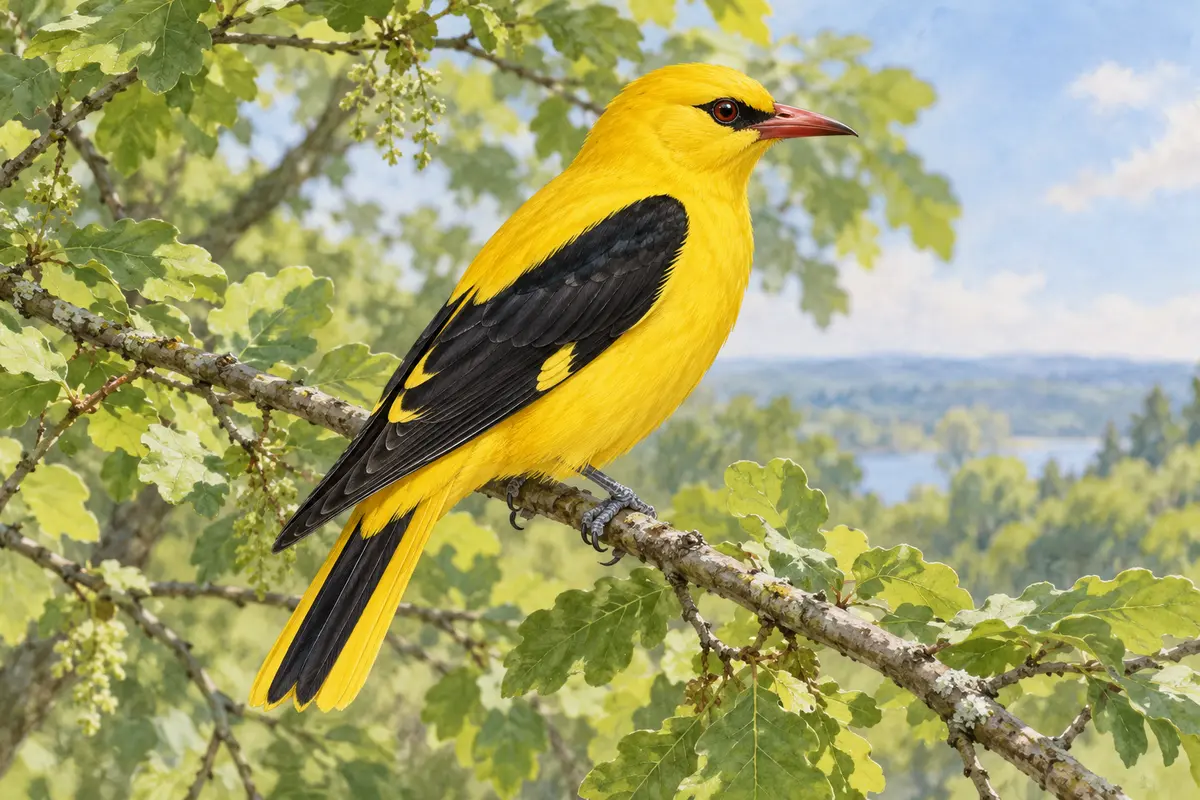
Eurasian golden oriole
Oriolus oriolusA woodland bird with a clear, fluting song; the bright yellow-and-black male often stays hidden high in foliage. This account covers Oriolus oriolus, not other Asian oriole species. [2]
Open full profile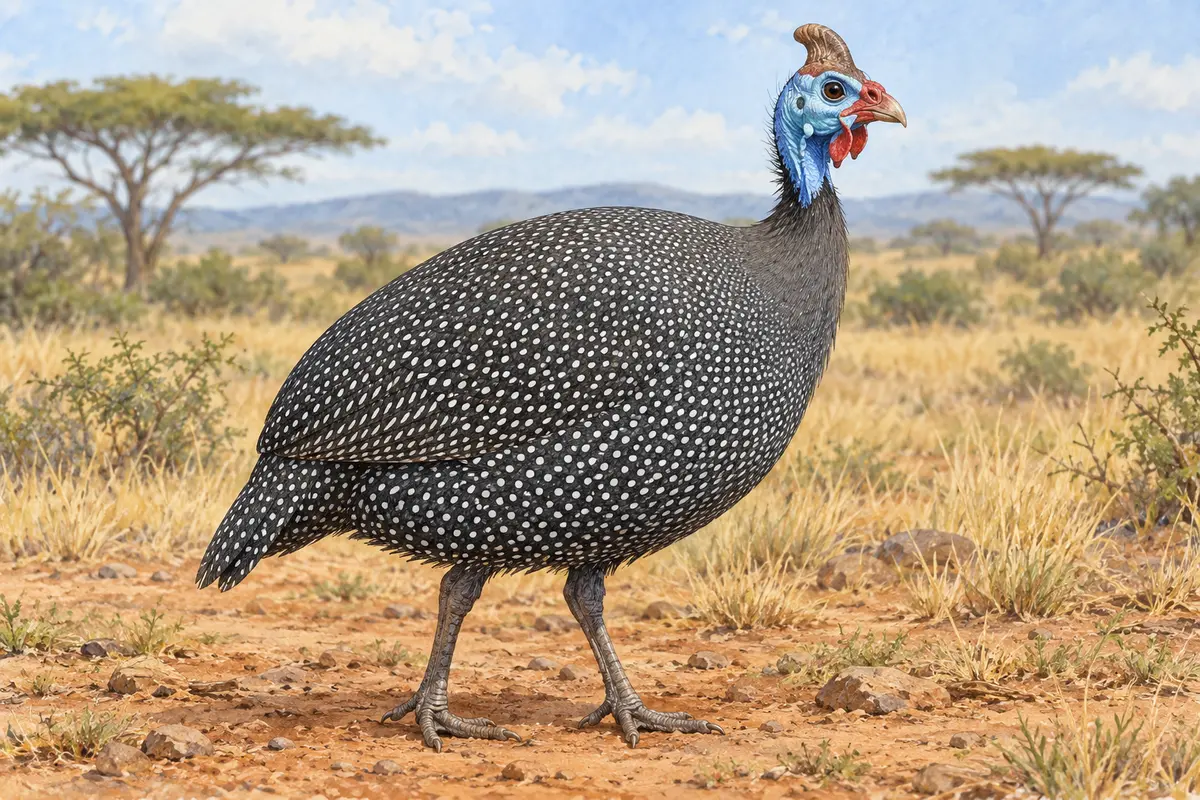
Helmeted guineafowl
Numida meleagrisA ground-foraging bird with a rounded white-spotted body and a casque. The figures below describe wild-species biology, not production performance of domestic strains. [1,3]
Open full profile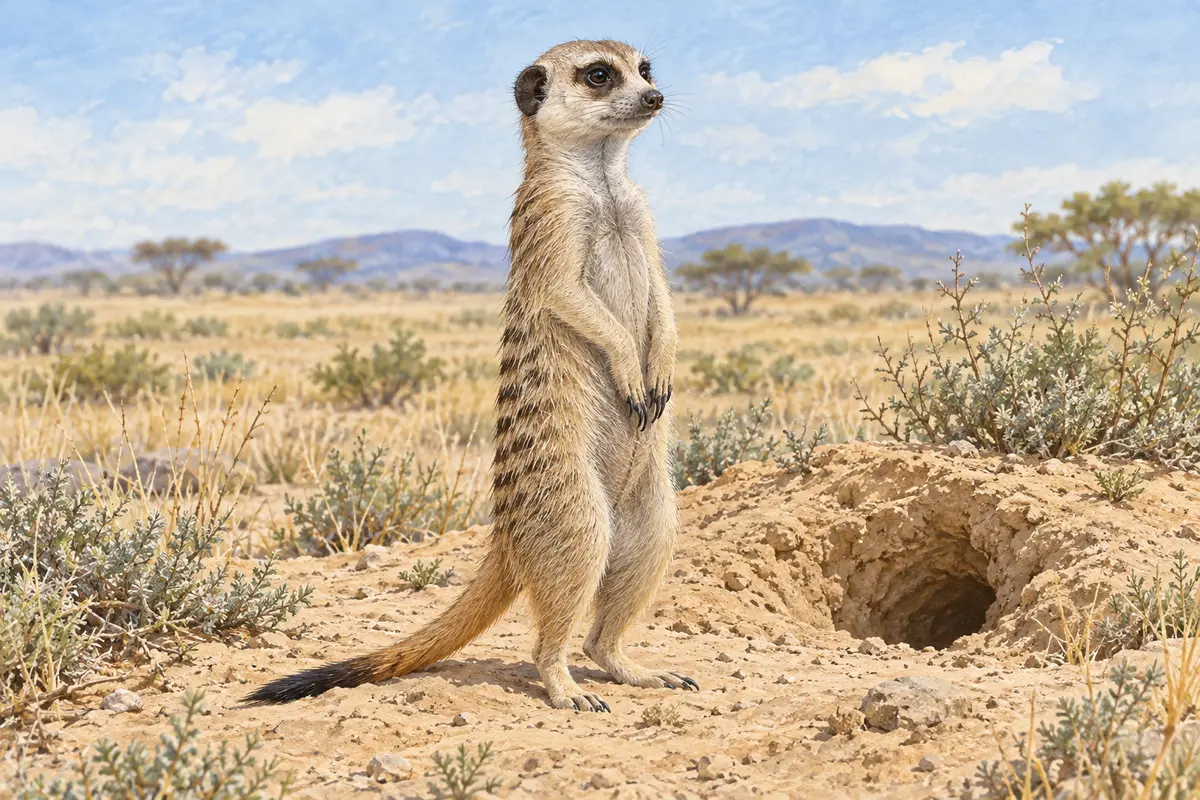
Meerkat
Suricata suricattaA small social mongoose from southern Africa. Its familiar lookout posture is only part of a life involving digging, foraging and cooperative care of young. [1,2]
Open full profile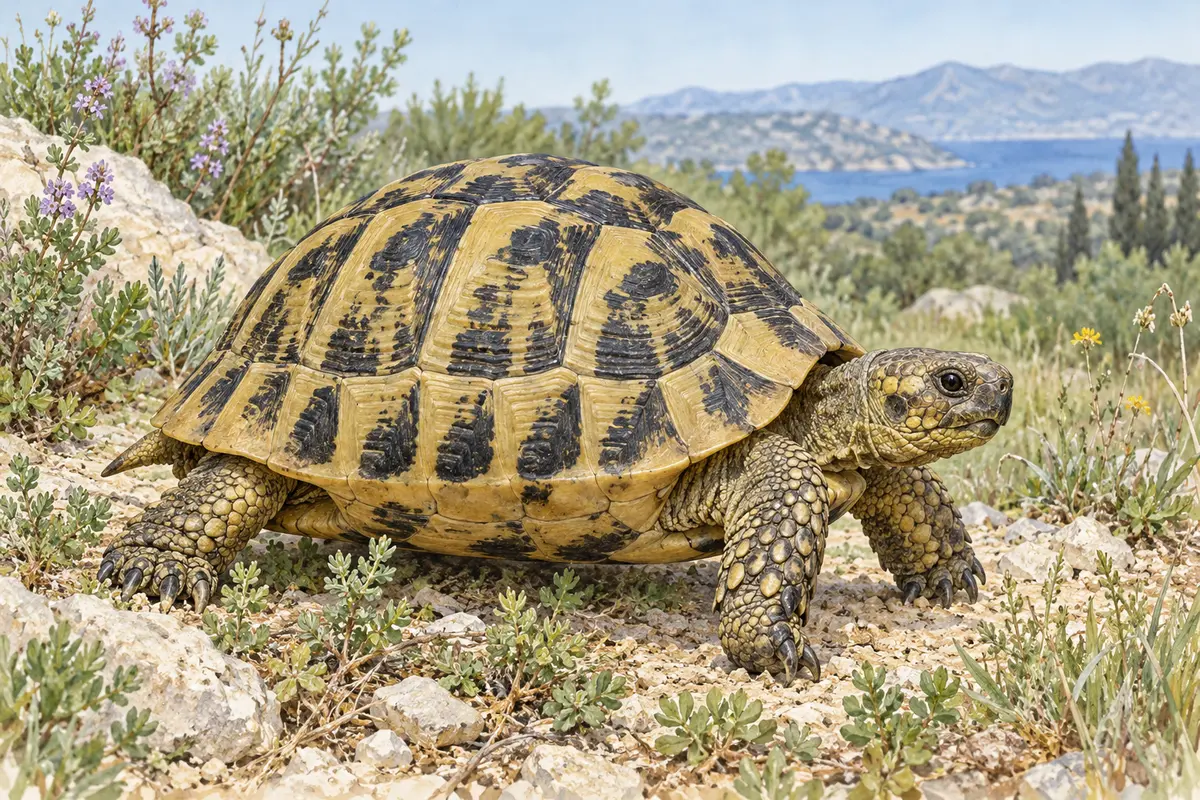
Hermann’s tortoise
Testudo hermanniA small Mediterranean tortoise with a yellow-and-black shell and horny tail tip. Identification needs multiple features, not one colour patch in a photograph. [3,4]
Open full profile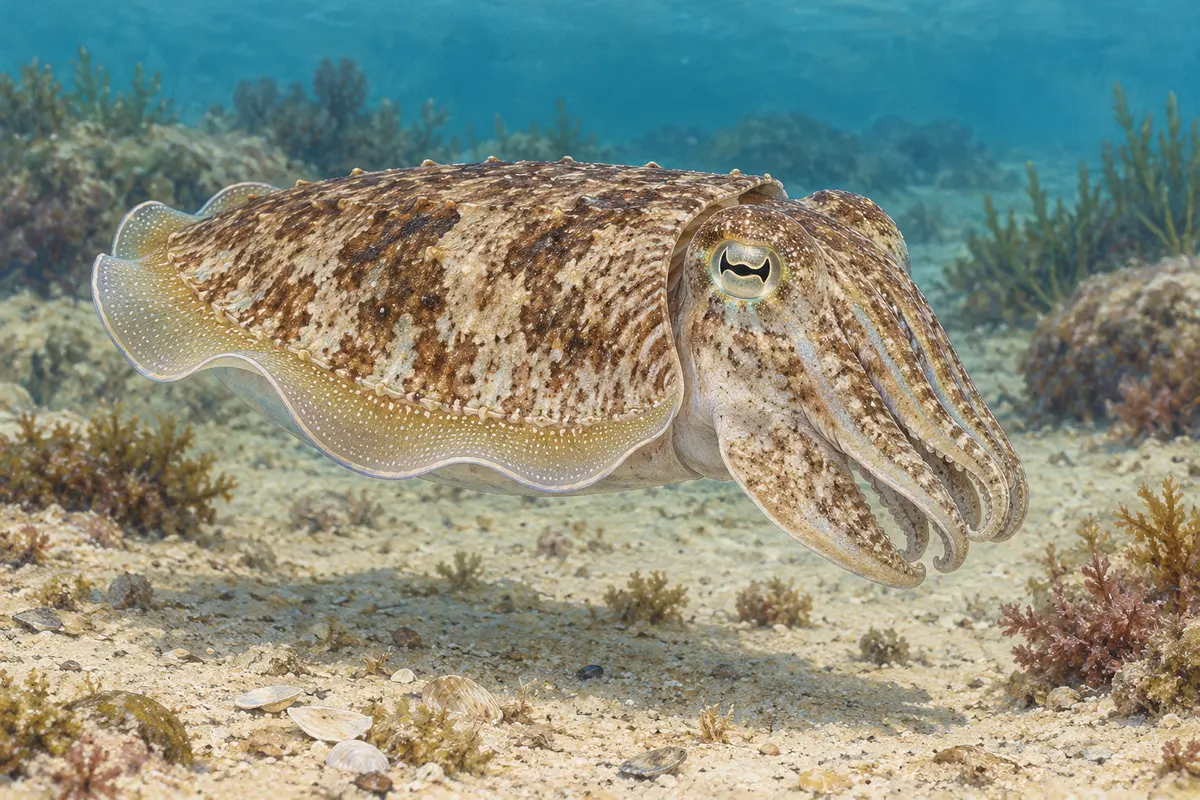
Common cuttlefish
Sepia officinalisA mollusc, not a fish. Its oval body has a fin skirt and internal porous cuttlebone; changing skin colour and texture supports camouflage. [1]
Open full profilePublished profiles · 13 Sep–17 Oct 2026
Explore more species
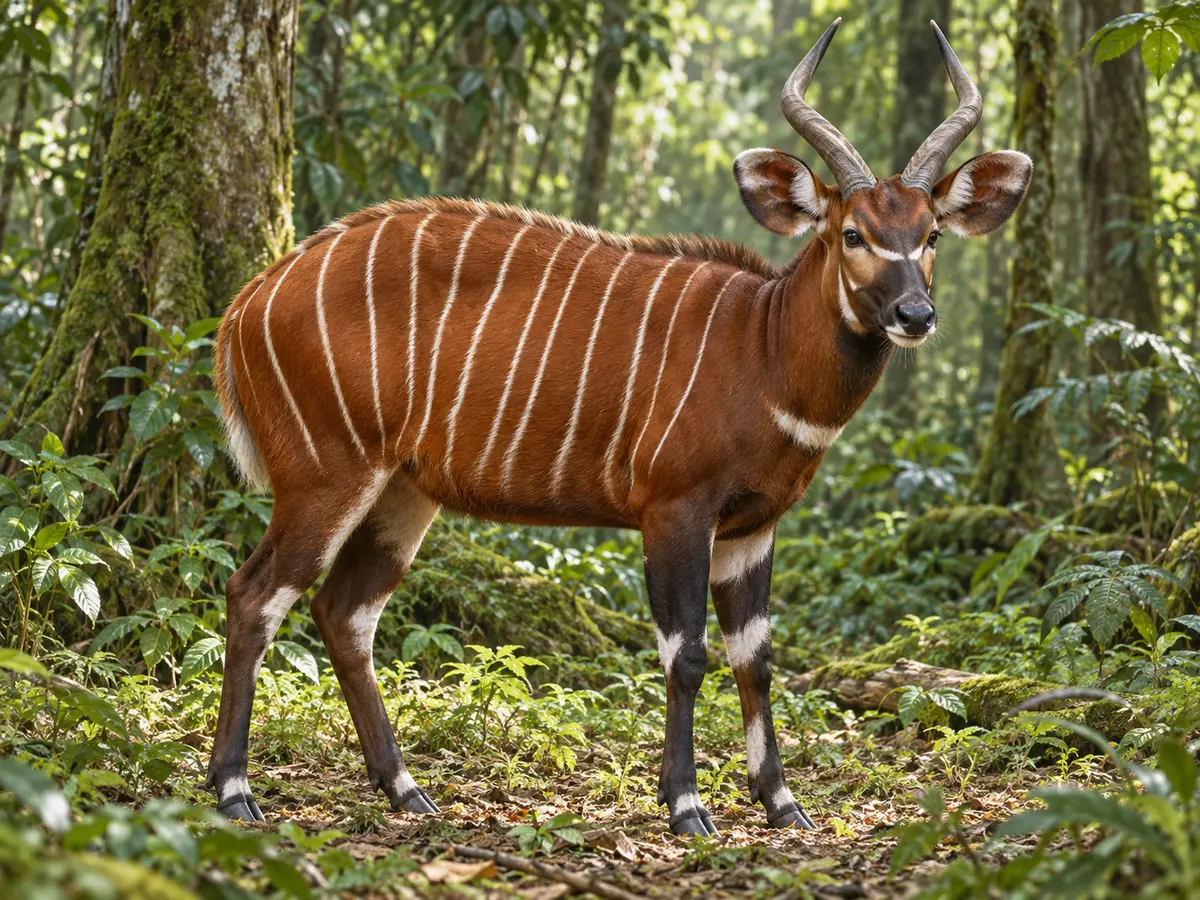
Bongo
Tragelaphus eurycerusThe Bongo is a large forest antelope, reddish-brown with 10–15 pale vertical stripes; both sexes carry spiralled horns. This profile covers Tragelaphus eurycerus as a species and does not apply the mountain subspecies' Critically Endangered status to every population. [1–3,6]
Open full profile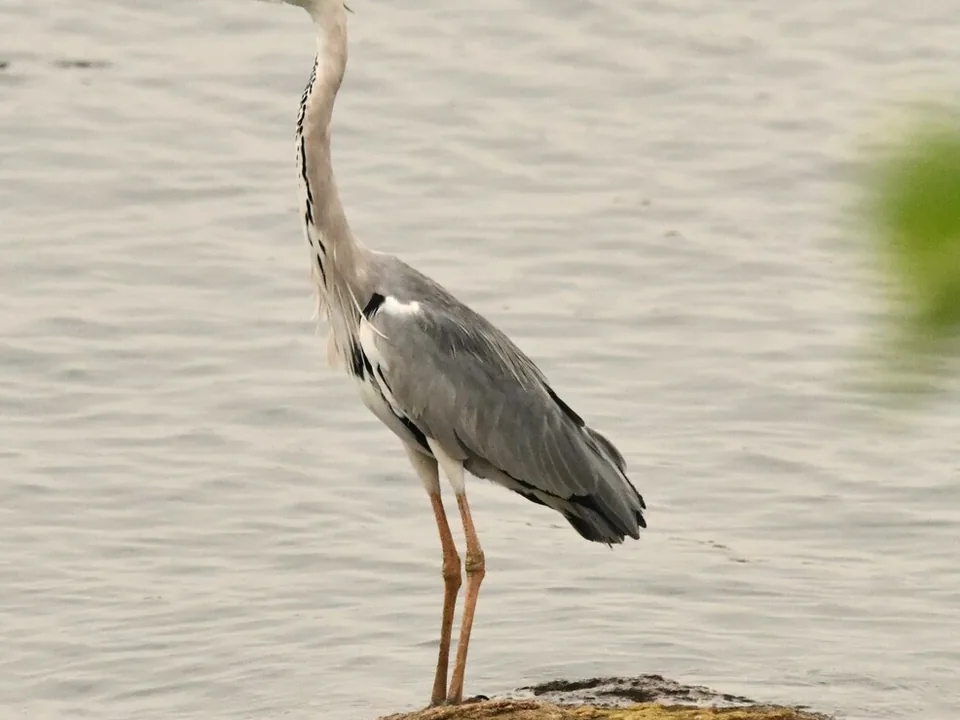
Grey heron
Ardea cinereaThe Grey heron is a large wading bird with a long neck, dagger-like bill and grey-white plumage with black head markings. It hunts by waiting and striking rapidly; in flight the neck folds into an S-shape, unlike the extended neck of cranes. [2–4]
Open full profile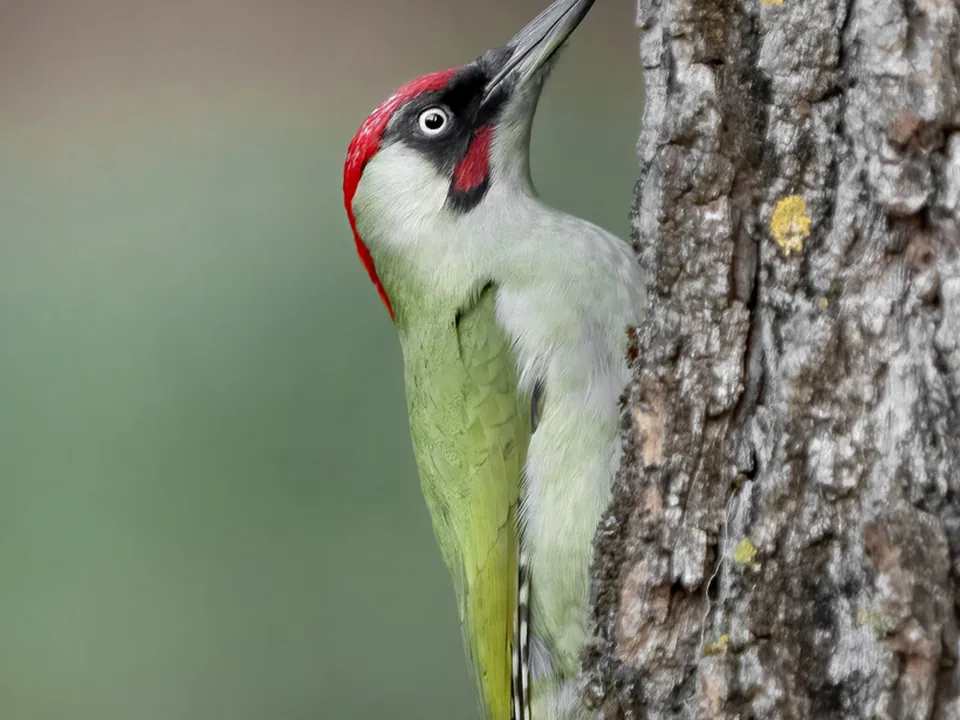
European green woodpecker
Picus viridisThis large olive-green woodpecker has a red crown, yellow rump and a ringing, laugh-like call. Unlike many woodpeckers that forage mainly on trunks, it frequently feeds on the ground for ants. [2–4]
Open full profile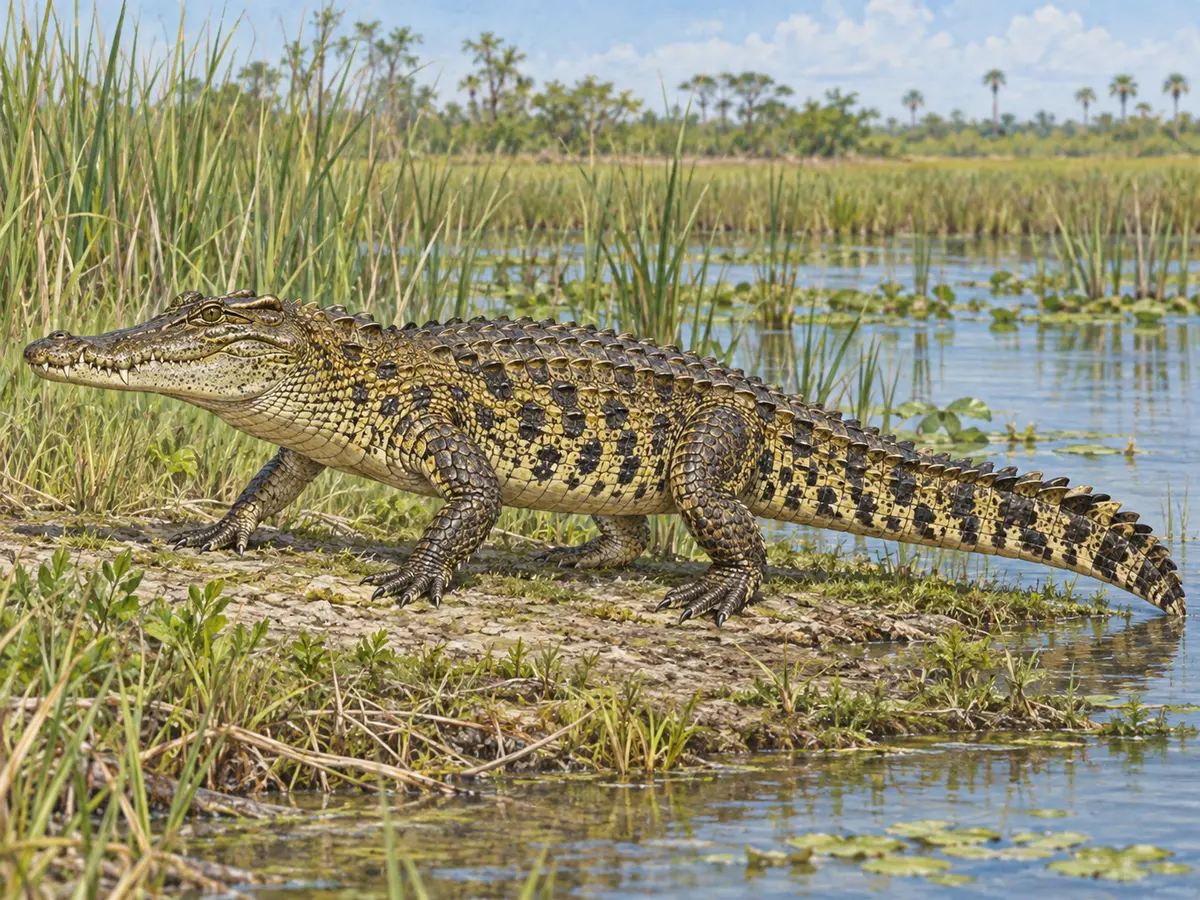
Cuban crocodile
Crocodylus rhombiferThe Cuban crocodile is a very narrow-range endemic now surviving mainly in Cuba's Zapata and Lanier swamps. It has relatively long legs, coarse leg scales and mottled yellow-black patterning, and is more agile on land than many other crocodilians. [1–3]
Open full profile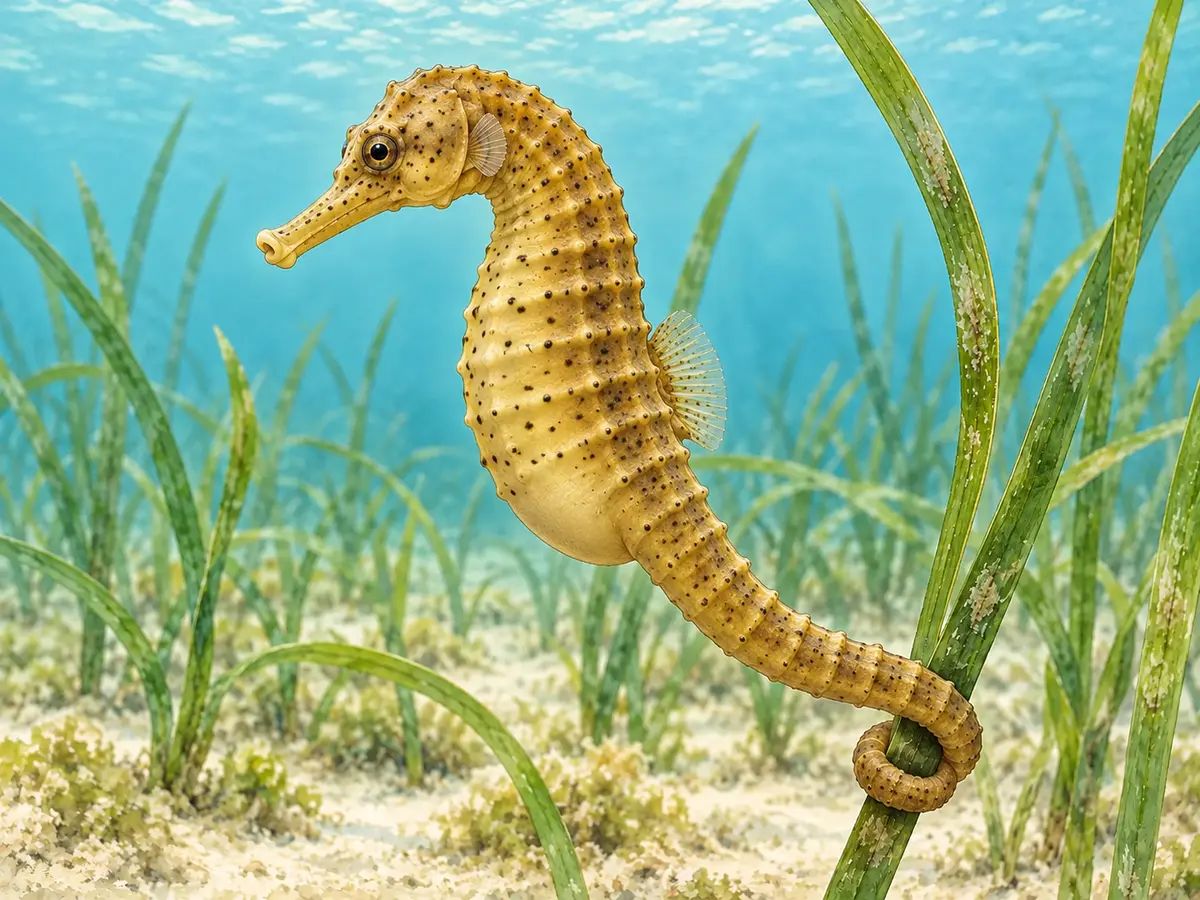
Spotted seahorse
Hippocampus kudaThe Spotted seahorse is a relatively large, smooth-bodied Indo-Pacific seahorse with a thick snout, low coronet and highly variable colour. Males brood embryos in a pouch; this reverses the pregnancy role but does not change that females produce the eggs. [1–3]
Open full profile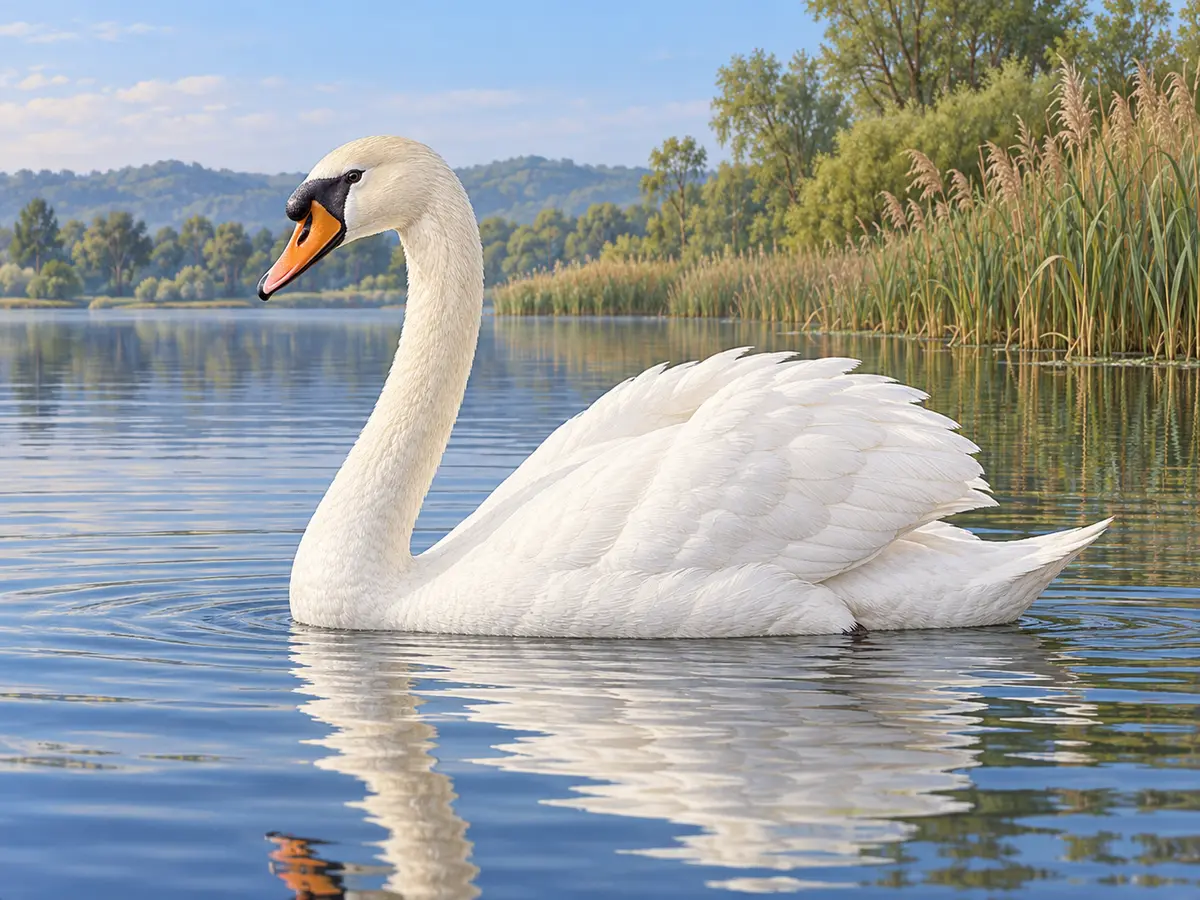
Mute swan
Cygnus olorThe Mute swan is a very large waterbird with white plumage, a long S-curved neck and an orange bill bearing a prominent black basal knob. Its name reflects quieter calls than many other swans, not complete silence. [2,3]
Open full profile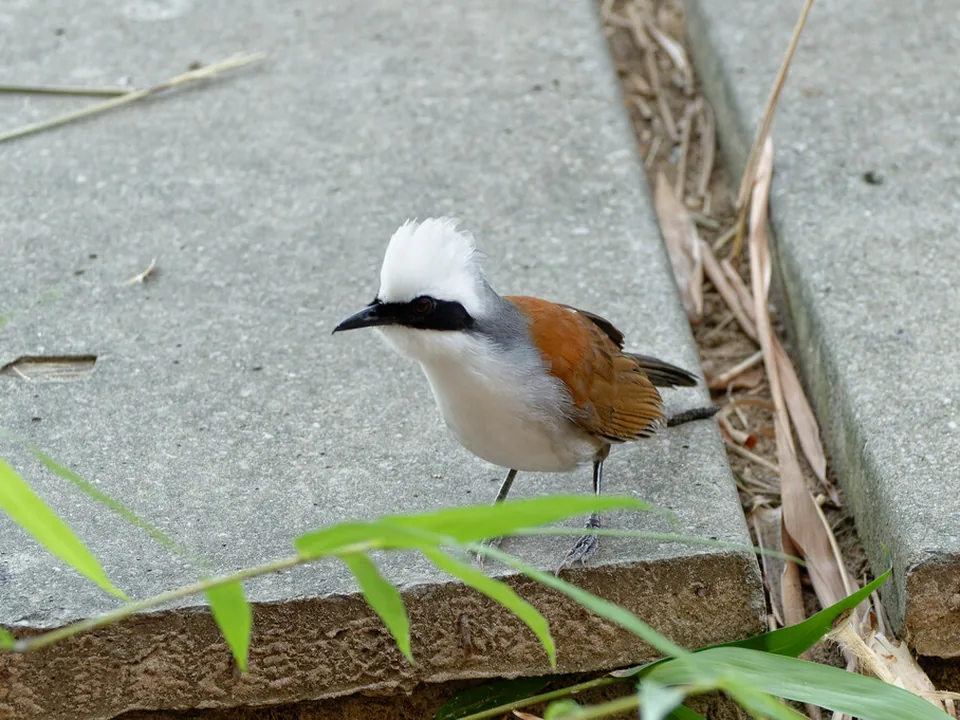
White-crested laughingthrush
Garrulax leucolophusThe White-crested laughingthrush is a social forest bird recognised by its white crest and breast, black mask and rufous-brown back and wings. Coordinated cackling calls help group members maintain contact in dense vegetation. [2,3]
Open full profile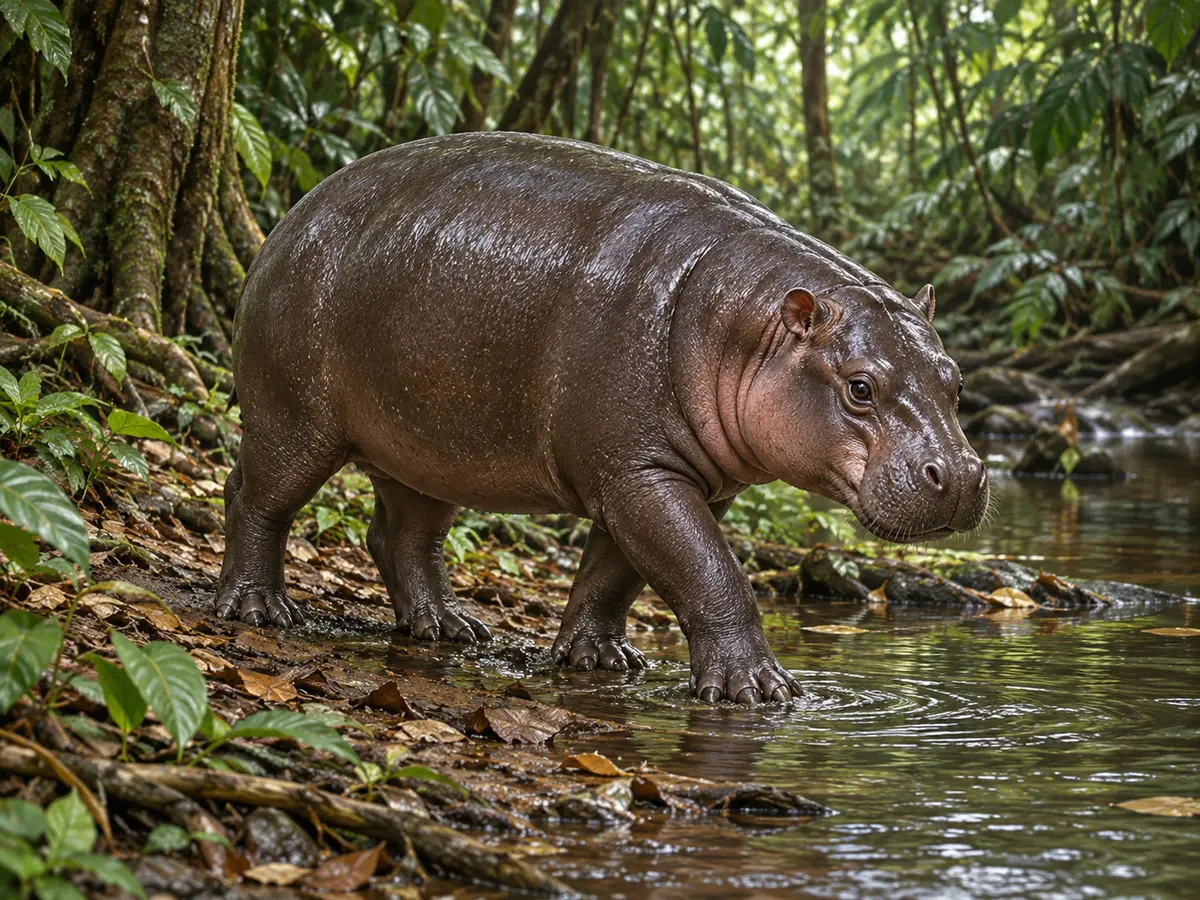
Pygmy hippopotamus
Choeropsis liberiensisThe Pygmy hippopotamus is a secretive semi-aquatic mammal of West African forest, far smaller than the common hippopotamus. Relatively long legs and neck, a smaller head and less-webbed feet suit movement through forest and mud. [1–4]
Open full profile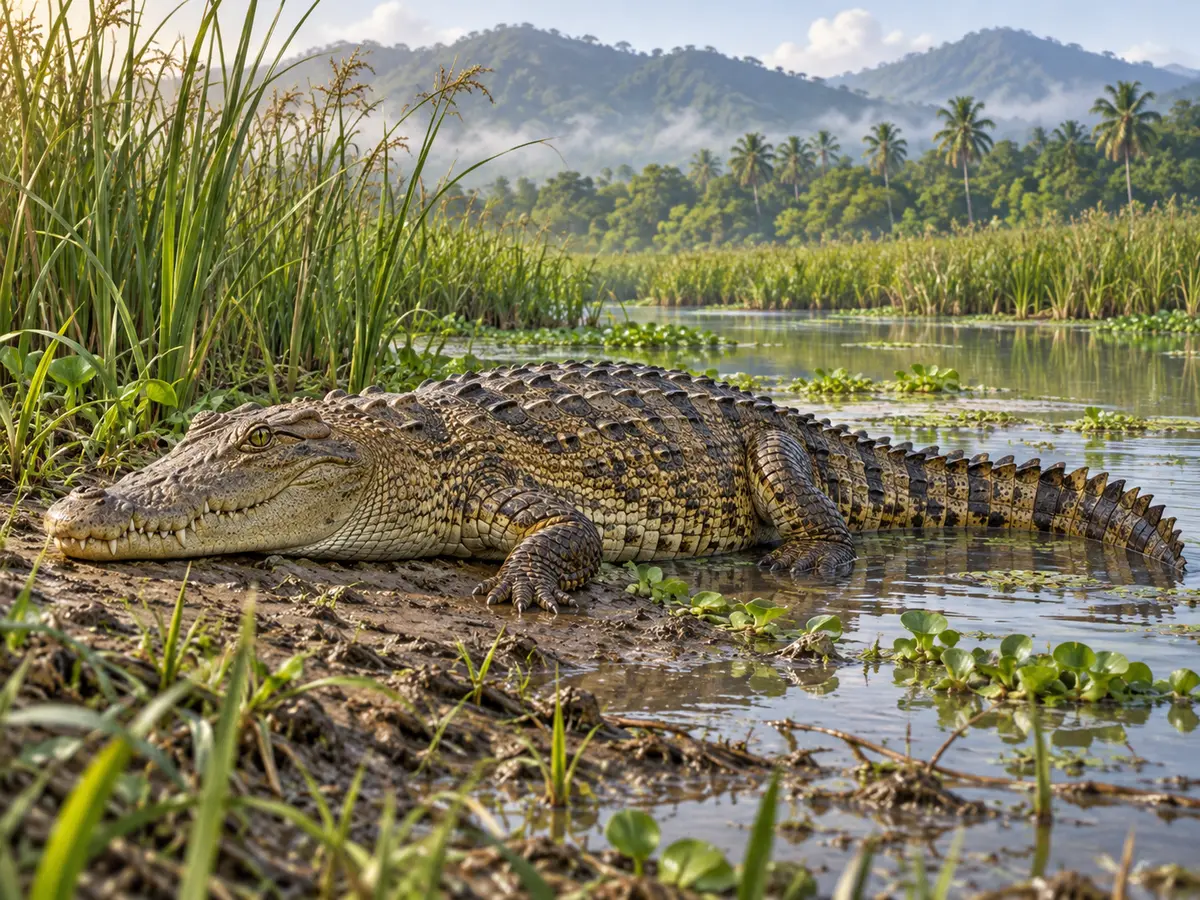
Philippine crocodile
Crocodylus mindorensisThe Philippine crocodile is a relatively small freshwater crocodile endemic to the Philippines, with a broad snout and heavy dorsal armour. It should not be confused with the larger saltwater crocodile that also occurs in the country. [1–3]
Open full profile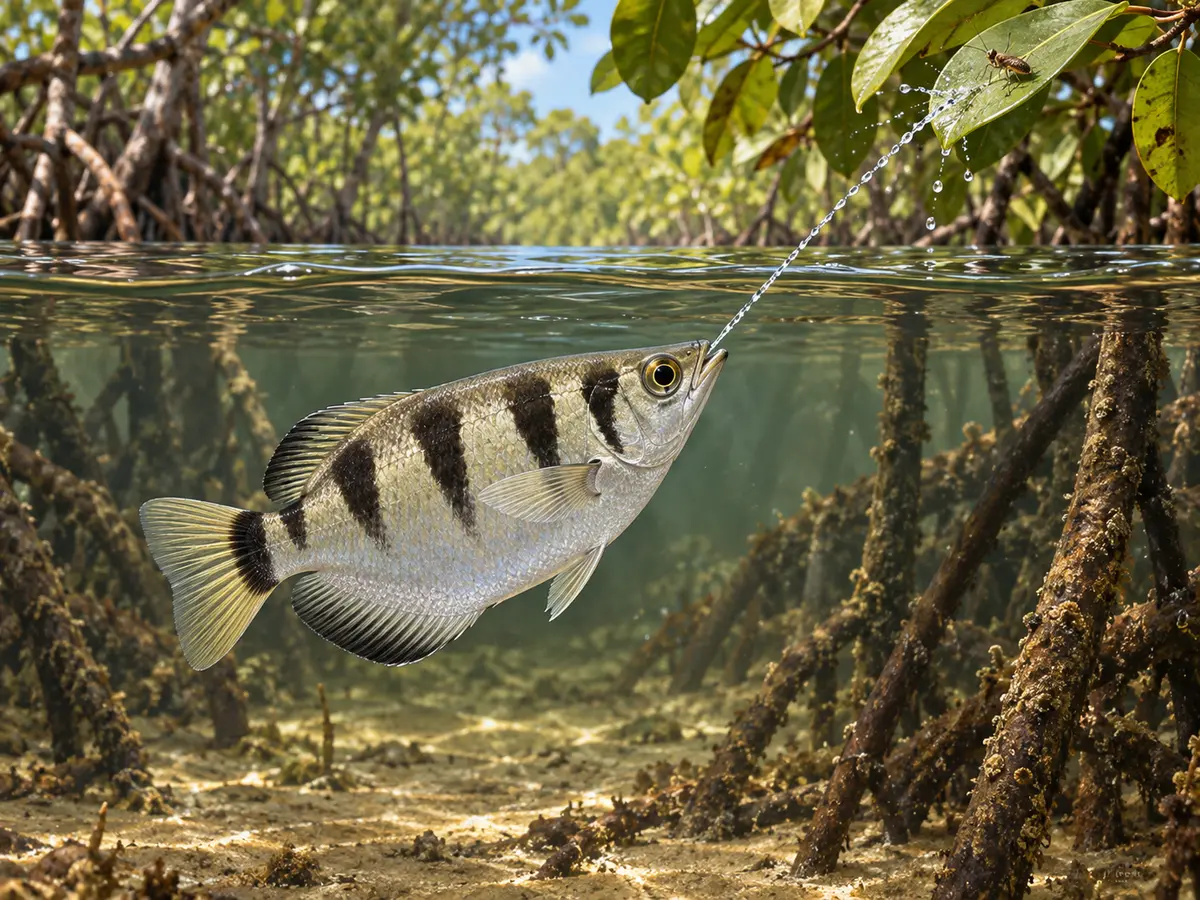
Banded archerfish
Toxotes jaculatrixThe Banded archerfish is a silvery, laterally compressed fish of estuaries and mangroves, famous for shooting water to dislodge insects from vegetation. This profile concerns T. jaculatrix with 4–5 upper-body black bars, not all archerfishes. [1–3]
Open full profile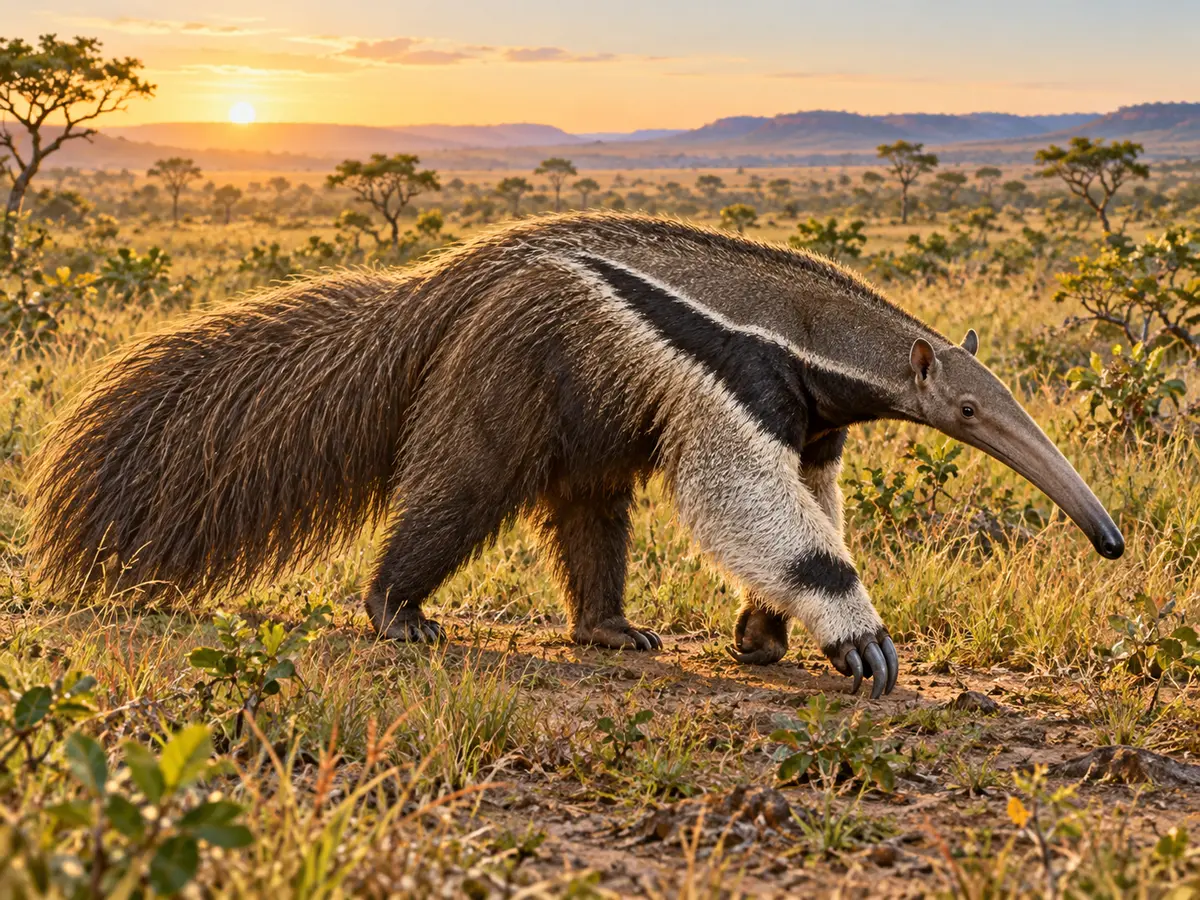
Giant anteater
Myrmecophaga tridactylaThe Giant anteater is the largest of the four living anteater species. A tubular snout, long tongue, enormous foreclaws, diagonal black shoulder stripe and bushy tail make it unmistakable; the species has no teeth. [1–3]
Open full profile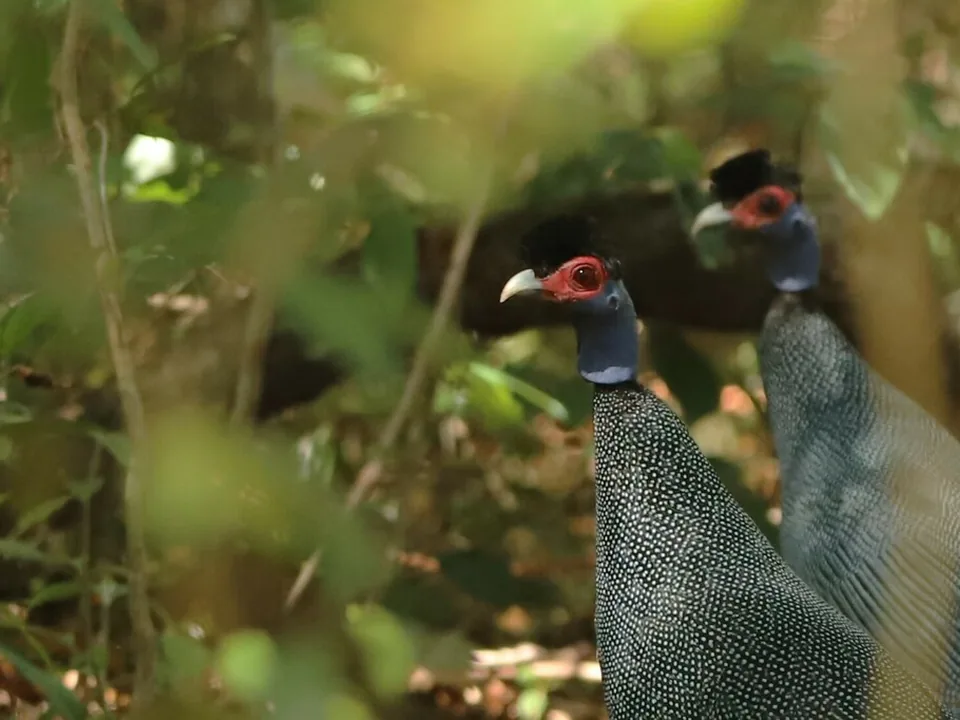
Eastern crested guineafowl
Guttera pucheraniThe Eastern crested guineafowl is a terrestrial bird with dark, white-spotted plumage and a curled black crown. This profile follows the current narrow concept of G. pucherani rather than the old broad grouping of African crested guineafowl. [1–3]
Open full profile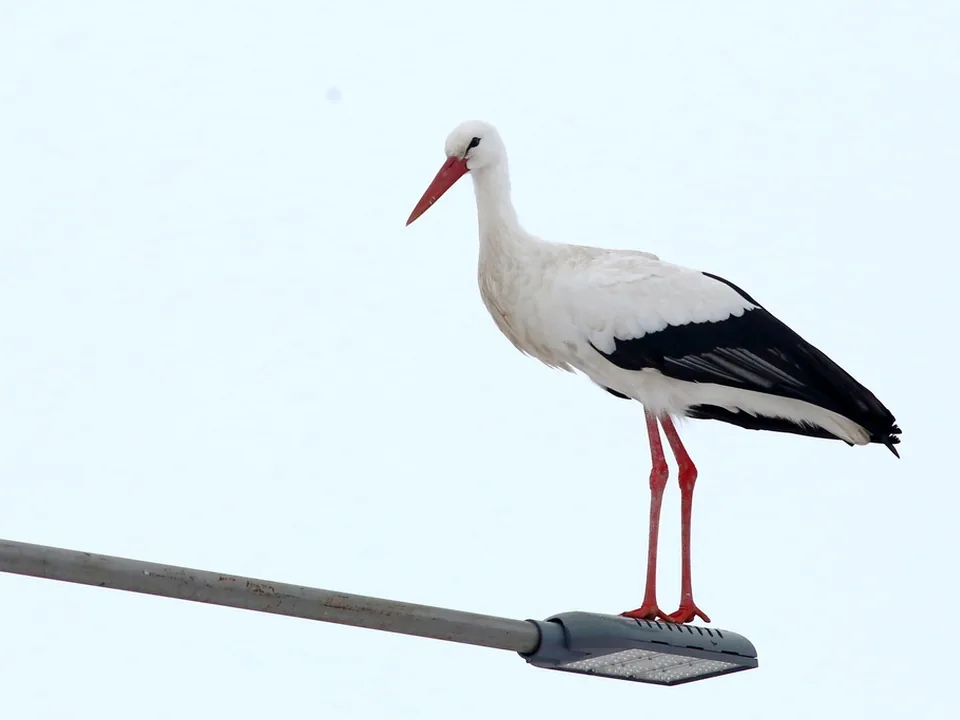
White stork
Ciconia ciconiaThe White stork is a large long-legged bird with white plumage, black flight feathers, and red bill and legs in adults. Many populations migrate long distances by thermal soaring; their large stick nests are often reused for years. [1–3]
Open full profile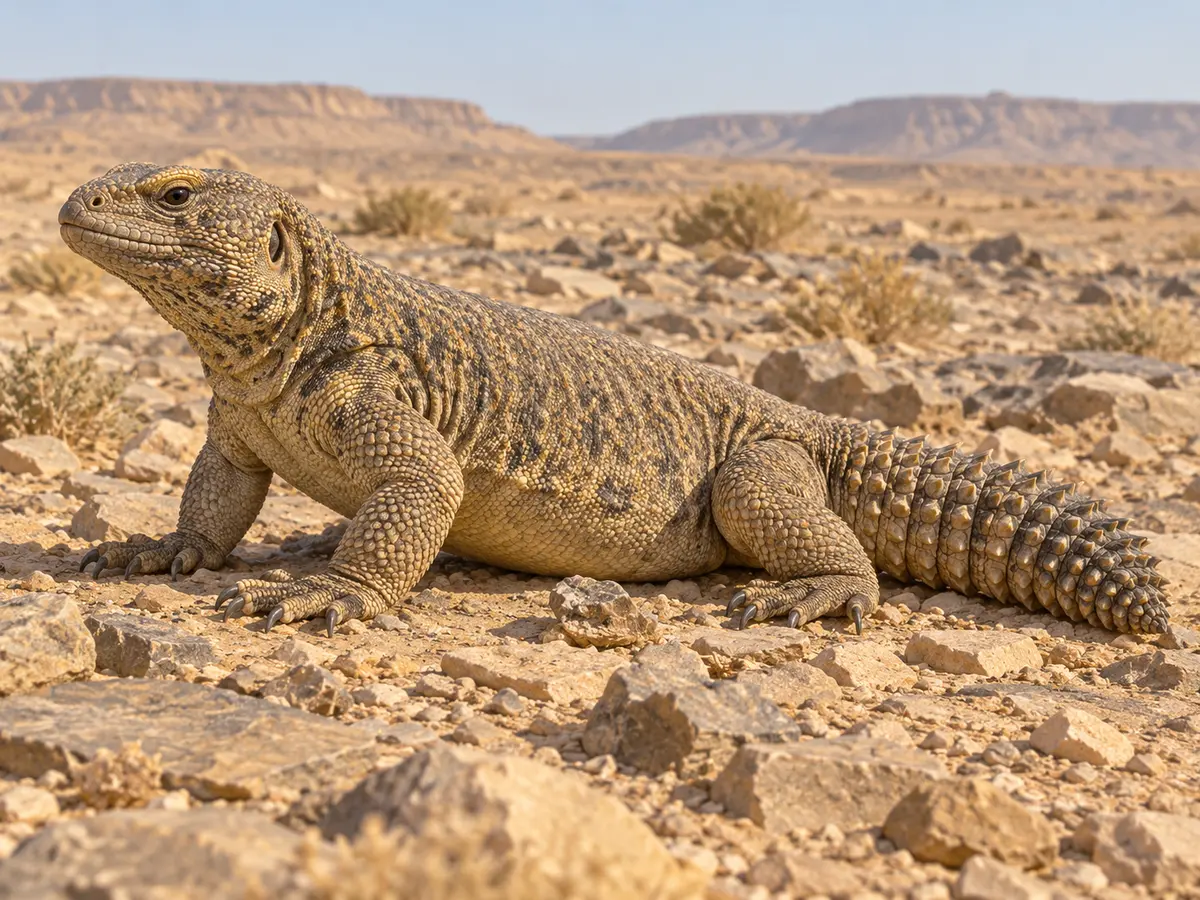
Egyptian spiny-tailed lizard
Uromastyx aegyptiaOne of the largest Uromastyx, this species has a heavy low body and a short tail armoured with rings of large spiny scales. It is a diurnal lizard of stony deserts, digging deep burrows and feeding mainly on plants. [1–4]
Open full profile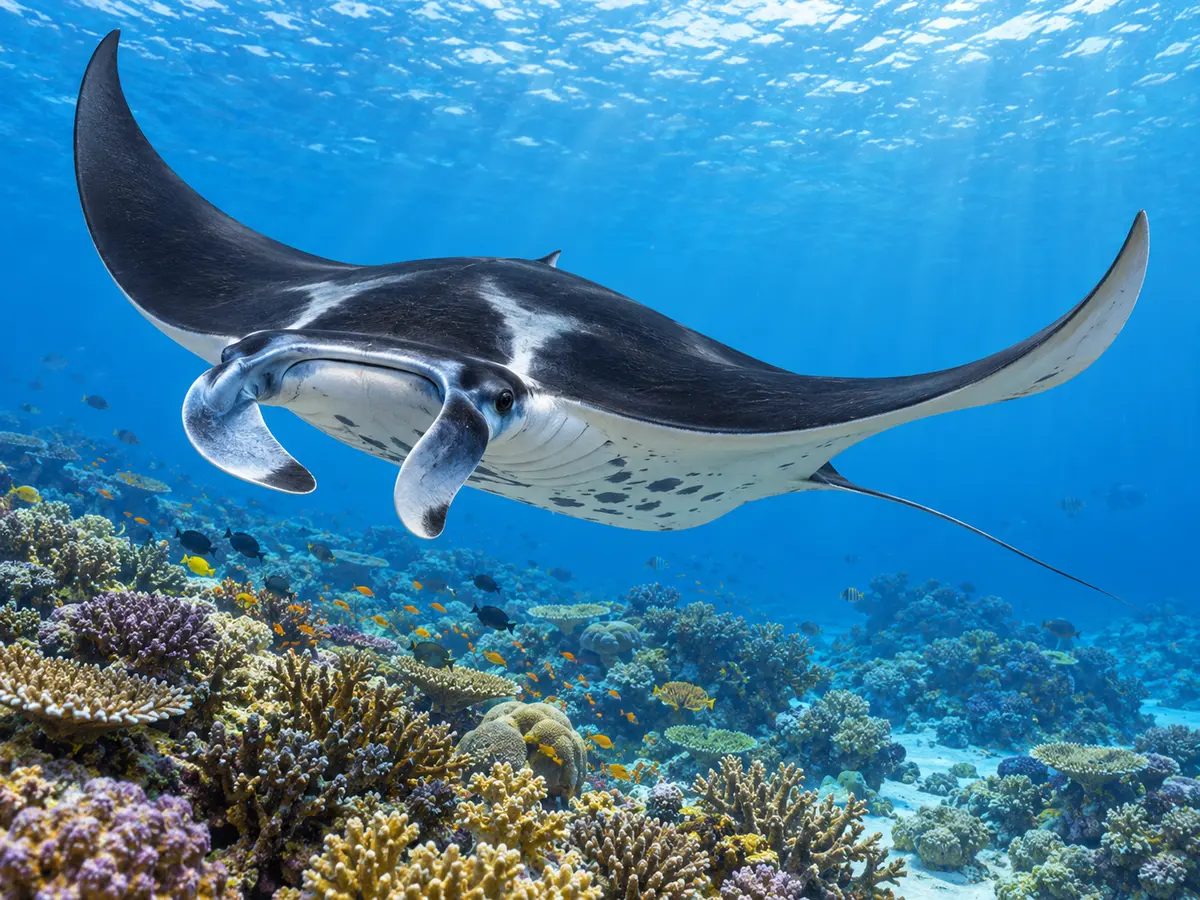
Reef manta ray
Mobula alfrediThe Reef manta ray is a giant plankton-filtering ray associated with reefs, islands and coastal cleaning stations across the Indo-Pacific. It has no venomous tail spine; paired cephalic lobes unfurl to funnel prey-rich water into the mouth. [1–4]
Open full profile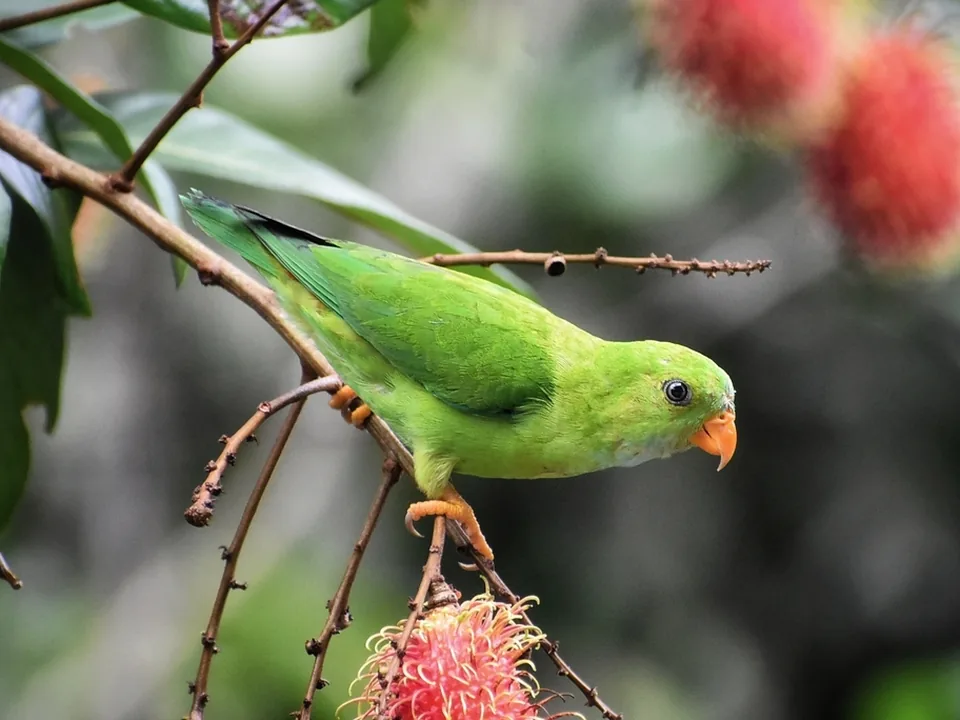
Vernal hanging-parrot
Loriculus vernalisThe Vernal hanging-parrot is a small green parrot of South and Southeast Asia, famous for sleeping upside down. A short tail, orange-red bill and red rump aid identification; adult males also show a blue throat patch. [1–3]
Open full profile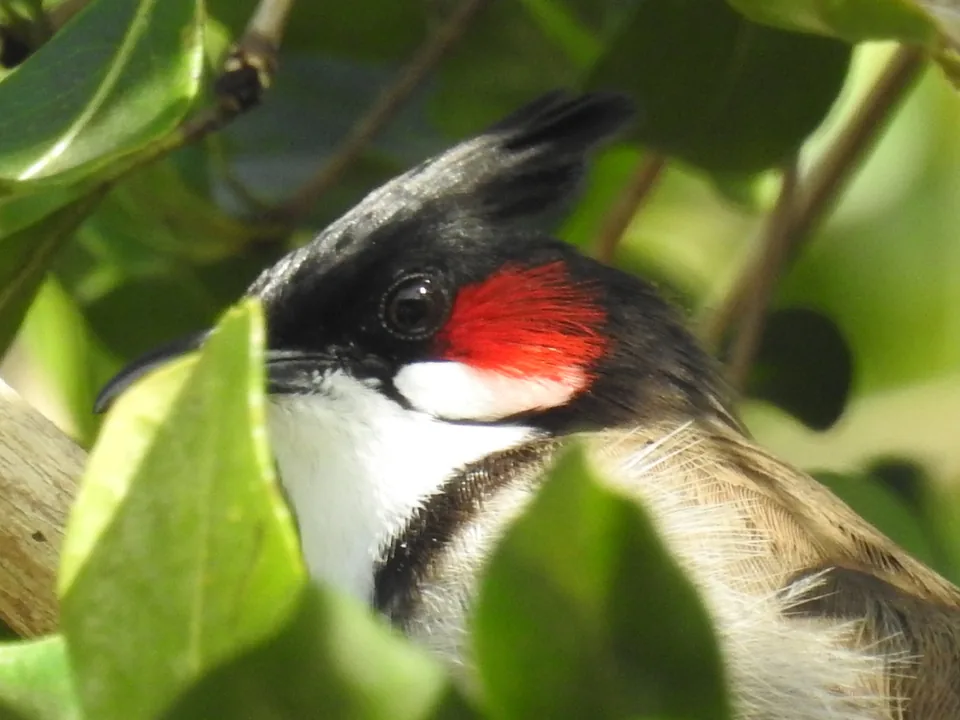
Red-whiskered bulbul
Pycnonotus jocosusThe red-whiskered bulbul is a familiar fruit- and insect-eating bird of South and Southeast Asia. A tall black crest, white cheeks, dark breast spurs, red ear patch and red vent form its characteristic field marks. [1–3]
Open full profile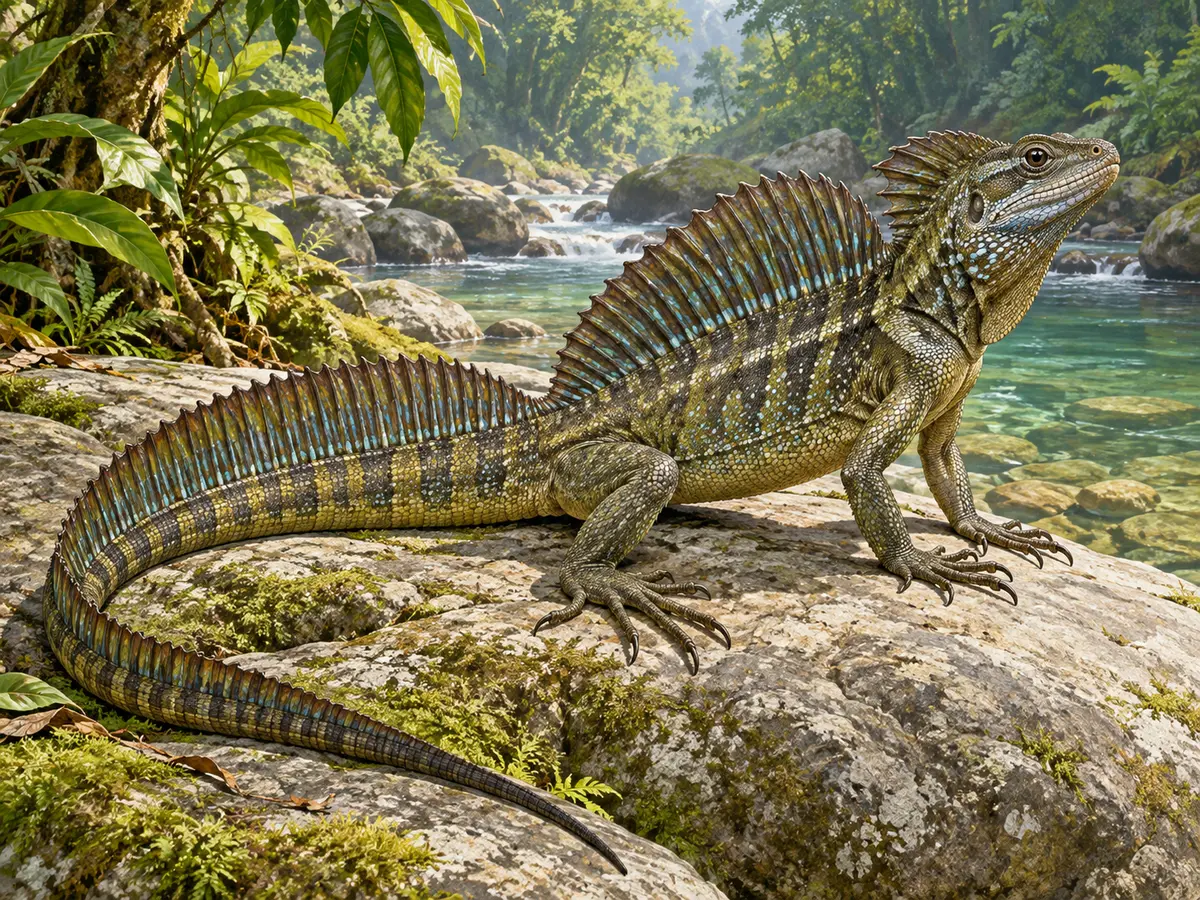
Philippine sailfin lizard
Hydrosaurus pustulatusThe Philippine sailfin lizard is a semi-aquatic reptile endemic to the Philippines, living along wooded streams with sandy banks and boulders. Males carry high dorsal and tail crests; strong limbs, long toes and a compressed tail aid swimming. [1,2]
Open full profile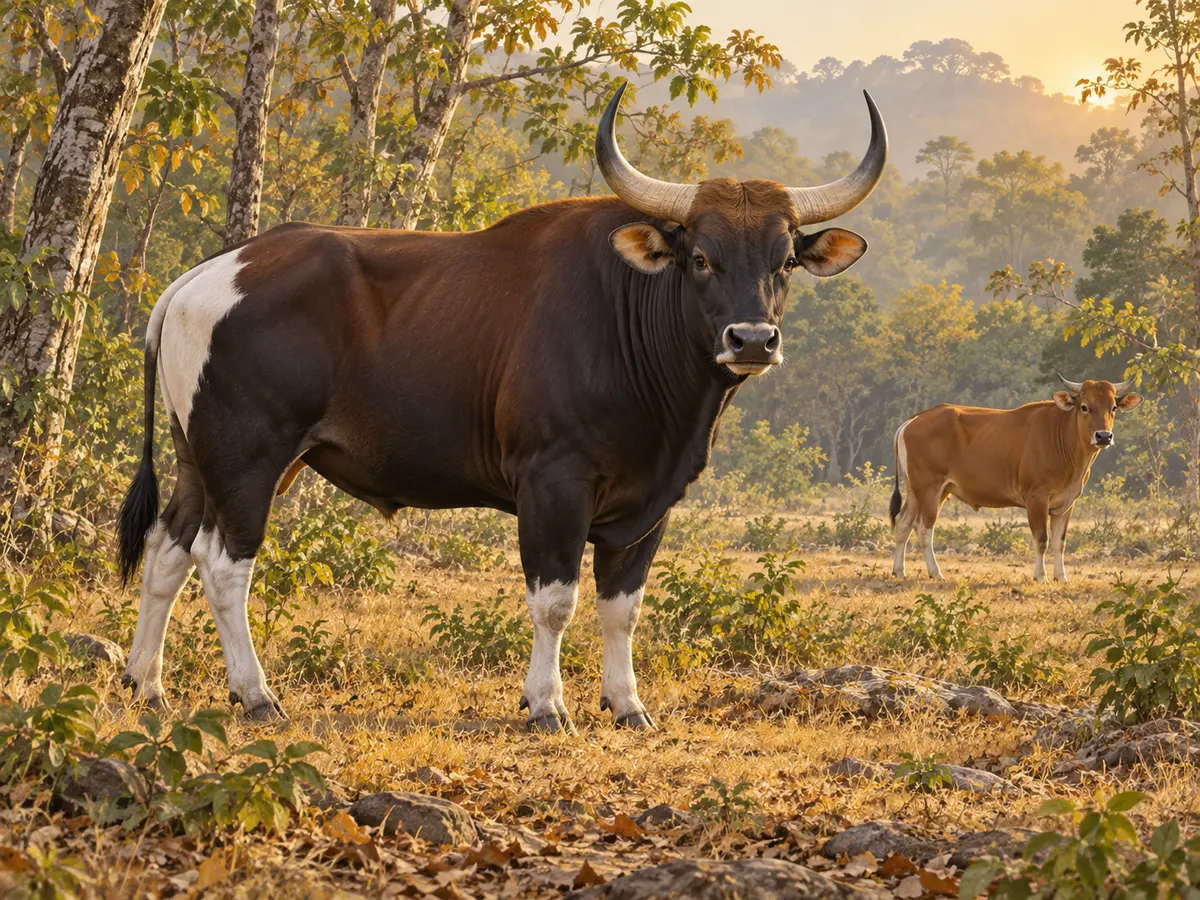
Banteng
Bos javanicusThe banteng is a Southeast Asian wild ox with a large white rump patch, white lower legs and strong sexual dimorphism: adult males are often dark brown-black and females reddish-brown. Wild populations are severely fragmented by hunting, habitat loss and livestock disease. [1,4]
Open full profile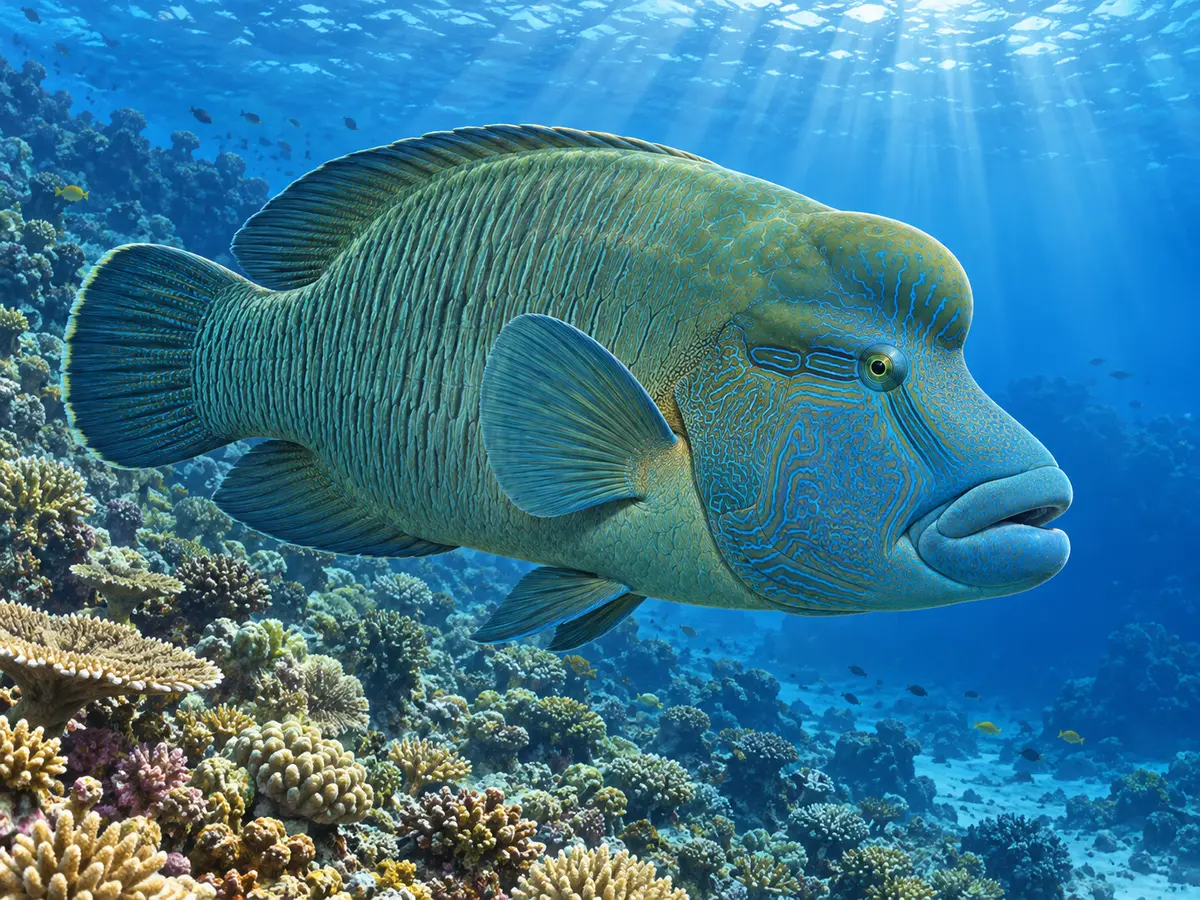
Humphead wrasse
Cheilinus undulatusThe humphead wrasse is the largest wrasse, recognised by thick lips, facial lines and a forehead hump that enlarges with age. It is long-lived, matures slowly and is heavily targeted for the luxury live-reef-fish trade. [1–4]
Open full profile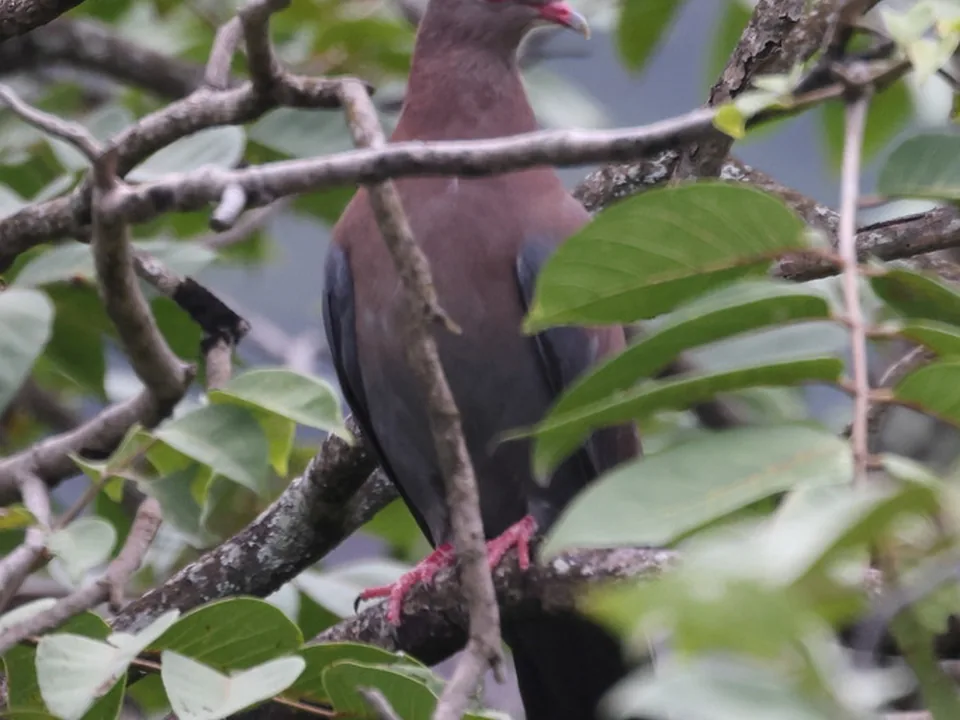
Marañón pigeon
Patagioenas oenopsThe Marañón pigeon is a range-restricted bird of the dry Marañón valley and adjacent Peru–Ecuador. Reddish-purple plumage, blue-grey upperparts and bare skin around the eye aid identification; its small population is pressured by forest loss and fragmentation. [1–3]
Open full profile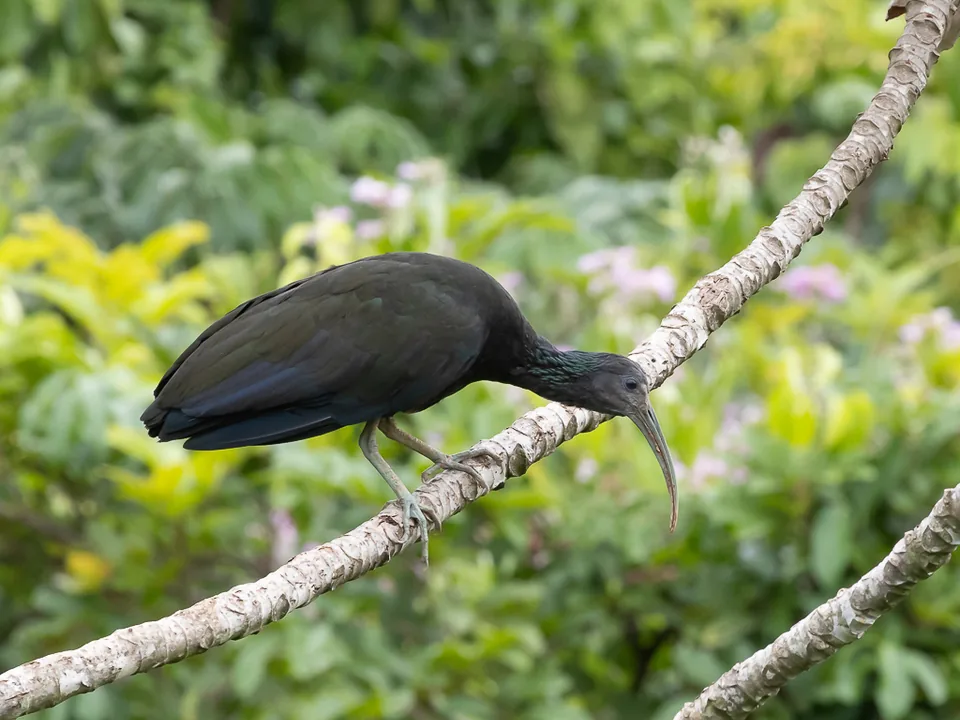
Green ibis
Mesembrinibis cayennensisThe green ibis is a forest ibis of tropical America, with dark green-bronze gloss, relatively short legs and a down-curved bill. It often forages unobtrusively along wooded shores, swamps and streams. [1–3]
Open full profile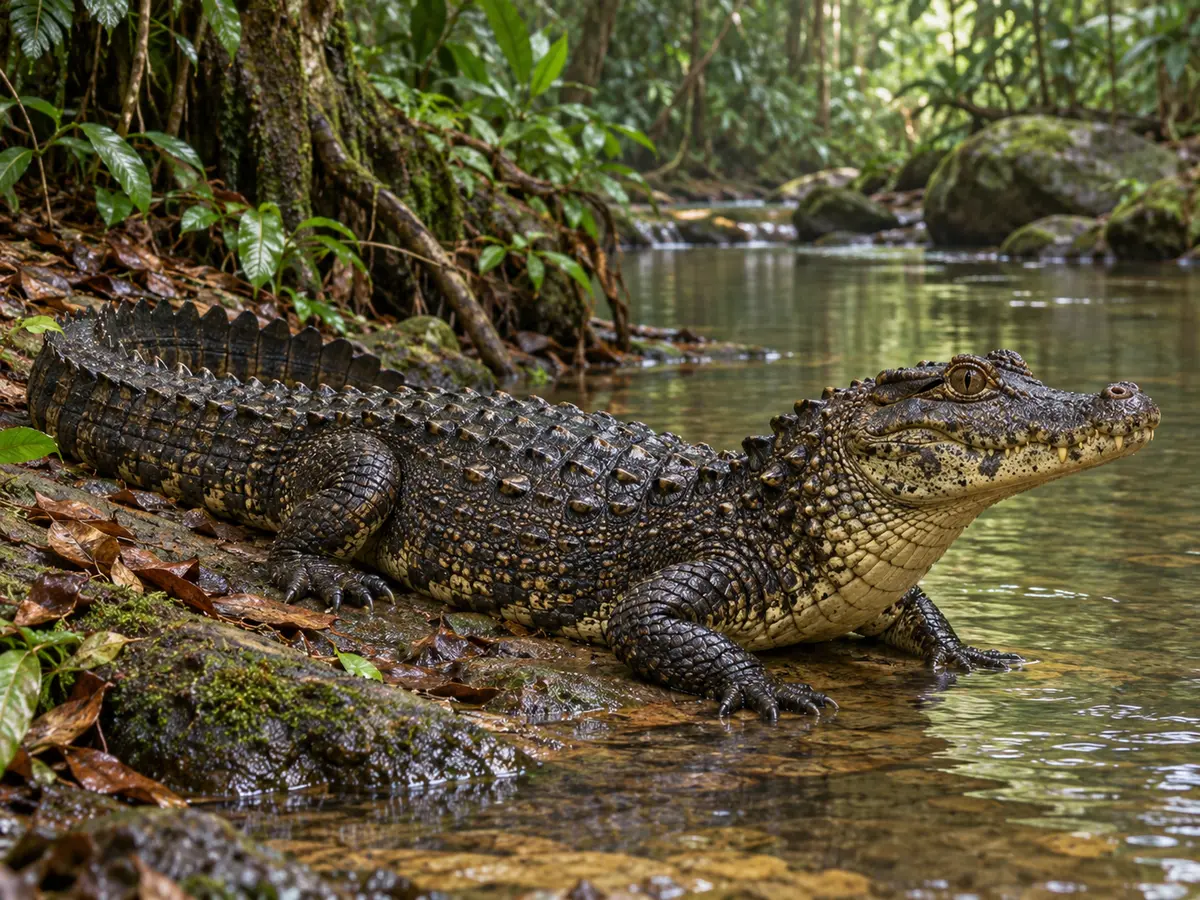
West African dwarf crocodile
Osteolaemus tetraspisThe West African dwarf crocodile is among the smallest crocodilians, living unobtrusively in swamps and forest streams of West and Central Africa. A short blunt snout, heavy bony armour and nocturnal habits suit small waters under forest cover. [1,2]
Open full profile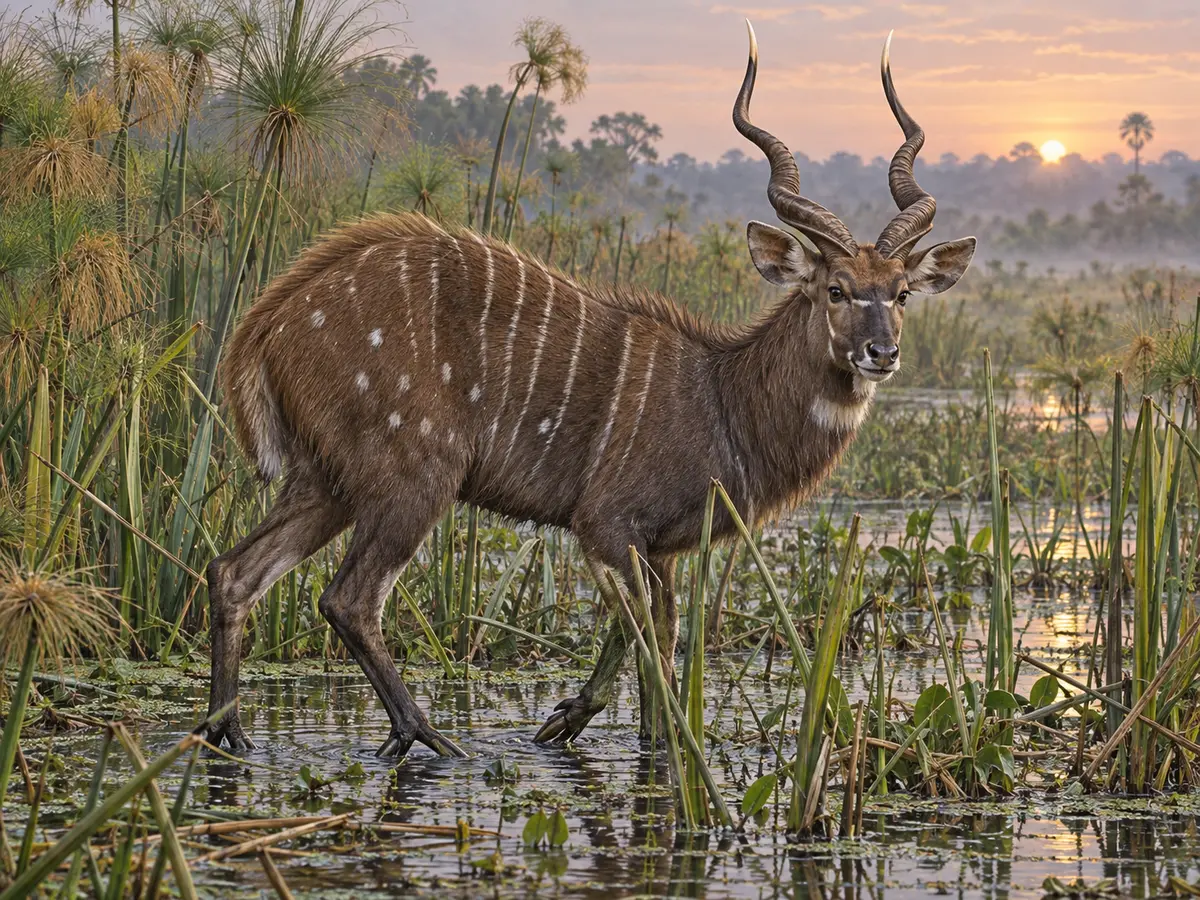
Sitatunga
Tragelaphus spekiiThe sitatunga is an African antelope specialised for swamps. Long splayed hooves, elevated hindquarters and a water-resistant coat allow movement over mud, swimming across channels and concealment in reeds. [1,2]
Open full profile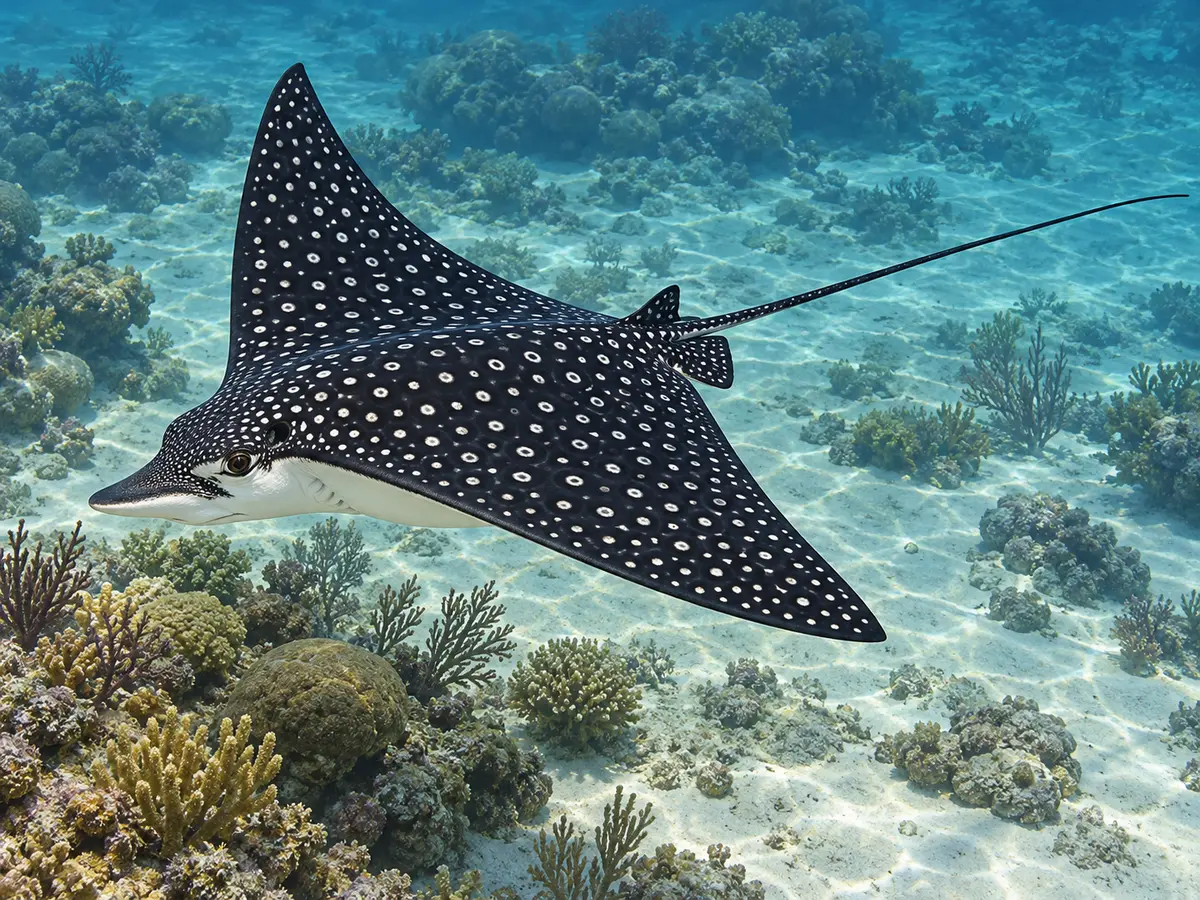
Whitespotted eagle ray
Aetobatus narinariThe Atlantic whitespotted eagle ray has a wing-like disc, duckbill snout, dark back with white spots and a very long whip tail. It swims over coastal and reef habitats and uses dental plates to crush hard-shelled bottom prey. [1,2]
Open full profile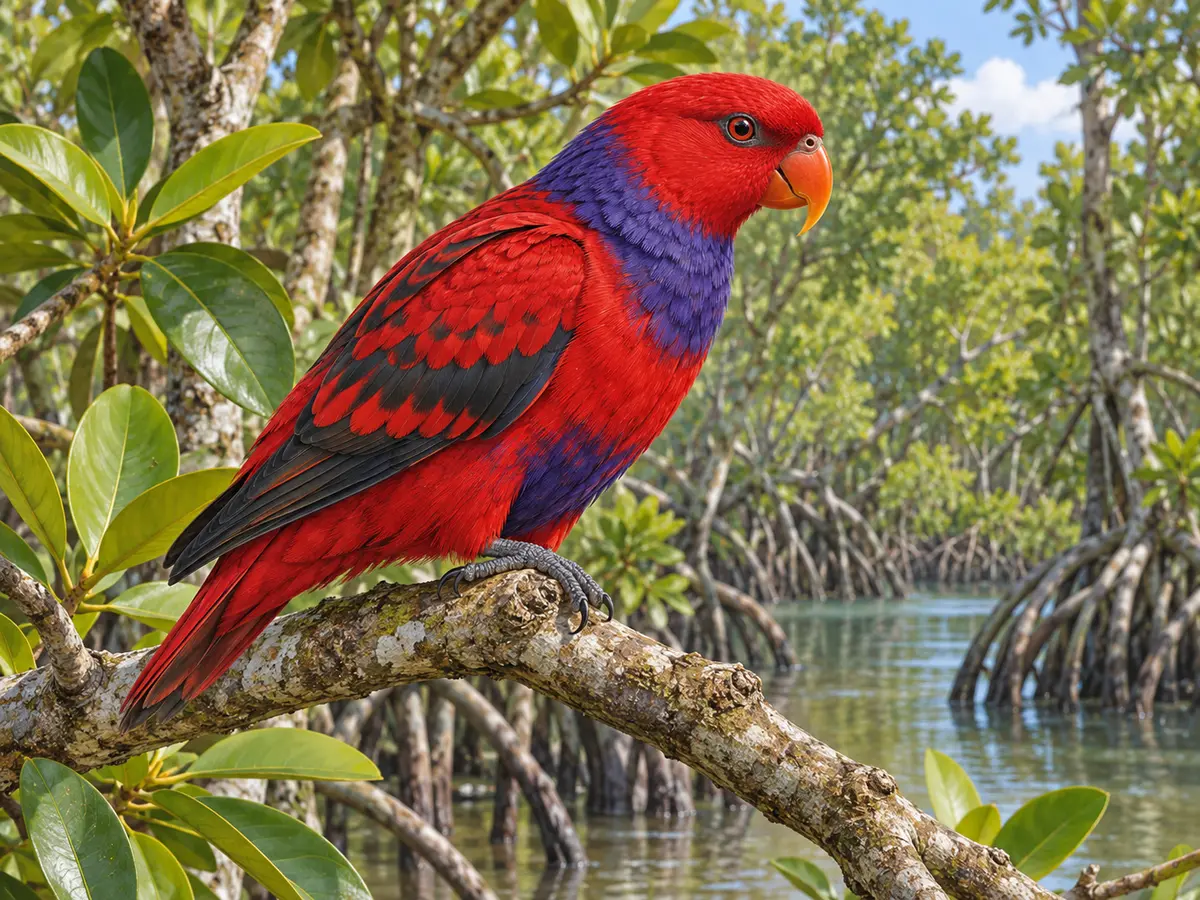
Violet-necked lory
Trichoglossus squamatus (syn. Eos squamata)The violet-necked lory is a striking red parrot of northern Moluccan and western Papuan islands in Indonesia. Its violet-blue collar, orange bill and brush-tipped tongue aid identification and the use of nectar, pollen and soft fruit. [1,2]
Open full profile
American white pelican
Pelecanus erythrorhynchosThe American white pelican is among North America's largest waterbirds. It is white with a huge orange bill and pouch; black flight feathers become conspicuous in flight. Unlike brown pelicans, it often cooperatively corrals fish and scoops them at the surface. [1–3]
Open full profile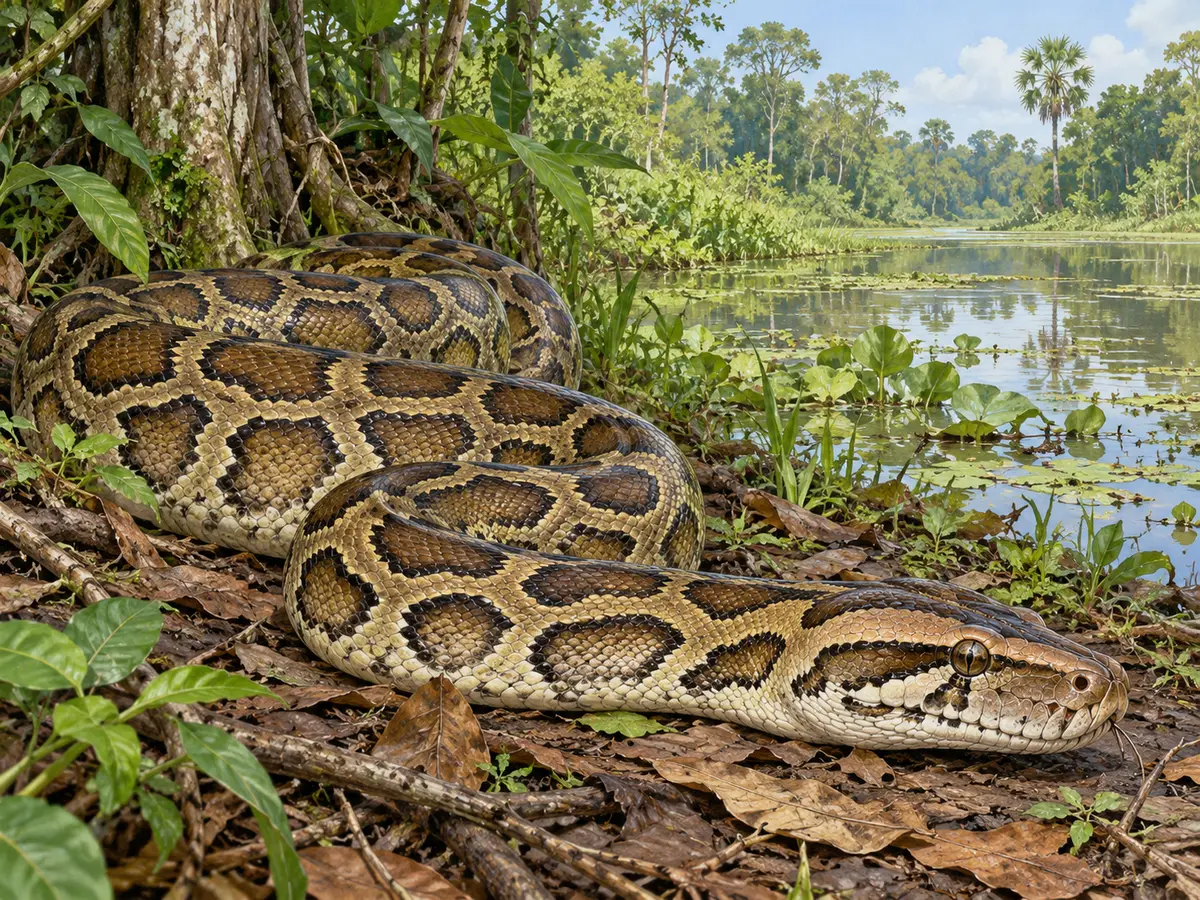
Burmese python
Python bivittatusThe Burmese python is a very large nonvenomous constrictor of South and Southeast Asia. Dark-brown saddle blotches on tan, dark head markings and heat-sensitive pits along the mouth support hunting in forests and wetlands. [1,2]
Open full profile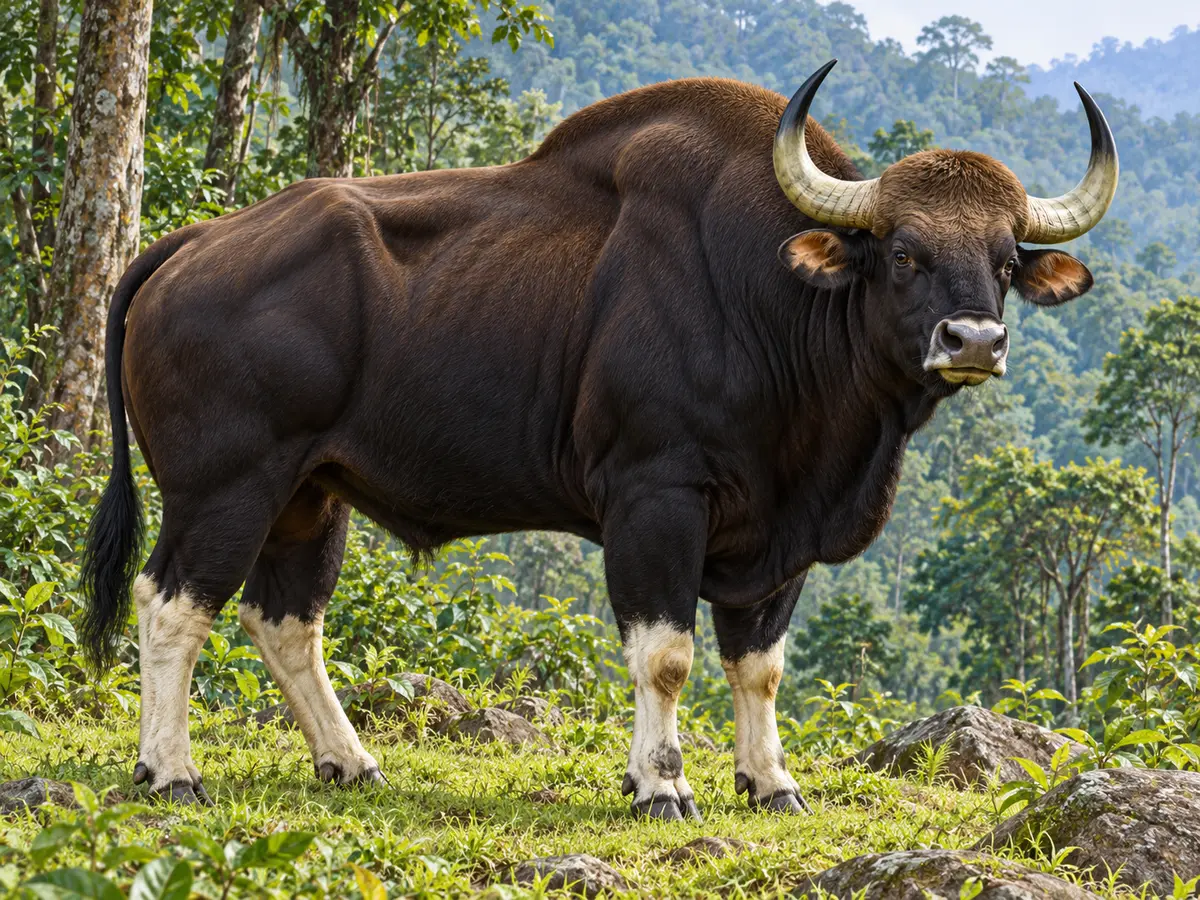
Gaur
Bos gaurusThe gaur is the largest living wild bovine, marked by a massive dark body, high muscular shoulder ridge, curved horns and pale stocking-like lower legs. It depends on South and Southeast Asian forest blocks with forage openings and water. [1–3]
Open full profile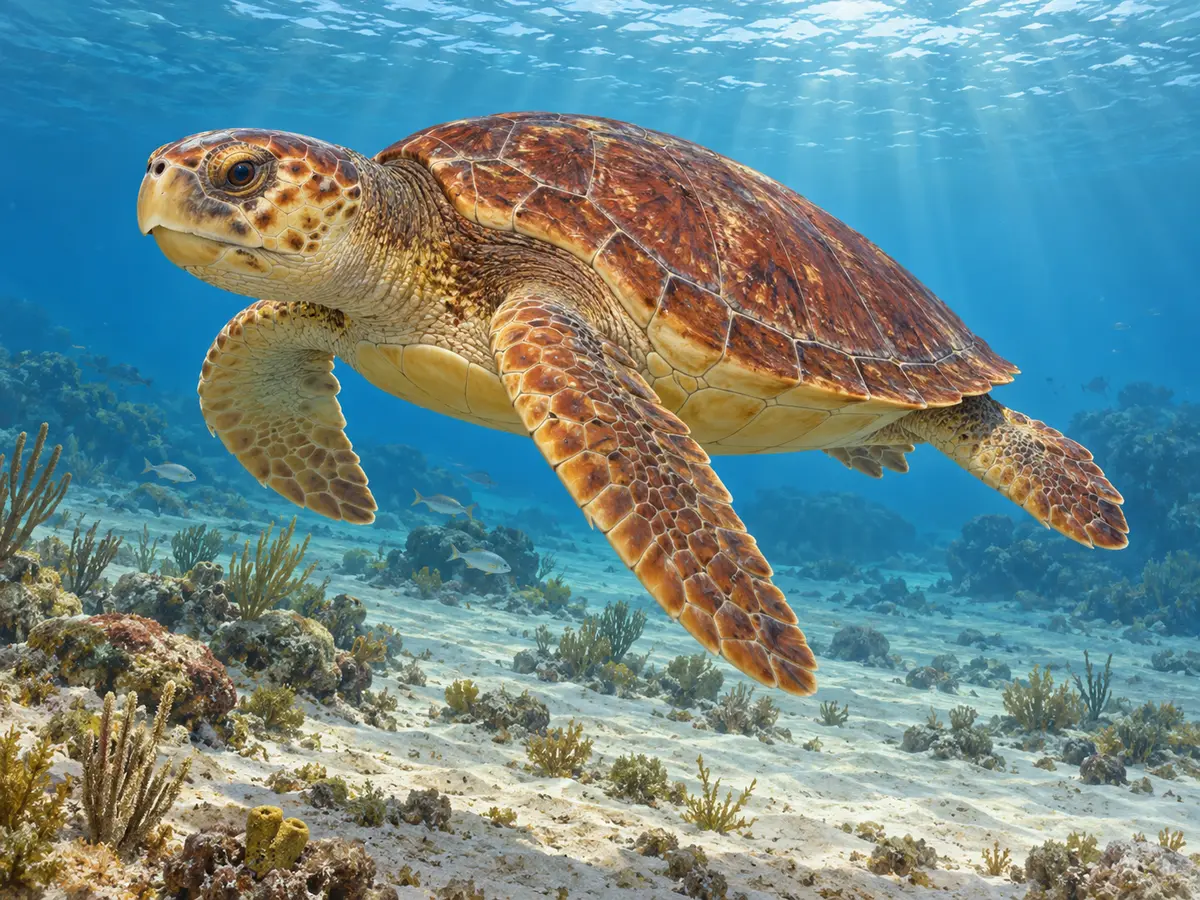
Loggerhead sea turtle
Caretta carettaThe loggerhead has a massive block-like head, powerful jaws and a reddish-brown, slightly heart-shaped shell. It occurs nearly worldwide in warm-temperate and subtropical seas, specialising on hard-shelled benthic prey after spending early years in the open ocean. [1]
Open full profile
Purple-naped lory
Lorius domicellaThe purple-naped lory is a small-range parrot endemic to Indonesia's southern Moluccas. Predominantly red plumage, a purple nape patch and a variable yellow breast band aid identification; a brush-tipped tongue is adapted to nectar and pollen. [1–3]
Open full profile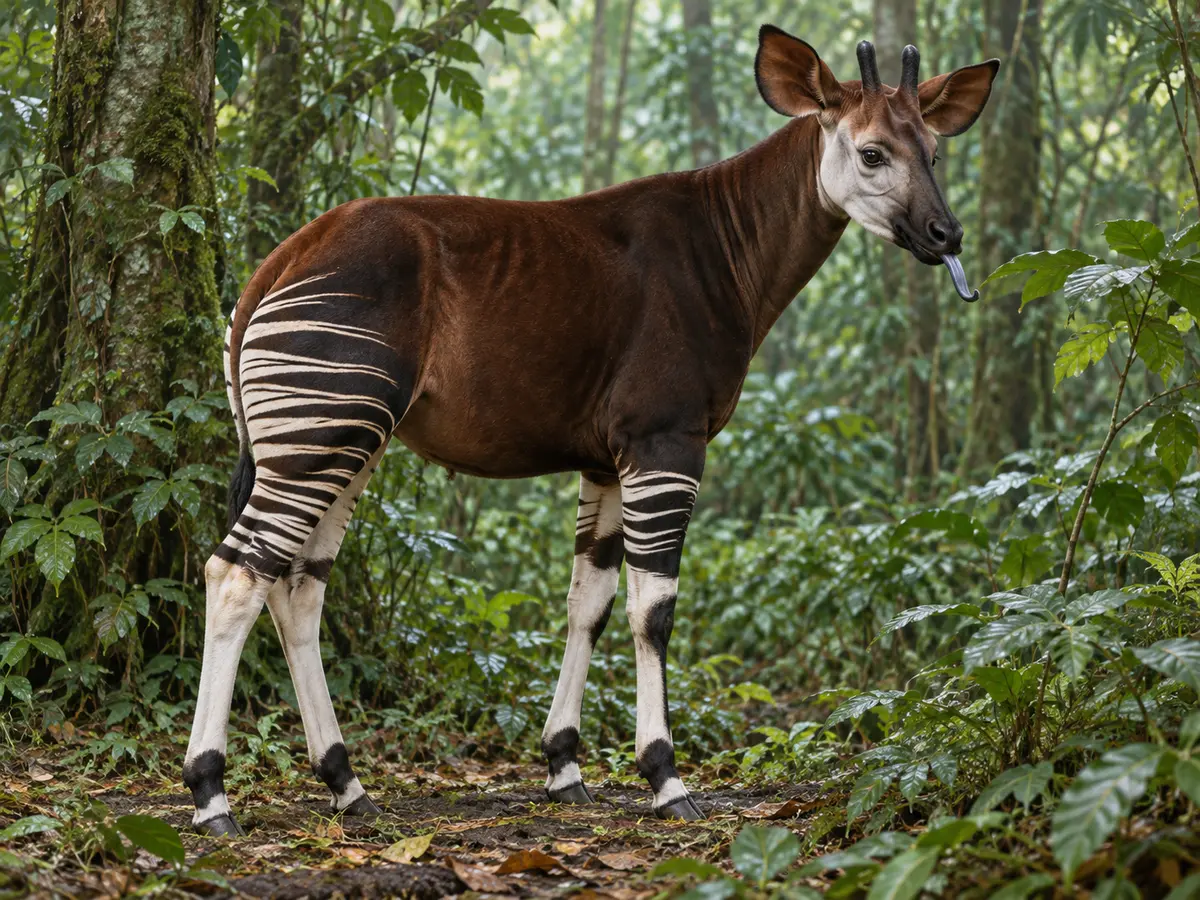
Okapi
Okapia johnstoniThe okapi is the giraffe's closest living relative and is endemic to rainforests of north-eastern Democratic Republic of the Congo. A dark-brown body, black-and-white leg stripes, large ears and a long tongue form a distinctive understory adaptation. [1,2]
Open full profile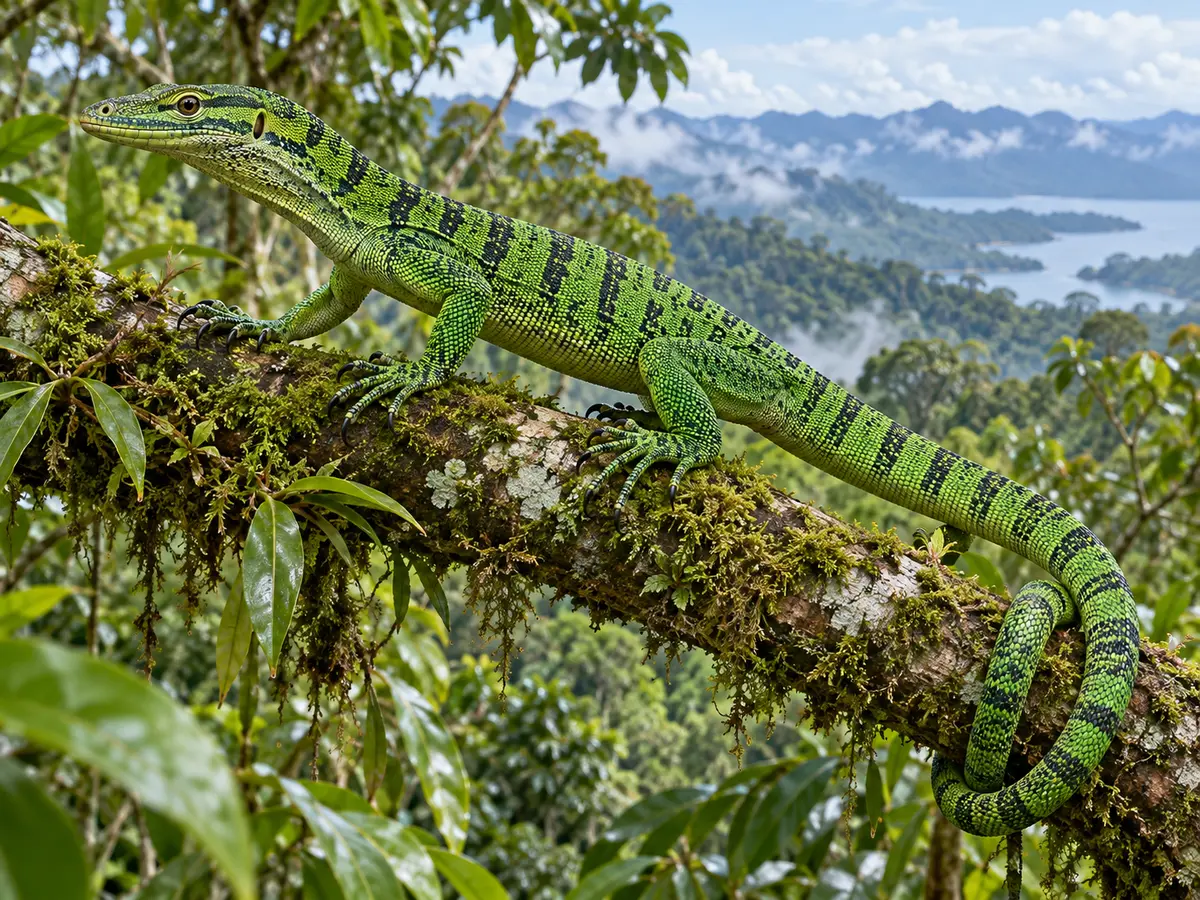
Emerald tree monitor
Varanus prasinusThe emerald tree monitor is a slender arboreal monitor of New Guinea and adjacent islands. Jade-to-lime colour with black bars, long claws and a prehensile tail roughly twice the body length support movement among branches. [1]
Open full profile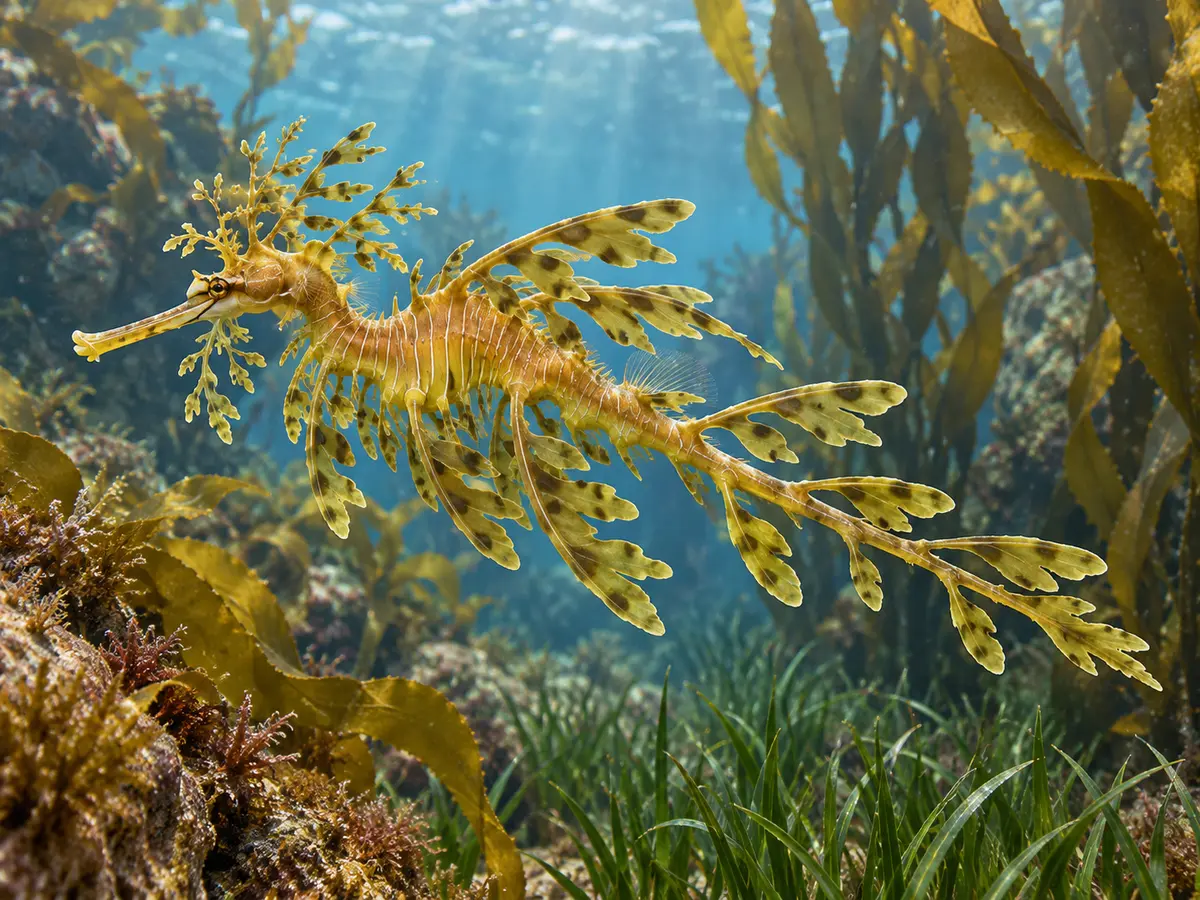
Leafy seadragon
Phycodurus equesThe leafy seadragon is endemic to temperate southern Australian seas. Leaf-like skin lobes provide camouflage among kelp; propulsion comes from nearly transparent dorsal and pectoral fins, not from the 'leaves'. [1,2]
Open full profile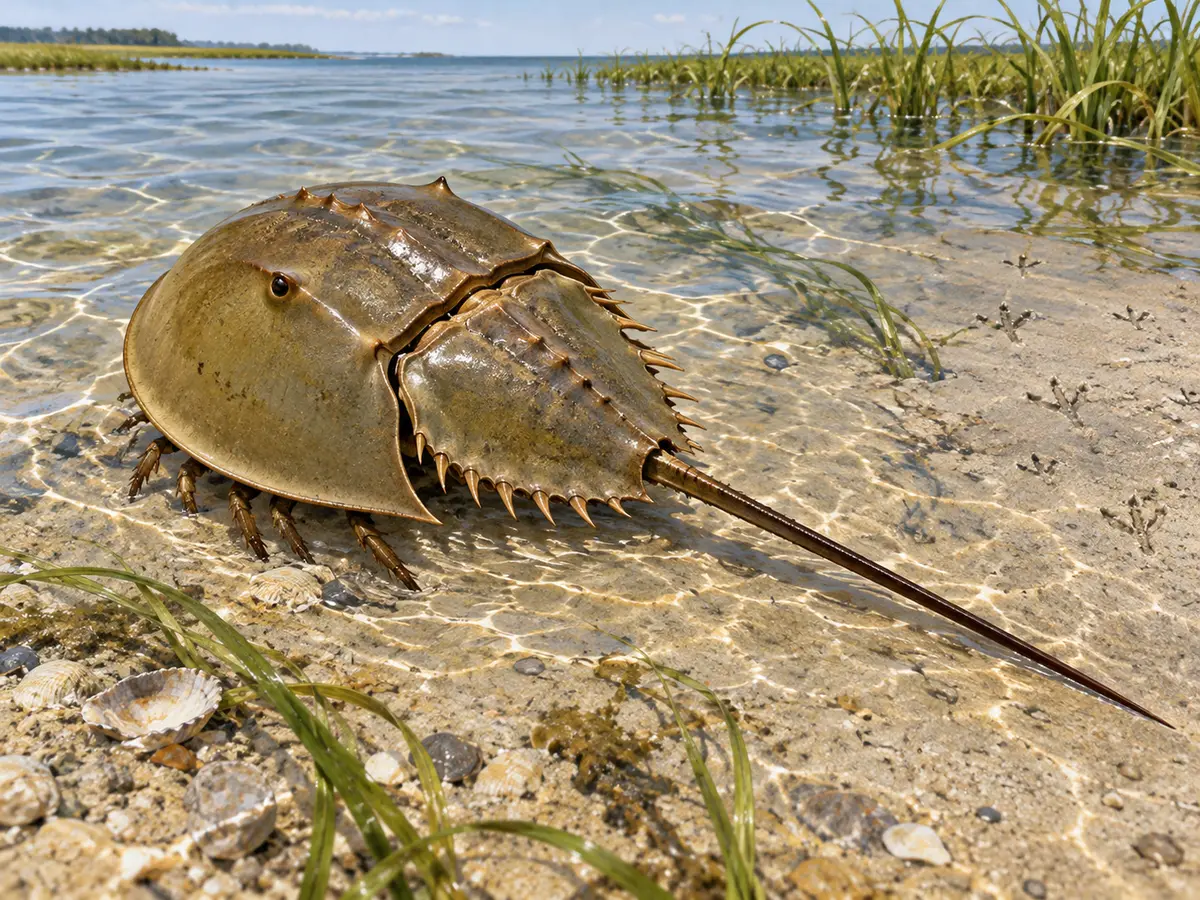
Atlantic horseshoe crab
Limulus polyphemusThe Atlantic horseshoe crab is not a true crab but an arthropod closer to spiders and scorpions. A horseshoe-shaped carapace, spined abdomen and straight tail form a sandy-bottom body plan; its eggs provide vital energy to migratory birds. [1–3]
Open full profile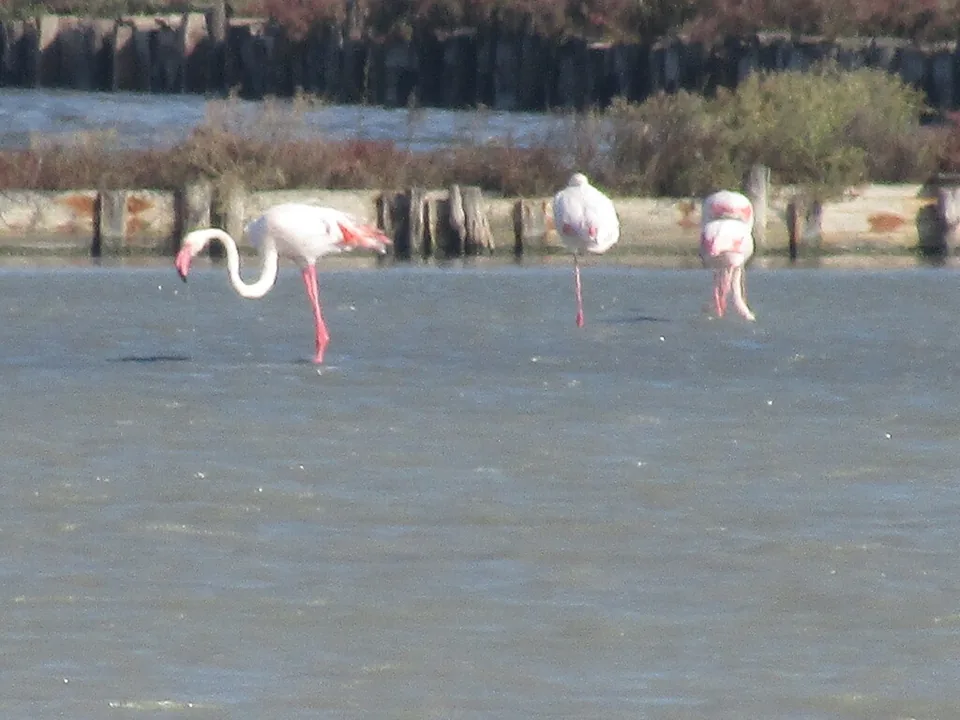
Greater flamingo
Phoenicopterus roseusThe greater flamingo is the most widely distributed flamingo, occupying shallow saline, brackish and alkaline waters from Africa and southern Europe through western and southern Asia. Its down-curved bill, filtering lamellae and pump-like tongue separate small food from water and mud. [1–3]
Open full profile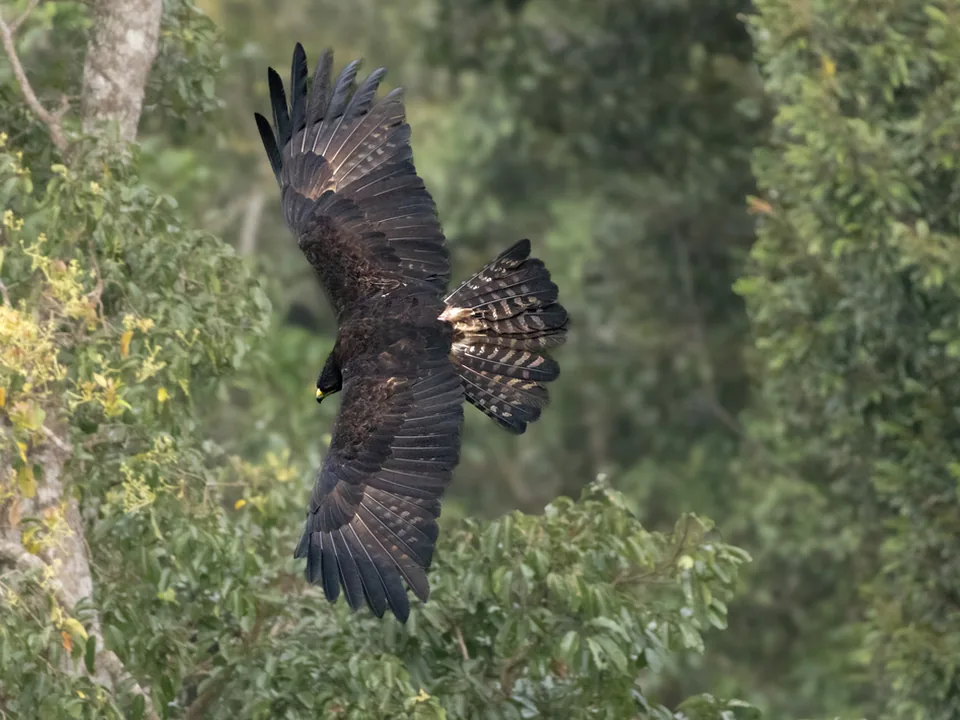
Black eagle
Ictinaetus malaiensisThe black eagle is a dark forest raptor that quarters slowly over the canopy in search of bird nests, squirrels and other small animals. Long wings with deeply spread primary 'fingers', a long tail and yellow feet aid identification in flight. [1–3]
Open full profile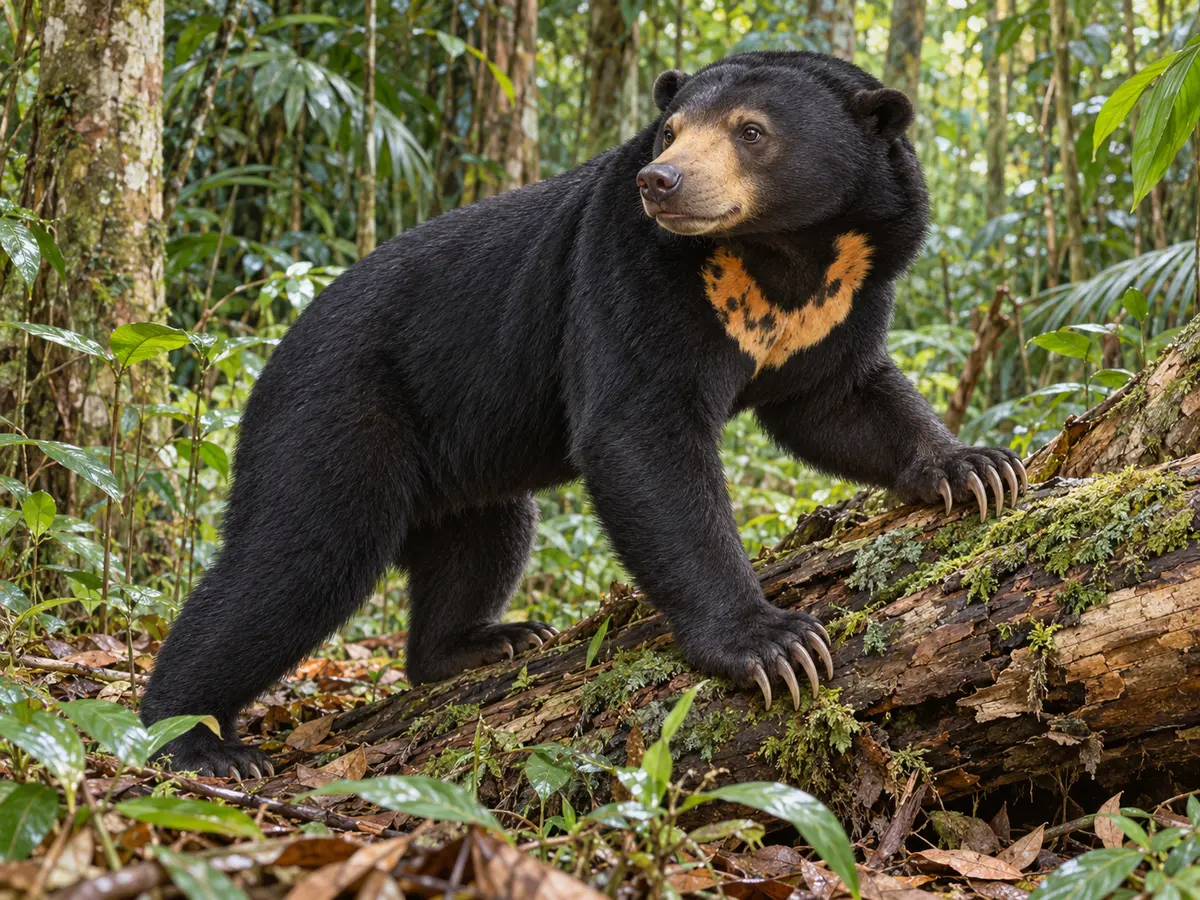
Sun bear
Helarctos malayanusThe sun bear is the smallest living bear and a skilled climber of South-East Asian tropical forests. A pale muzzle, small ears, long curved claws, broad bare-soled paws and an individually variable yellow-orange chest patch are key features. [1–3]
Open full profile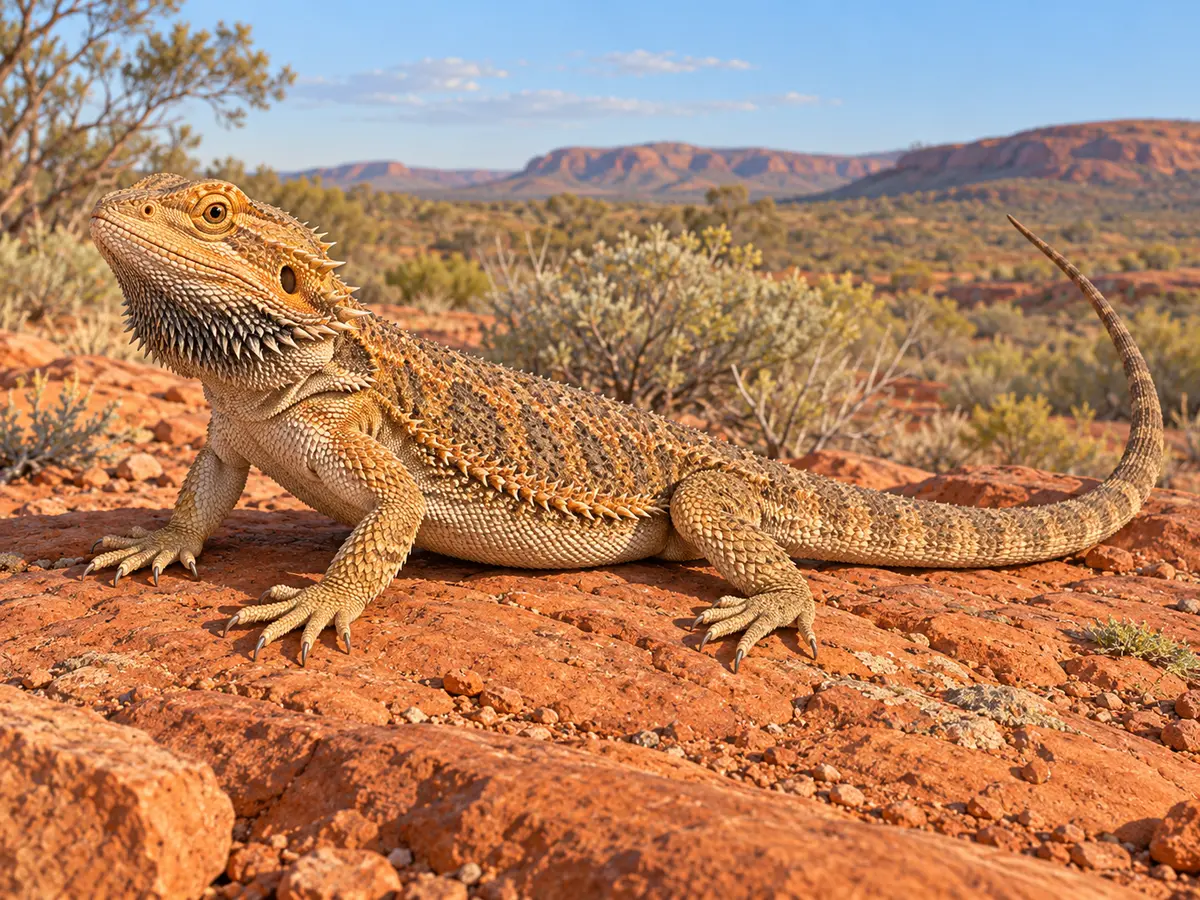
Central bearded dragon
Pogona vitticepsThe central bearded dragon is a diurnal lizard of Australia's dry interior, with a triangular head, flattened body, flexible spines and a throat that expands and darkens into a 'beard'. It uses both the ground and elevated trunks, posts or stumps as lookouts. [1–3]
Open full profile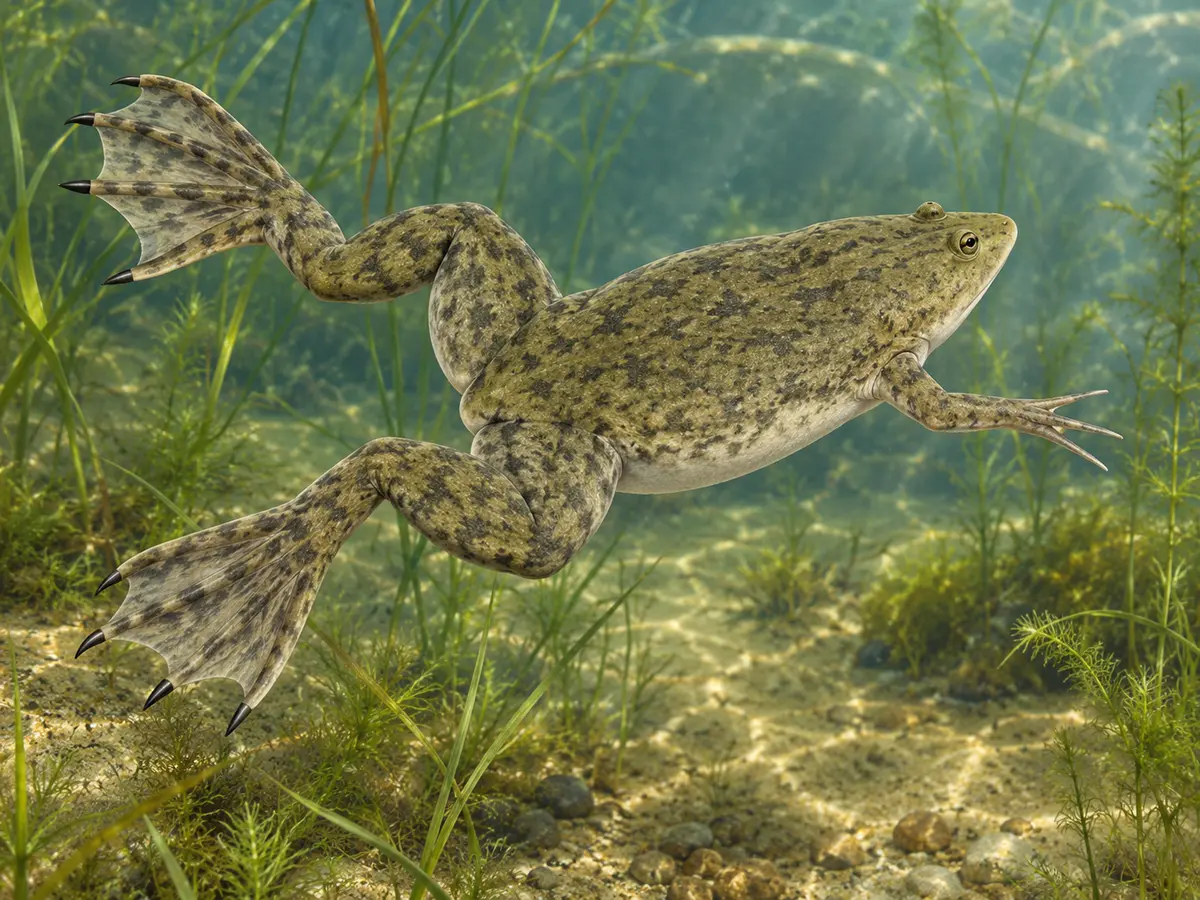
African clawed frog
Xenopus laevisThe African clawed frog is fully aquatic, with a flattened body, upward-facing eyes, webbed hind feet and black claws on three toes. It lacks a projectile tongue and external eardrum, using suction and the forefeet to push food into the mouth. [1–3]
Open full profile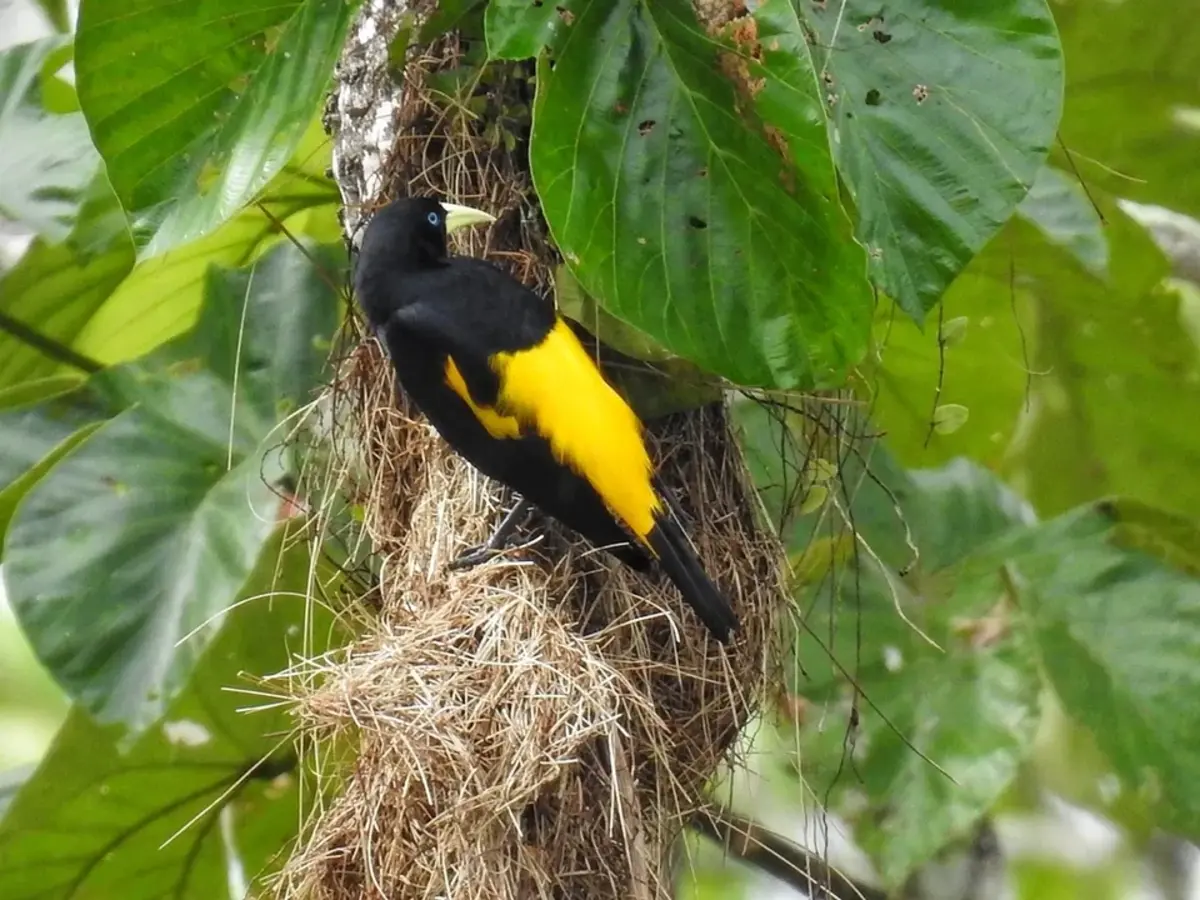
Yellow-rumped cacique
Cacicus celaThe yellow-rumped cacique is a colonial Neotropical bird with black plumage, yellow wing and rump patches, pale blue eyes and a greenish-yellow bill. Long hanging pouch nests and colony-specific songs define much of its social ecology. [1,2]
Open full profile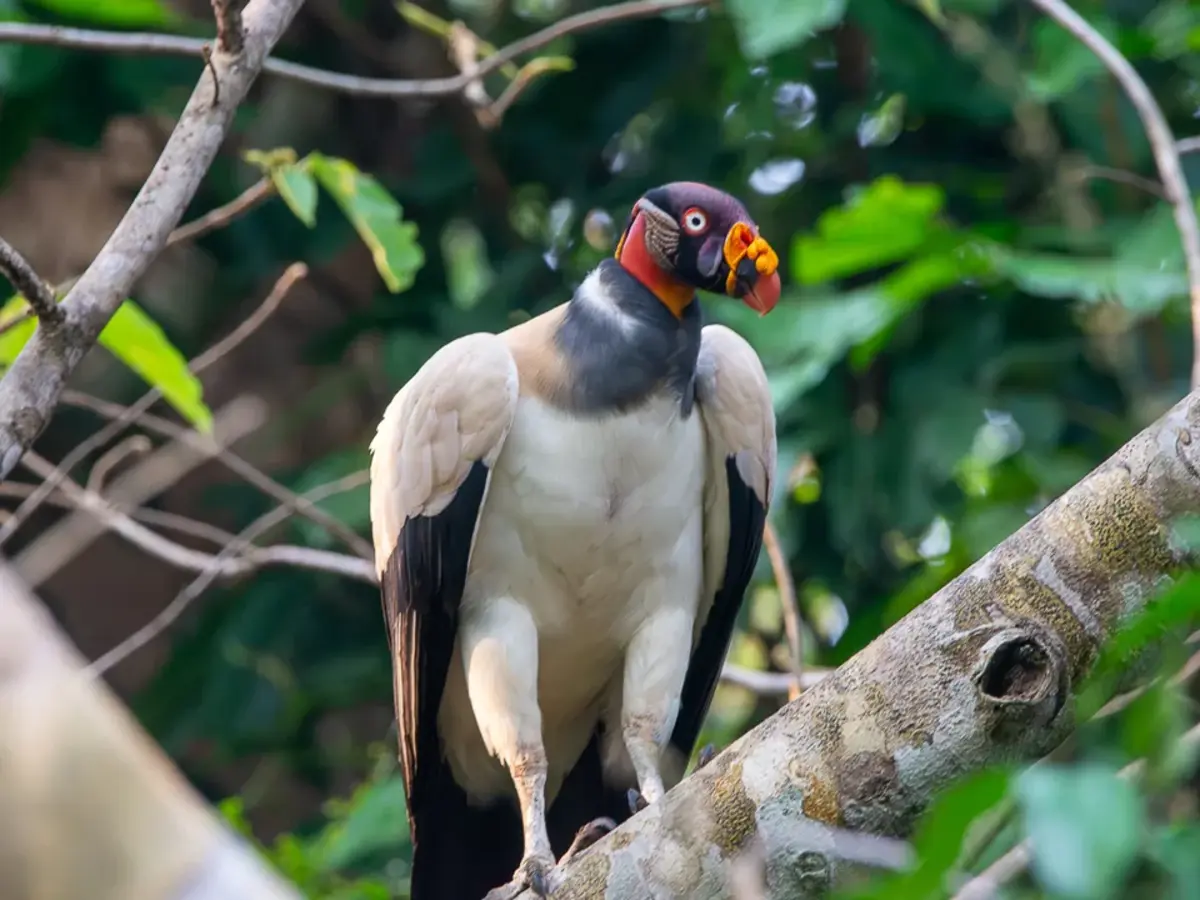
King vulture
Sarcoramphus papaThe king vulture is a large Neotropical forest scavenger with a white body, black flight feathers and a multicoloured bare head bearing a fleshy caruncle. Its strong bill opens tougher parts of carcasses, giving smaller scavengers access to food. [1,2]
Open full profile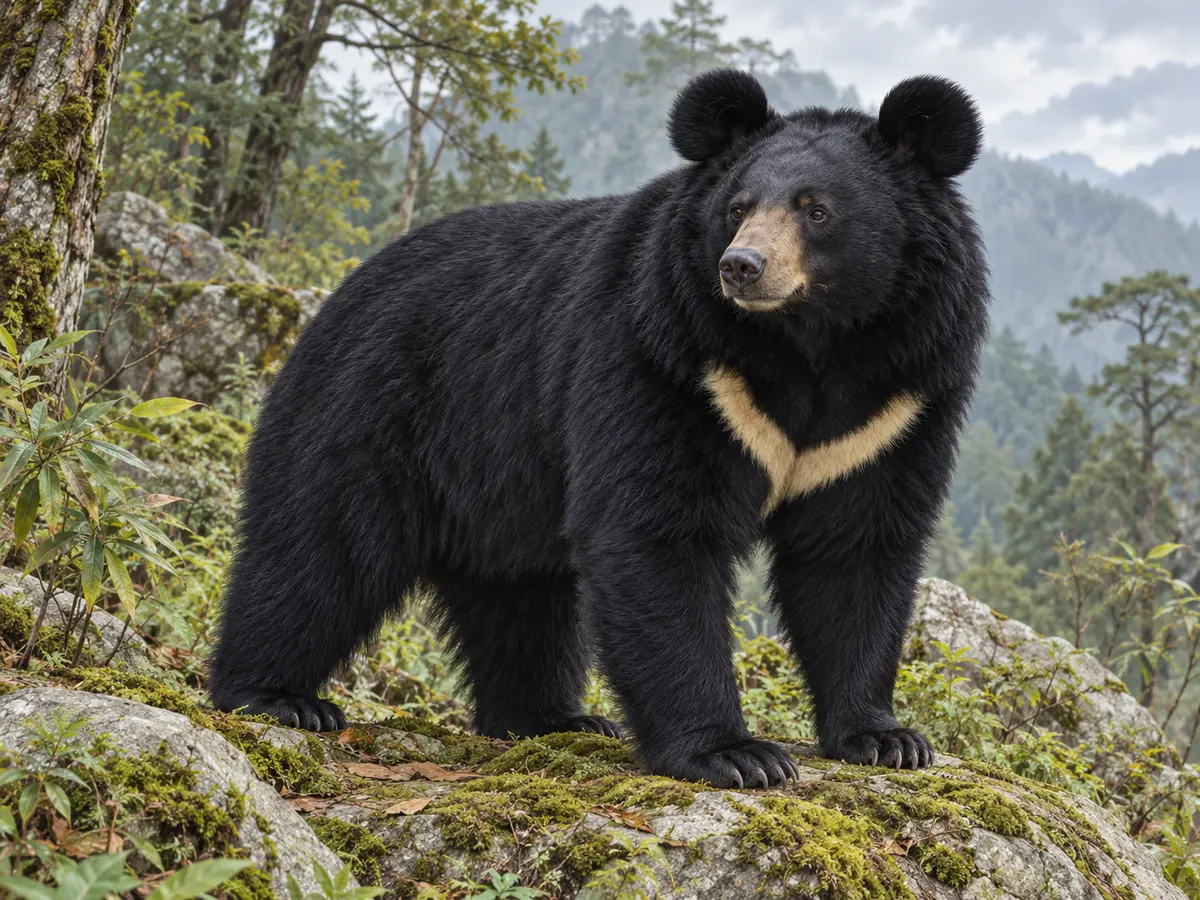
Asiatic black bear
Ursus thibetanusThe Asiatic black bear is an Asian forest bear with black fur, a pale muzzle, large rounded ears and a cream-white chest patch often shaped like a crescent. Although in Carnivora, its seasonal diet relies heavily on fruit, nuts, shoots and other plant material. [1,2]
Open full profile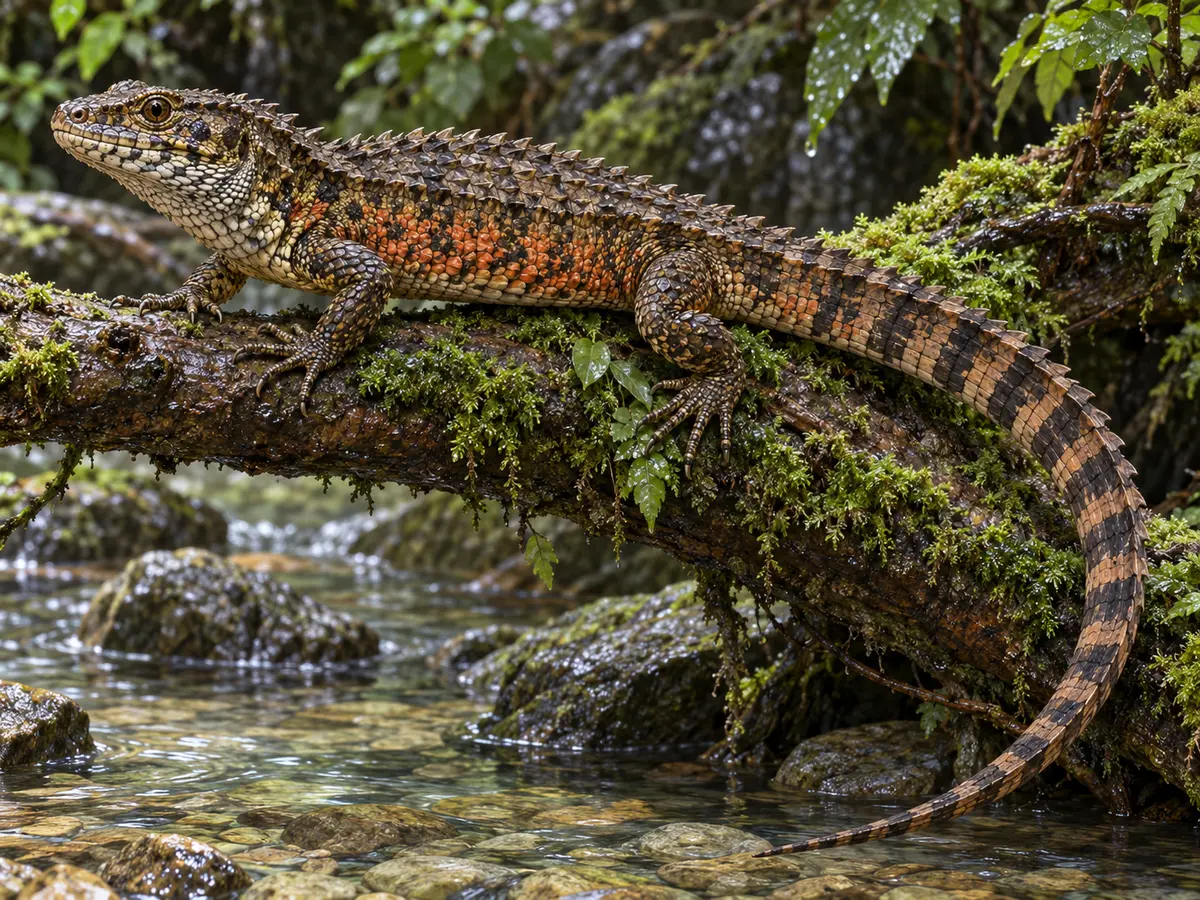
Chinese crocodile lizard
Shinisaurus crocodilurusThe Chinese crocodile lizard is a rare semiaquatic reptile of forest streams in southern China and northeastern Vietnam. Two rigid scale rows along the tail give a crocodilian appearance; the species depends closely on cool, slow water and dense streamside vegetation. [1,2]
Open full profile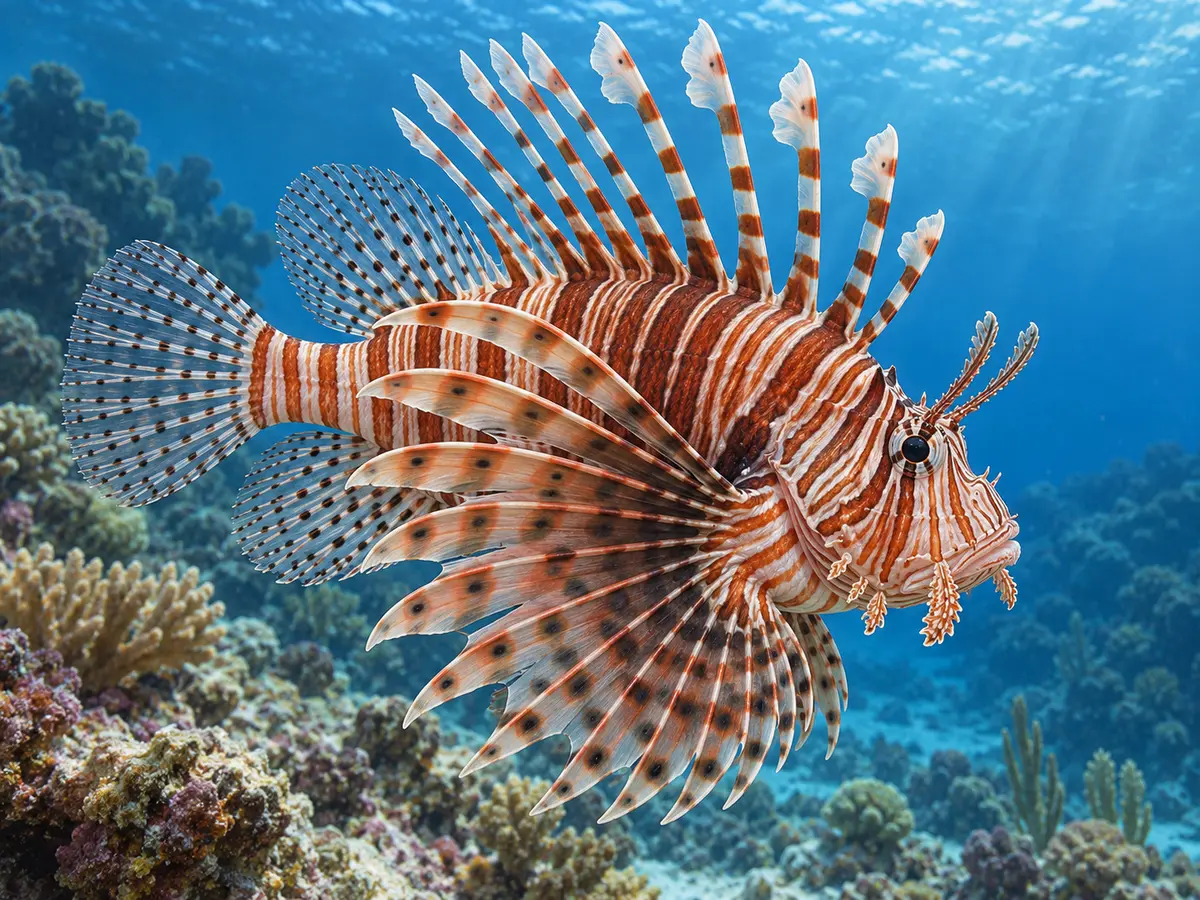
Red lionfish
Pterois volitansThe red lionfish is an Indo-Pacific reef fish with red-brown and white bands, broad fan-like pectoral fins and venomous spines. Its appearance made it popular in aquaria, while introduced western Atlantic populations became powerful invasive predators. [1–3]
Open full profile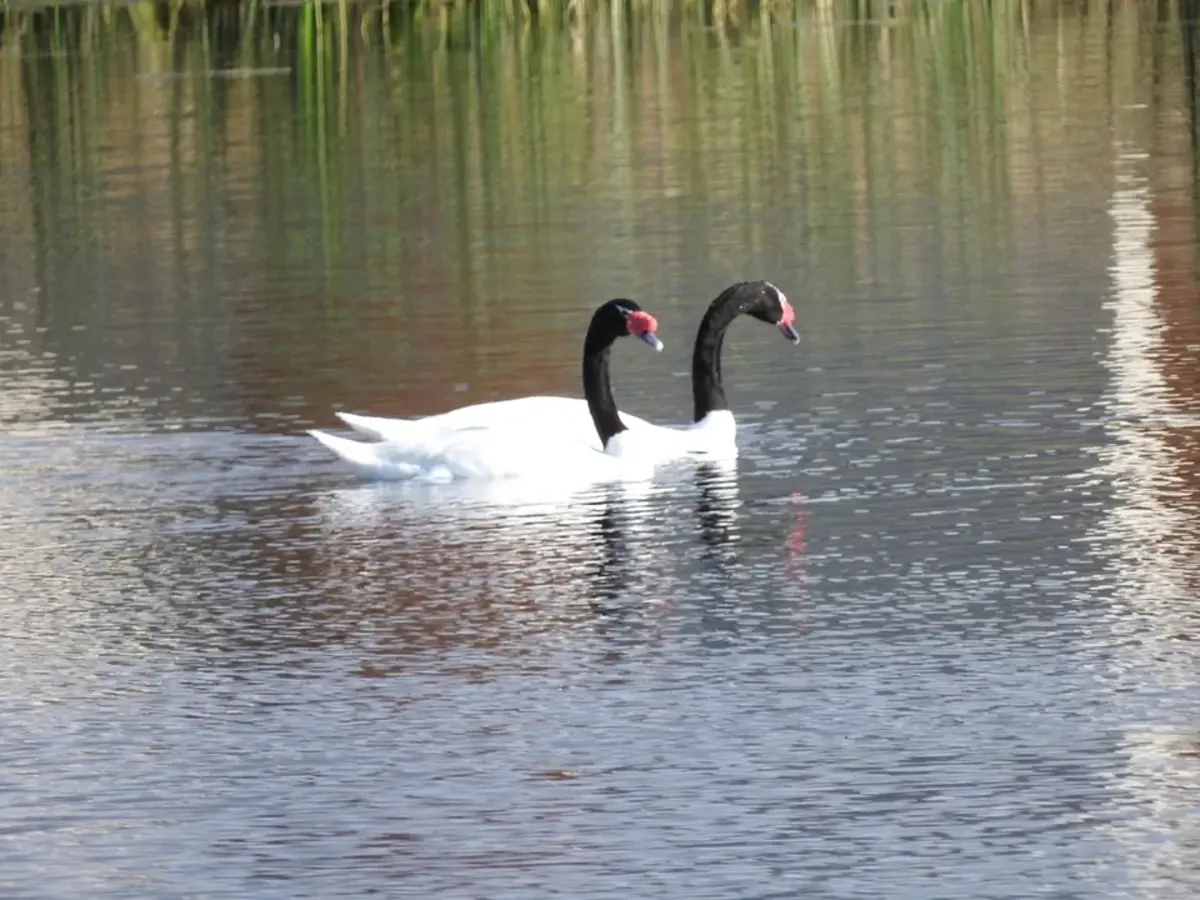
Black-necked swan
Cygnus melancoryphusThe black-necked swan is a South American swan with a white body, velvety black head and neck, and a red caruncle at the bill base. It depends on lakes, marshes, estuaries and shallow water rich in aquatic plants; parents may carry cygnets on their backs. [1,2]
Open full profile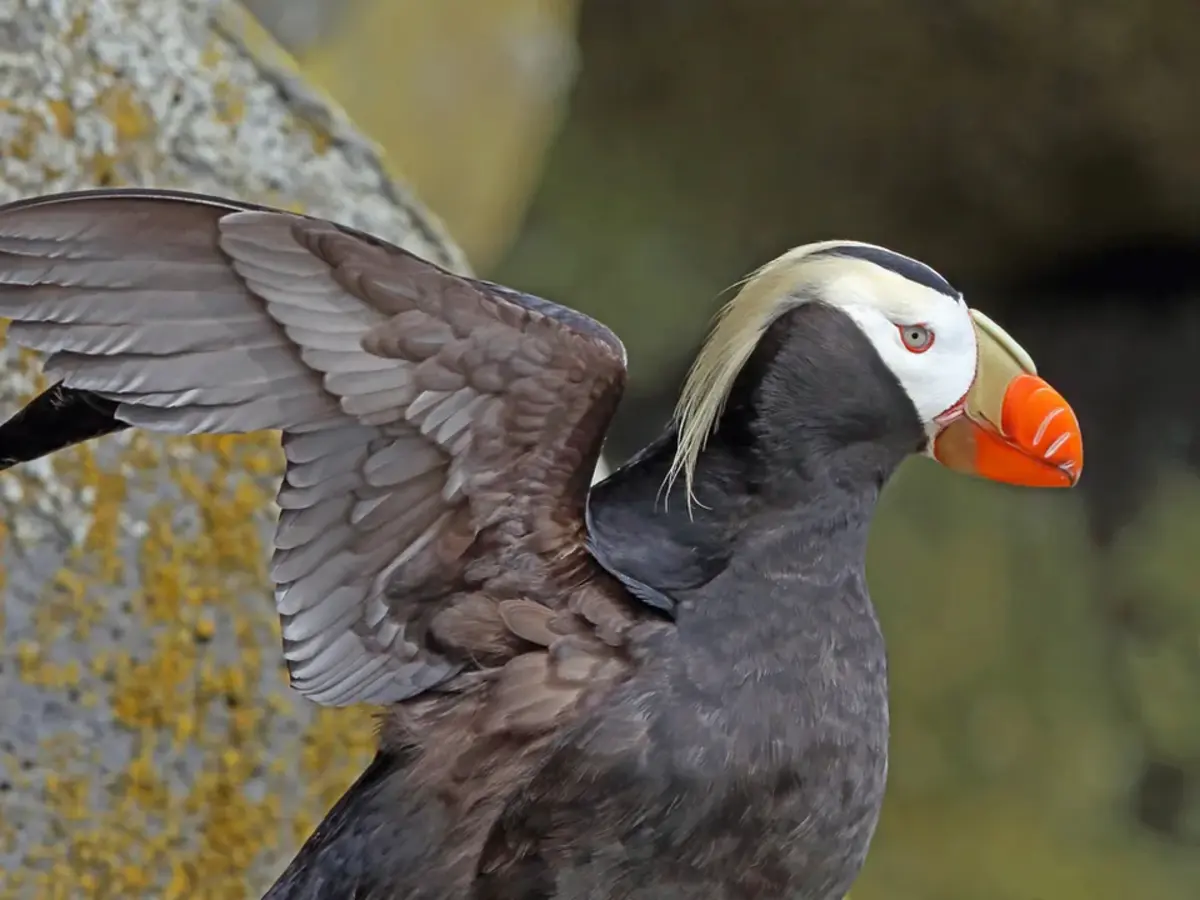
Tufted puffin
Fratercula cirrhataThe tufted puffin is a North Pacific seabird recognised in breeding season by two long golden head plumes, a white face and a large red-orange bill. It spends most of the year at sea, using its wings as underwater paddles to pursue prey and coming ashore to breed. [1–3]
Open full profile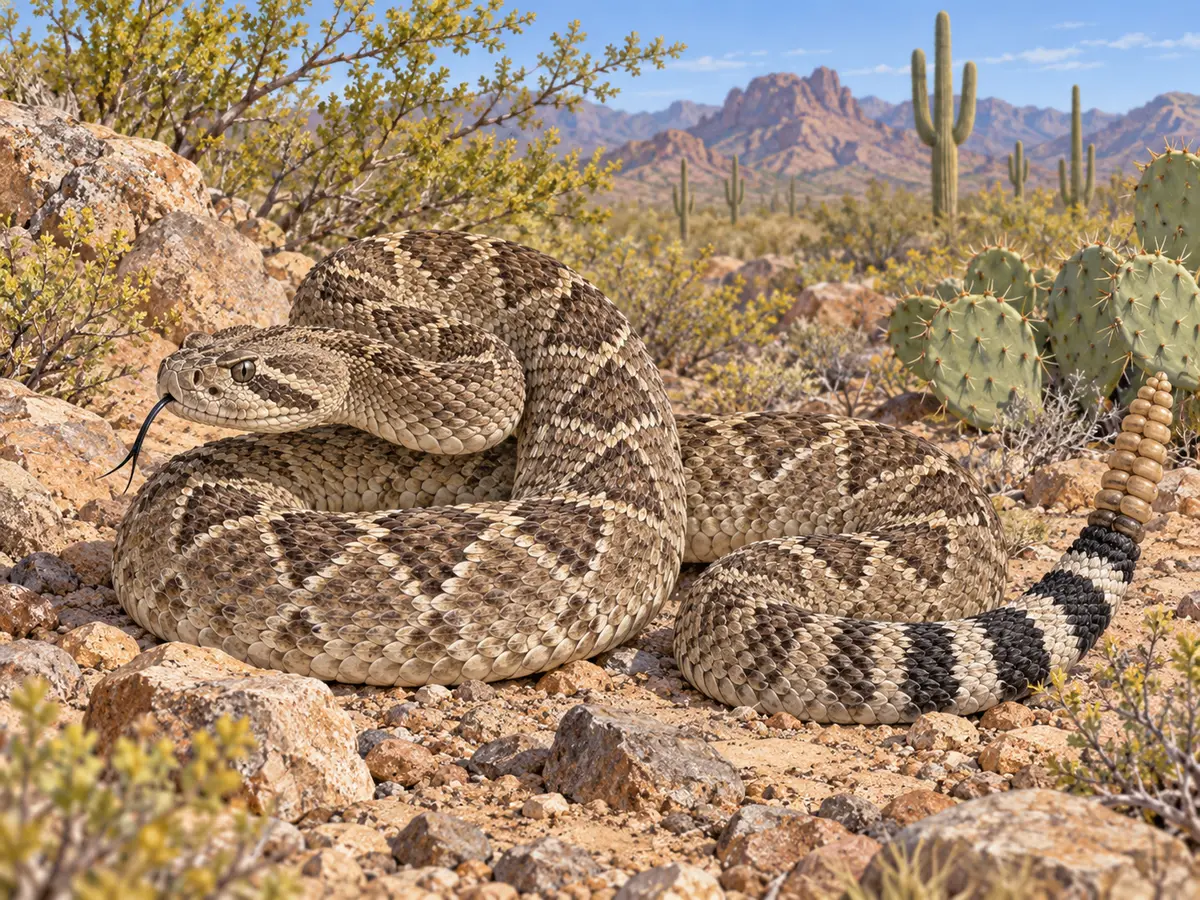
Western diamondback rattlesnake
Crotalus atroxThe western diamondback is a venomous pit viper of the southwestern United States and northern to central Mexico. Dorsal diamonds, black-and-white tail bands before the rattle and a heat-sensing pit between eye and nostril are key traits; rattling is defensive communication, not human-hunting behaviour. [1,2]
Open full profile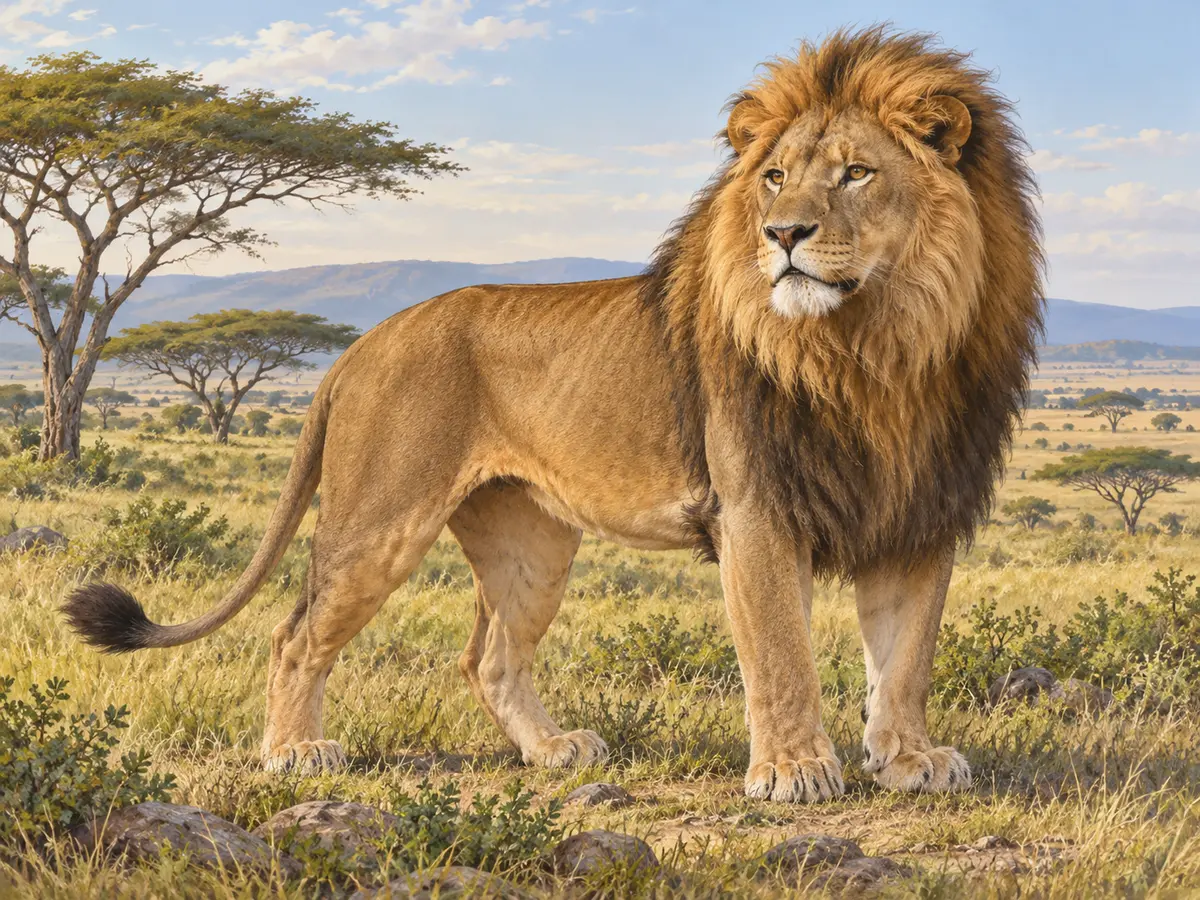
Lion
Panthera leoThe lion is an unusually social big cat: prides contain related females, young and one or more resident males. Most remaining populations occur in sub-Saharan Africa, with a small Asian population in the Gir landscape of India. [1–3]
Open full profile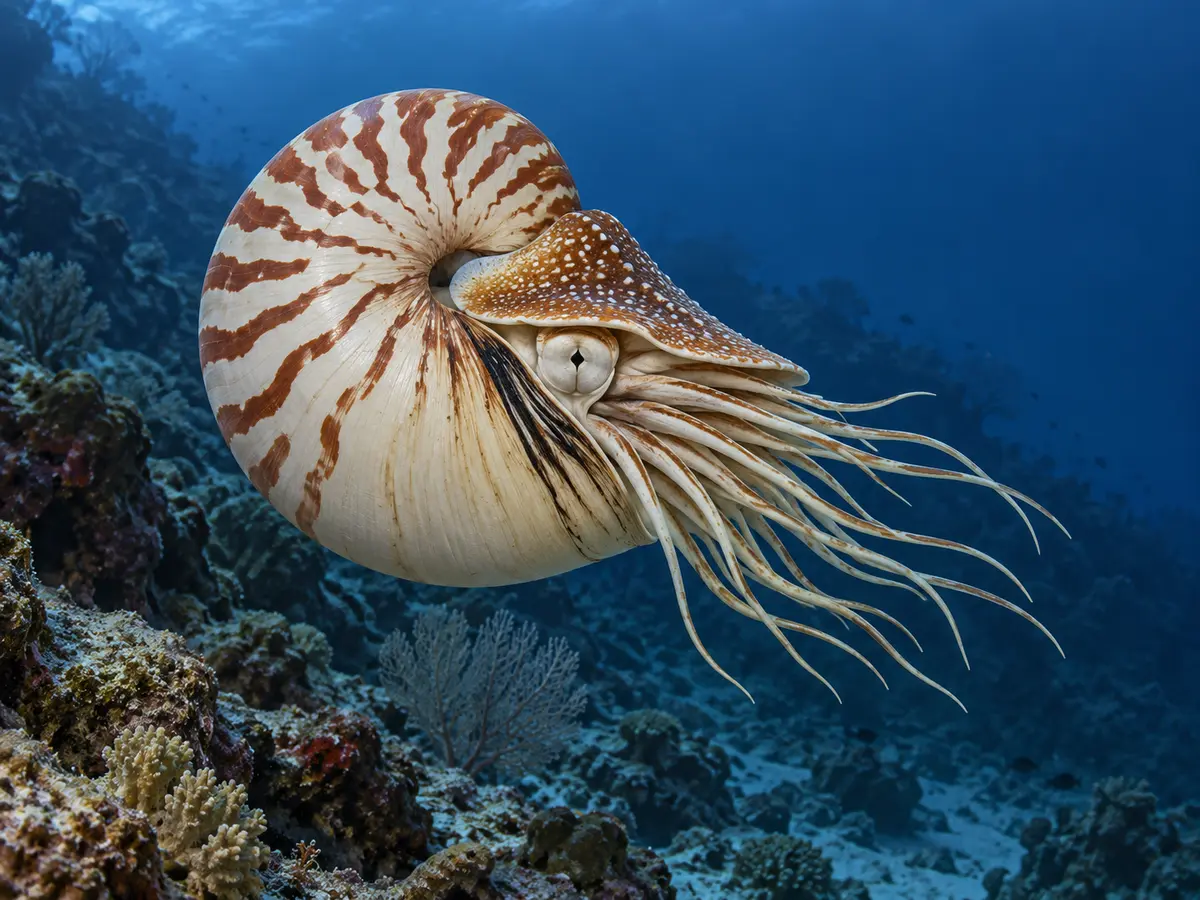
Chambered nautilus
Nautilus pompiliusThe chambered nautilus is a cephalopod with an external coiled shell divided into chambers, while the body occupies only the outermost chamber. It regulates buoyancy with water and gas, jets through a funnel and searches for food using more than 90 suckerless tentacles. [1–3]
Open full profile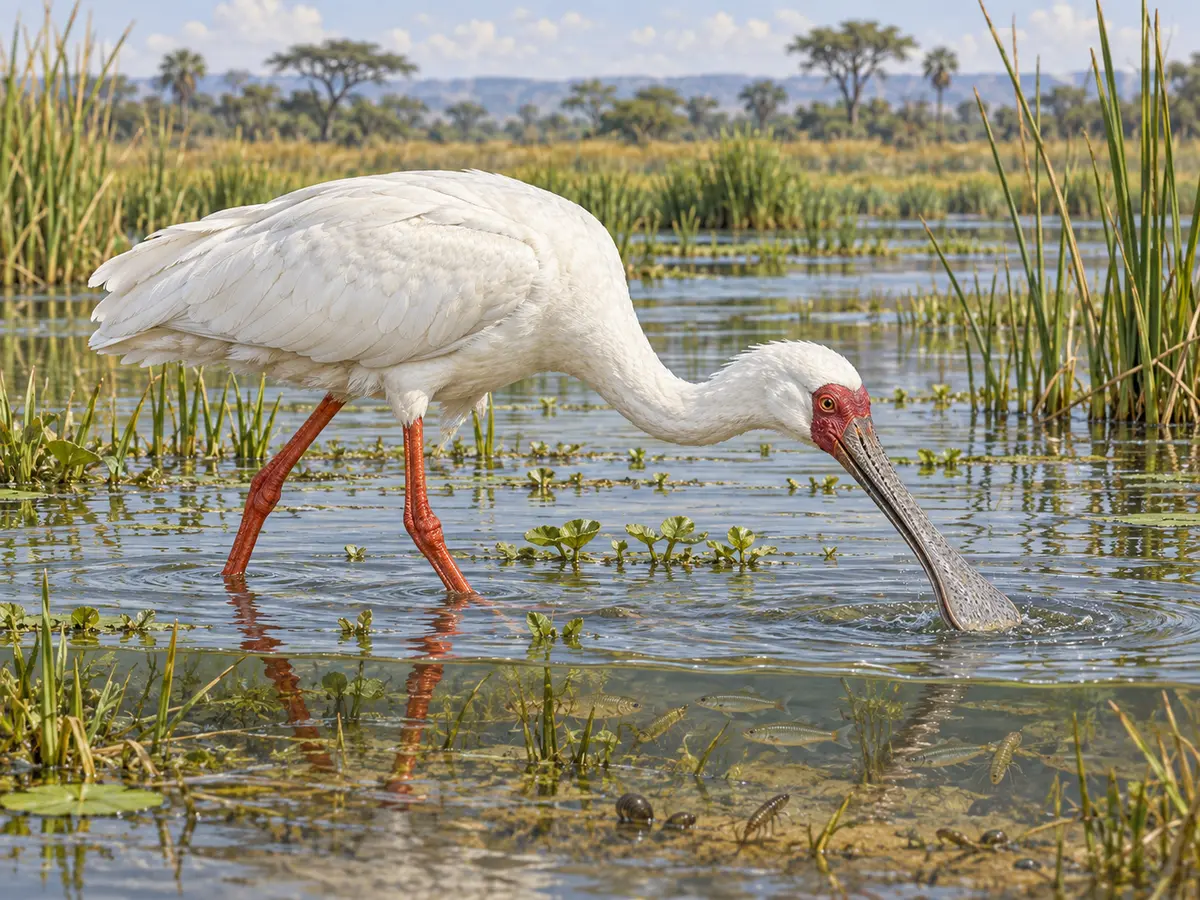
African spoonbill
Platalea albaThe African spoonbill is a white waterbird with red legs and facial skin and a flattened bill expanded into a spoon-shaped tip. It sweeps that bill sideways through shallow water for fish and invertebrates, and often feeds and breeds colonially in sub-Saharan wetlands. [1–4]
Open full profile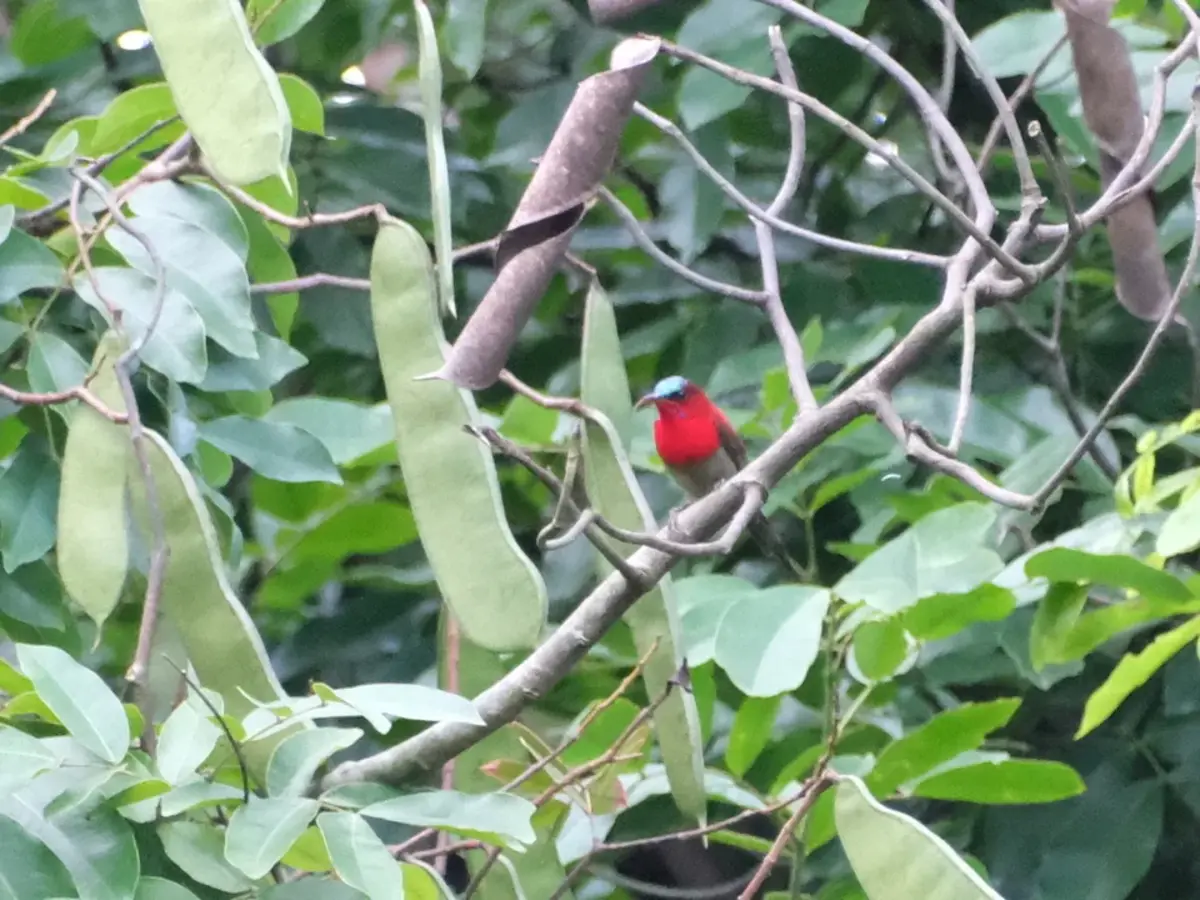
Crimson sunbird
Aethopyga siparajaThe crimson sunbird is a small South and Southeast Asian sunbird. Males have brilliant red upperparts and breast, an iridescent blue crown and moustachial stripe, and a dark grey belly; females are subdued olive-yellow. The curved bill reaches nectar, but insects and spiders remain important prey. [1–3]
Open full profile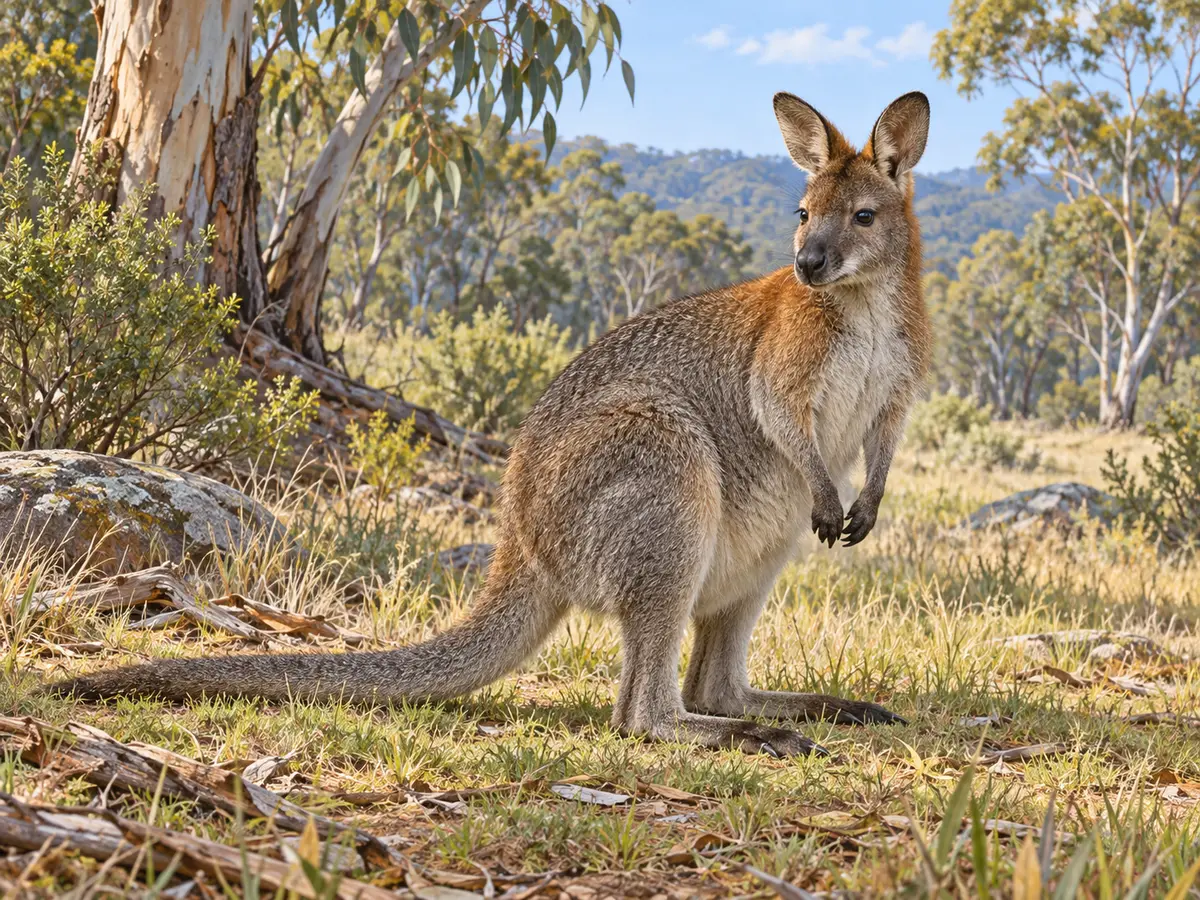
Red-necked wallaby
Notamacropus rufogriseusThe red-necked wallaby is a medium-sized marsupial of eastern Australia and Tasmania, recognised by grey-brown fur, reddish shoulders and nape, and dark muzzle and feet. It shelters in dense cover by day and feeds more actively at dusk, night and early morning. [1–3]
Open full profile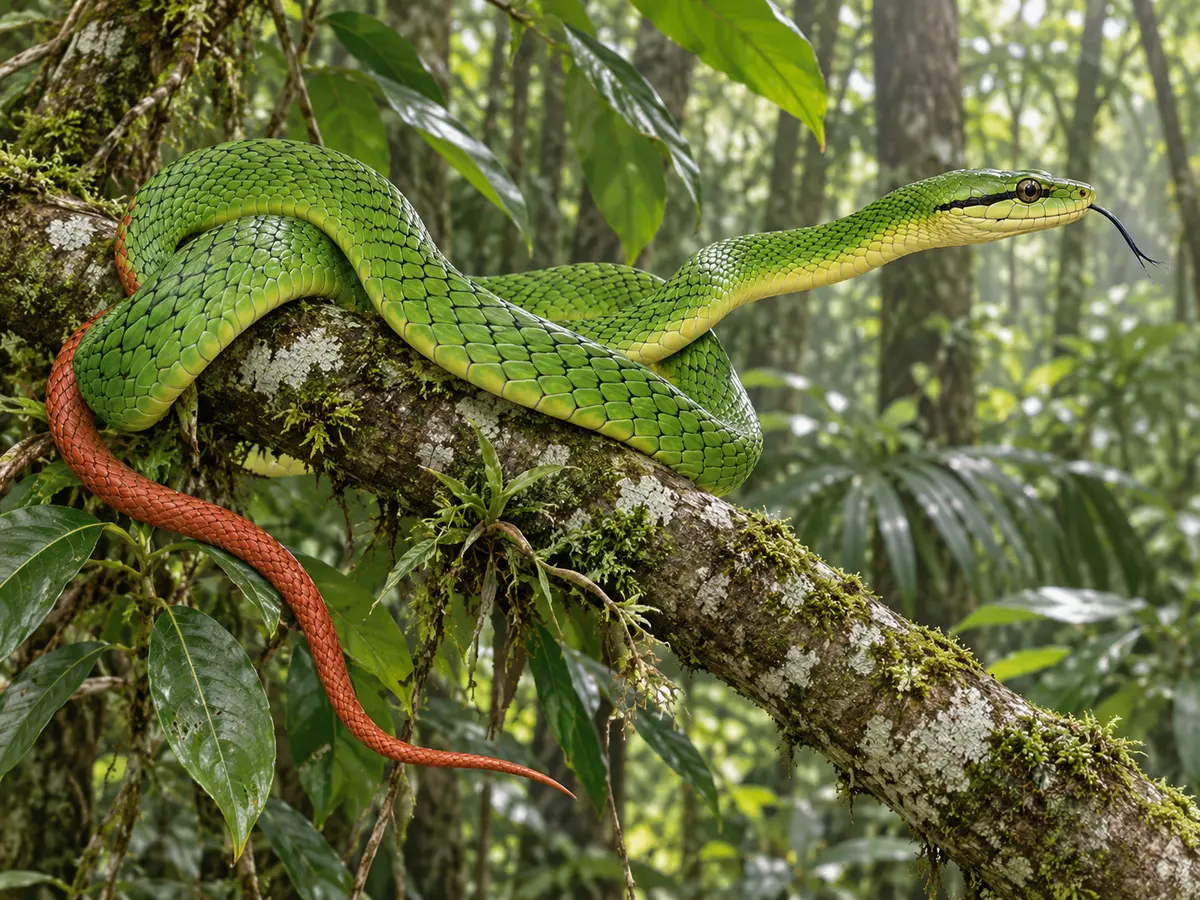
Red-tailed green ratsnake
Gonyosoma oxycephalumThe red-tailed green ratsnake is a non-venomous arboreal snake of Southeast Asia, with a long slender green body, pointed head and distinctive reddish-brown tail. It is diurnal, climbs well and subdues birds, small mammals and other vertebrates by constriction. [1–4]
Open full profile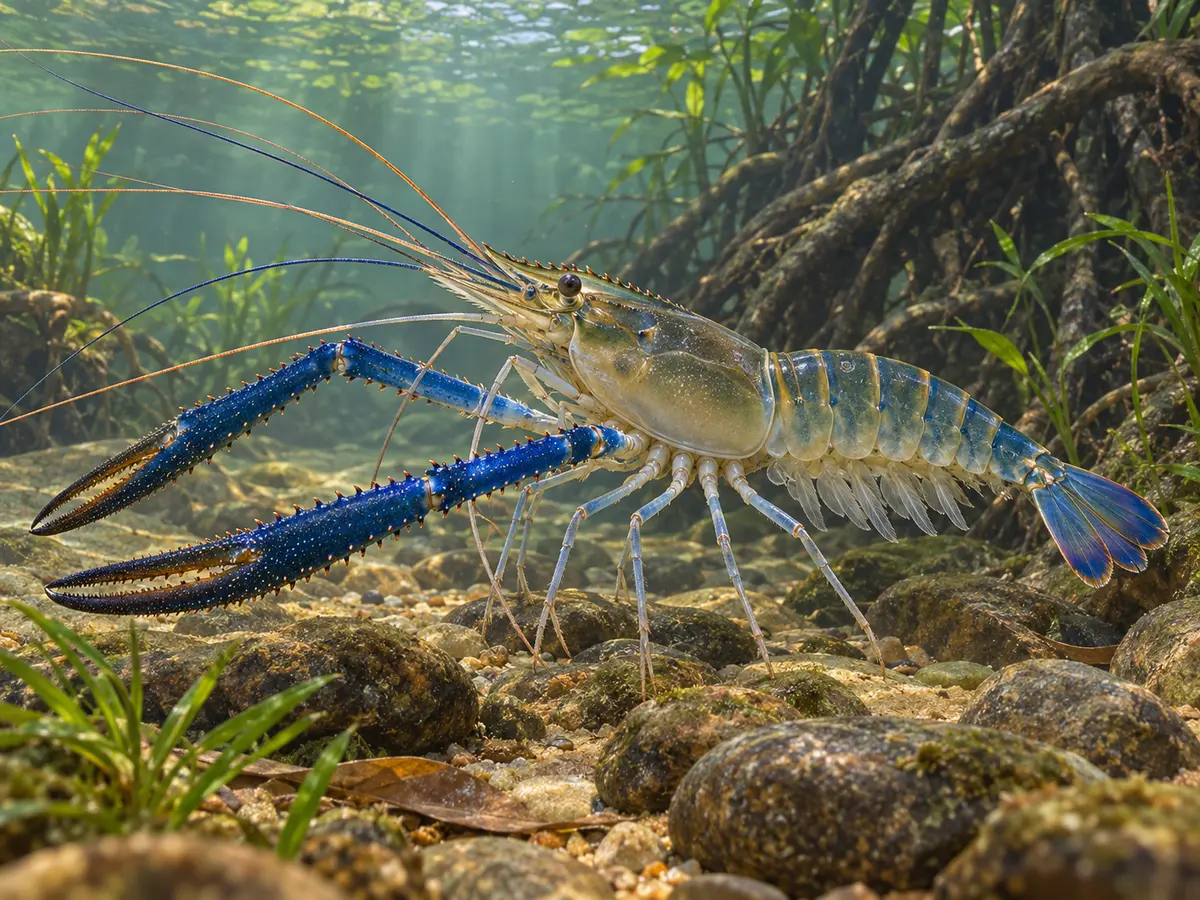
Giant river prawn
Macrobrachium rosenbergiiThe giant river prawn is a large decapod native to South and Southeast Asia and northern Oceania. Adults live mainly in fresh water but larvae require brackish water. Its high aquaculture value and river-to-estuary life cycle make water quality, disease control and escape prevention especially important. [1–4]
Open full profile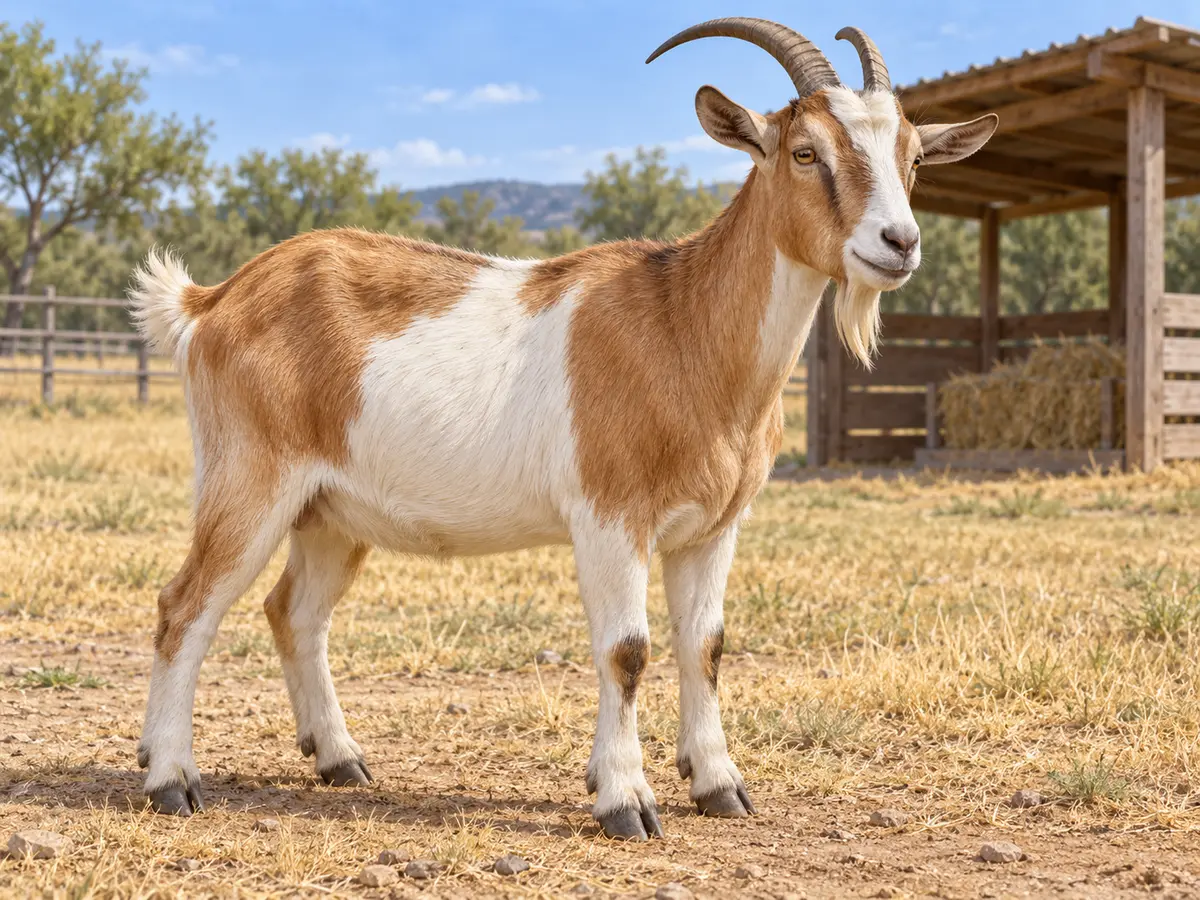
Domestic goat
Capra aegagrus hircusDomestic goats are ruminants selected for milk, meat, fibre and adaptation to many husbandry systems. More than 200 breeds are recognised, so coat, size, ears, horns and production traits vary widely; data from one breed do not represent the whole taxon. [1–3]
Open full profile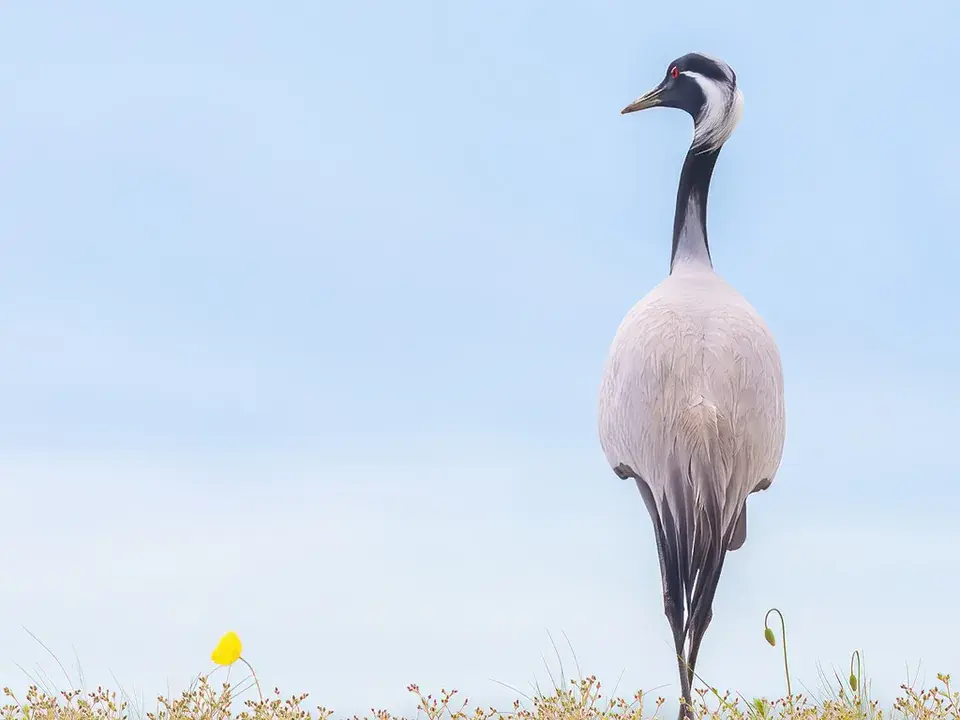
Demoiselle crane
Anthropoides virgoThe smallest crane, breeding across open Eurasian steppe and plateaus before migrating to northeastern Africa, Pakistan and the Indian subcontinent. Its fully feathered head, white post-eye plumes and long black breast feathers are distinctive. [1–3]
Open full profile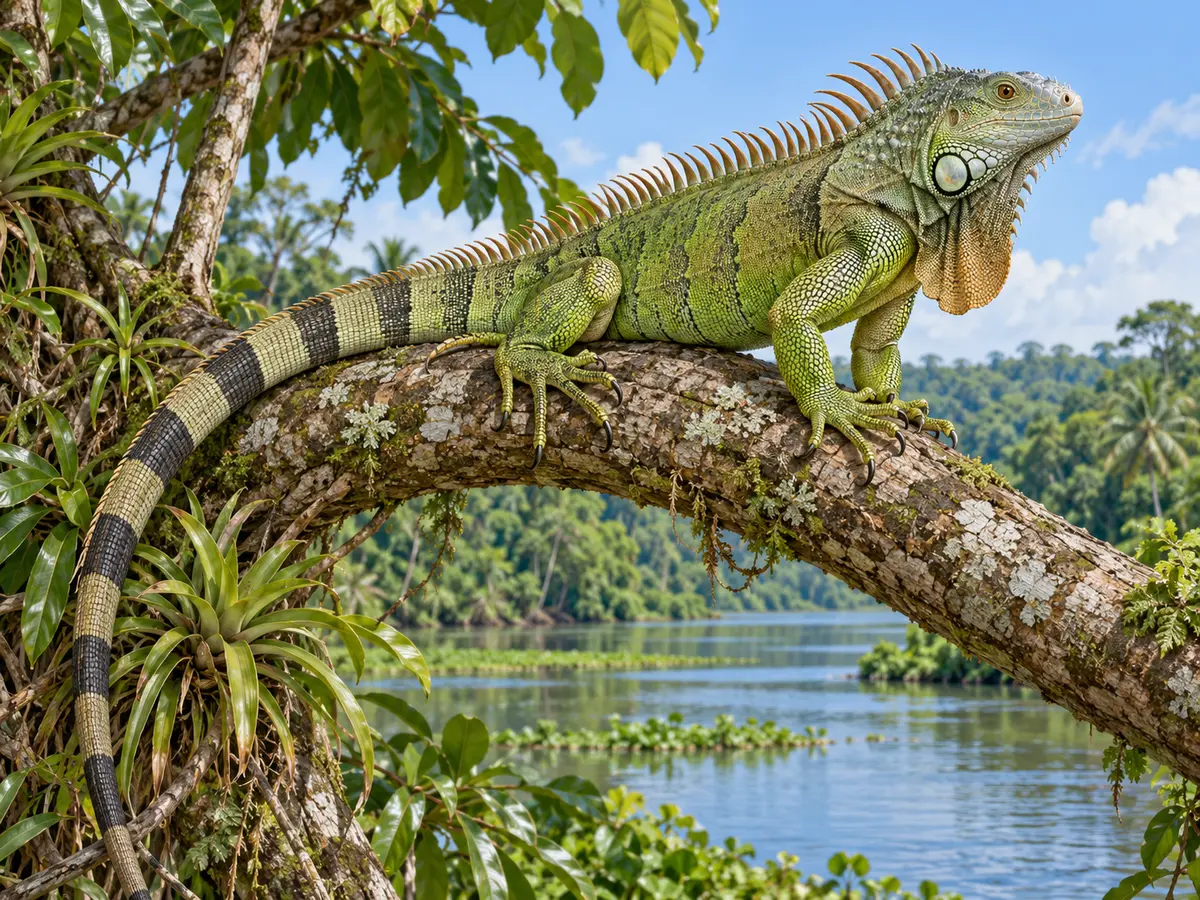
Green iguana
Iguana iguanaA large arboreal iguana of tropical America, with a dorsal spine crest, broad dewlap and very long tail. It is primarily herbivorous, basks in the canopy and swims well; many non-native populations arose from released or escaped animals. [1–4]
Open full profile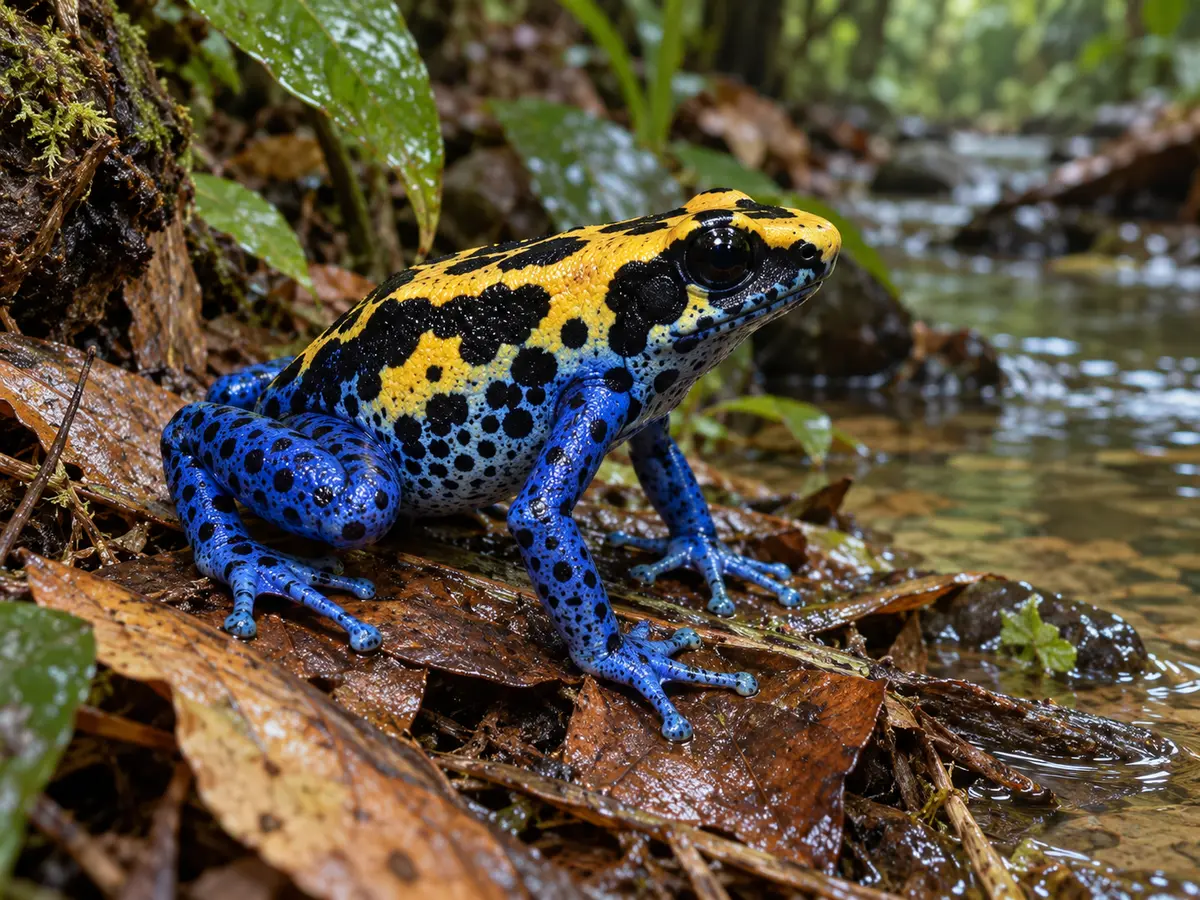
Dyeing poison frog
Dendrobates tinctoriusA diurnal frog of the eastern Guiana Shield, renowned for highly variable warning patterns in yellow, blue, white and black. Field research finds it concentrated around treefall gaps, with unusual parental care: males carry tadpoles to small water-filled tree cavities. [1–3]
Open full profile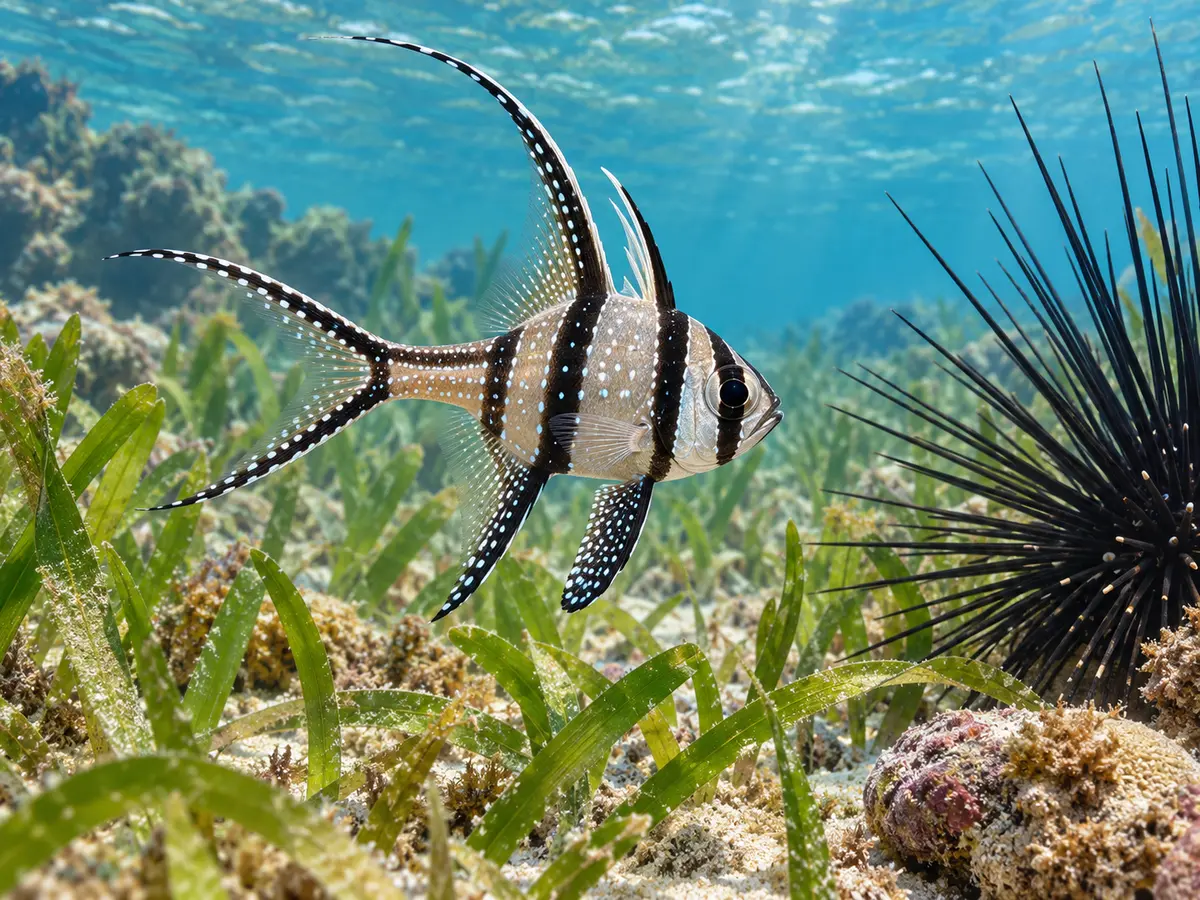
Banggai cardinalfish
Pterapogon kauderniA small marine fish endemic to Indonesia's Banggai Archipelago, recognised by three black bars, white spots and elongated fin rays. A narrow native range, low mobility and aquarium demand make populations sensitive to harvest; males mouth-brood the eggs. [1–4]
Open full profile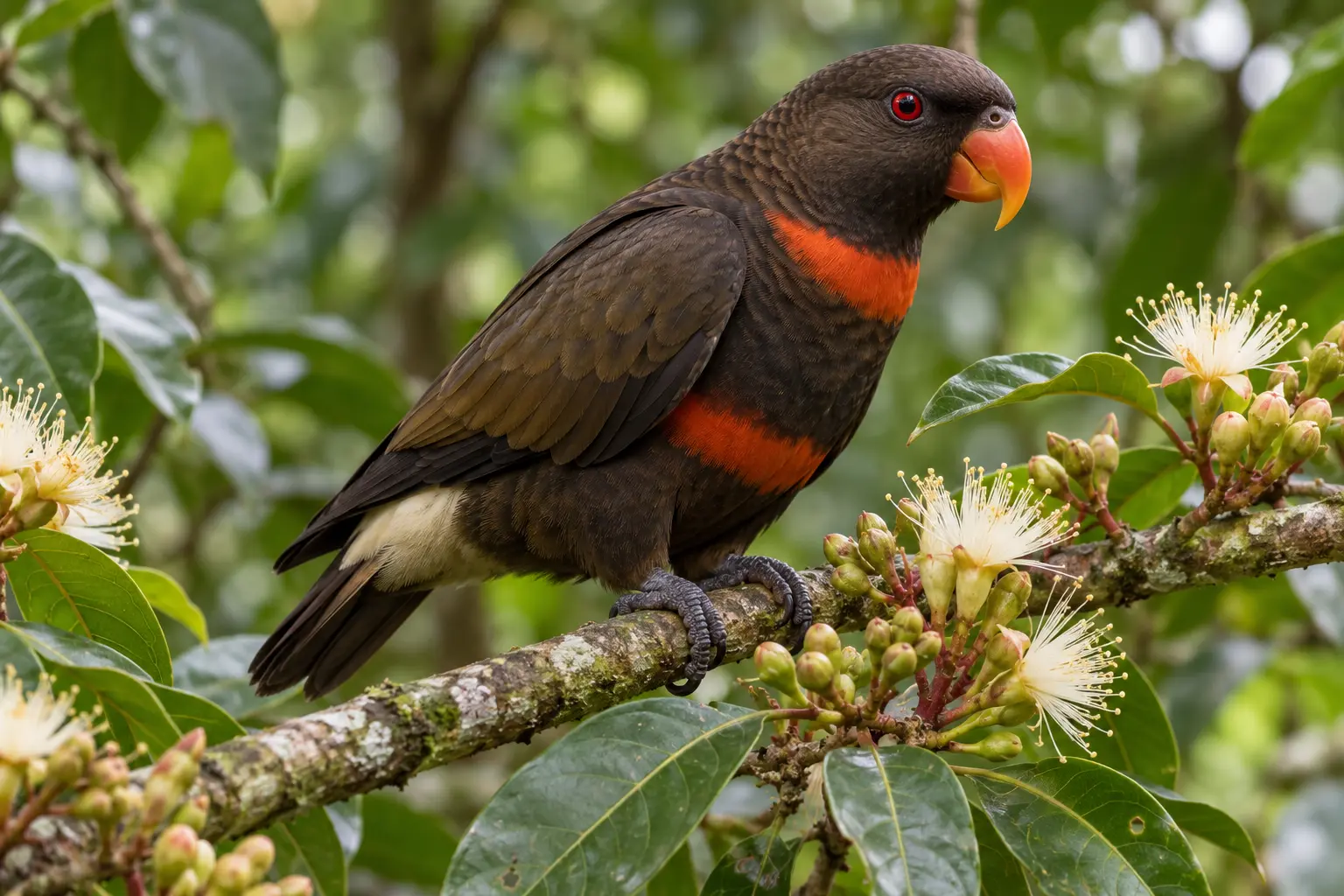
Dusky lory
Pseudeos fuscataA lory endemic to New Guinea and nearby islands, with dusky olive-brown plumage, an orange bill, pale rump and yellow or orange-red breast-and-belly colour phases. It feeds on nectar, fruit and pollen, is highly social and moves with flowering resources. [1–3]
Open full profile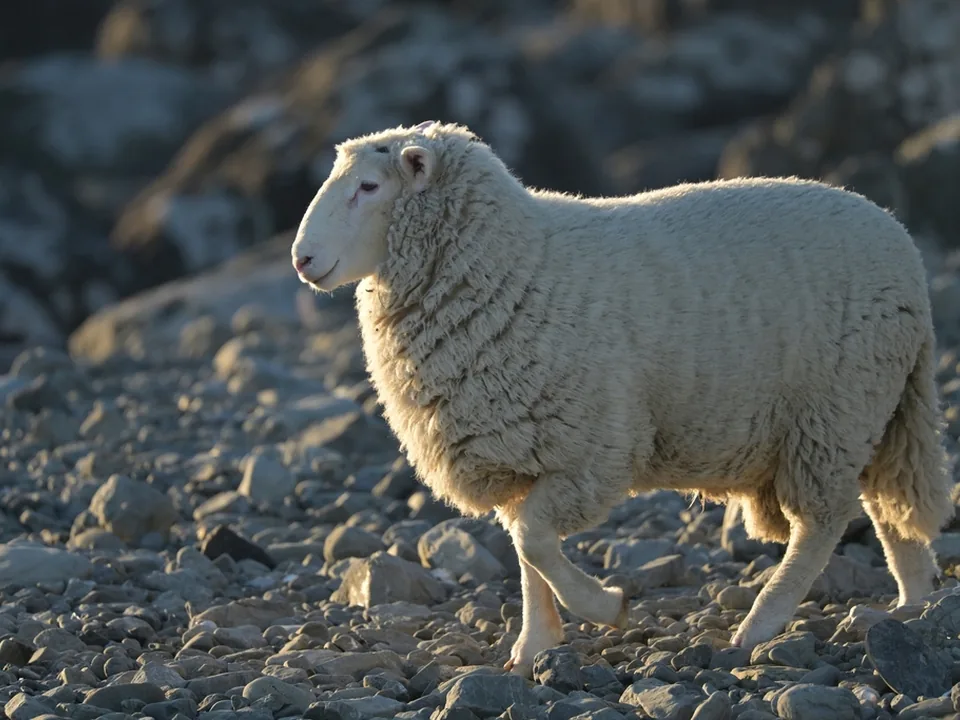
Domestic sheep
Ovis ariesDomestic sheep are ruminants selected over millennia for meat, milk, wool, hides and adaptation to many production systems. Breed differences are enormous, so the measurements and traits of one breed do not represent the entire species. [1–3]
Open full profile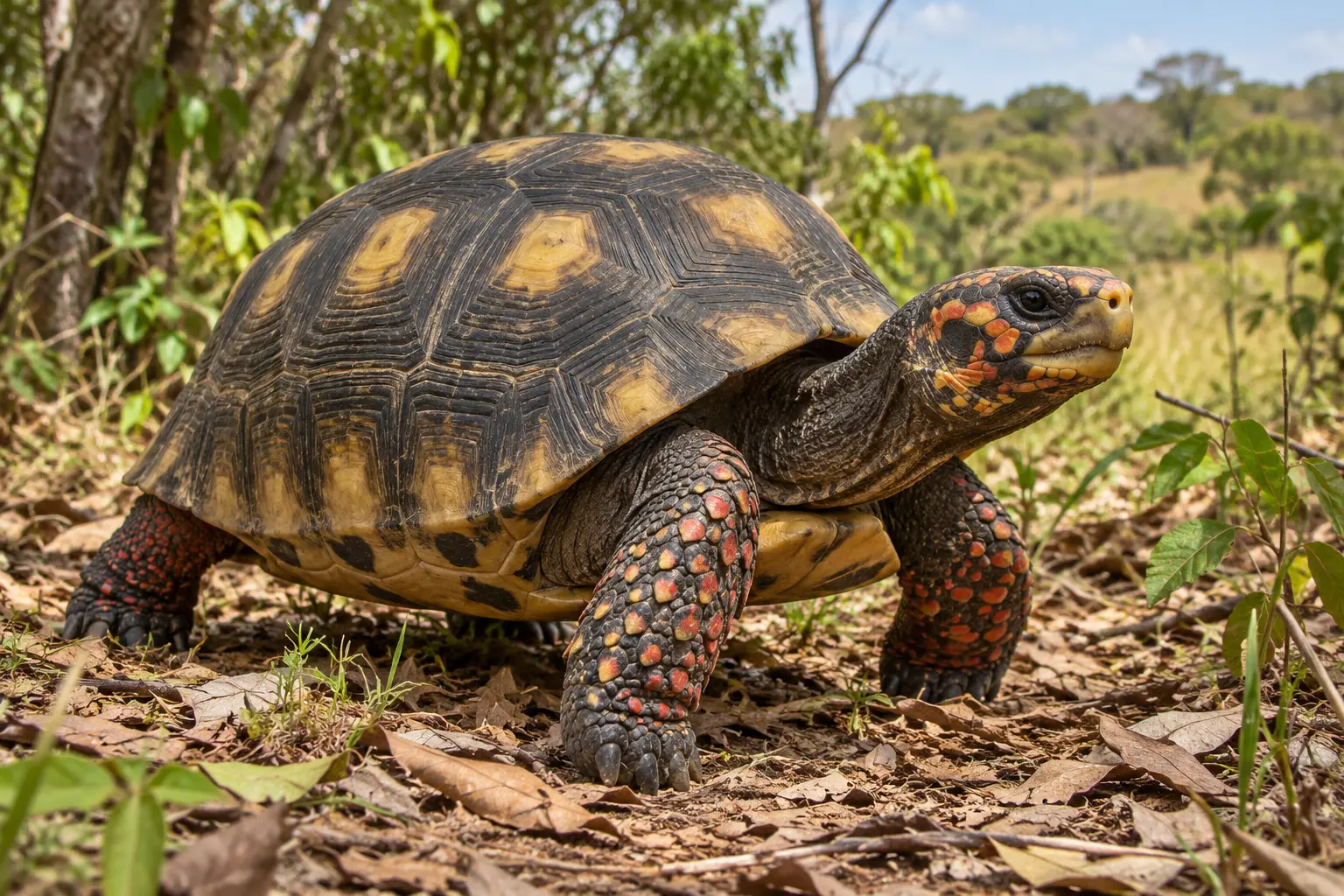
Red-footed tortoise
Chelonoidis carbonariaA South American tortoise with a dark shell, tan-yellow scute centres and red, orange or yellow scales on the head, legs and tail. It uses dry and wet forests, savanna and grassland, feeding mainly on plants but also fungi and small amounts of invertebrate matter. [1,2]
Open full profile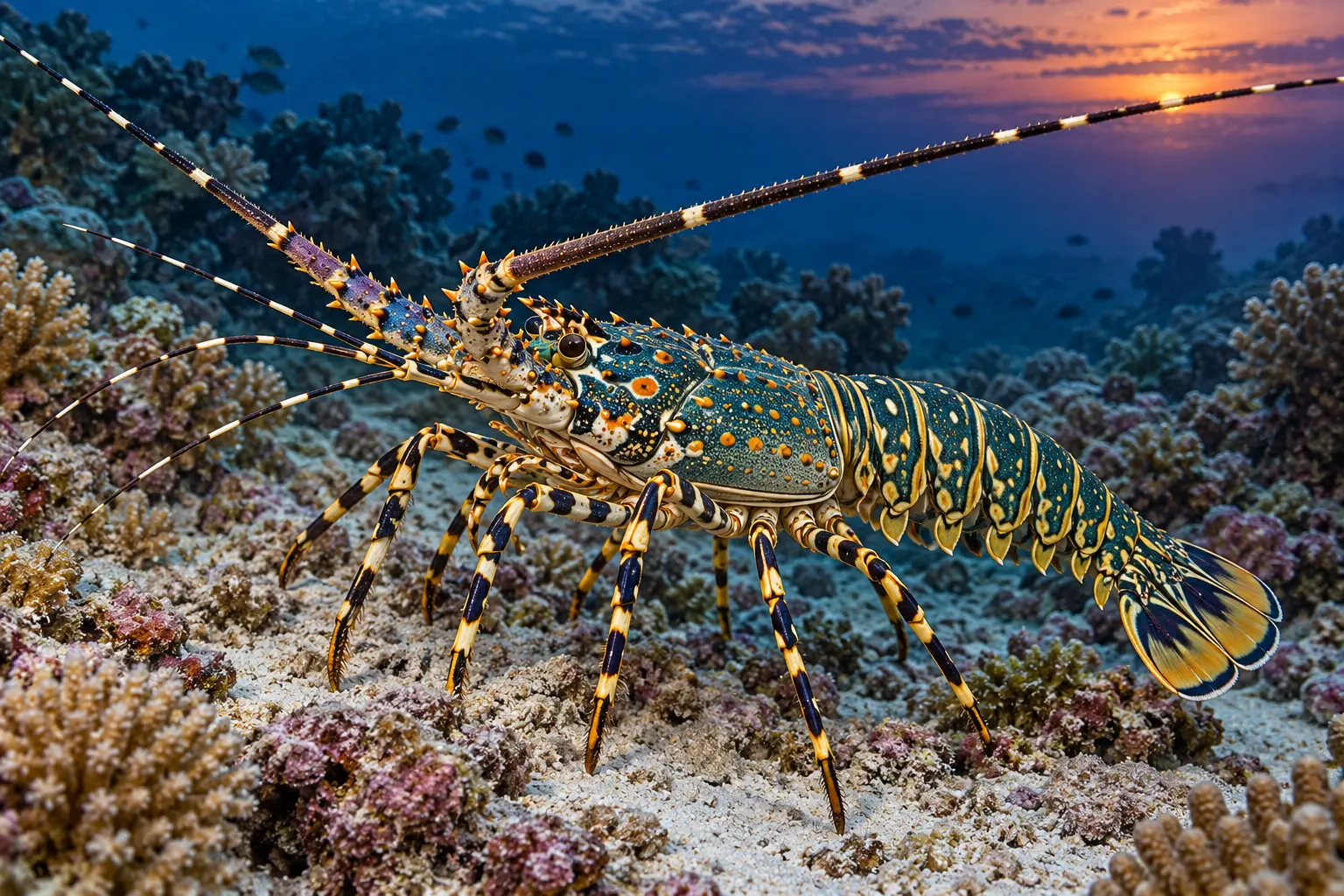
Ornate spiny lobster
Panulirus ornatusA large blue-green spiny lobster patterned yellow and orange, with extremely long antennae and a broad Indo-West Pacific range. Unlike clawed lobsters it lacks enlarged chelae; antennae and spines provide its main defence. [1–3]
Open full profile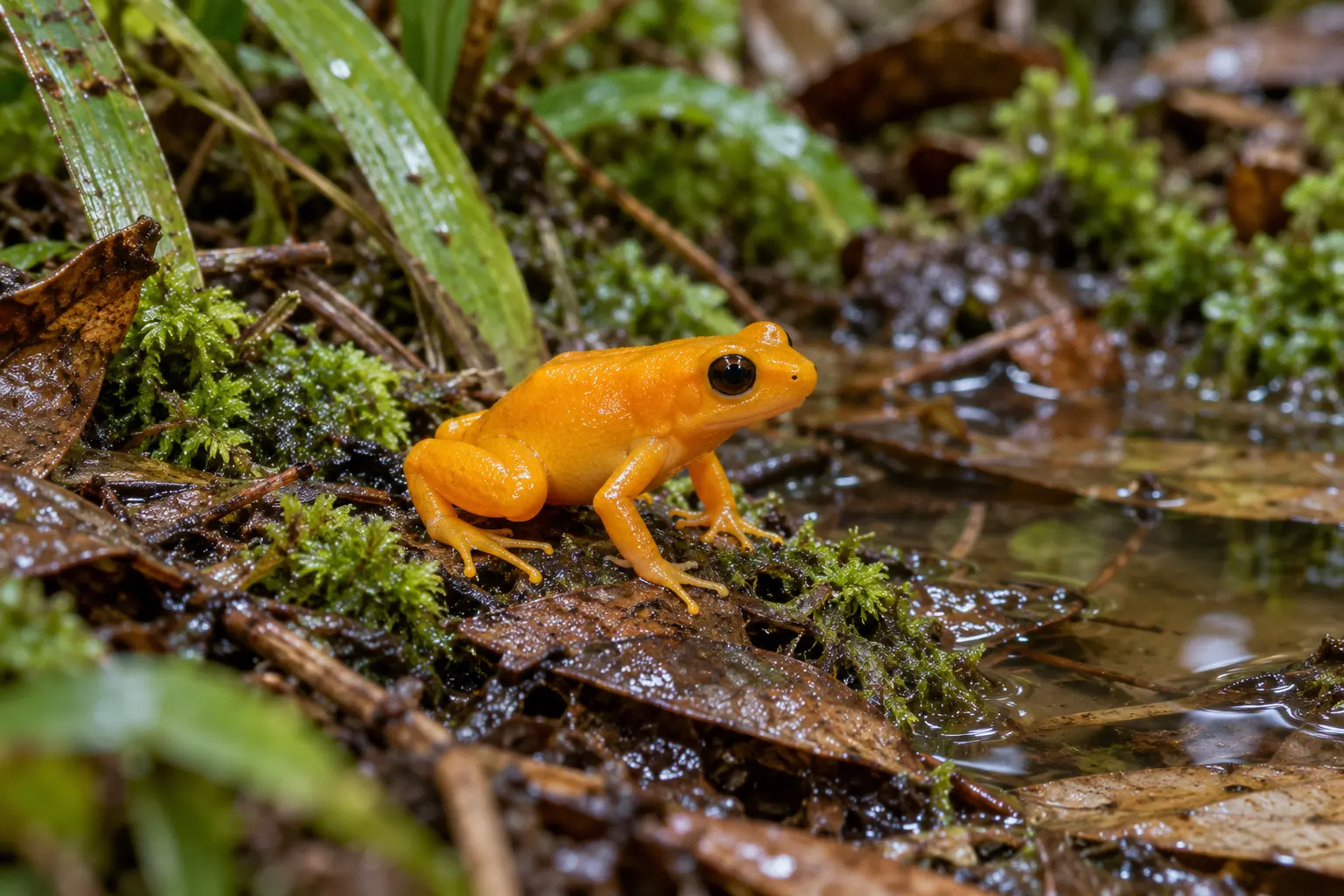
Golden mantella
Mantella aurantiacaA tiny terrestrial frog endemic to a very small area of central-eastern Madagascar, marked by uniform yellow-orange colour. Its warning colour is associated with alkaloids acquired from wild prey; captive animals do not automatically retain the same toxin profile without that diet. [1–4]
Open full profile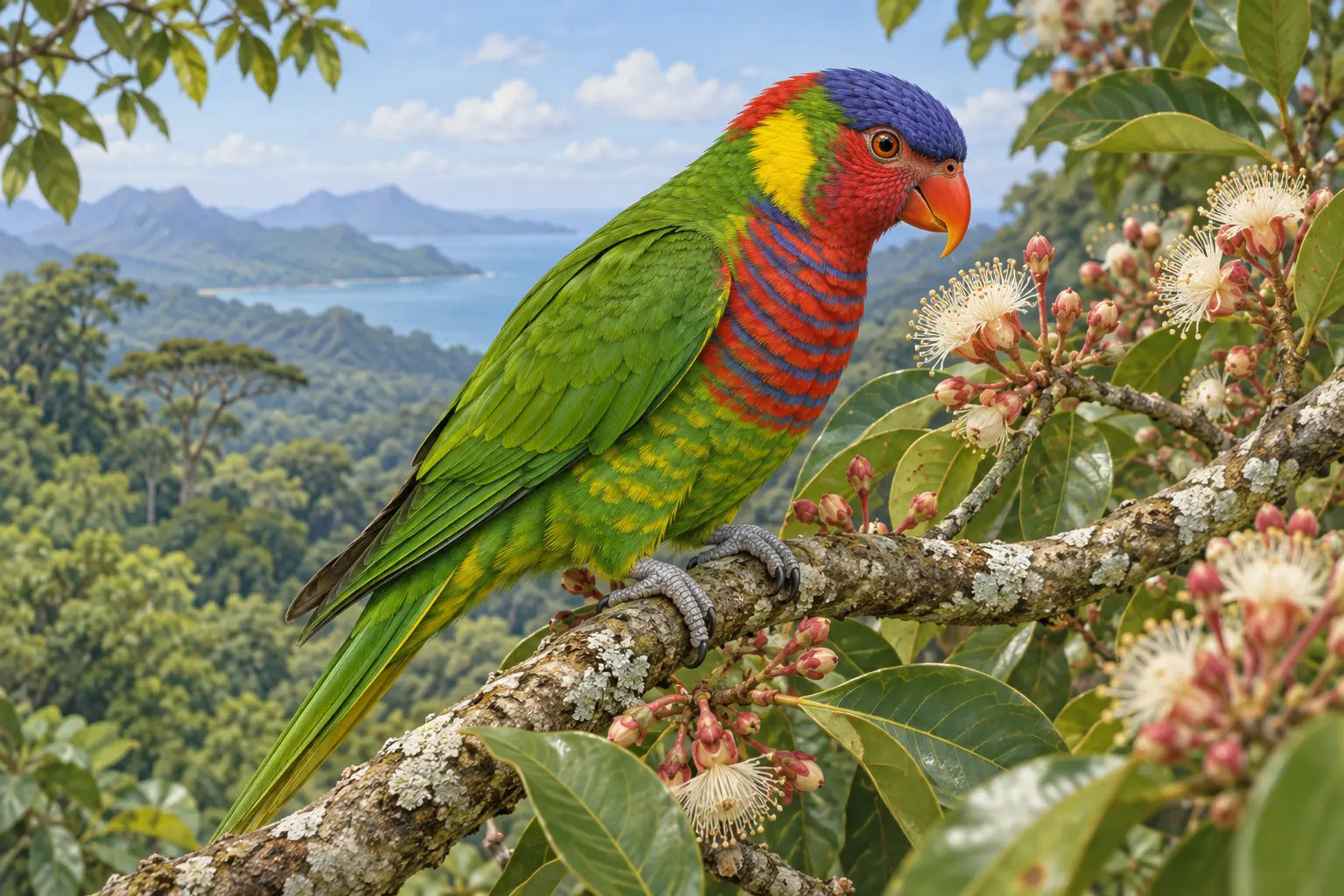
Ornate lorikeet
Saudareos ornataAn Indonesian endemic lorikeet with a green body, violet-blue crown, red face and breast barred blue, and a yellow neck patch. It feeds on nectar and pollen as well as fruit and seeds, so managed diets must reflect that biology rather than relying on sweet foods alone. [1–3]
Open full profile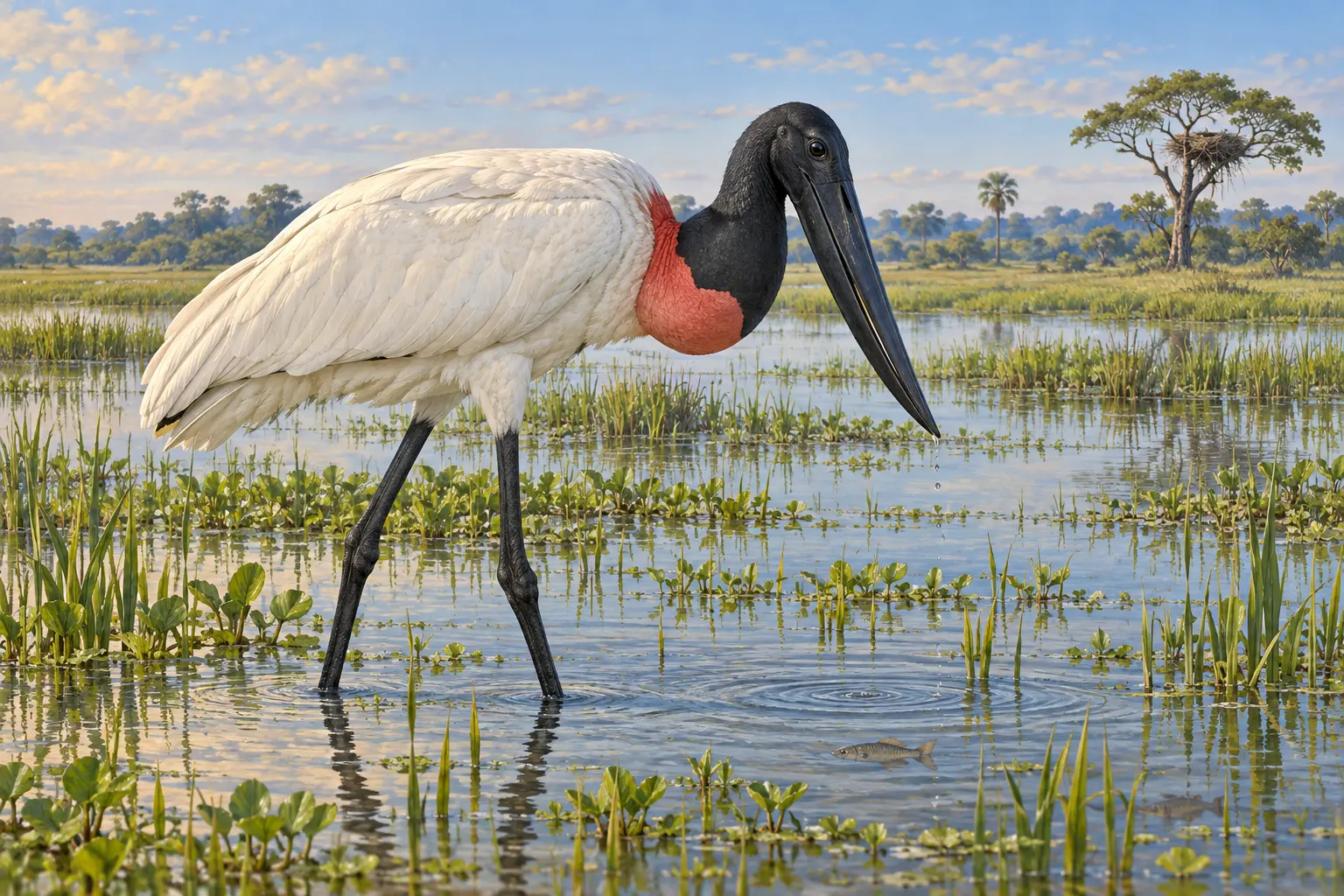
Jabiru
Jabiru mycteriaA very large American stork recognised by a white body, bare black head and neck, red lower-neck band and enormous slightly upturned black bill. It is closely associated with floodplains, marshes and tall nesting trees. [1,2]
Open full profile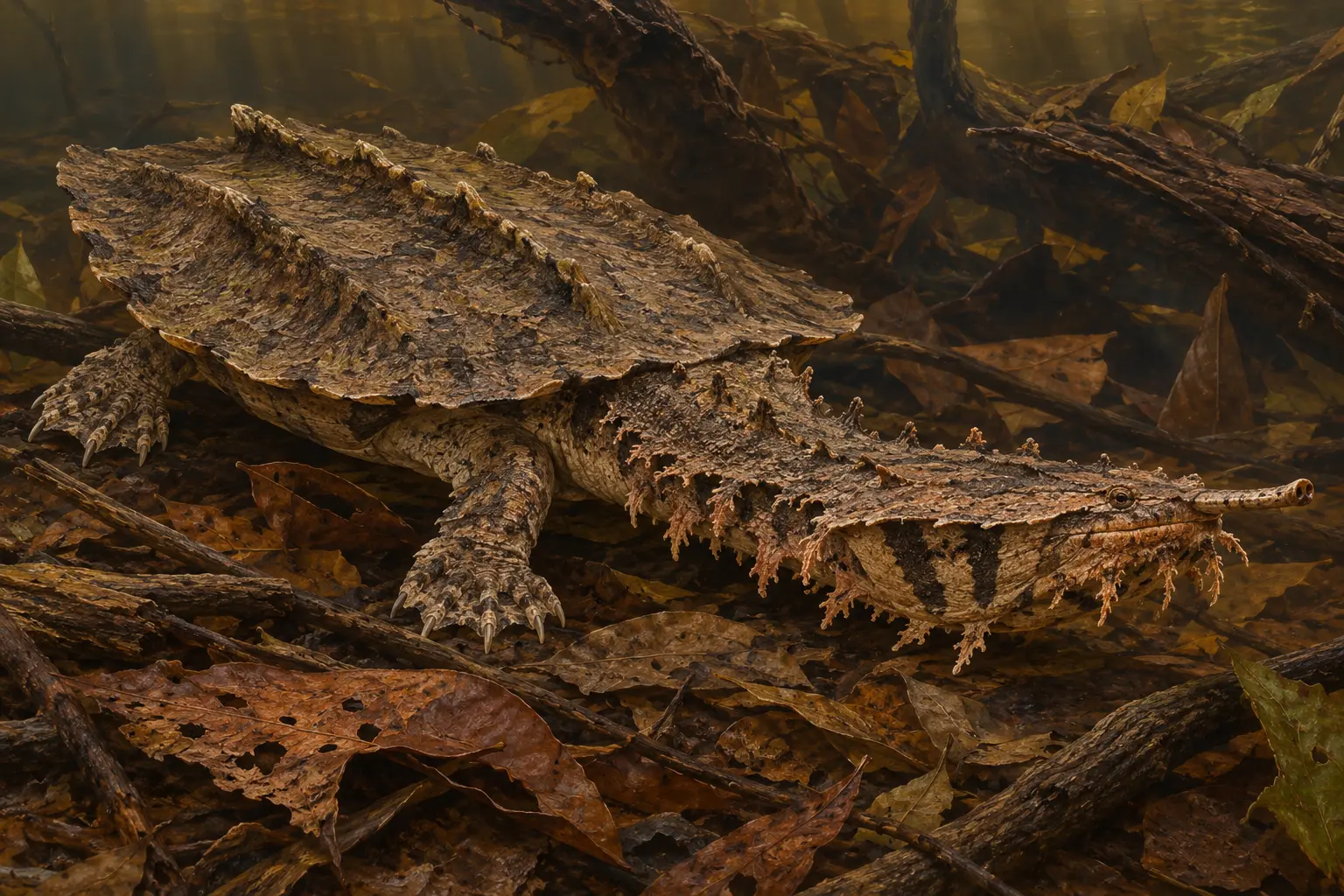
Amazon mata mata
Chelus fimbriataAn Amazonian freshwater turtle with a flattened triangular head, tubular snout, long fringed neck and bark-like rough shell. It ambushes prey on the bottom and rapidly opens its mouth to suck fish and water into the oral cavity. [1–3]
Open full profile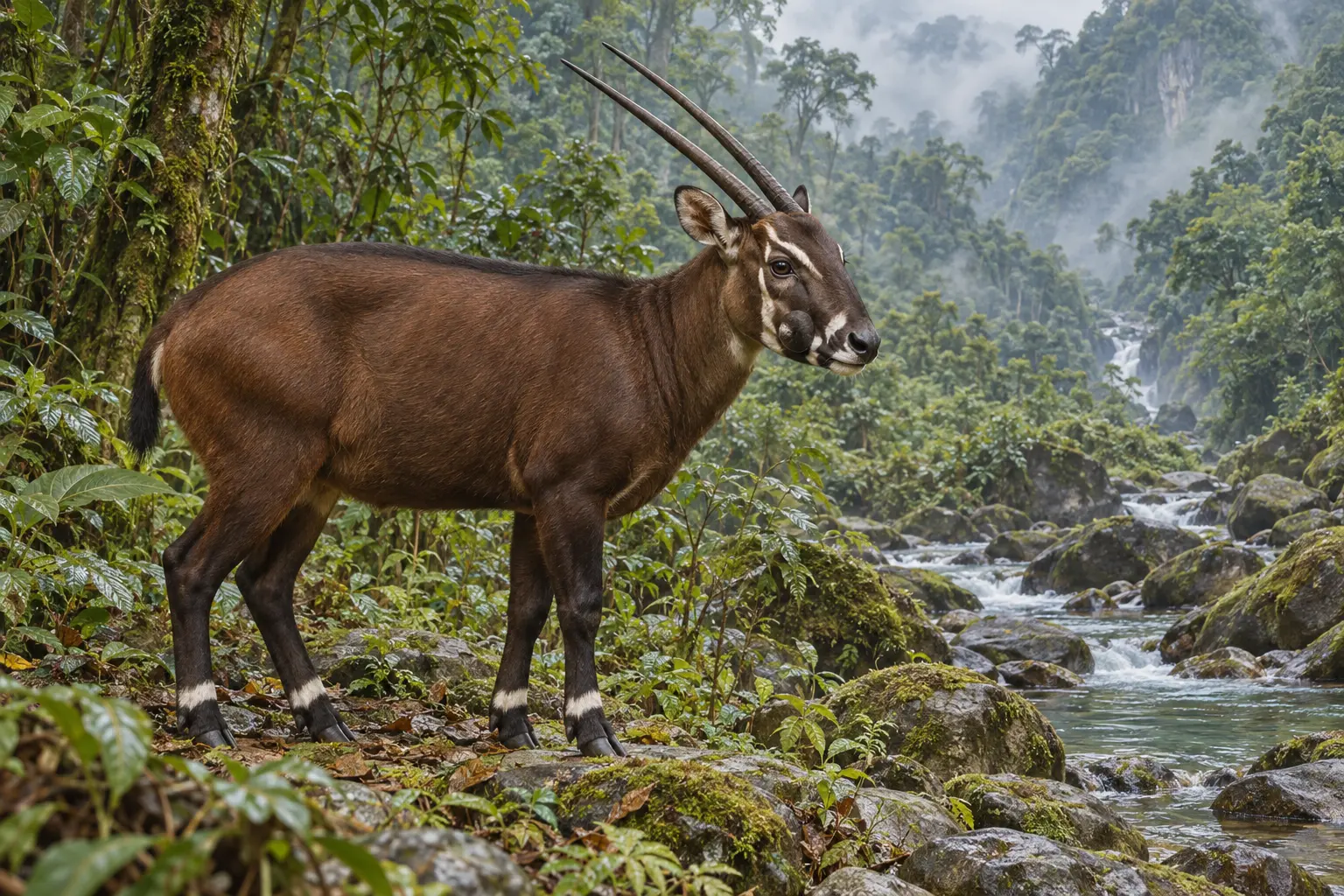
Saola
Pseudoryx nghetinhensisAn exceptionally rare ungulate known only from the Annamite Range of Viet Nam and Laos, scientifically described in 1993 after horns were found in 1992. Long nearly parallel horns in both sexes and bold white facial markings are distinctive. [1,2]
Open full profile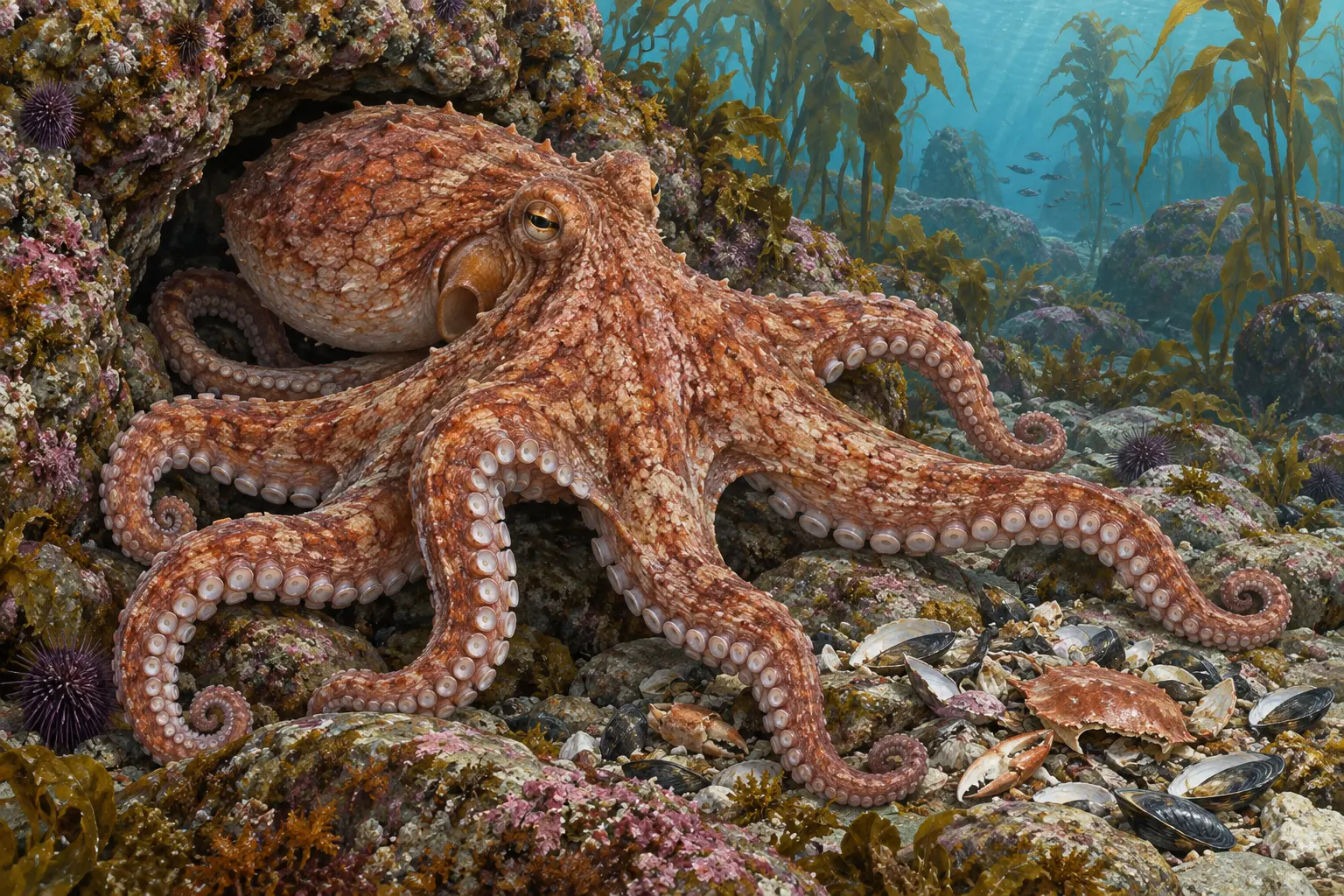
Giant Pacific octopus
Enteroctopus dofleiniOne of the largest octopuses, inhabiting the North Pacific from rocky coasts and kelp forests to deep water. A soft body, eight strong arms, two rows of suckers and rapid colour-texture change support hunting, concealment and environmental exploration. [1–3]
Open full profile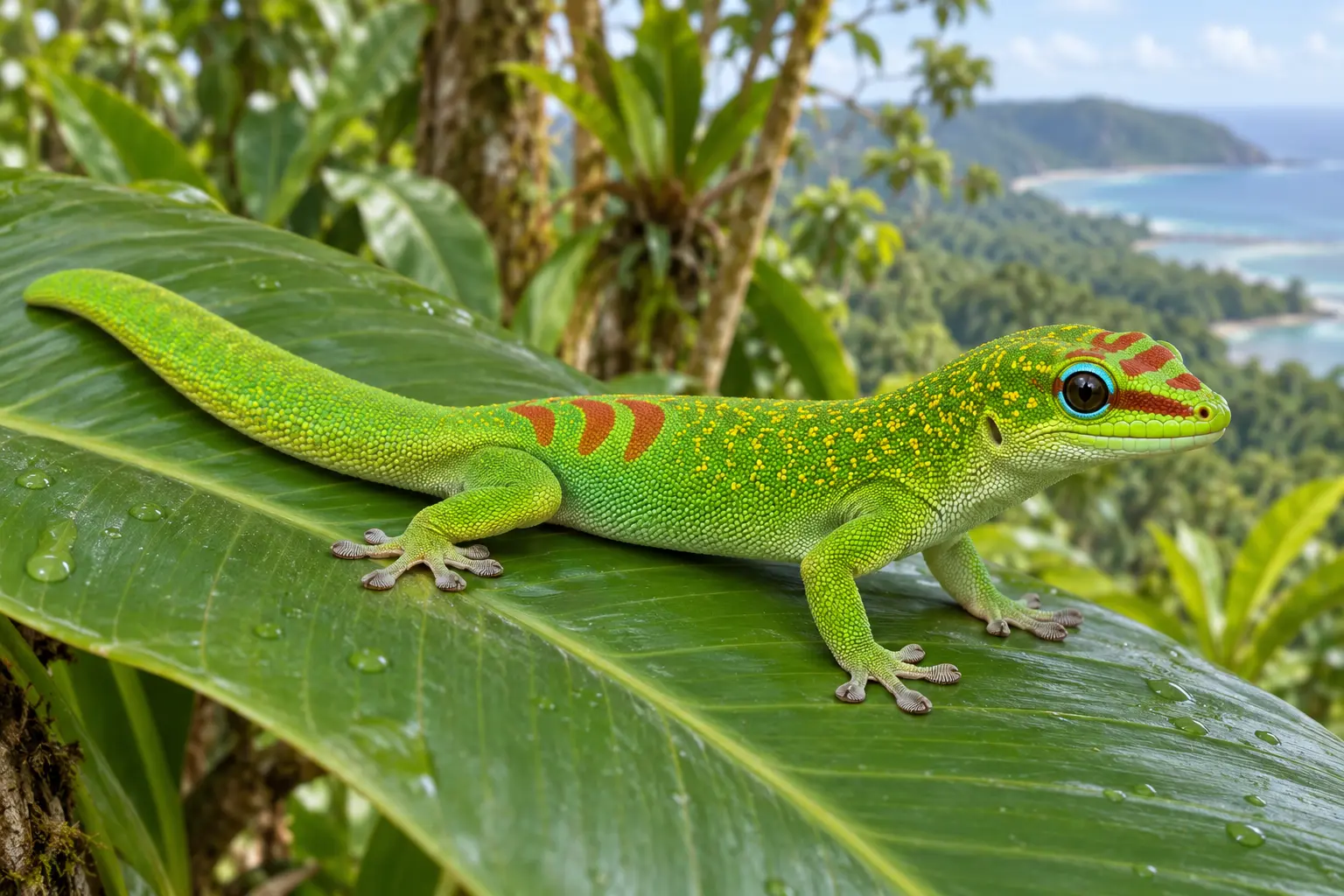
Gold dust day gecko
Phelsuma laticaudaA small diurnal gecko native to Madagascar and western Indian Ocean islands. A green body dusted with gold, three red-brown snout bars and blue around the eyes form its characteristic pattern. [1–3]
Open full profile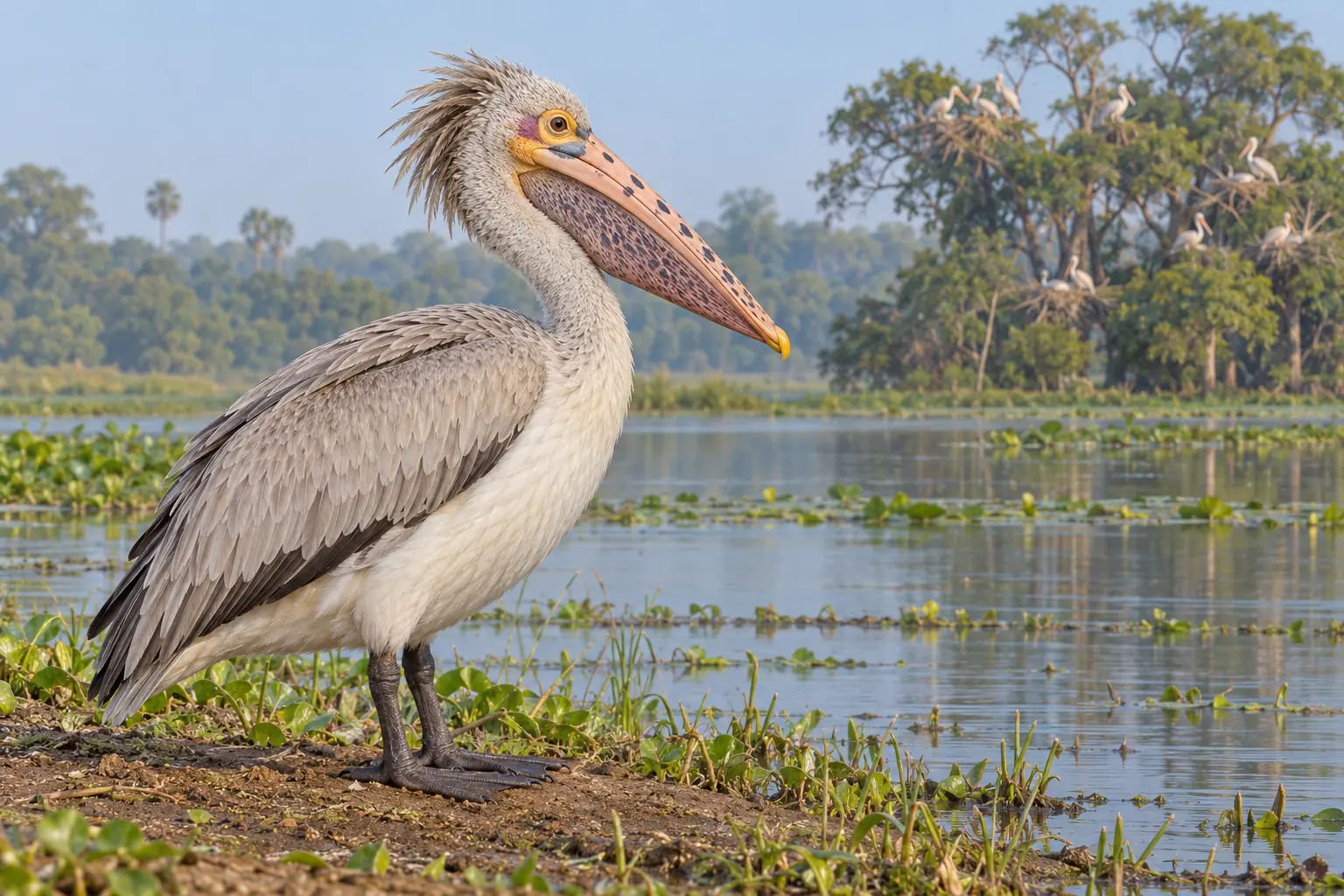
Spot-billed pelican
Pelecanus philippensisA large pelican of South and Southeast Asia, identified by dark spots on the upper bill, a mottled throat pouch and grey-white plumage. It depends on fish-rich wetlands and secure large nesting trees for colonial breeding. [1–3]
Open full profile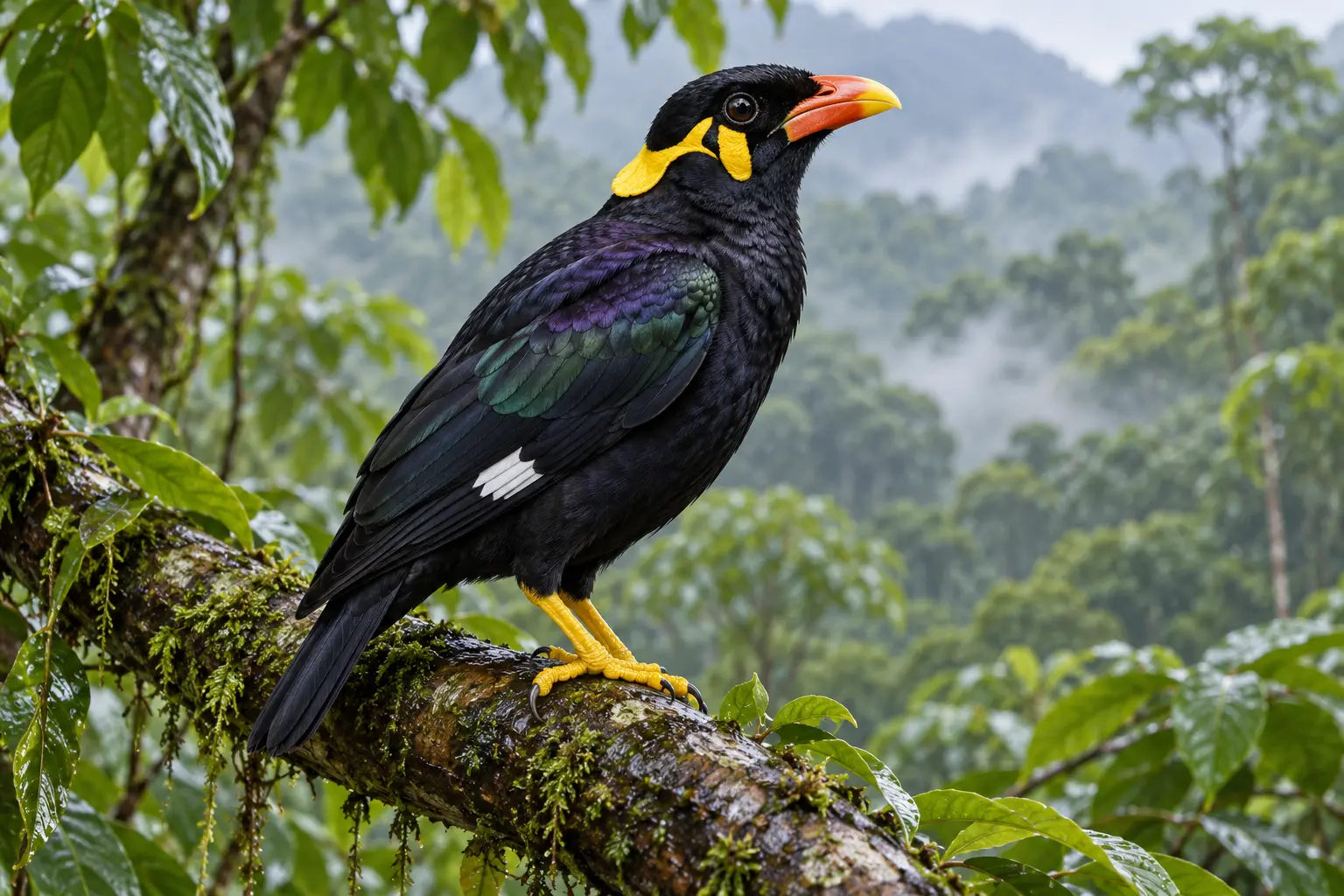
Common hill myna
Gracula religiosaAn Asian forest bird with blue-purple gloss on black plumage, white wing patches, an orange-yellow bill and yellow wattles behind the eyes. Exceptional vocal learning does not replace the need for movement, social choice and environmental complexity. [1,2,4]
Open full profile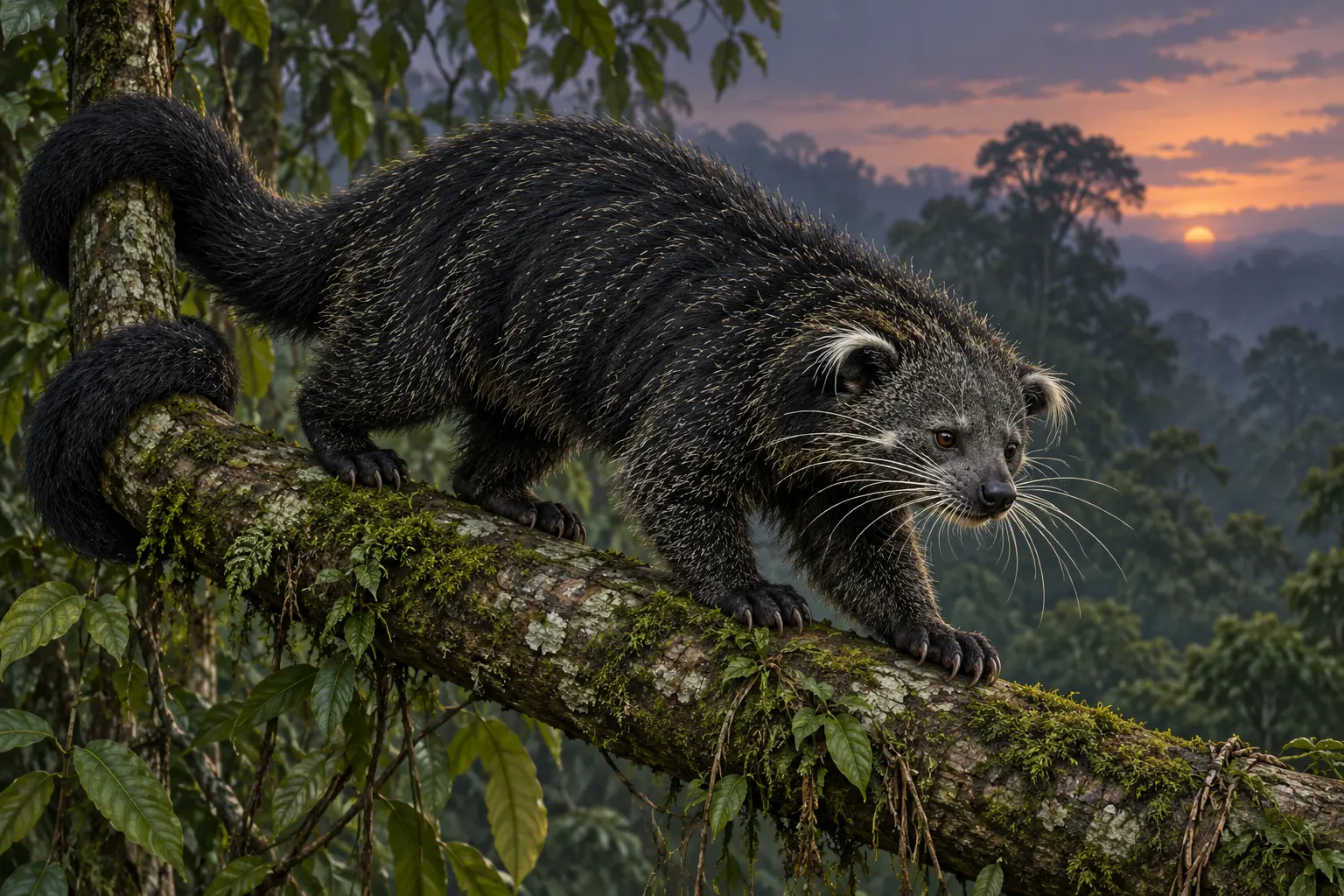
Binturong
Arctictis binturongA large arboreal mammal of South and Southeast Asian forests, with shaggy black fur, long whiskers and a prehensile tail nearly as long as the body. Although a carnivoran, it eats much fruit and is an important seed disperser. [1–4]
Open full profile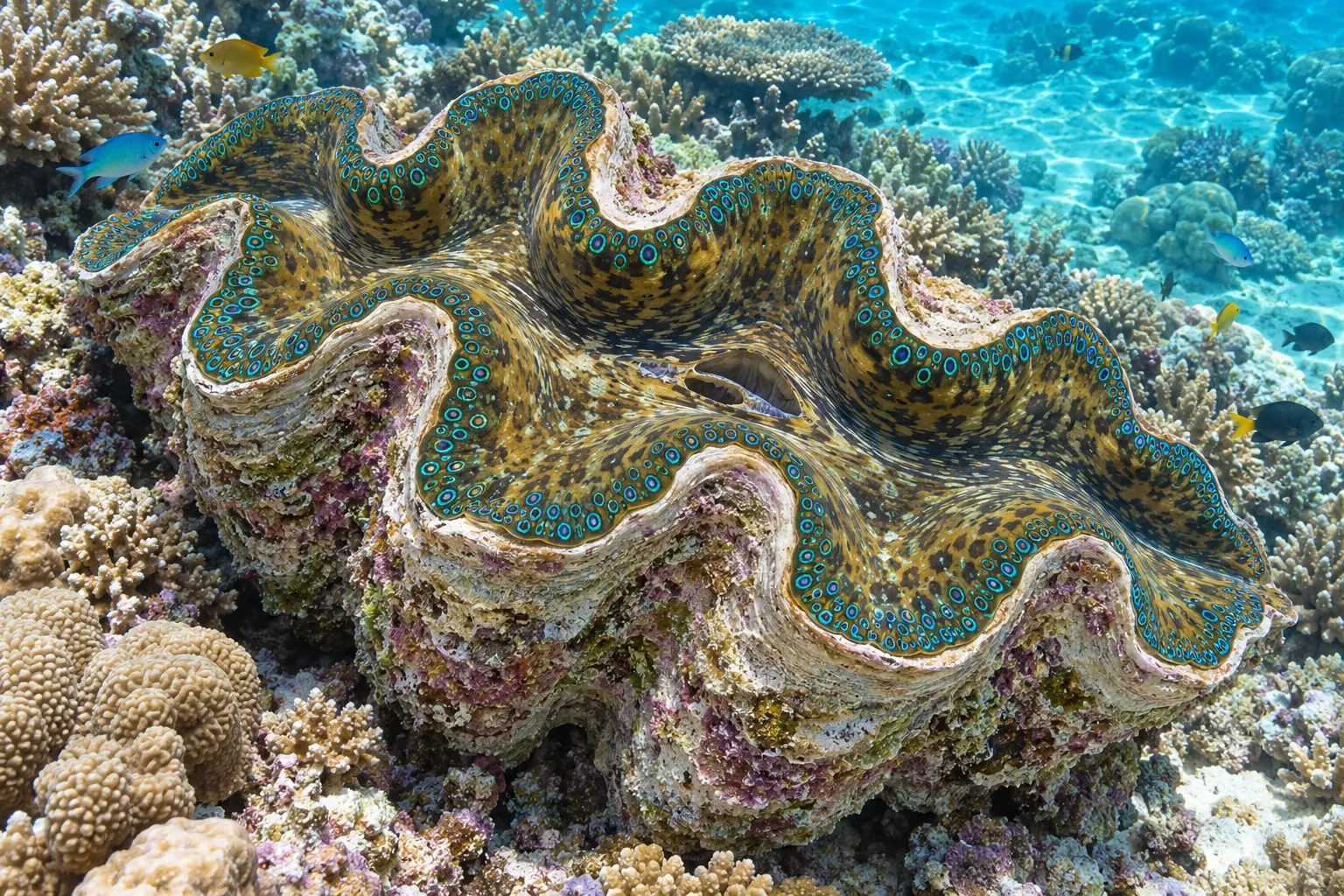
True giant clam
Tridacna gigasThe largest living bivalve, capable of exceeding one metre and 225 kg. Its colourful mantle houses photosynthetic symbiotic algae, making light, water quality and temperature direct physiological constraints. [1–3]
Open full profile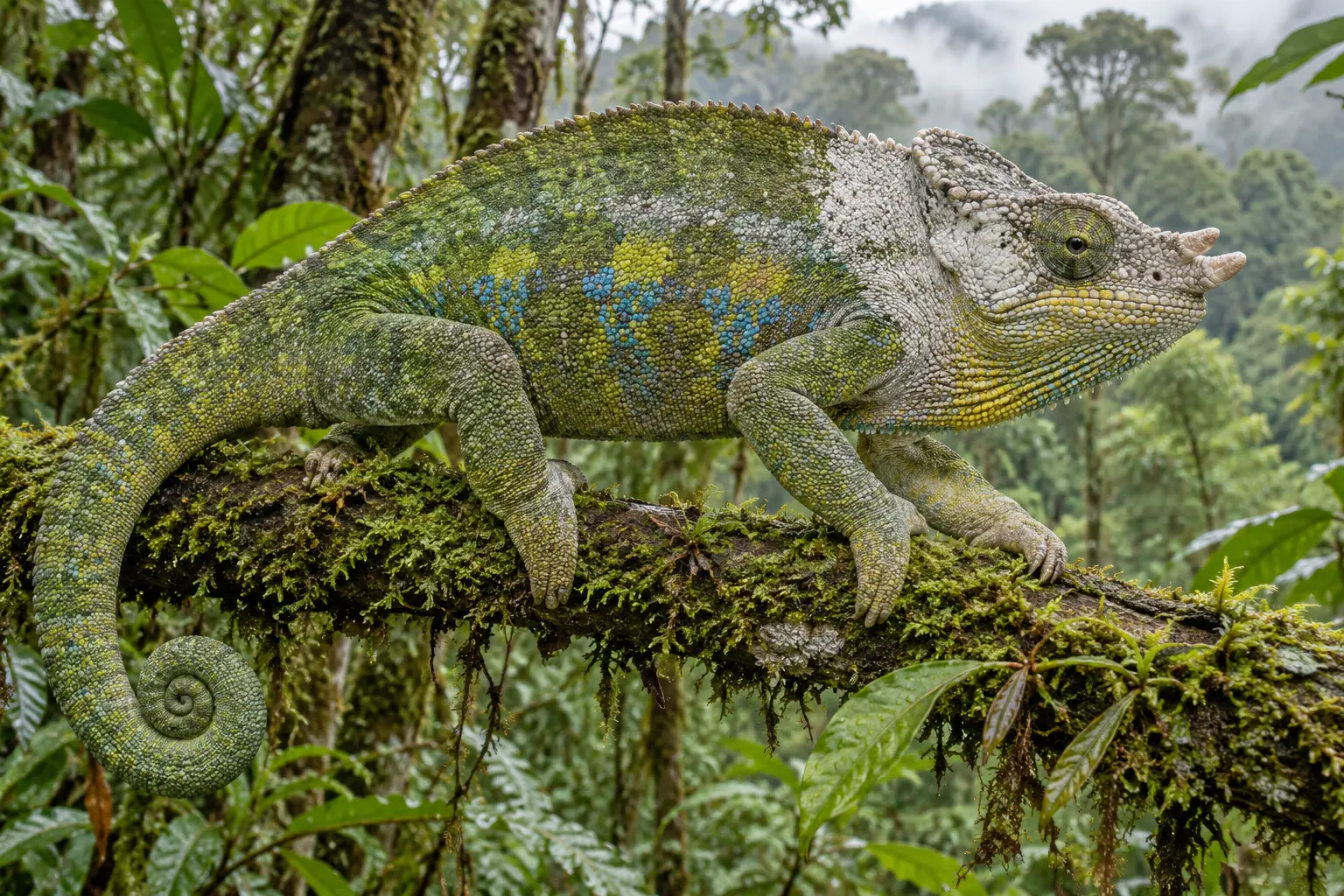
O’Shaughnessy’s chameleon
Calumma oshaughnessyiA large chameleon endemic to Madagascar and associated with intact humid rainforest in the island’s southeast. Males carry two short rostral processes; its restricted habitat and forest degradation underpin a VU listing. [1–4]
Open full profile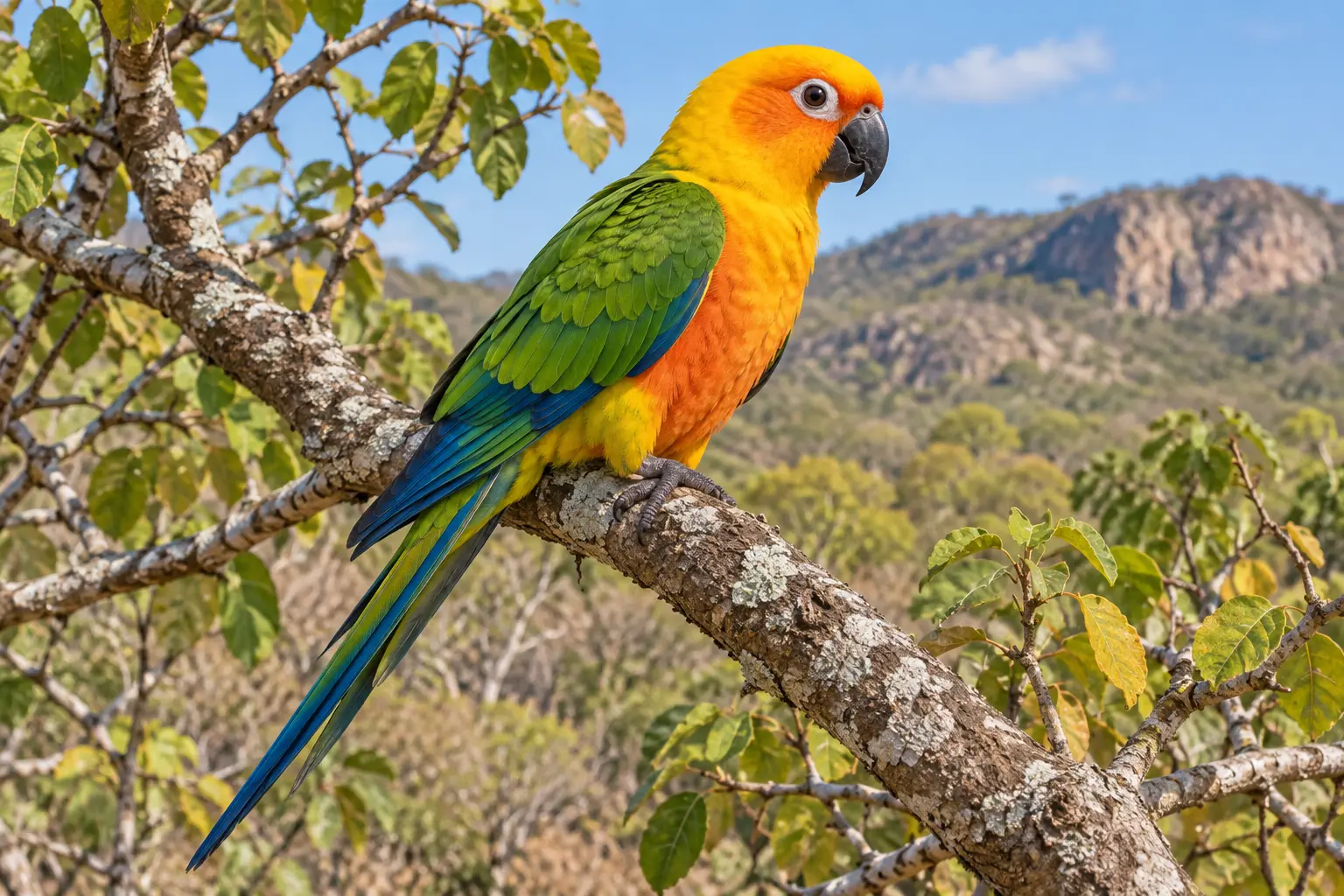
Jandaya parakeet
Aratinga jandayaA parakeet endemic to north-eastern Brazil, recognised by its yellow head, orange-red face and breast, green wings and long blue-green tail. It is currently LC but can still face local pressure from habitat loss and capture. [1–4]
Open full profile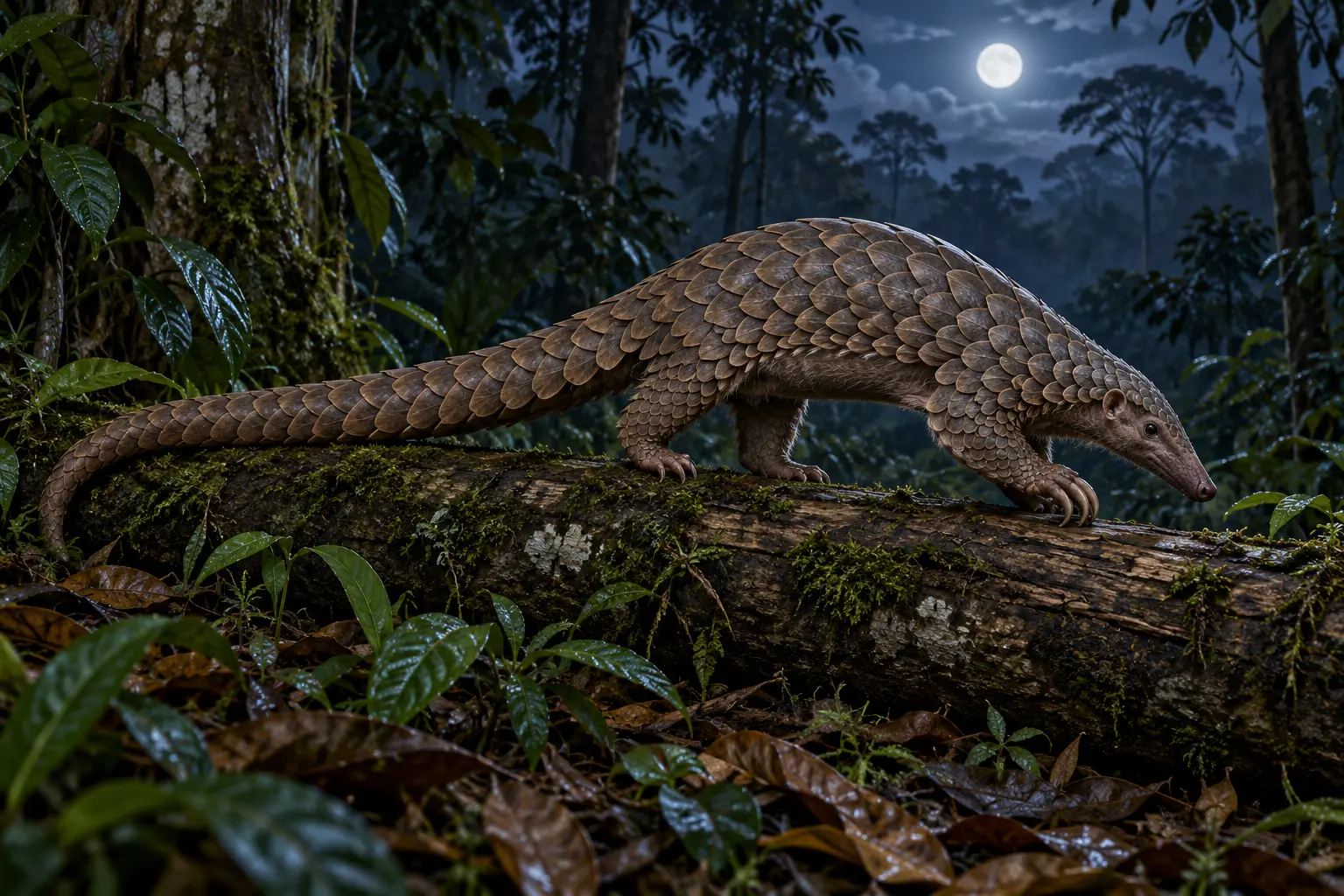
Sunda pangolin
Manis javanicaA semi-arboreal ant-and-termite specialist of Southeast Asia, covered in keratin scales and equipped with a long tail. Hunting, illegal trade and habitat loss have driven an IUCN CR listing. [1–5]
Open full profile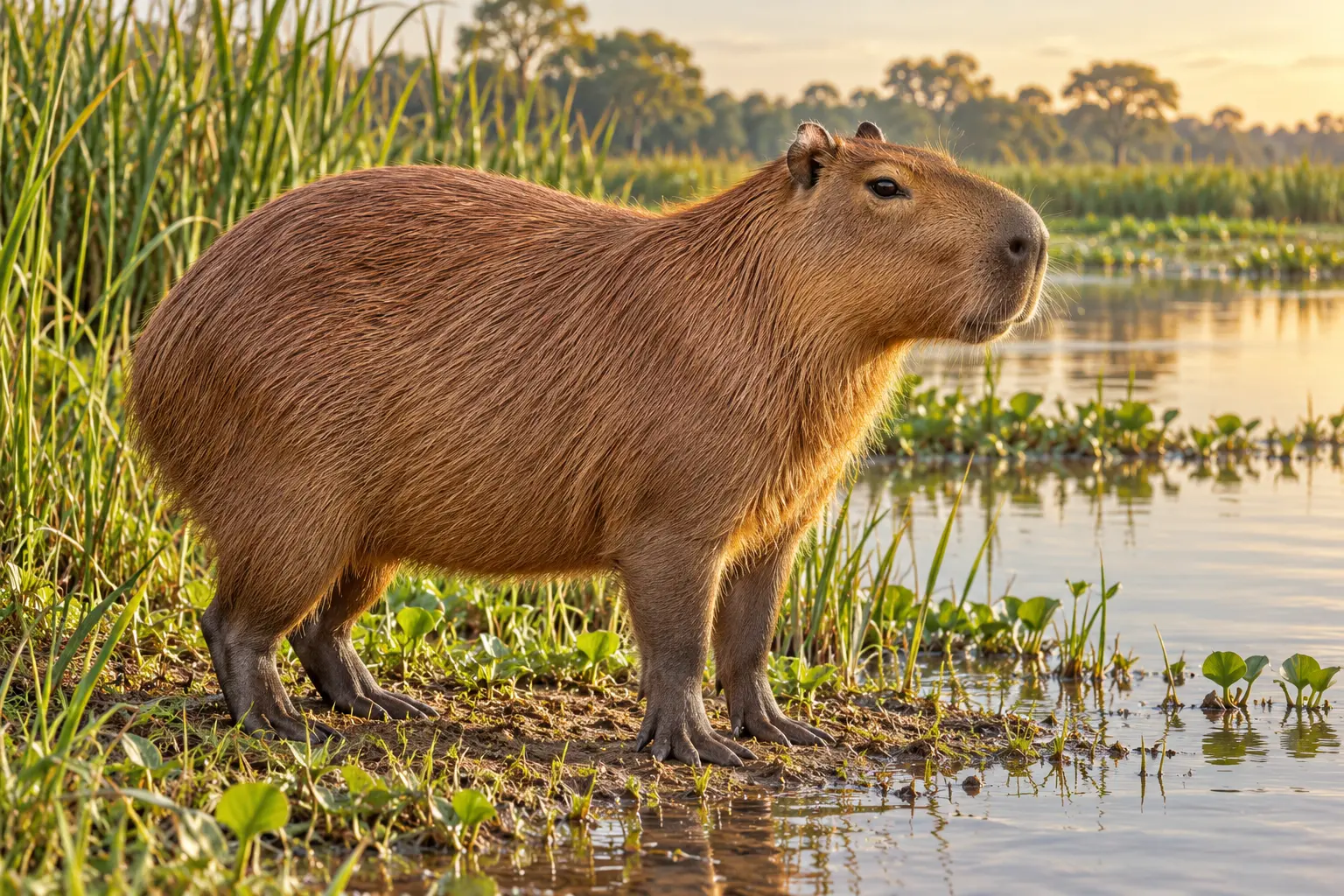
Capybara
Hydrochoerus hydrochaerisThe largest living rodent, adapted to South American flooded grasslands and river margins. A barrel body, partly webbed feet and sensory organs high on the head support terrestrial grazing and aquatic escape. [1–3]
Open full profile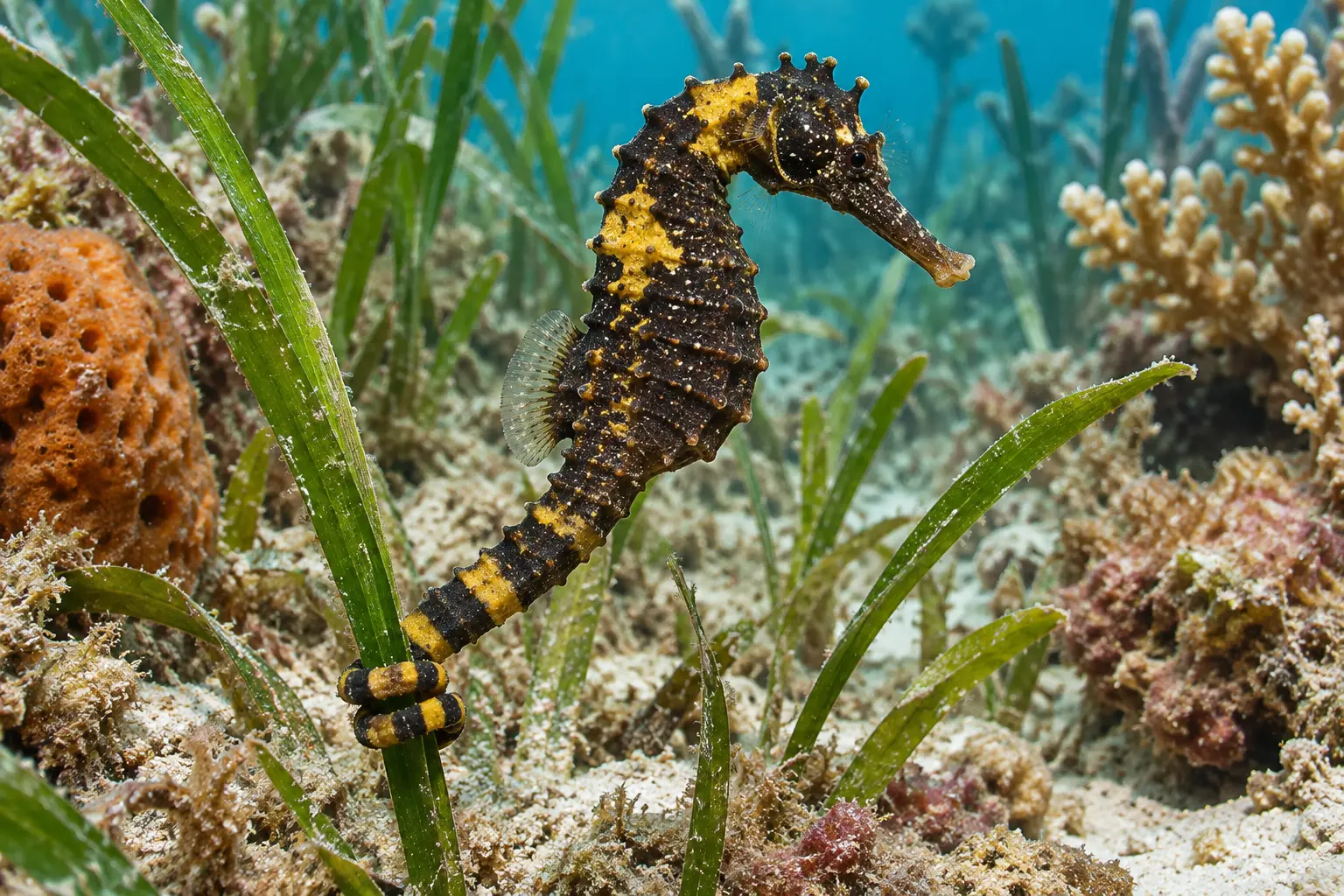
Tiger-tail seahorse
Hippocampus comesA medium-sized western Pacific seahorse, often dark brown-black with yellow saddle markings and a yellow-black banded tail. It is associated with coral, sponges, seagrass and Sargassum; exploitation and habitat loss contribute to its VU status. [1–5]
Open full profile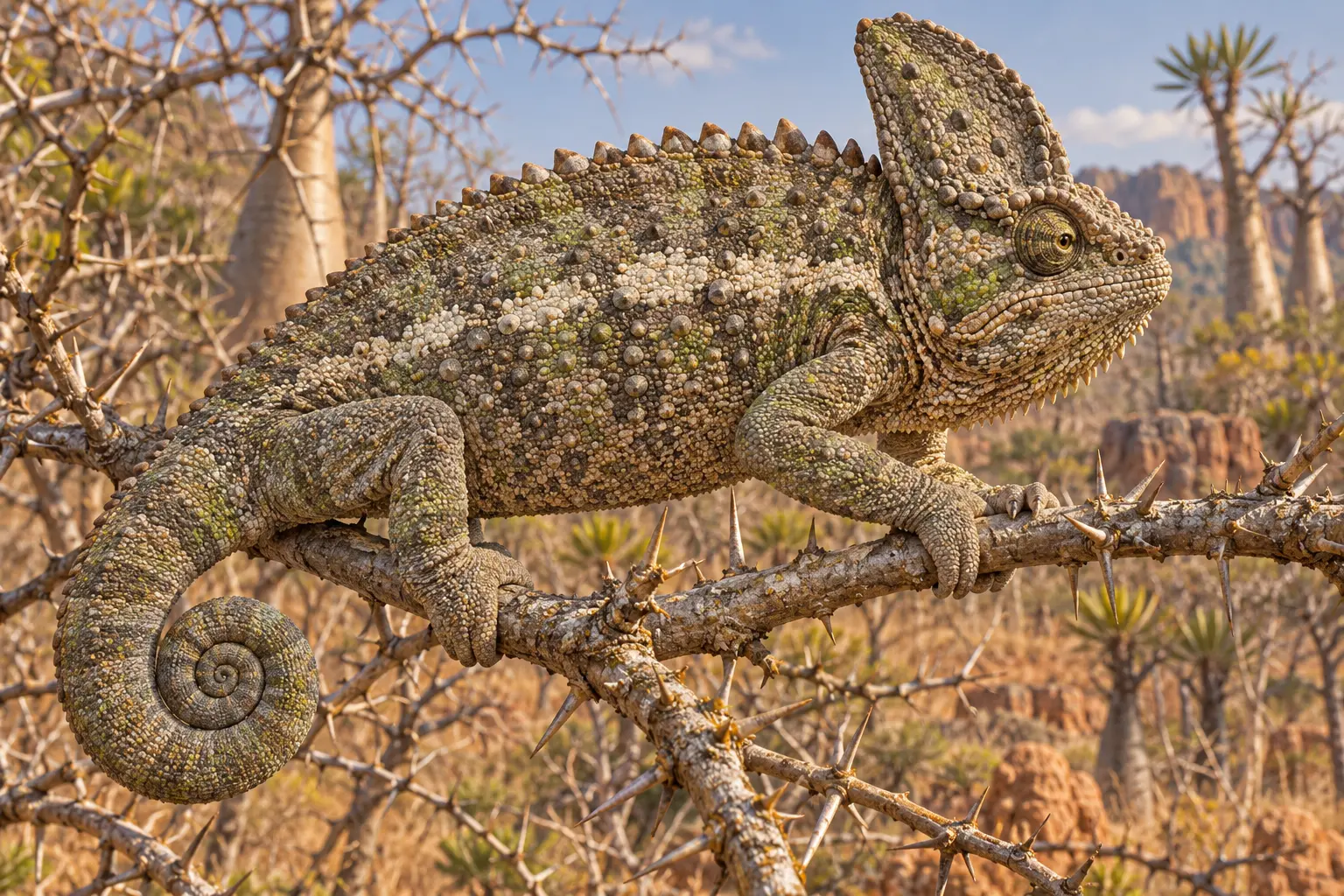
Warty chameleon
Furcifer verrucosusOne of Madagascar's largest chameleons, with rough, enlarged tubercular scales, a high casque and extreme sexual size dimorphism. It inhabits the hot, dry south and west of the island, where a short rainy season transforms the spiny forest. [1–3]
Open full profile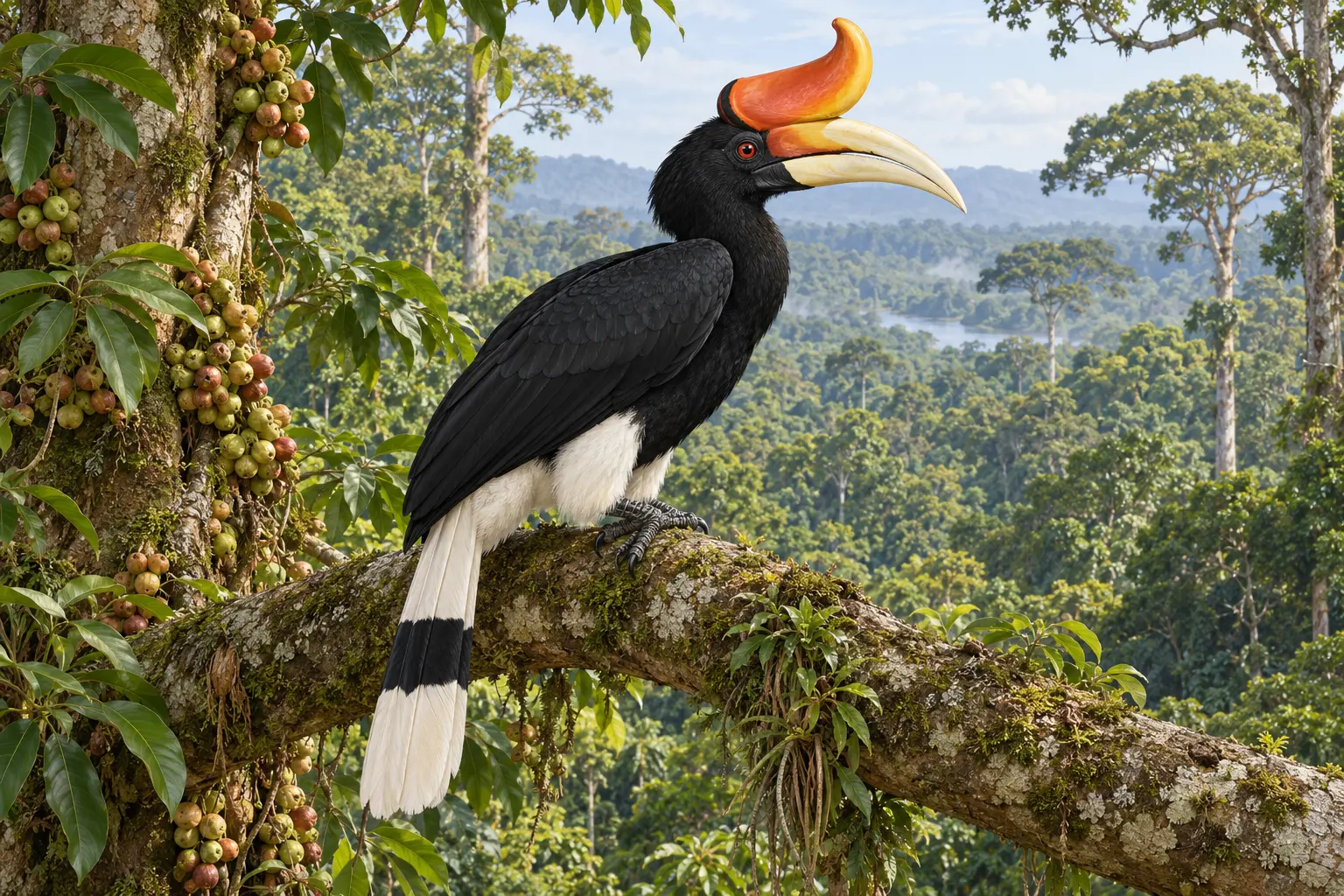
Rhinoceros hornbill
Buceros rhinocerosA very large Sundaic forest hornbill, distinguished by the rhinoceros-like upcurved casque above its bill. It depends on mature forest trees for fruit and nest cavities and disperses seeds over distance, making it an important forest-regeneration agent. [1–3]
Open full profile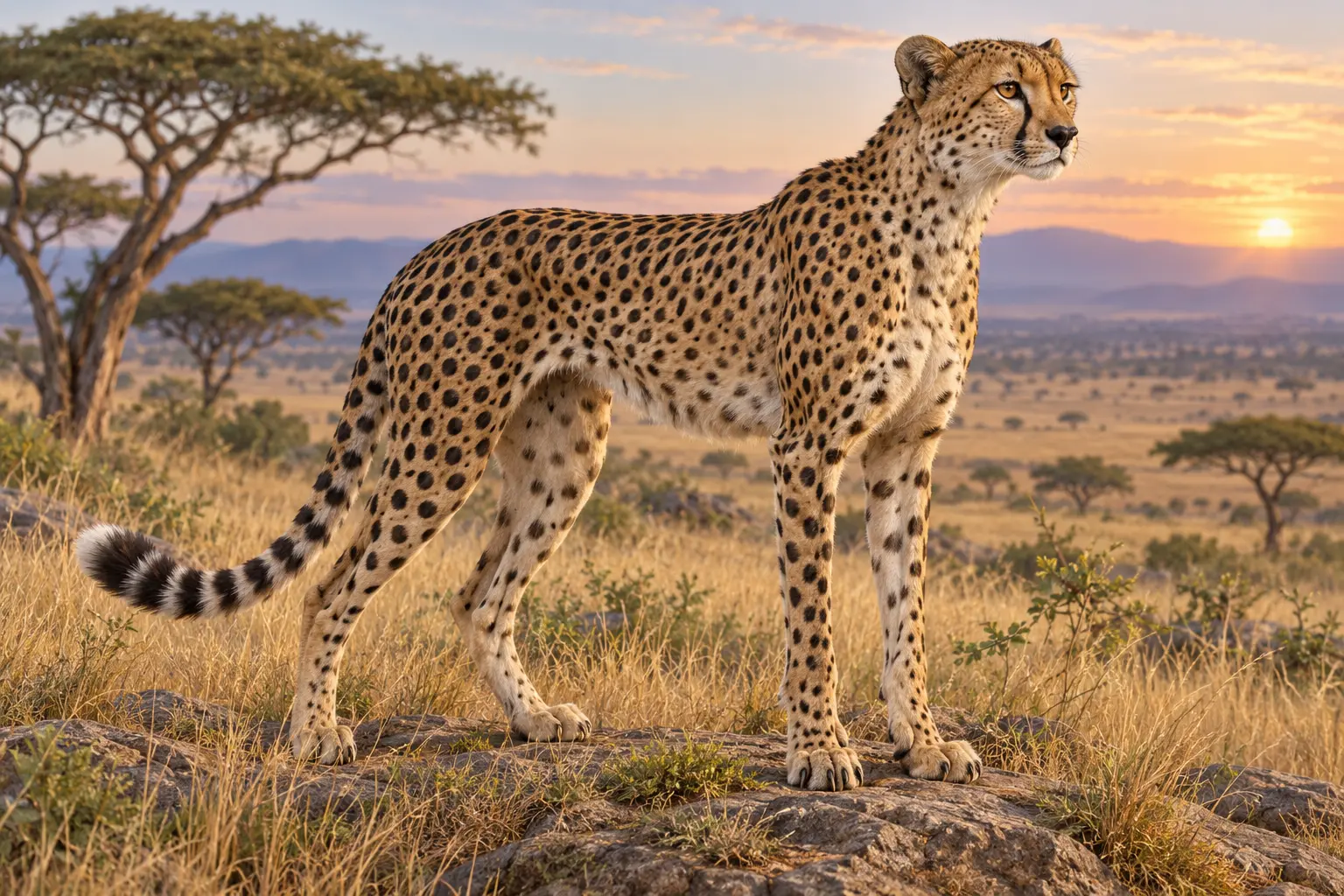
Cheetah
Acinonyx jubatusThe fastest land mammal, built for brief acceleration rather than distance running. A light frame, long limbs, flexible spine, semi-retractile claws and rudder-like tail work together during open-country pursuit. [1,2]
Open full profile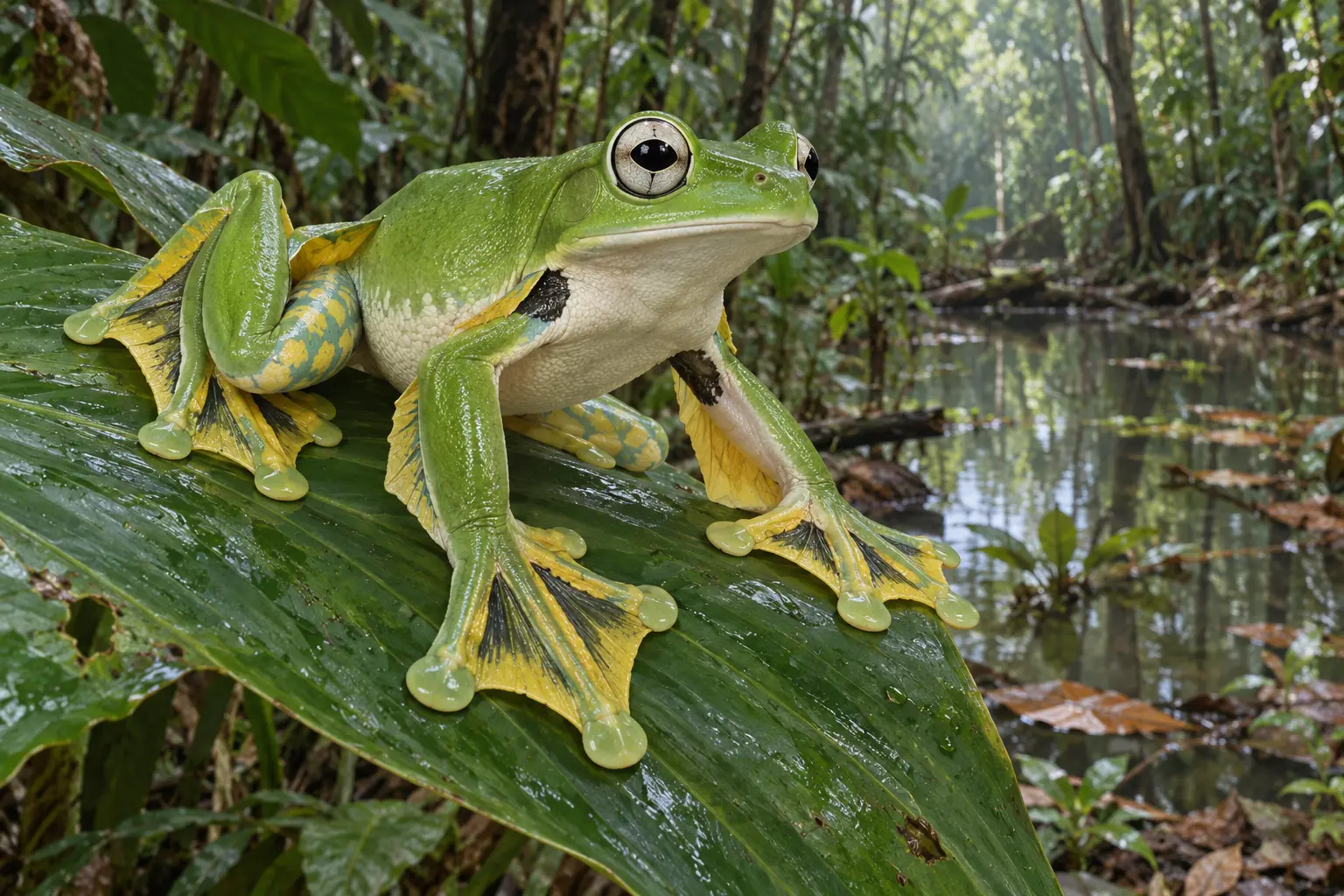
Helen's flying frog
Rhacophorus helenaeA large flying tree frog endemic to southern Vietnam and described scientifically only in 2012. Broad webbing and limb fringes increase drag while moving between vegetation layers; breeding depends on temporary ponds below the canopy, so both arboreal and seasonal-water habitat are essential. [1–3]
Open full profile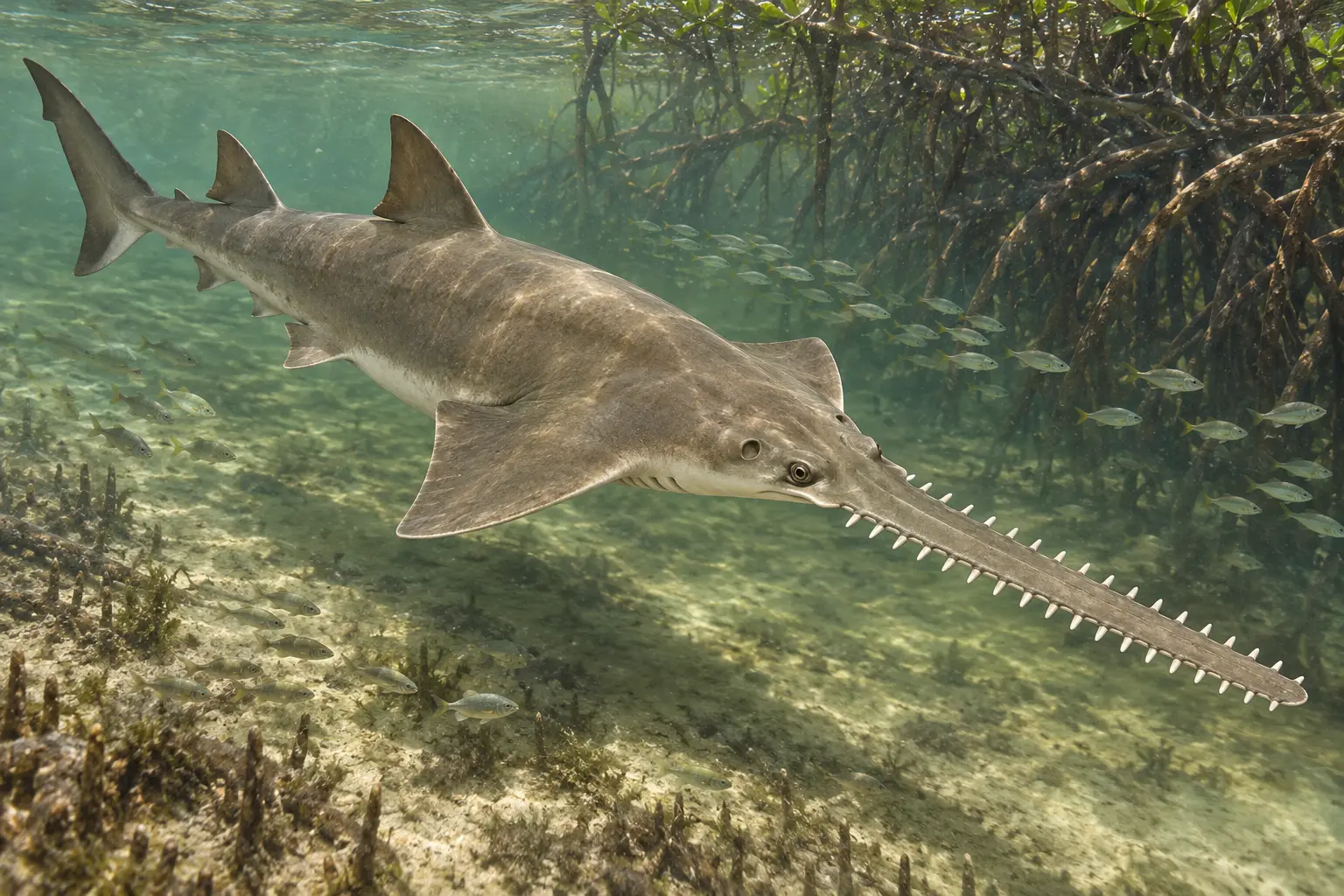
Largetooth sawfish
Pristis pristisA ray with a shark-like body and a long rostral ‘saw’ edged by teeth. It moves among marine, estuarine and freshwater habitats; dependence on this connected continuum and a rostrum easily entangled in nets make the species exceptionally vulnerable. [1,2]
Open full profile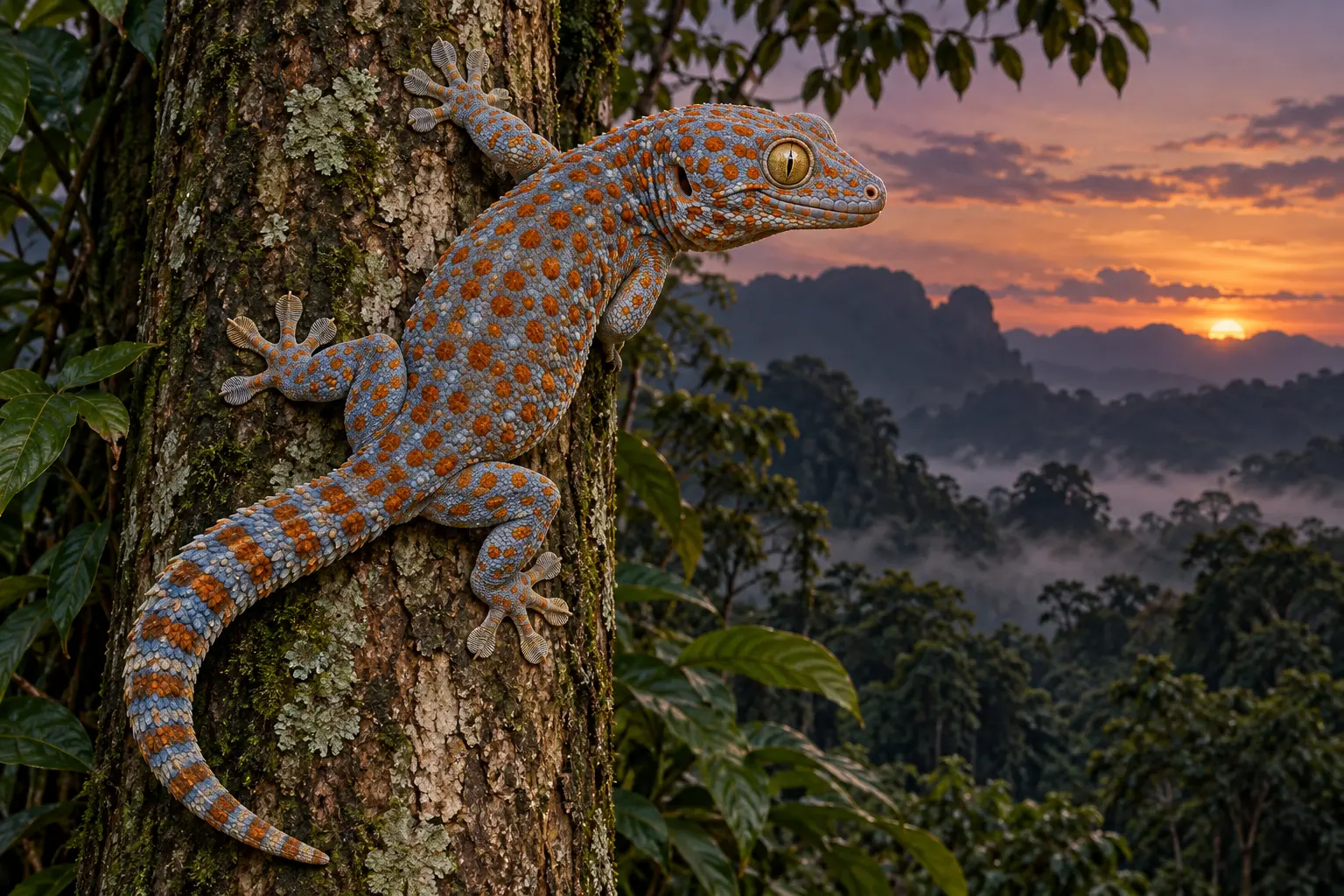
Tokay gecko
Gekko geckoA large South and Southeast Asian gecko, distinctive for blue-grey skin with orange-red spots and a resonant ‘to-kay’ call. It is a nocturnal predator on trees and buildings, with specialised adhesive feet whose performance still depends strongly on surface structure. [1,2]
Open full profile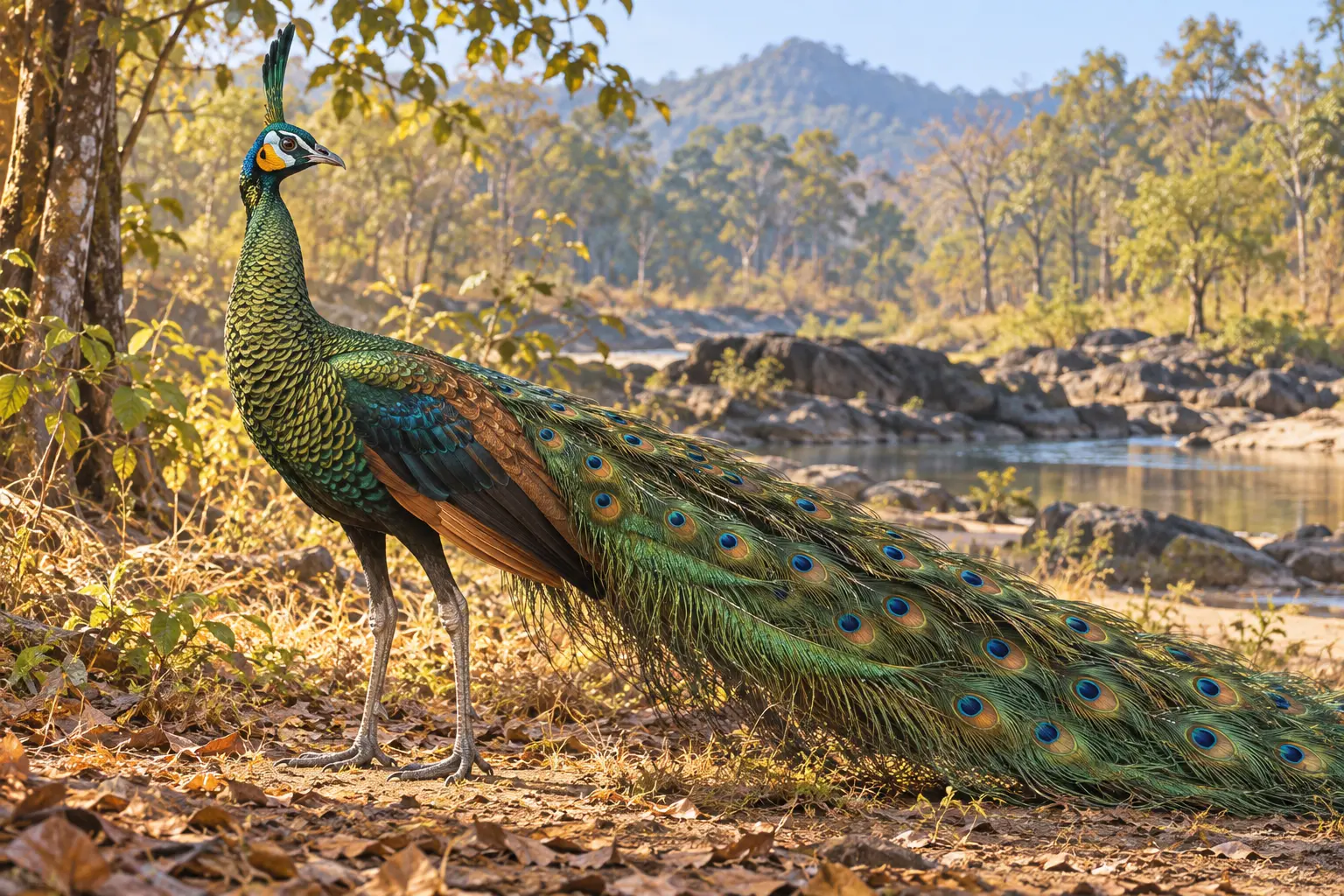
Green peafowl
Pavo muticusA Southeast Asian peafowl with iridescent green neck and breast in both sexes; the adult male carries very long, ocellated upper-tail coverts. Its range is now heavily fragmented by habitat loss, hunting and disturbance. [1–3]
Open full profile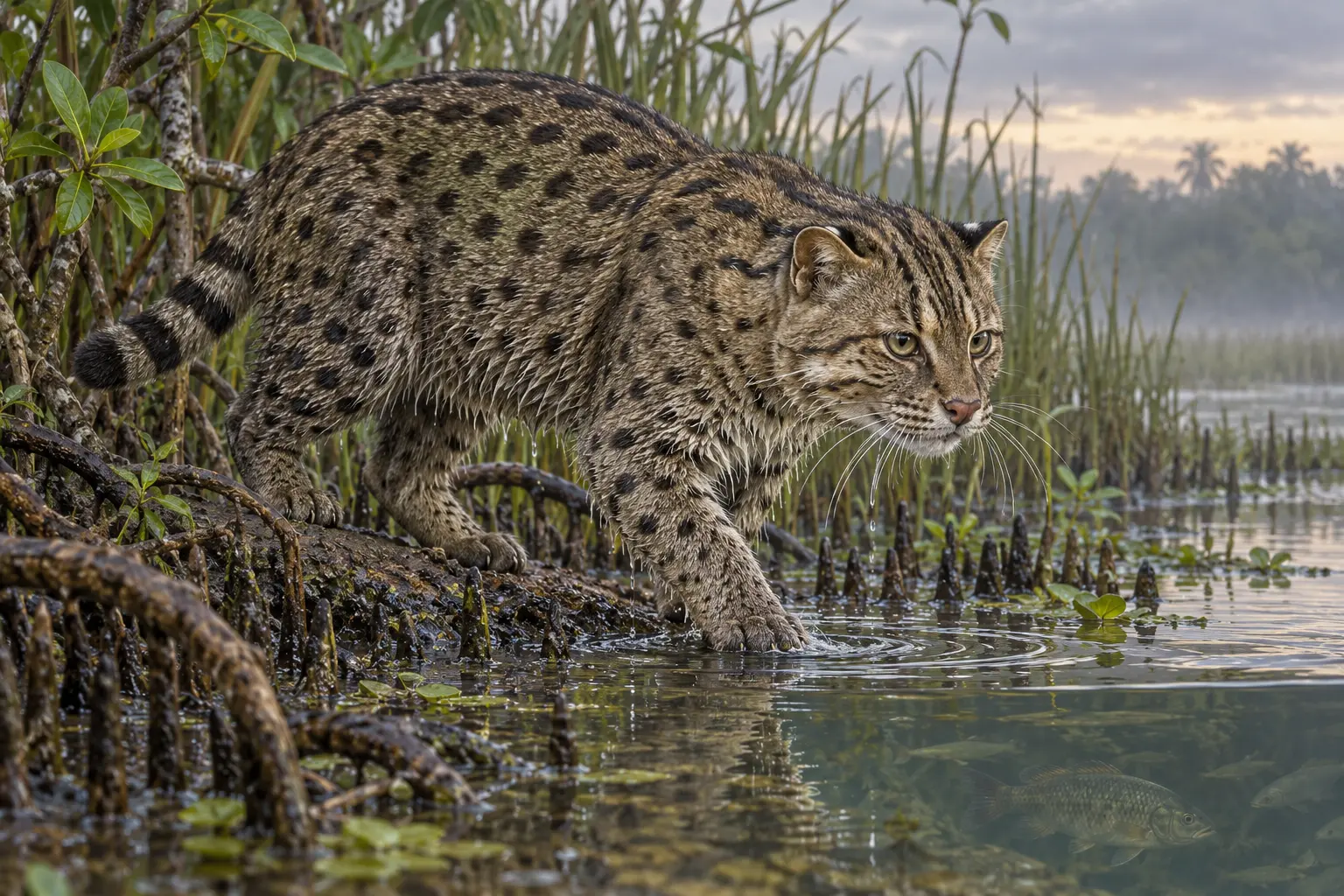
Fishing cat
Prionailurus viverrinusA medium-sized wild cat of South and Southeast Asian wetlands, with a stocky body, relatively short legs and olive-grey coat patterned with dark spots and stripes. It is a capable swimmer and waterside hunter, but fish are not its only prey. [1–3]
Open full profile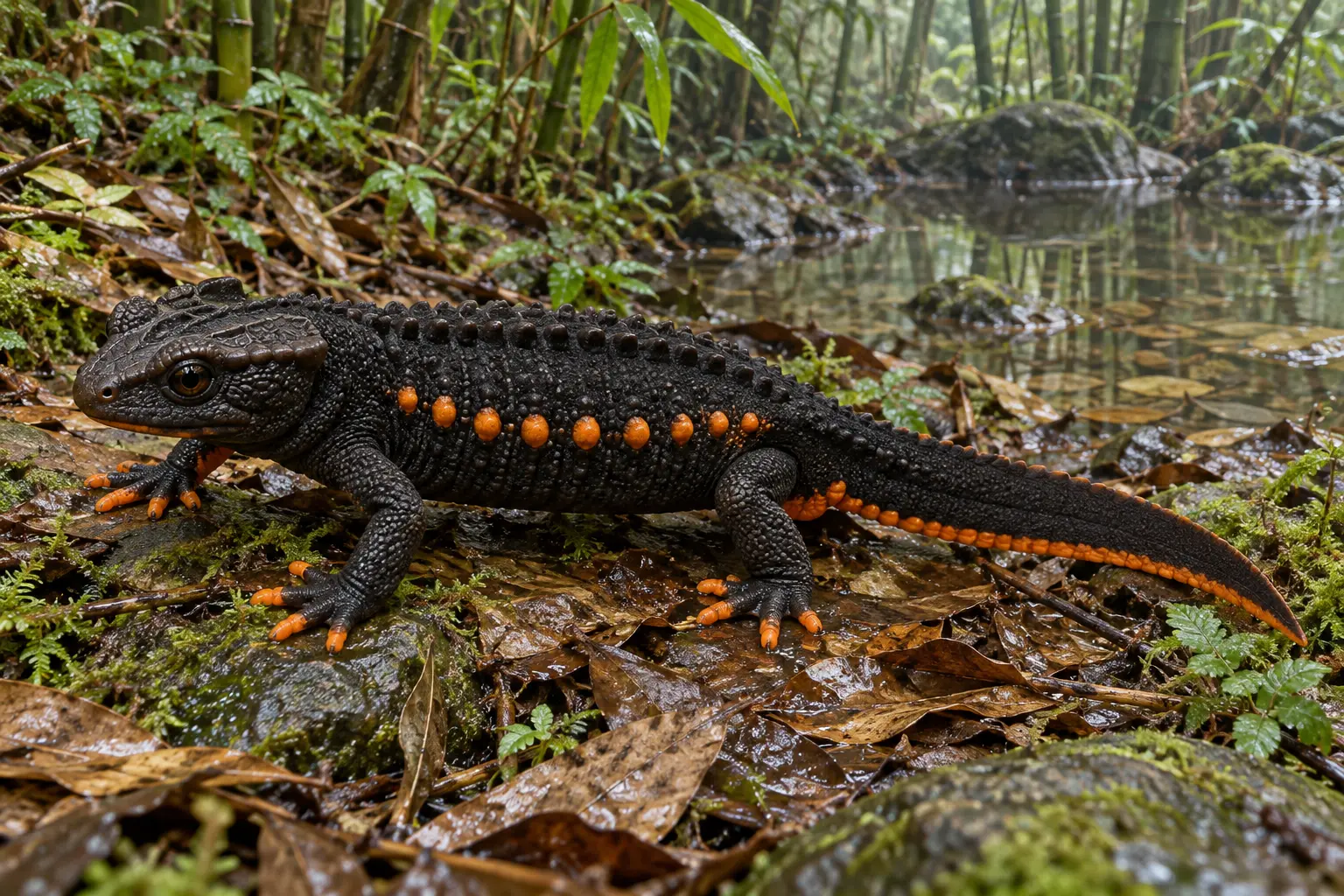
Ziegler's crocodile newt
Tylototriton ziegleriA crocodile newt described in 2013 from northern Vietnam, with rough black skin, prominent cranial ridges and a row of orange rib nodules. Its life cycle requires both humid forest floor and clean breeding ponds, making it sensitive to change in either environment. [1–3]
Open full profile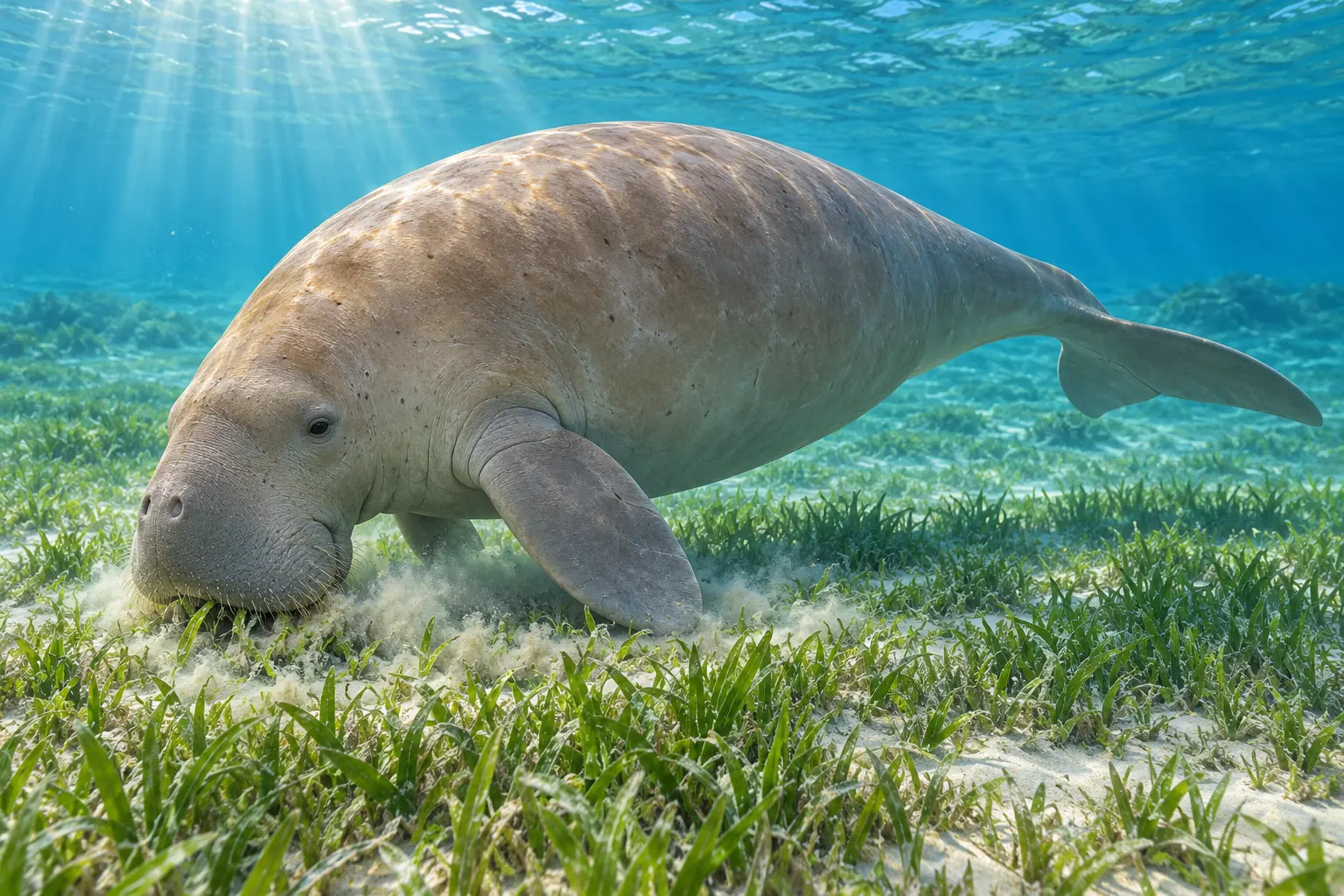
Dugong
Dugong dugonThe dugong is the only living member of Dugongidae and a marine herbivore dependent on shallow seagrass meadows across the Indo-West Pacific. A downturned muzzle, paddle-like forelimbs and horizontally fluked tail aid identification. [1,2]
Open full profile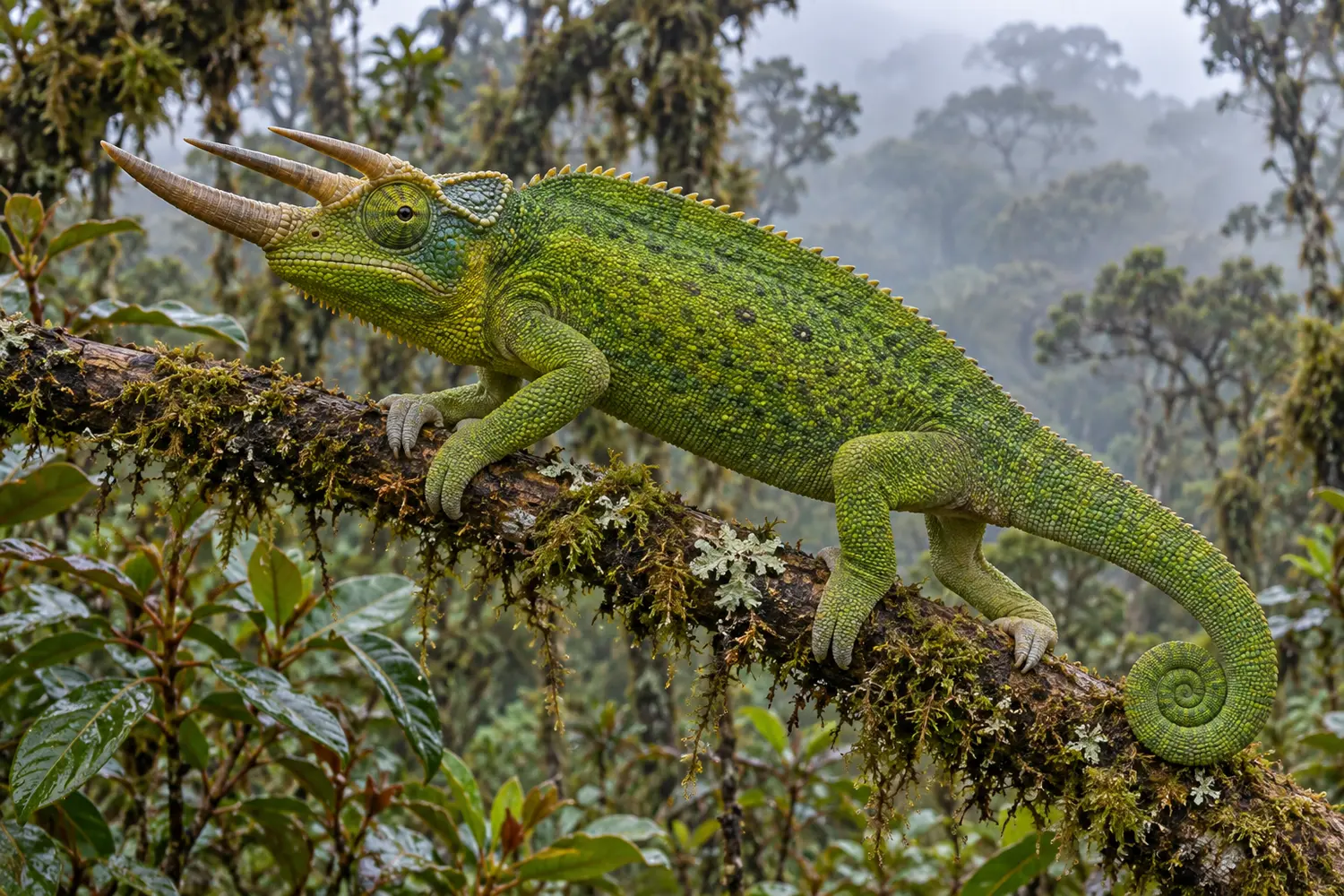
Jackson's chameleon
Trioceros jacksoniiAn East African montane chameleon whose adult males carry three long horns. It favours cool, humid conditions, gives birth to live young, and uses colour, posture and body form for communication rather than camouflage alone. [1–3]
Open full profile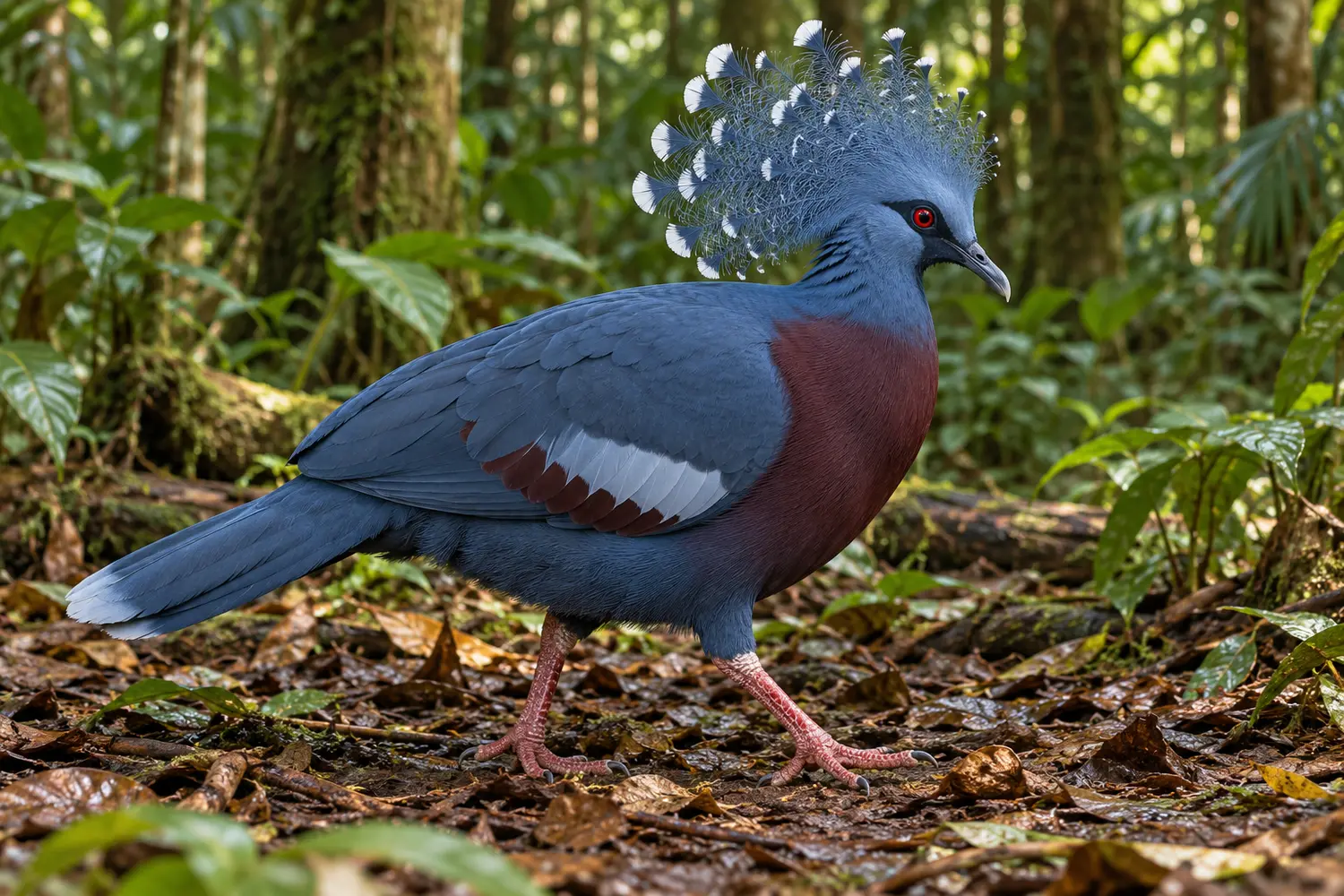
Victoria crowned pigeon
Goura victoriaOne of the largest living pigeons, endemic to the New Guinea region and distinguished by a blue lace crest tipped in white. This ground-dwelling lowland forest bird reproduces slowly and is pressured by hunting and forest loss. [1–3]
Open full profile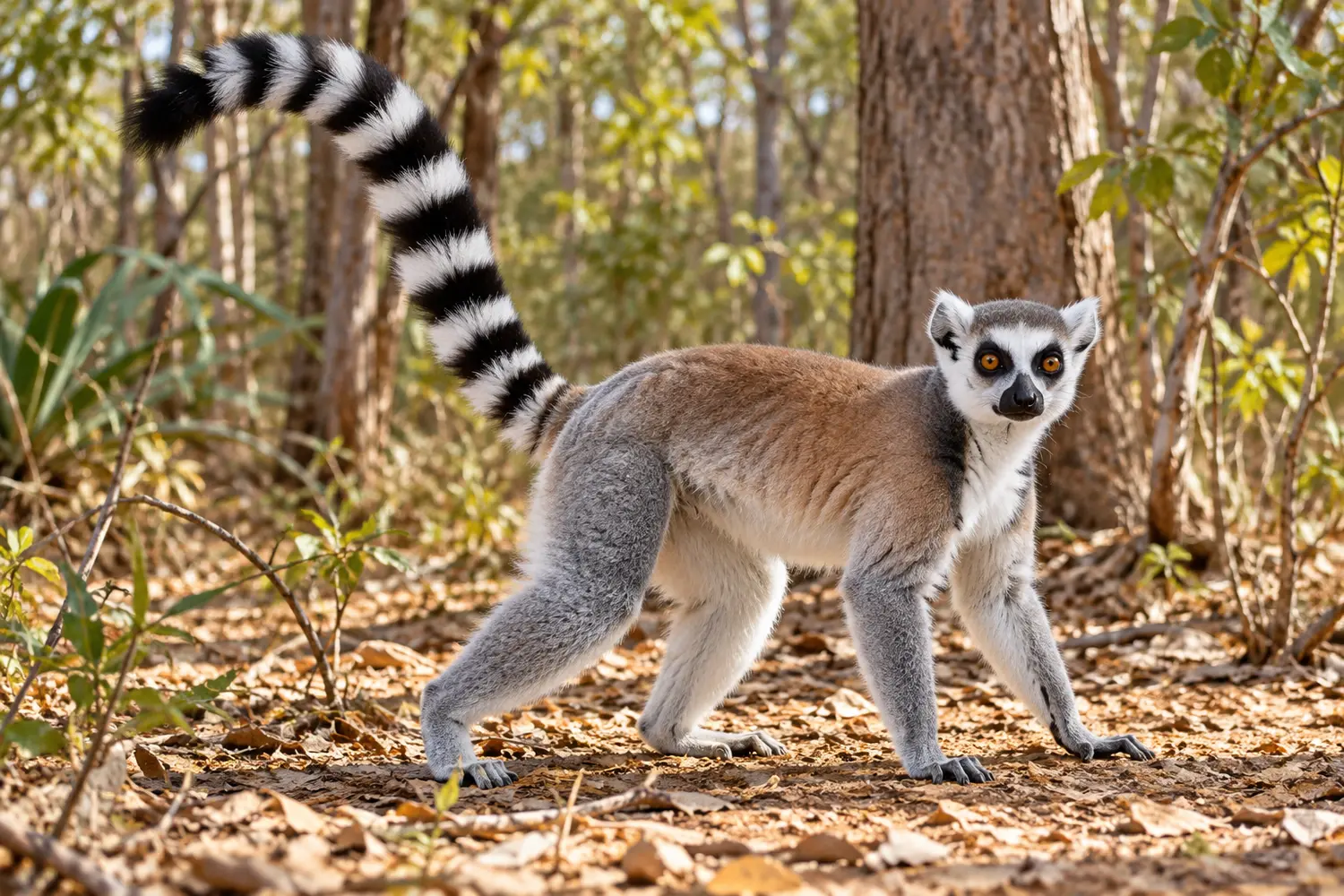
Ring-tailed lemur
Lemur cattaA Madagascar-endemic primate with 13 alternating black-and-white tail bands that spends more time on the ground than most lemurs. Female-dominant societies communicate strongly through scent, sound and posture. [1–3]
Open full profile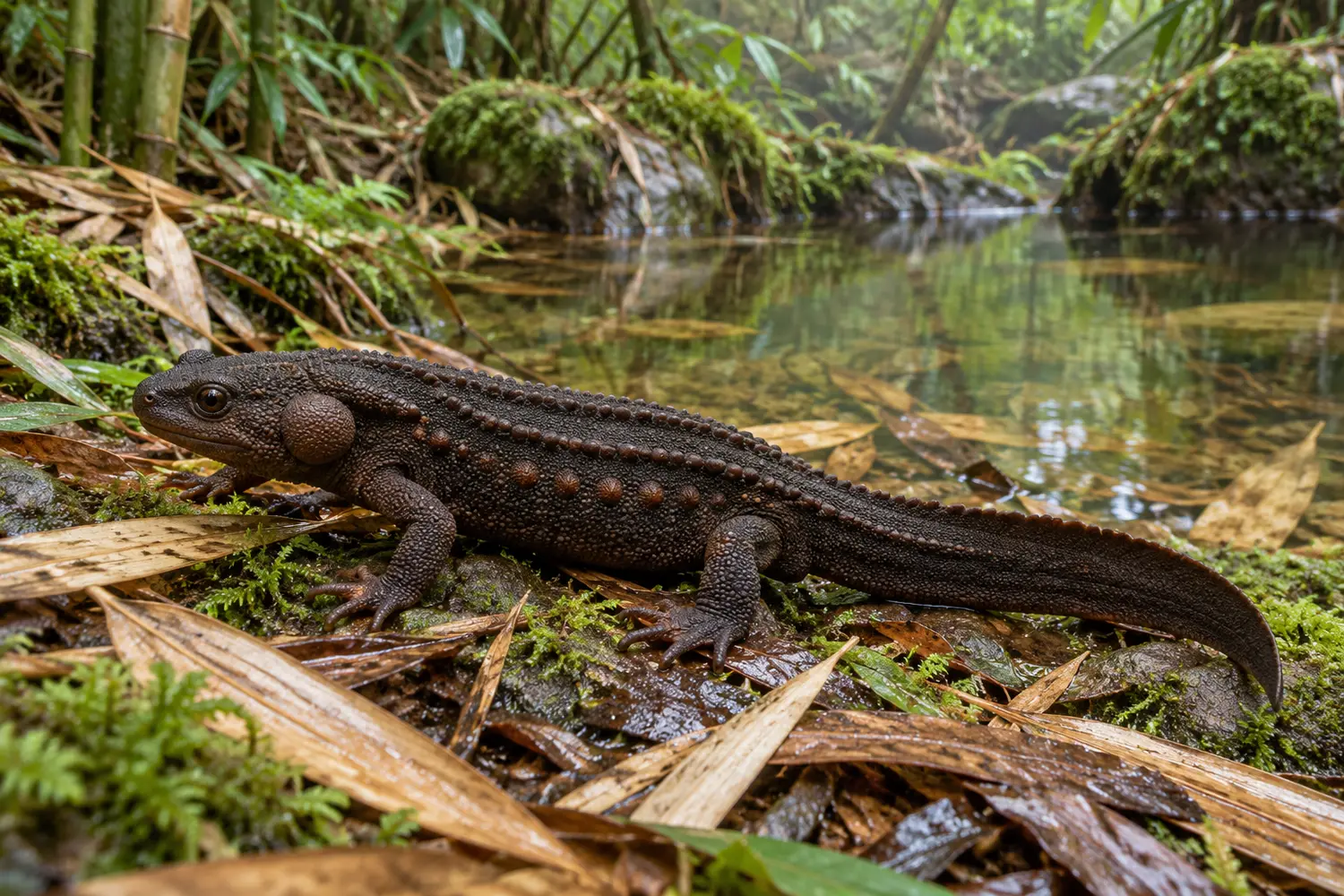
Vietnamese crocodile newt
Tylototriton vietnamensisA northern Vietnam endemic described in 2005 and associated with small breeding ponds in humid forest. Warty skin, bony ridges and poison glands give a miniature-crocodile appearance, but it is a permeable-skinned amphibian. [1–4]
Open full profile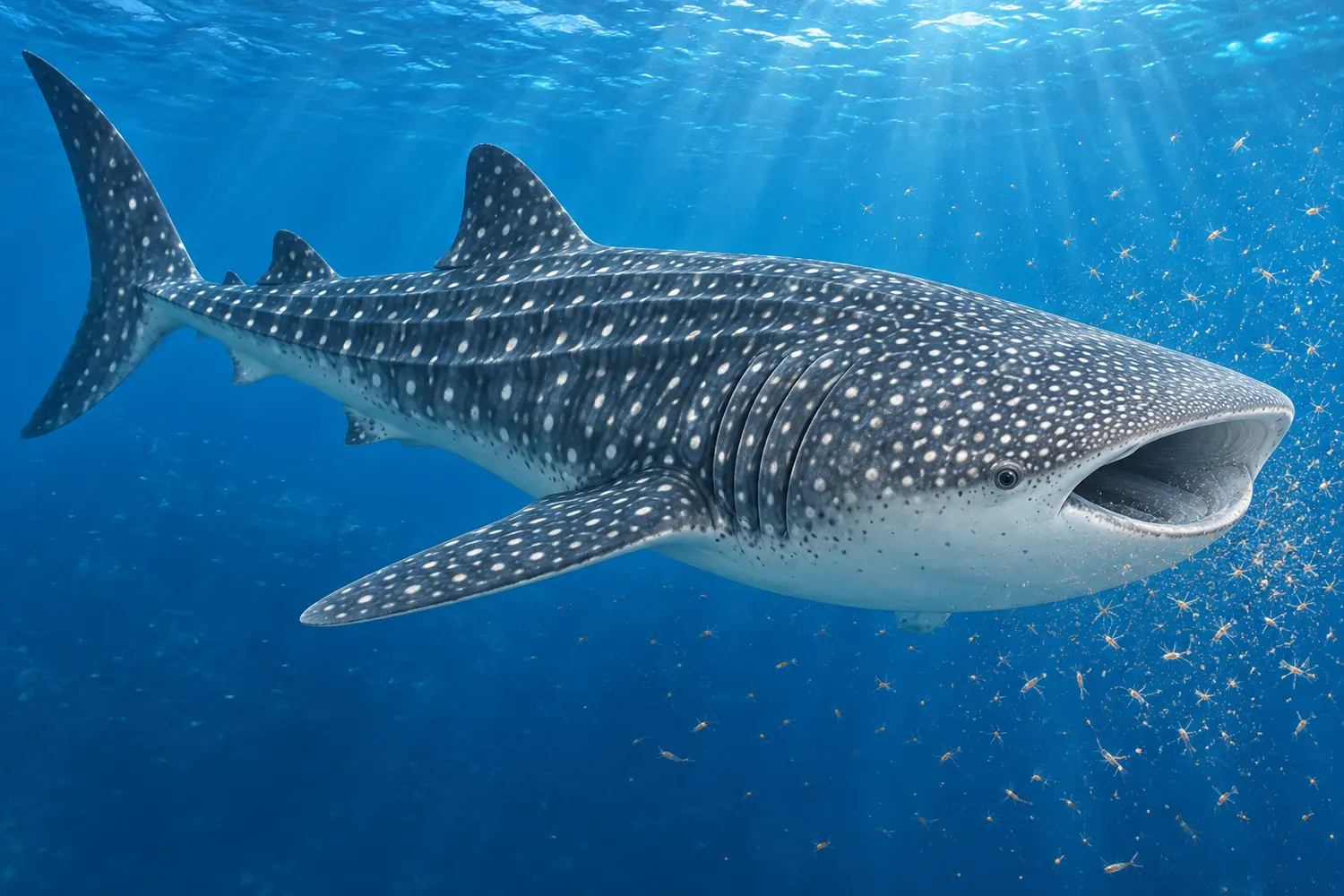
Whale shark
Rhincodon typusThe world's largest fish is a filter feeder, recognised by a broad flat head and a spot-stripe pattern unique to each individual. It ranges widely through tropical and subtropical seas and gathers seasonally where food is concentrated. [1–4]
Open full profile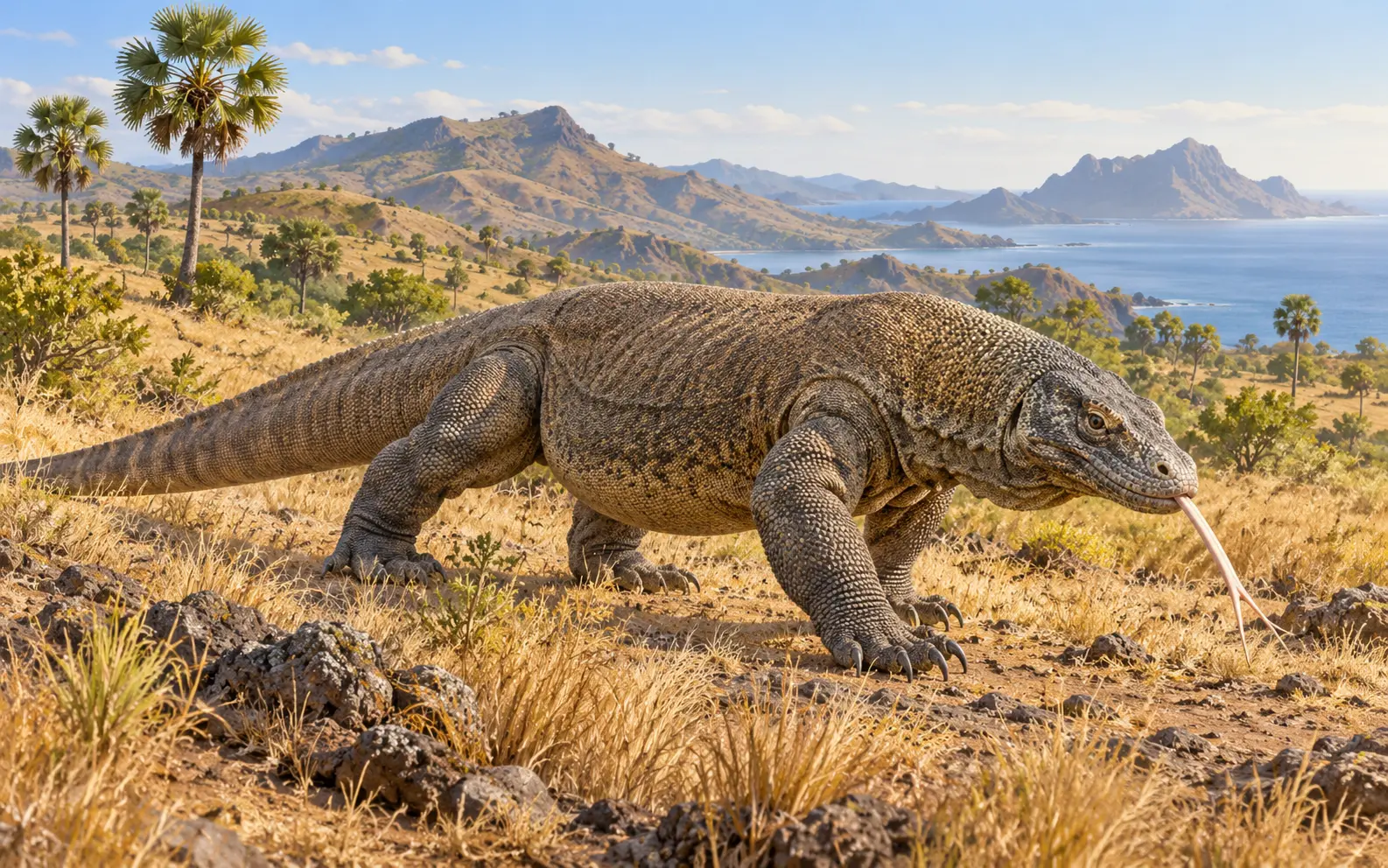
Komodo dragon
Varanus komodoensisThe world's largest living lizard, endemic to a small group of Indonesian islands. It is an apex predator, but its narrow range makes populations especially vulnerable to habitat change, prey decline and sea-level rise. [1–3]
Open full profile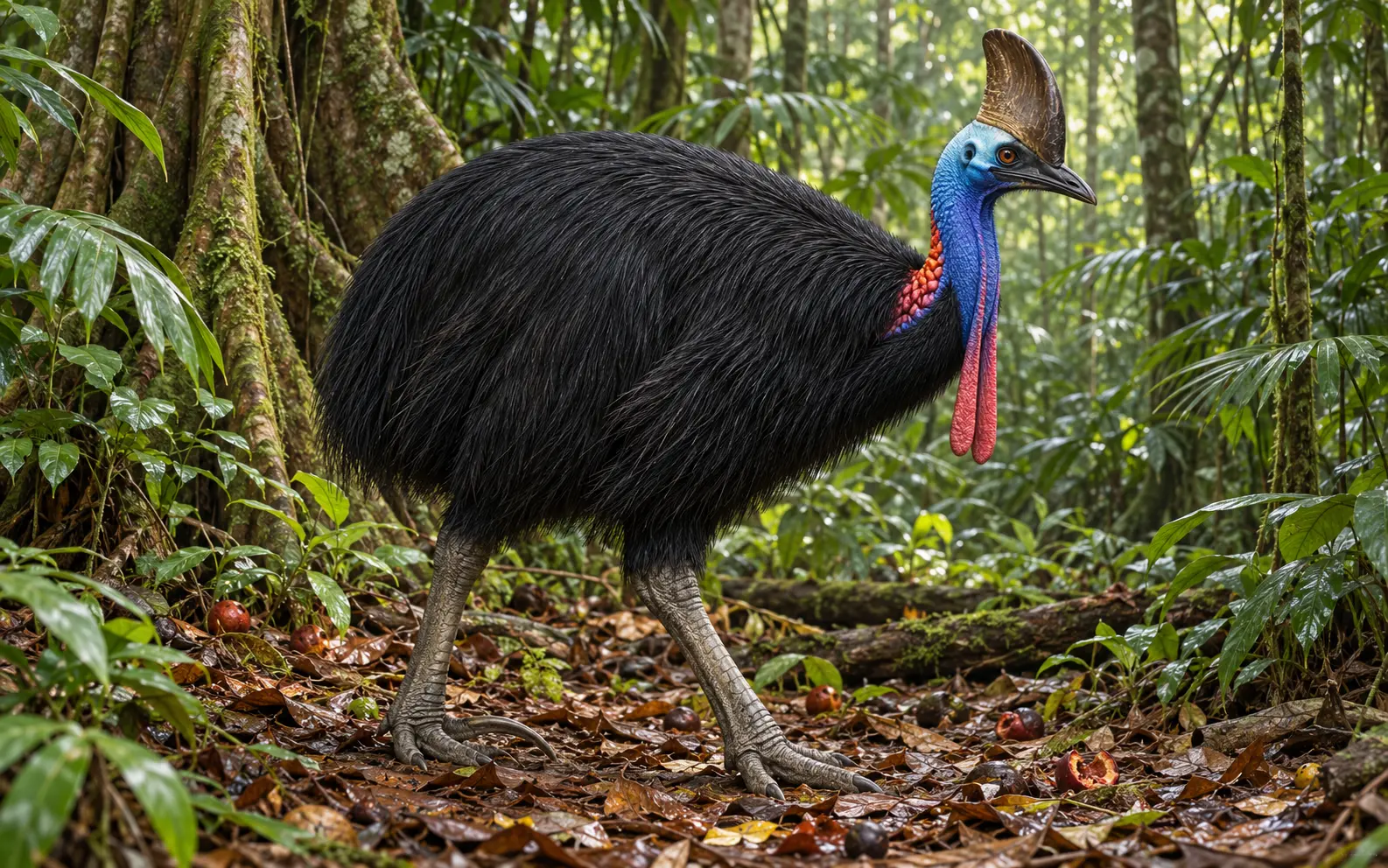
Southern cassowary
Casuarius casuariusA large flightless forest bird of New Guinea, north-eastern Australia and nearby islands, recognised by its casque, blue neck and two red wattles. It is a key seed disperser because it swallows and transports fruits too large for many other birds. [1–3]
Open full profile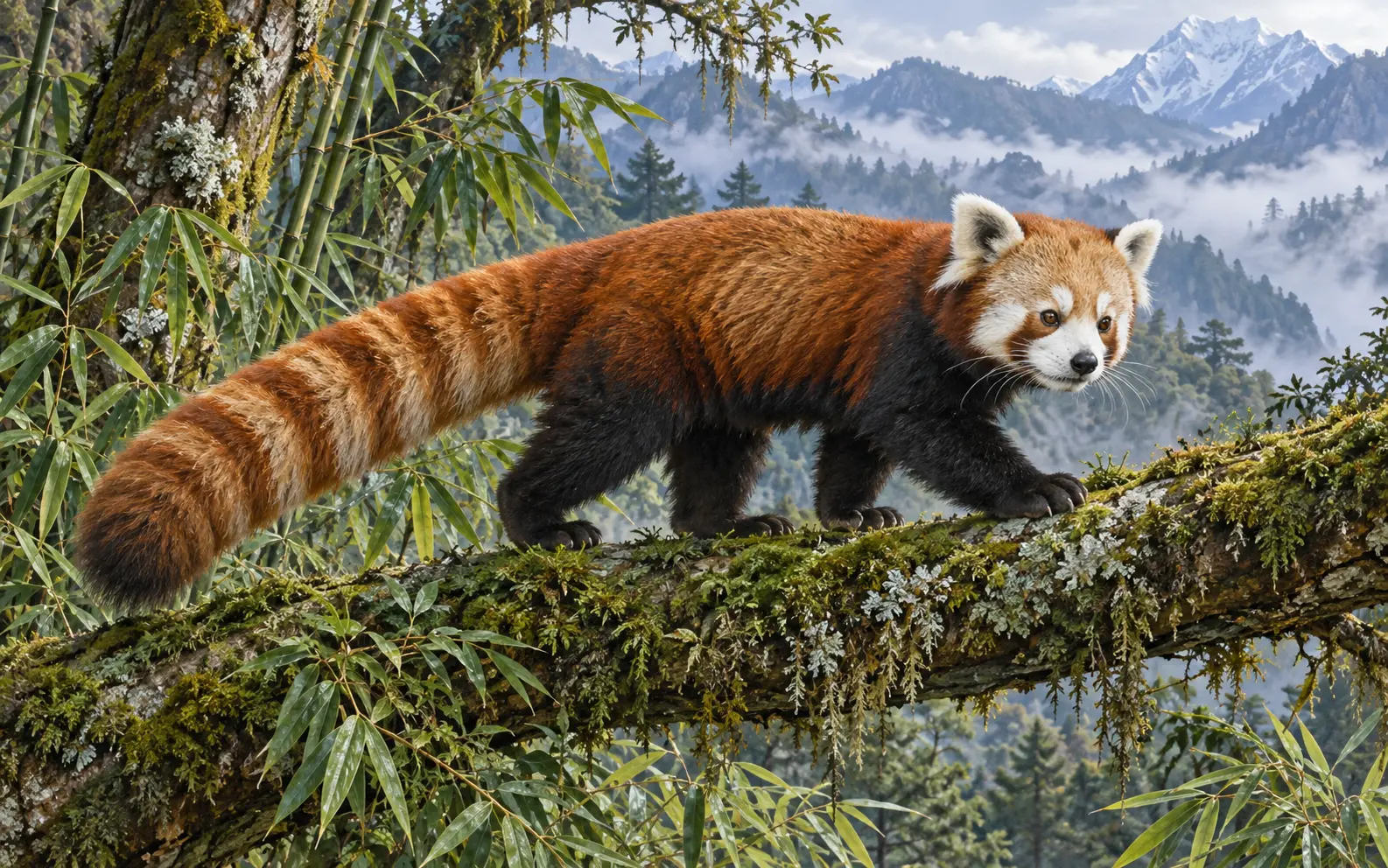
Red panda
Ailurus fulgensAn arboreal mammal of temperate Himalayan and south-west Chinese forests, with reddish fur, a white-marked face and a long ringed tail. Although in Carnivora, it feeds mainly on bamboo and is the only living member of Ailuridae. [1,2]
Open full profile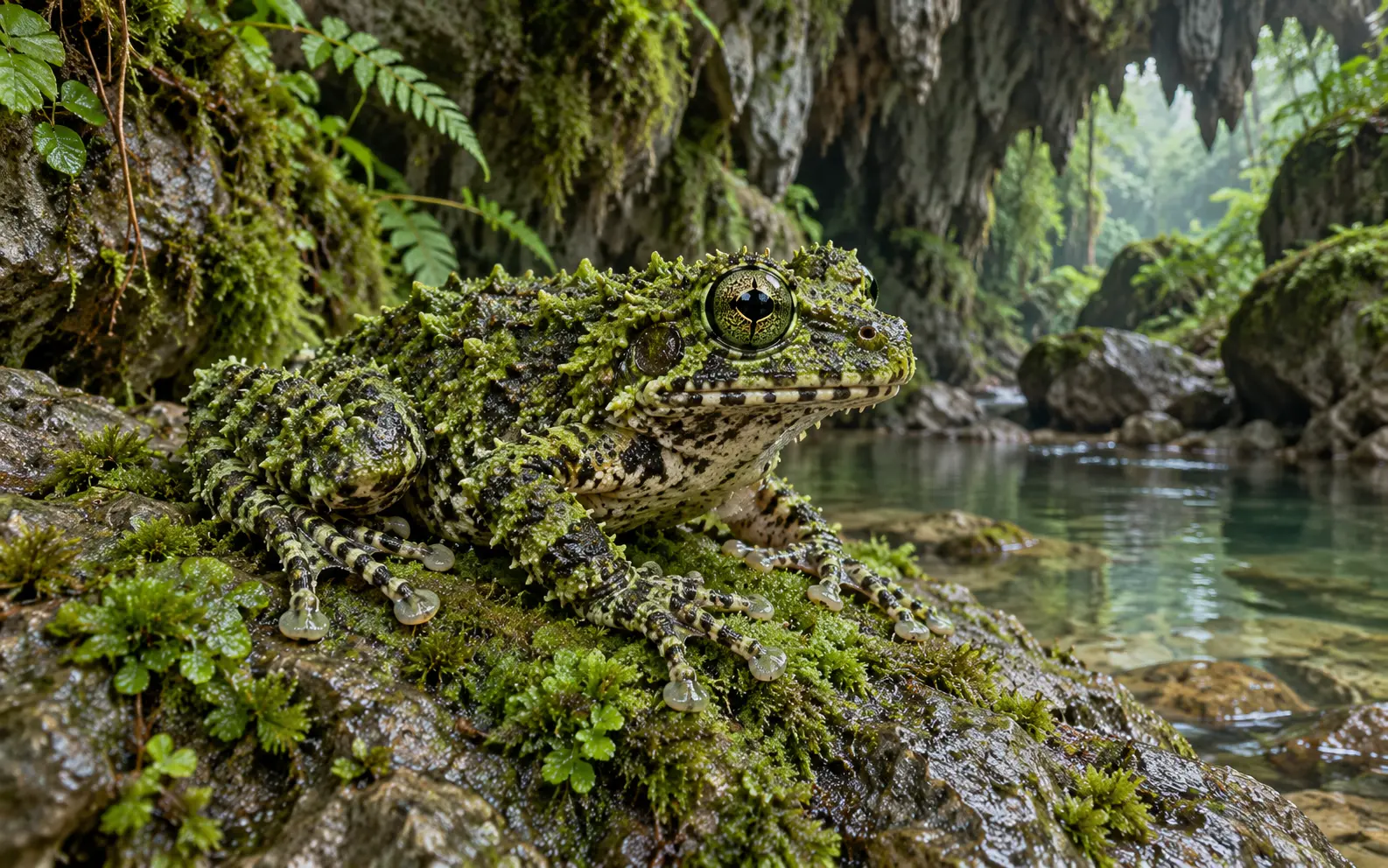
Vietnamese mossy frog
Theloderma corticaleA rough-skinned green-brown tree frog whose form disrupts its outline among moss, lichen and wet rock. Associated with humid forest, limestone caves and mountain water in Vietnam and neighbouring areas, it depends on both forest and water quality. [1–3]
Open full profile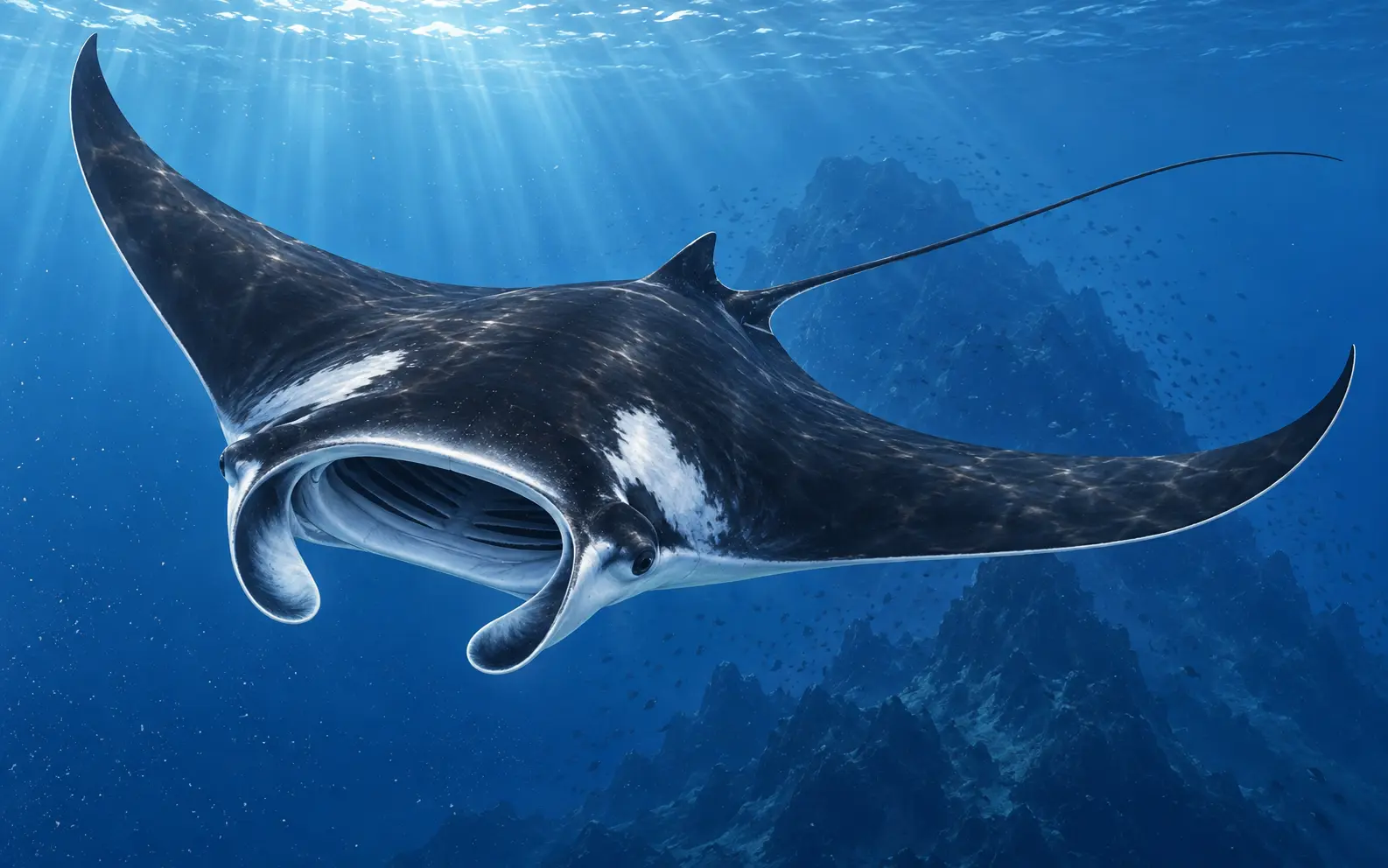
Giant oceanic manta ray
Mobula birostrisThe world's largest ray, travelling long distances among the open ocean, productive coasts and seamounts. Two cephalic lobes unfurl to guide plankton-rich water into the mouth; exceptionally slow reproduction makes the species highly sensitive to fishing mortality. [1,2]
Open full profile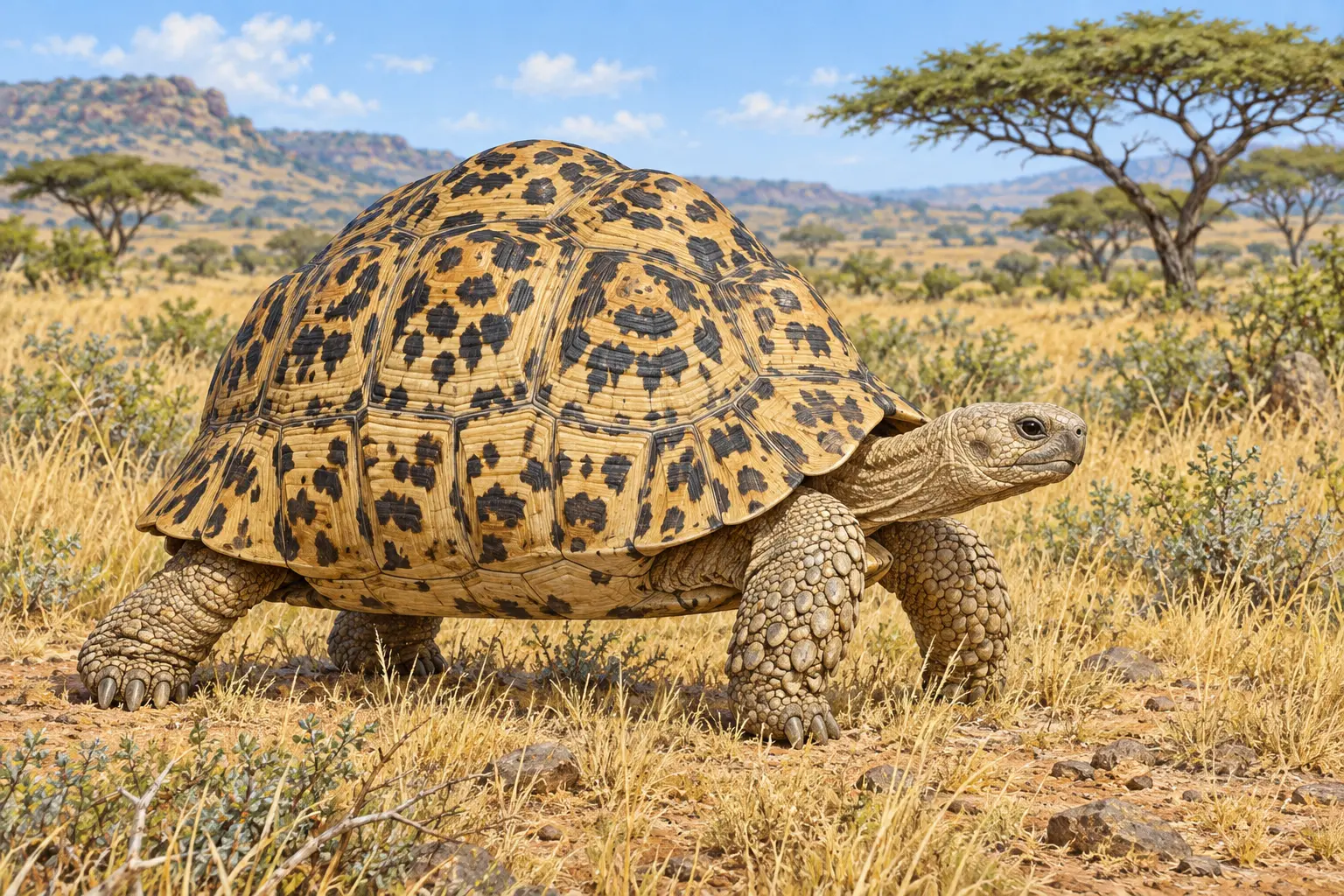
Leopard tortoise
Stigmochelys pardalisA large, high-domed tortoise with variable yellow-and-dark leopard markings, widely distributed across eastern and southern Africa. It uses grassland, savanna, scrub and semi-arid country; morphology, size and genetics vary geographically, making precise provenance records important. [1,2]
Open full profile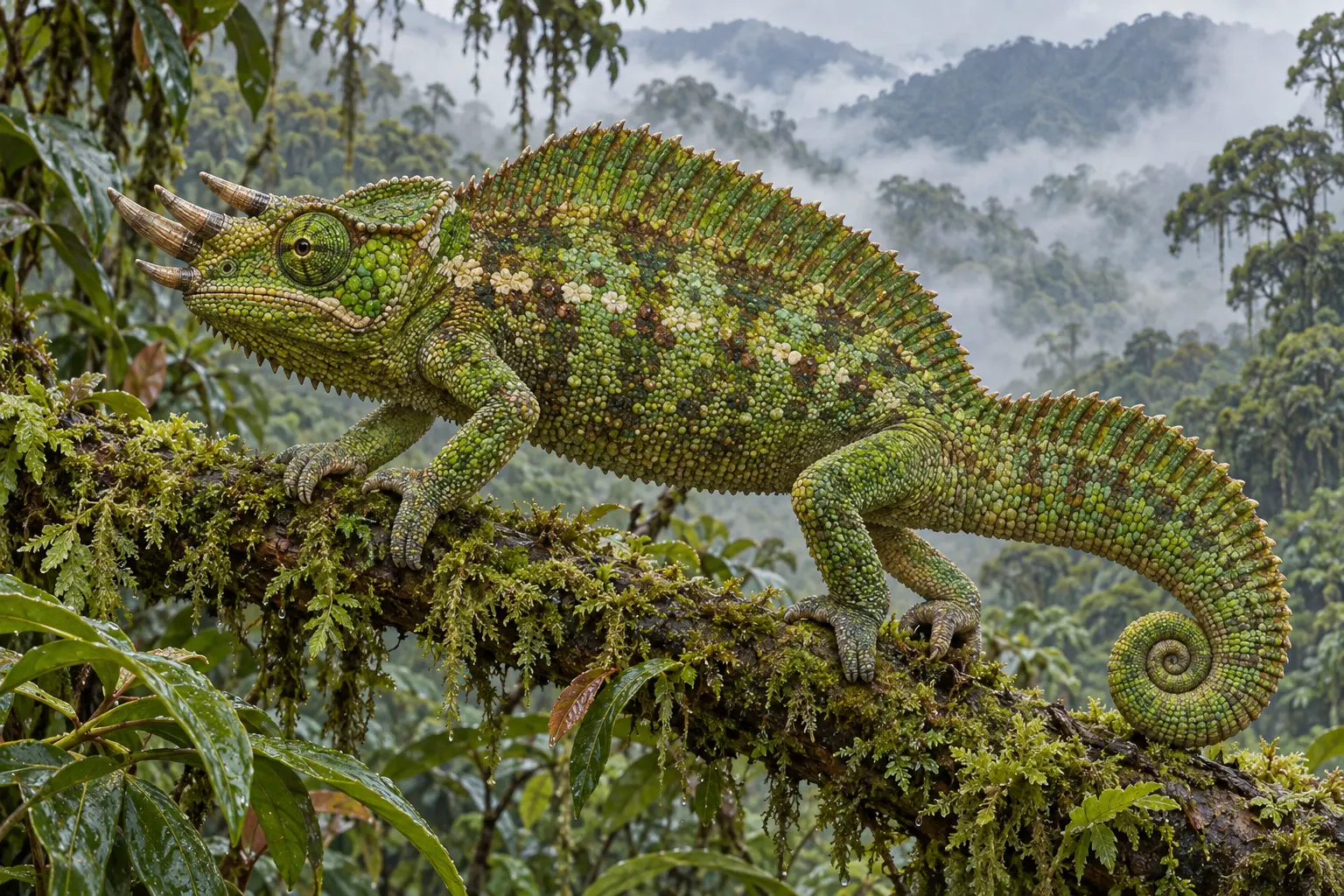
Four-horned chameleon
Trioceros quadricornisA montane chameleon of Cameroon and south-eastern Nigeria whose males carry short rostral horns and a tall sail-like dorsal-tail crest. It is specialised for cool, humid mountain forest, so lowland-chameleon temperatures should not be generalised to this species. [1–3]
Open full profile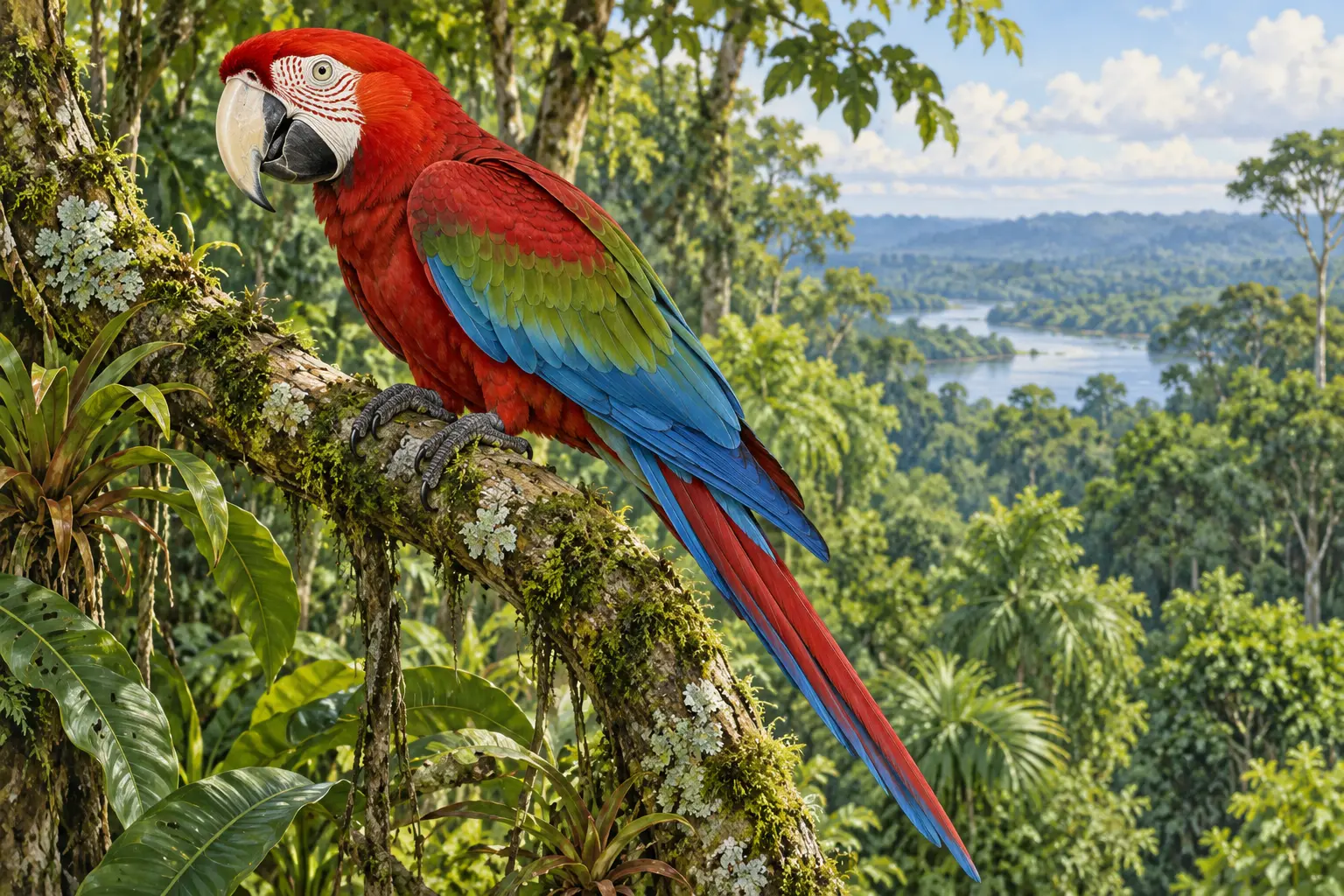
Green-winged macaw
Ara chloropterusA very large South American macaw, mainly red with green middle-wing feathers, blue outer wings and fine red feather lines across the white facial patch. The powerful bill processes hard foods, while pair and flock life creates high social and cognitive care needs. [1,2]
Open full profile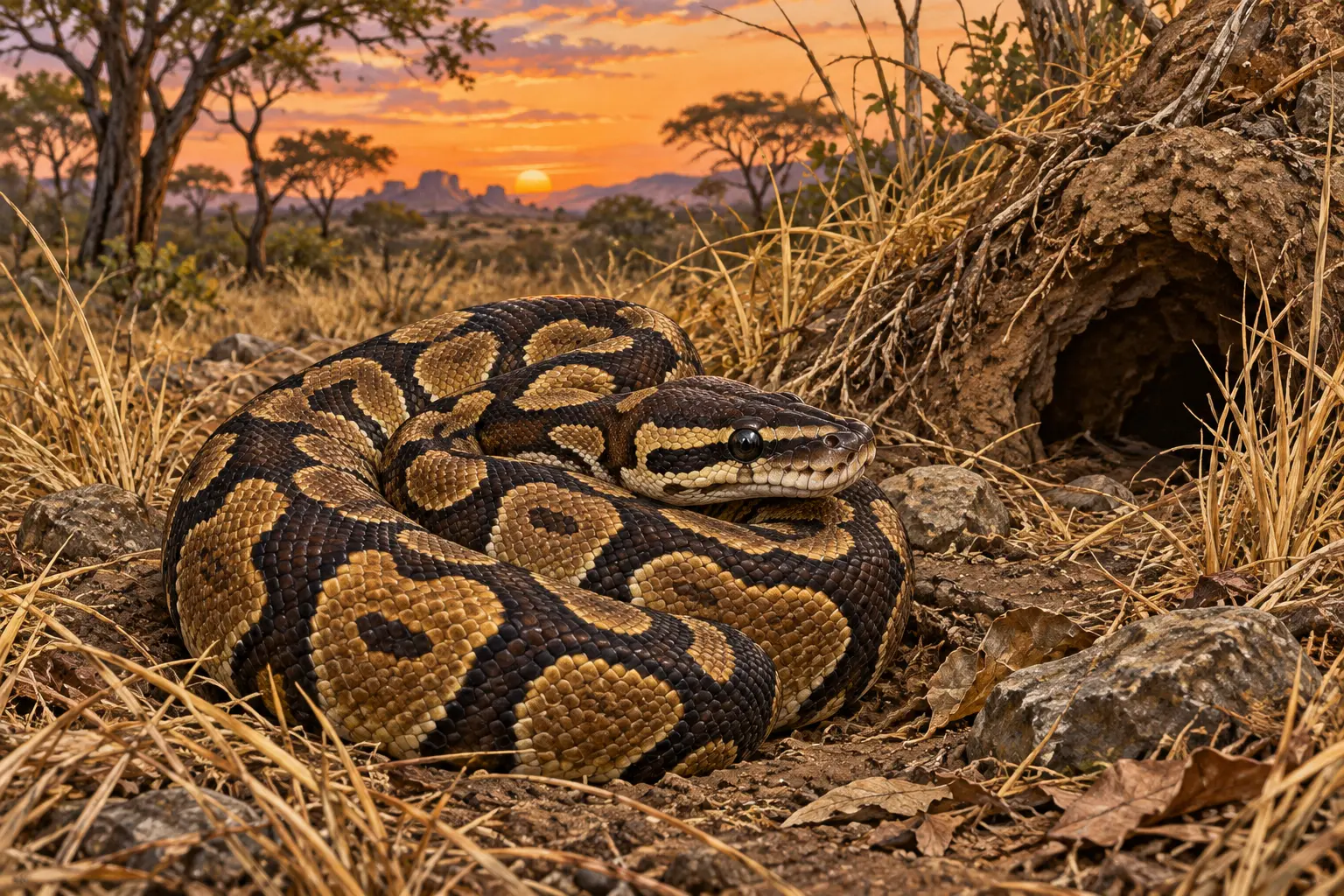
Ball python
Python regiusA small-to-medium West and Central African python named for its habit of tucking the head into tight body coils when defensive. It uses savanna, grassland, woodland, farmland and animal burrows; large-scale harvest pressure makes provenance scrutiny essential. [1,2]
Open full profile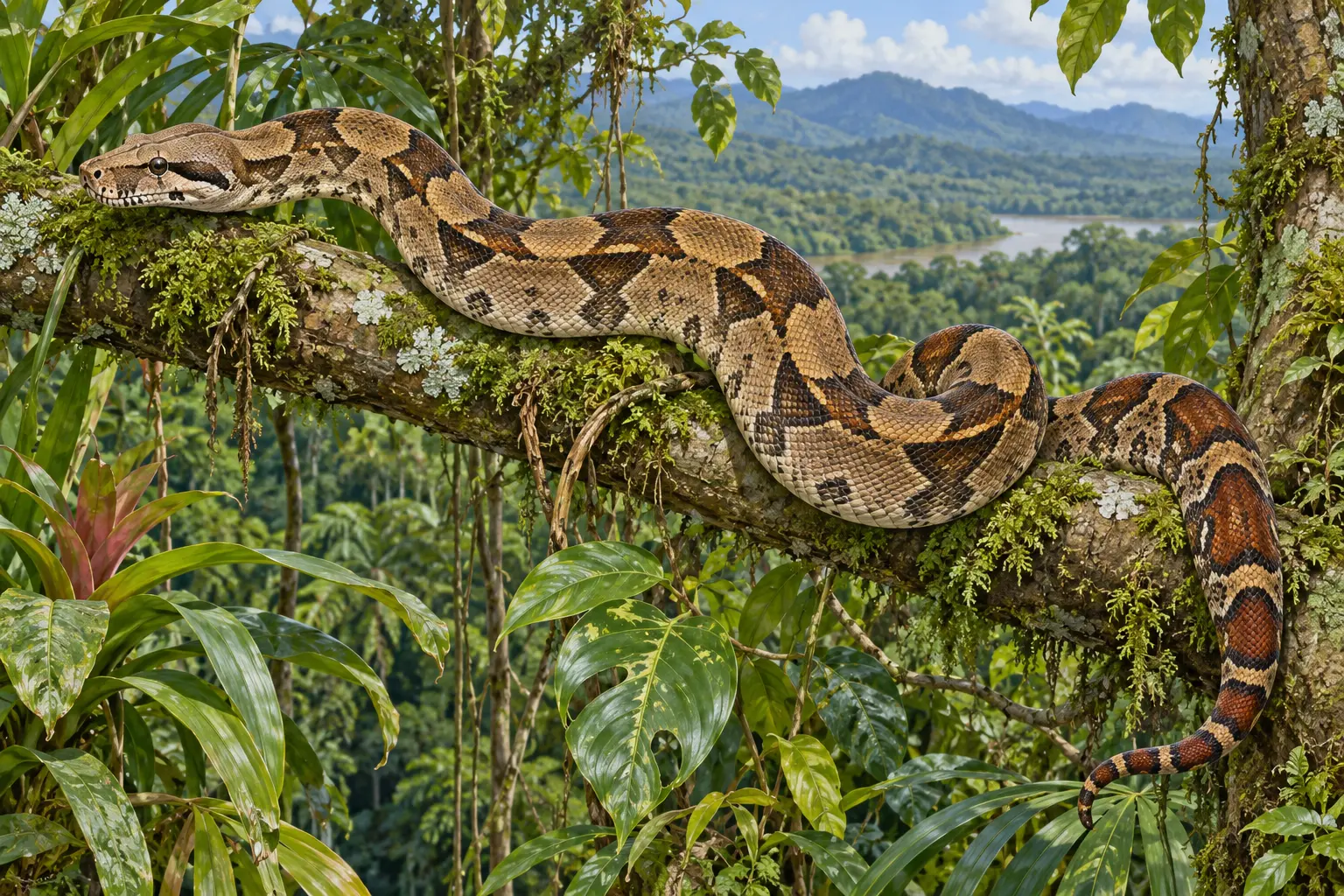
Boa constrictor
Boa constrictorA large South American boa marked by dorsal saddle blotches and, in many populations, a rich reddish-brown tail. It ambushes and constricts prey, causing circulatory arrest; the name and range were historically used very broadly, making current identification both a biological and legal priority. [1–3]
Open full profile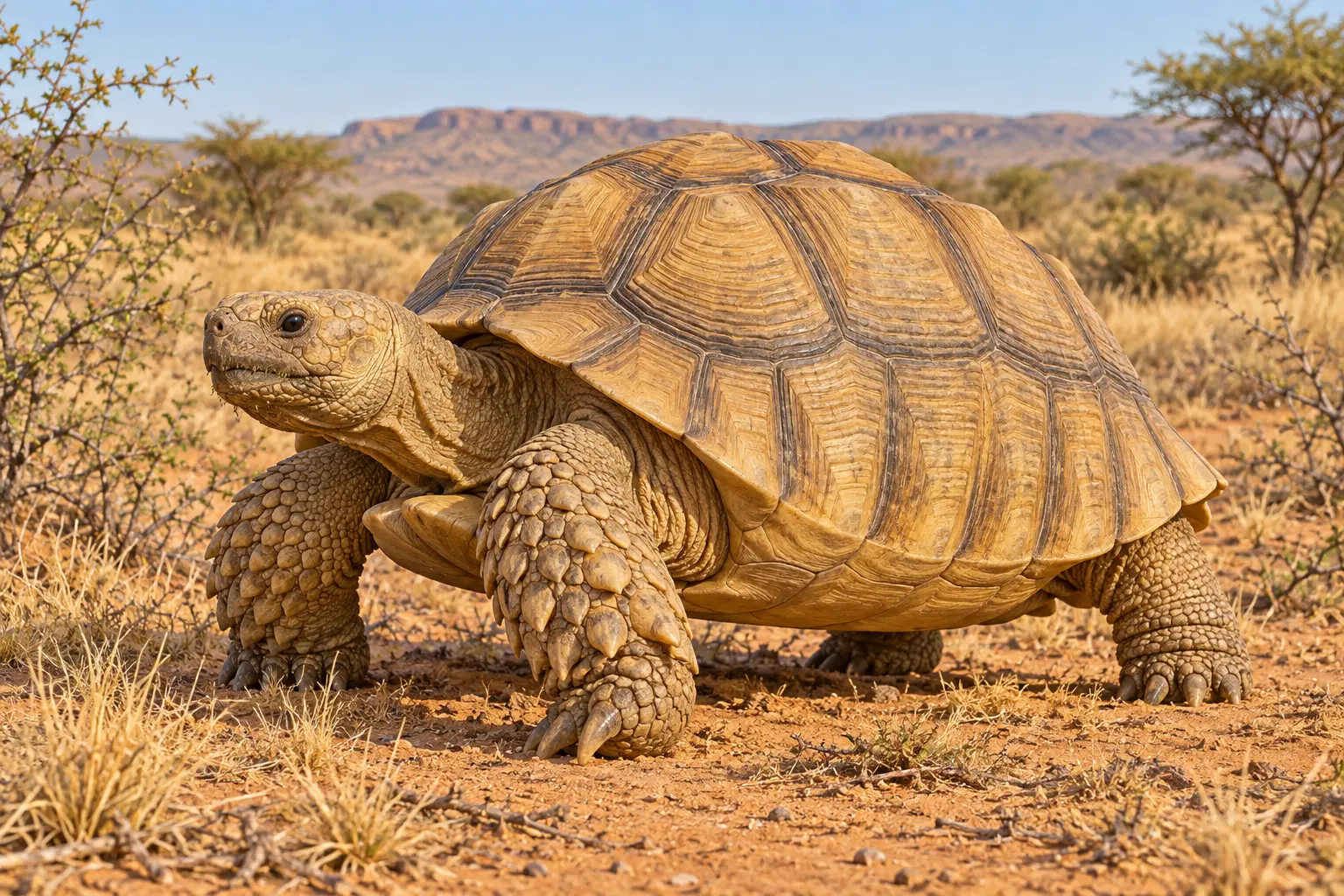
African spurred tortoise
Centrochelys sulcataAfrica's largest mainland tortoise, occupying the dry Sahel belt south of the Sahara. A sand-coloured shell, heavily scaled forelimbs and prominent thigh spurs aid identification, while deep burrowing is central to surviving temperature extremes. [1,2]
Open full profile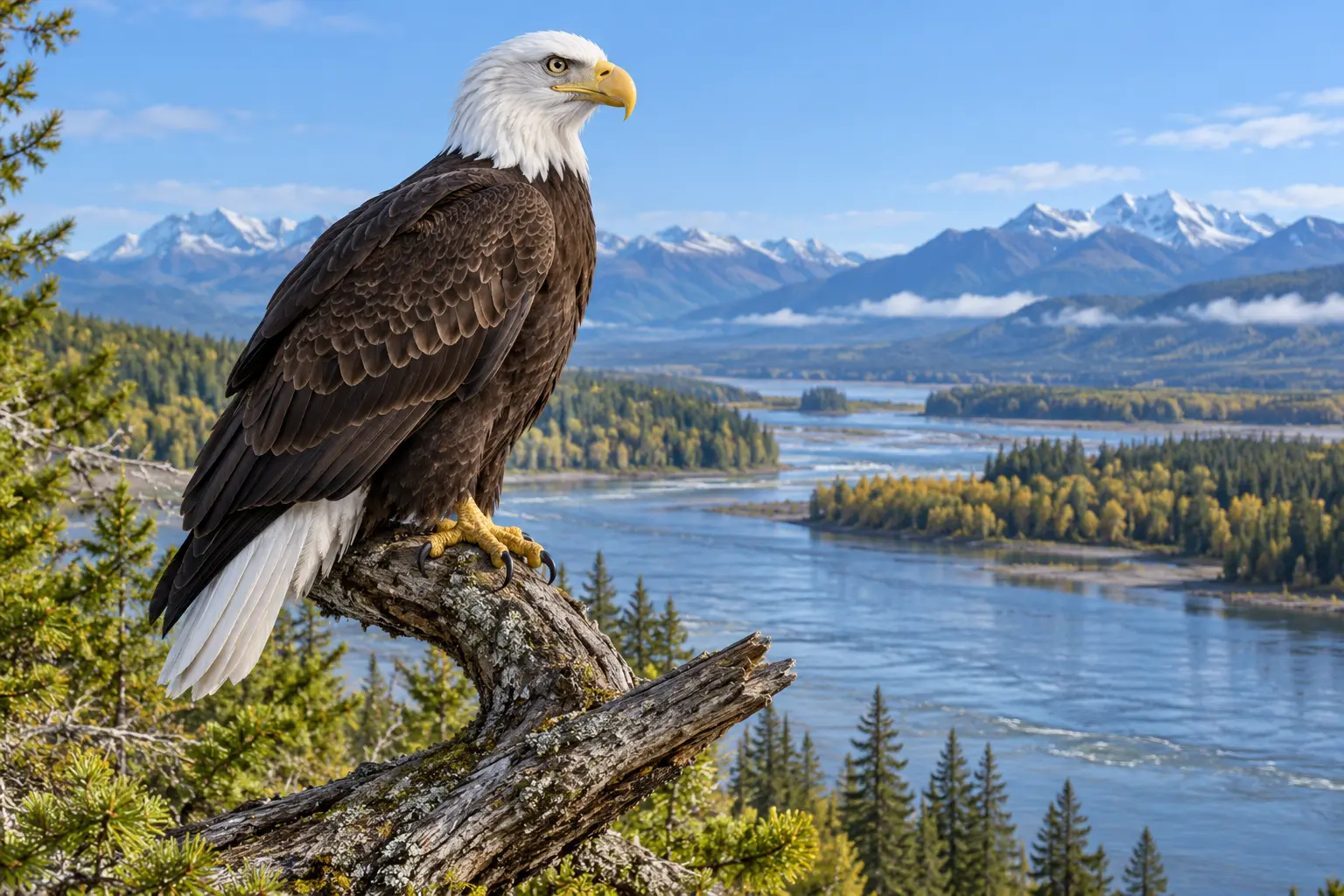
Bald eagle
Haliaeetus leucocephalusA North American sea eagle closely associated with fish-rich rivers, lakes, estuaries and coasts. The full white head and tail appear only in adults; recovery after DDT is a landmark example of habitat protection, law and pollution control working together. [1,2]
Open full profile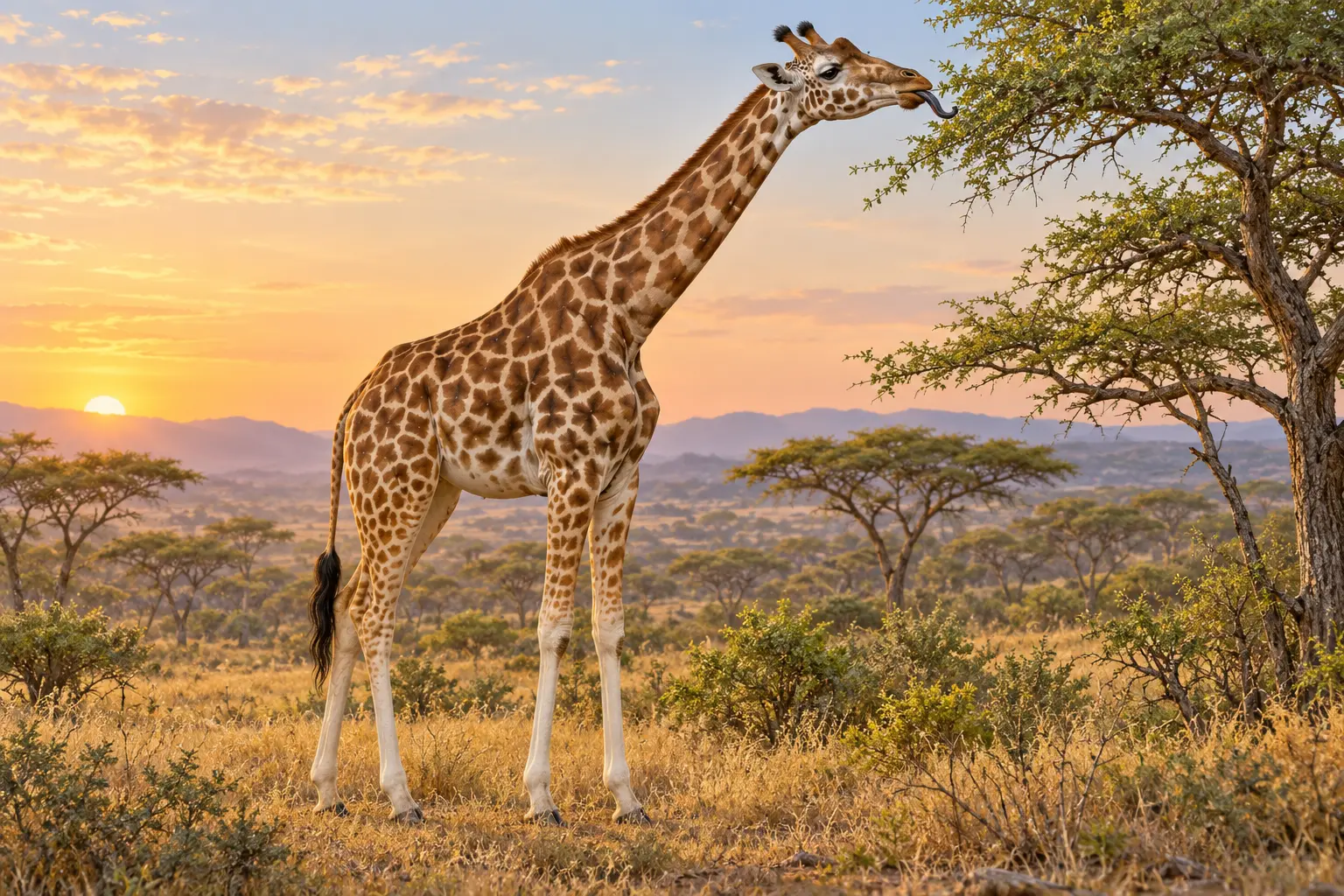
Northern giraffe
Giraffa camelopardalisOne of four giraffe species under the treatment now used by GCF and the IUCN specialist group. Only about 7,037 wild individuals remain across the Kordofan, Nubian and West African subspecies in fragmented West, Central and East African ranges. [1,2]
Open full profile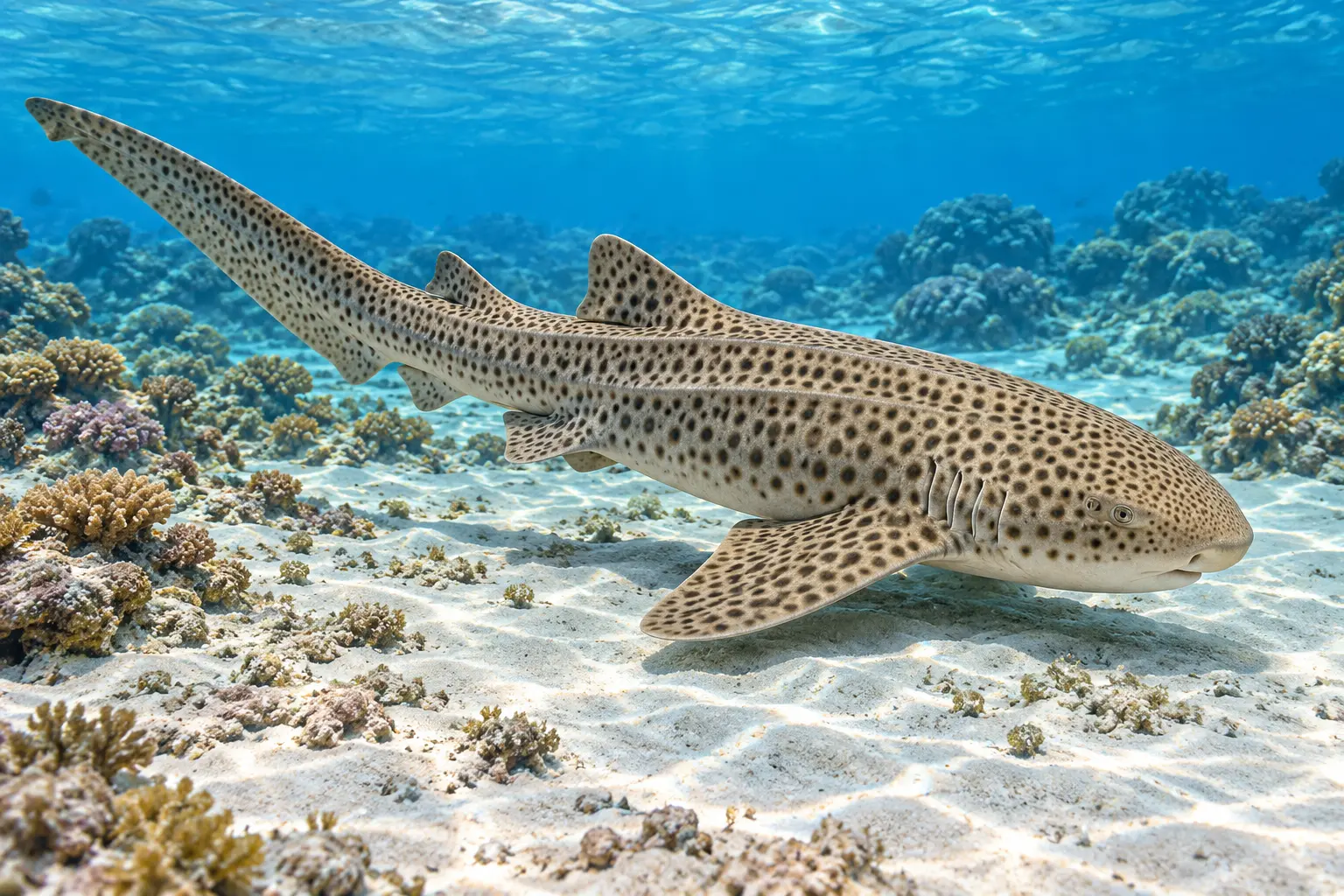
Zebra shark
Stegostoma tigrinumA tropical carpet shark with a dramatic pattern change: juveniles carry pale bars on a dark body, while adults are dark-spotted on yellow-brown. Longitudinal ridges and an exceptionally long tail suit bottom hunting on Indo-Pacific reefs. [1–3]
Open full profile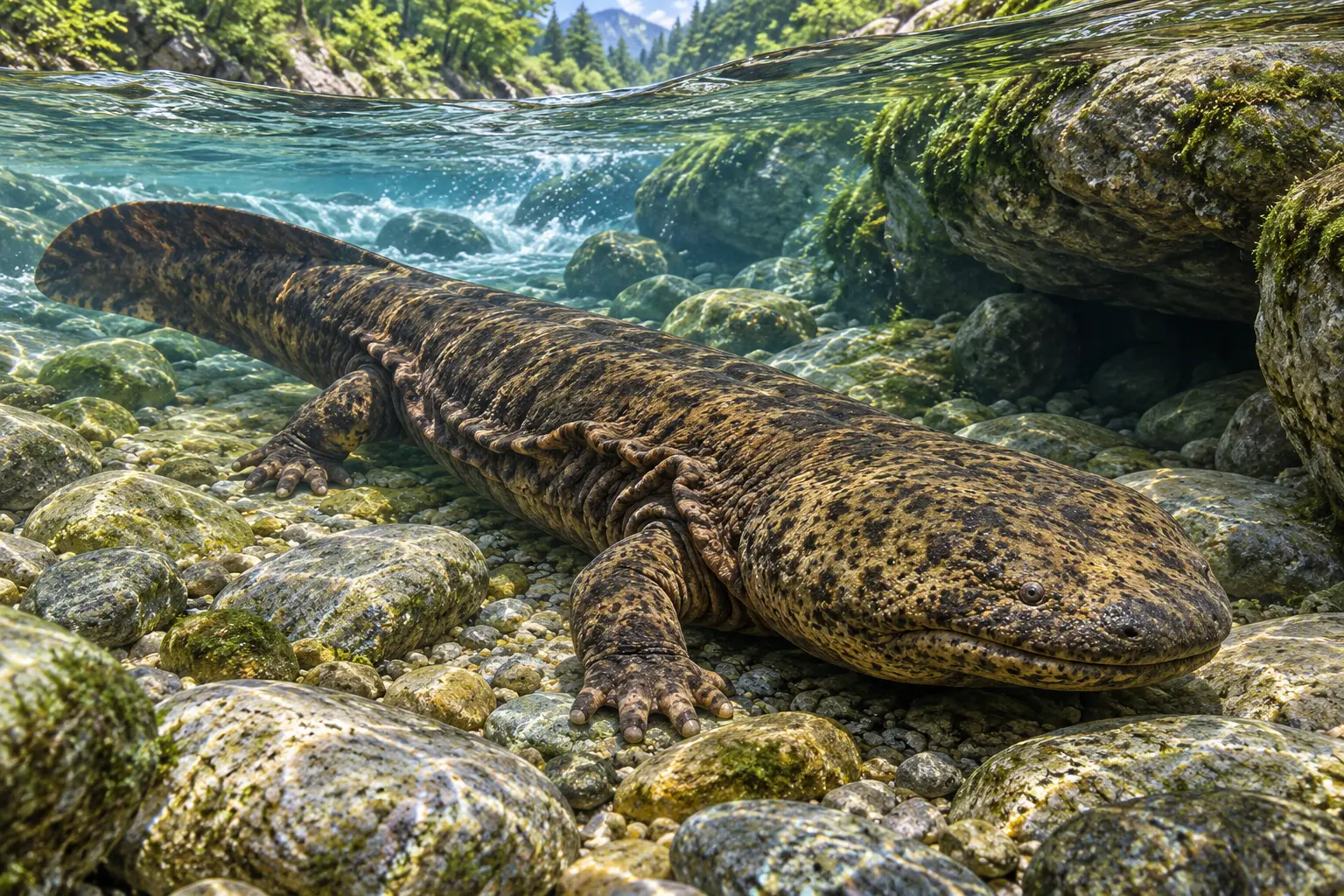
Chinese giant salamander
Andrias davidianusOne of the largest living amphibians, fully adapted to cool, oxygen-rich mountain streams and rivers in China. A flattened body, deeply folded skin and tiny eyes suit crevice hunting, while exploitation, river degradation and genetic disruption have driven the species to CR. [1–3]
Open full profile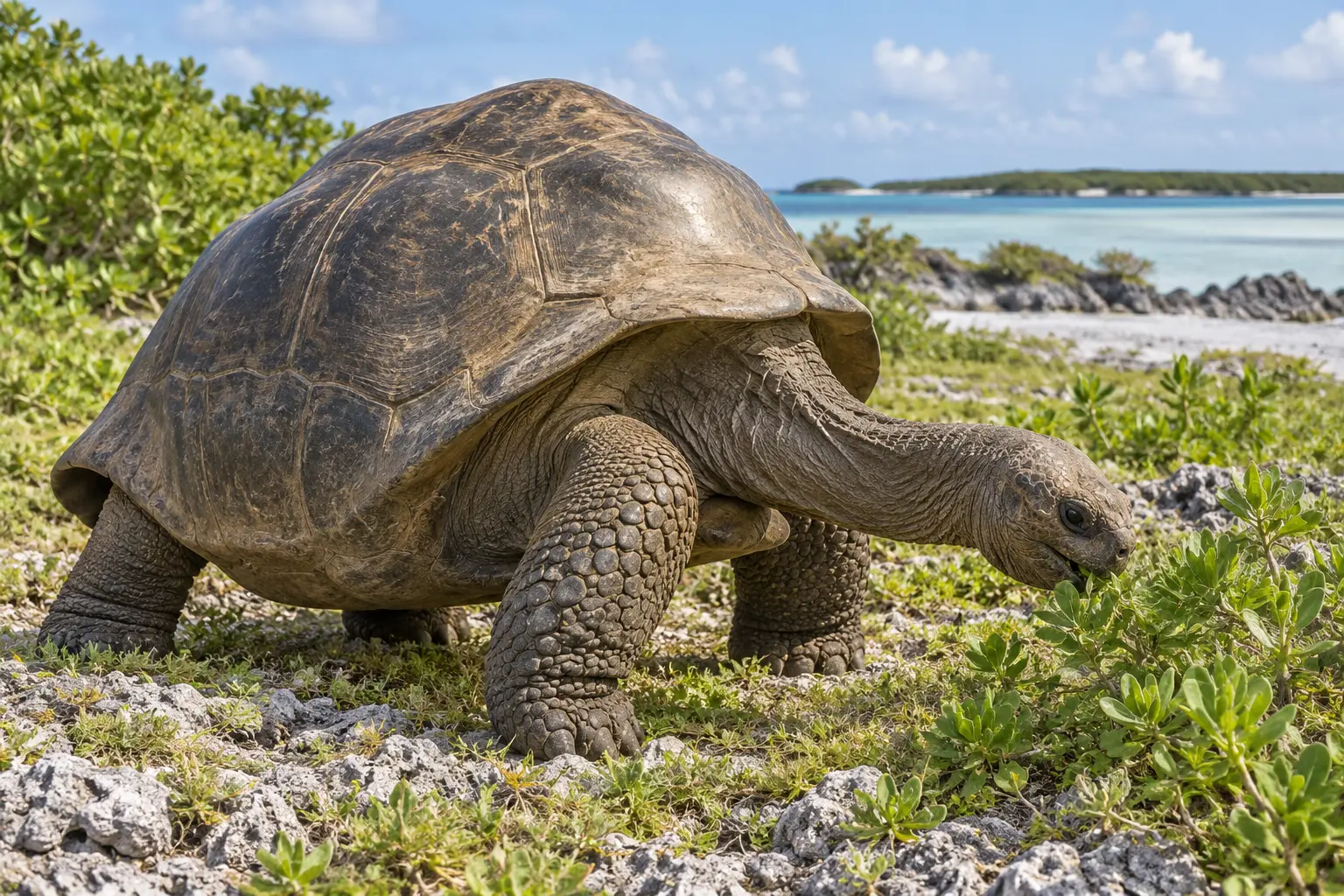
Aldabra giant tortoise
Aldabrachelys giganteaOne of the world's largest tortoises and a dominant herbivore of Seychelles' Aldabra Atoll. Its long neck, columnar limbs and domed shell allow browsing from ground vegetation to higher leaves, while its feeding activity reshapes habitat. [1,2]
Open full profile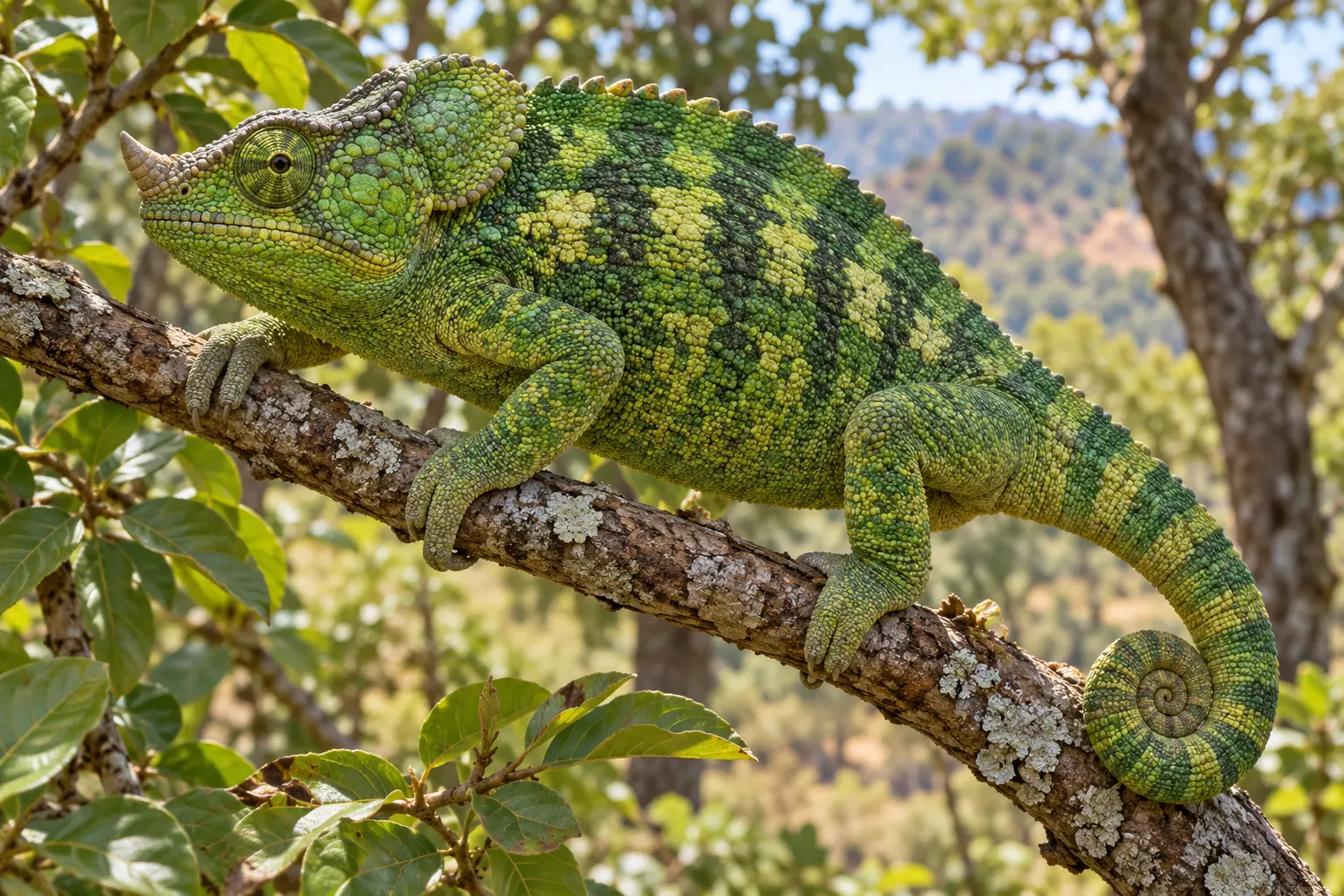
Meller's chameleon
Trioceros melleriThe largest chameleon on mainland Africa, with a robust body, a small single rostral horn and large ear-like occipital lobes. It is arboreal in Malawi, northern Mozambique and Tanzania, where vegetation structure and heat-moisture cycles define its microhabitat. [1–3]
Open full profile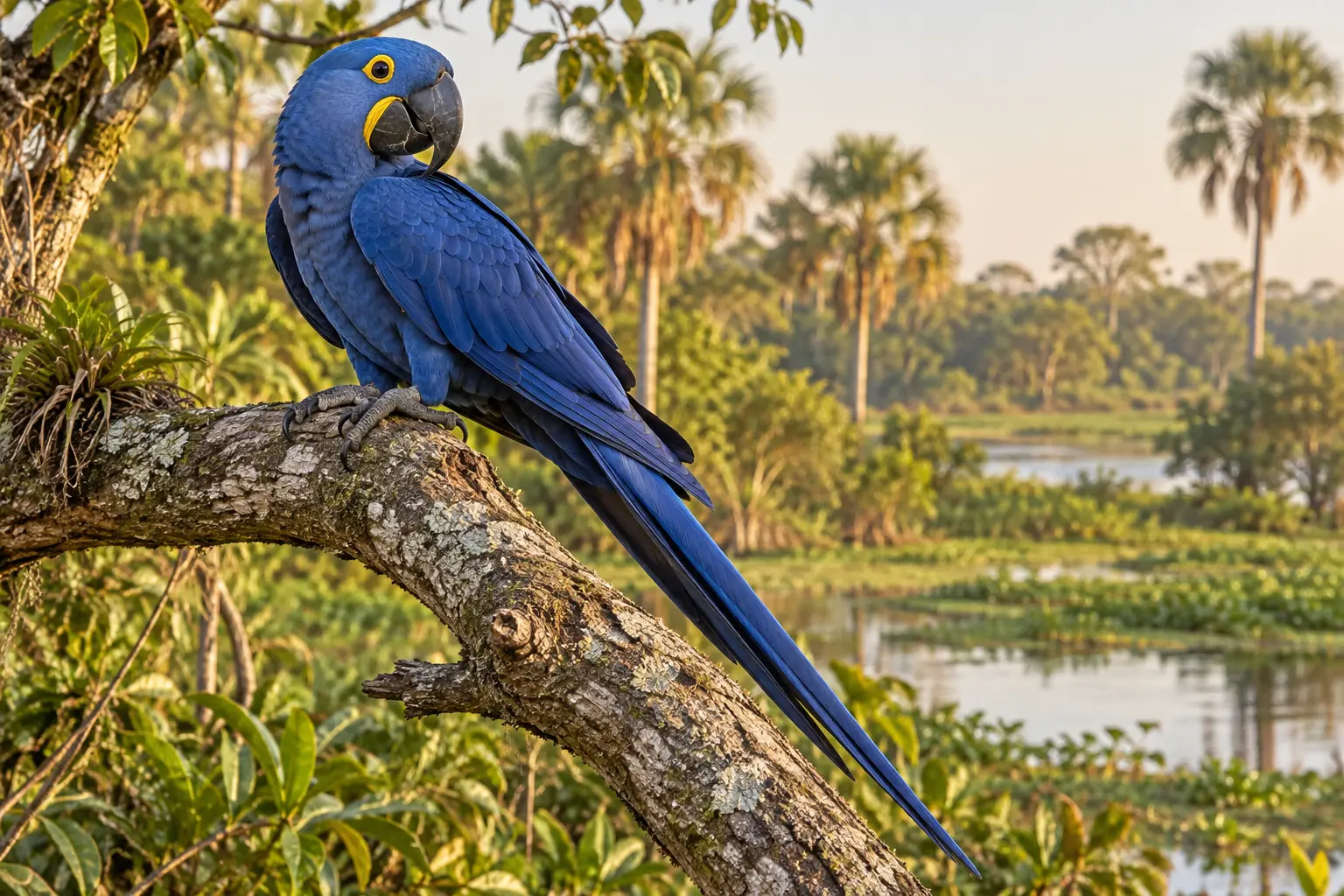
Hyacinth macaw
Anodorhynchus hyacinthinusThe world's longest flying parrot, distinguished by cobalt-blue plumage, a massive black bill and narrow yellow bare skin around the eye and lower mandible. Its three main regions are tied to palm nuts and large cavity trees in central South America. [1,2]
Open full profile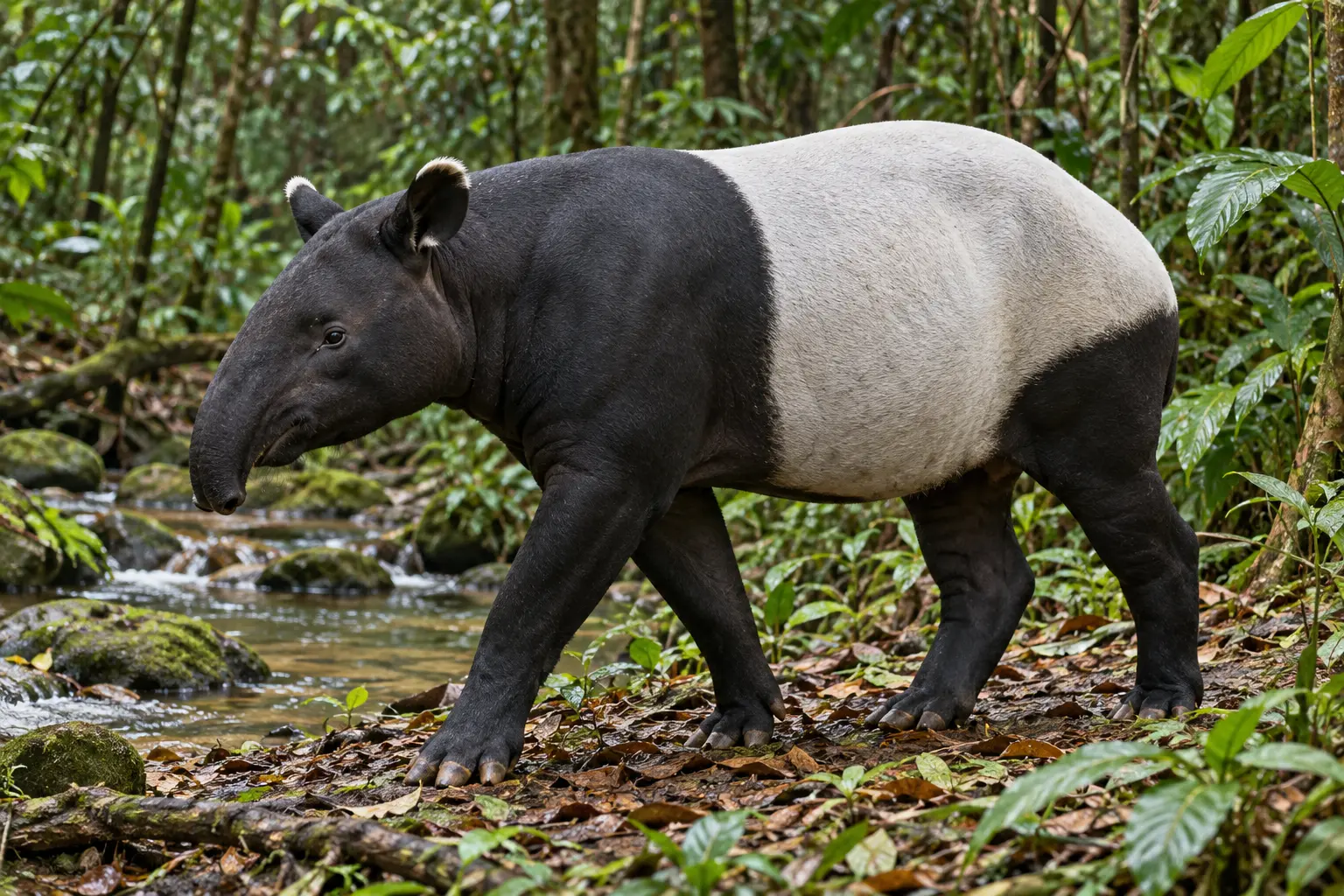
Malayan tapir
Tapirus indicusAsia's only tapir and the largest of the four living species, immediately recognisable by a white saddle across a black body. As a large browser-frugivore it moves seeds and links feeding areas through the forest. [1]
Open full profile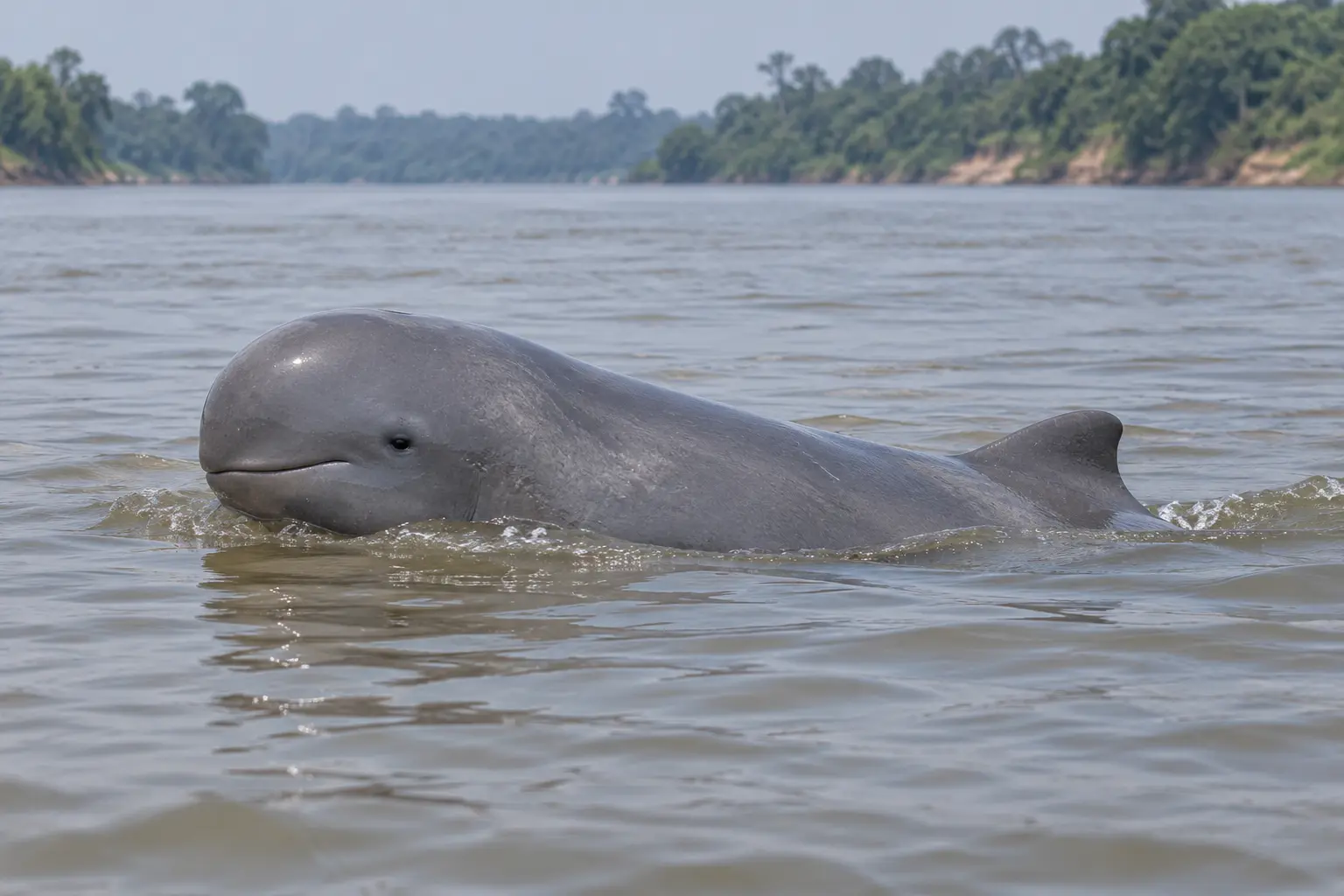
Irrawaddy dolphin
Orcaella brevirostrisA round-foreheaded dolphin without a long beak and with a small dorsal fin, occupying coastal-estuarine South and Southeast Asia and the Ayeyarwady, Mahakam and Mekong rivers. Small isolated river populations are especially sensitive to net mortality. [1–3]
Open full profile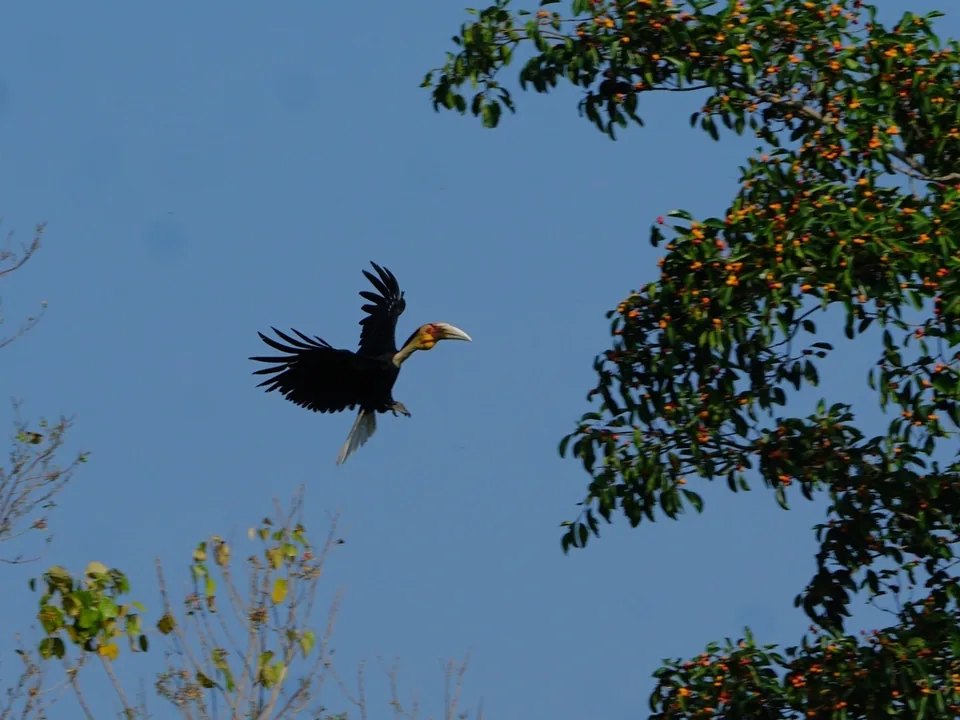
Wreathed hornbill
Rhyticeros undulatusA large forest hornbill of South and Southeast Asia, recognised by the transverse ridges on its casque. It travels widely between fruiting trees and is an important long-distance seed disperser in tropical forest. [1,2]
Open full profile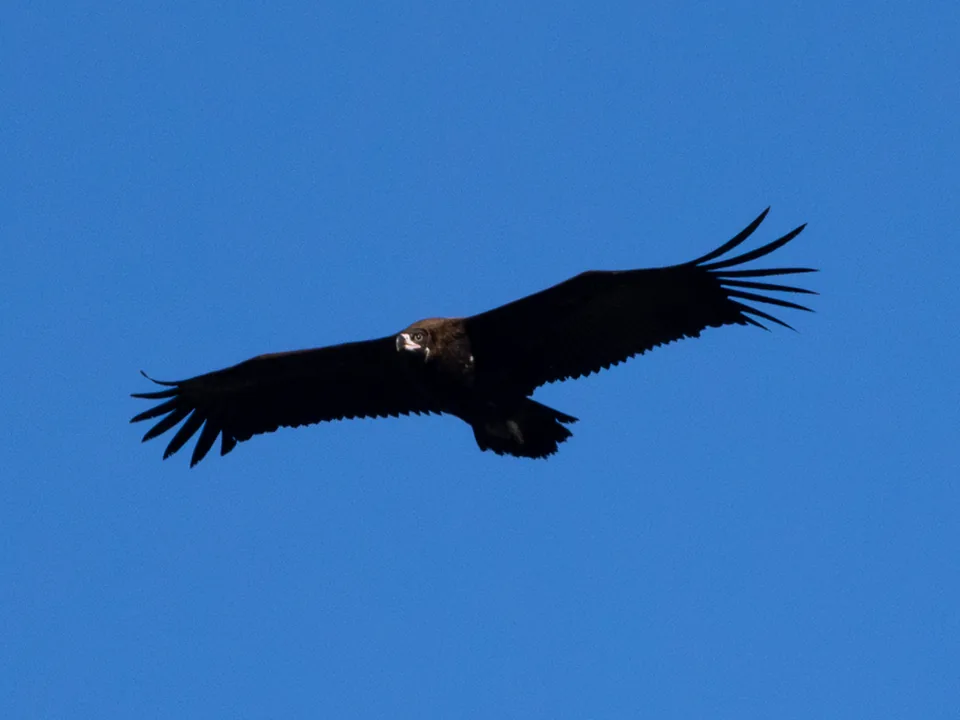
Cinereous vulture
Aegypius monachusOne of the world's largest raptors, with dark brown-black plumage, a powerful head and exceptionally broad wings. As a specialised scavenger it removes decomposing tissue and can interrupt some pathogen pathways across a landscape. [1,2]
Open full profile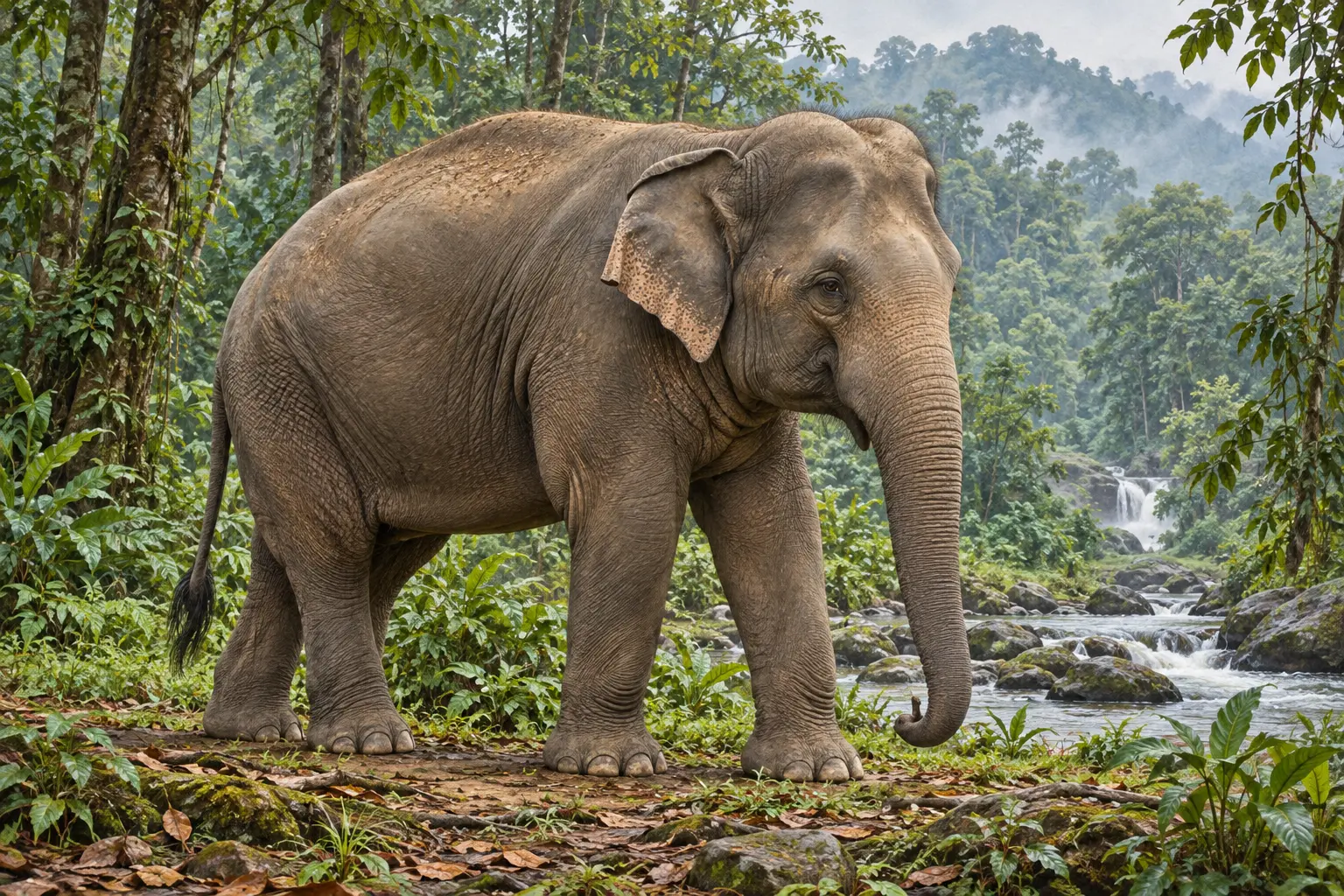
Asian elephant
Elephas maximusAsia's largest terrestrial animal, with a twin-domed head, smaller ears than African elephants and a single finger-like projection at the trunk tip. Female herds transmit experience across generations, while elephant movement and feeding reshape forest–grassland landscapes. [1,2]
Open full profile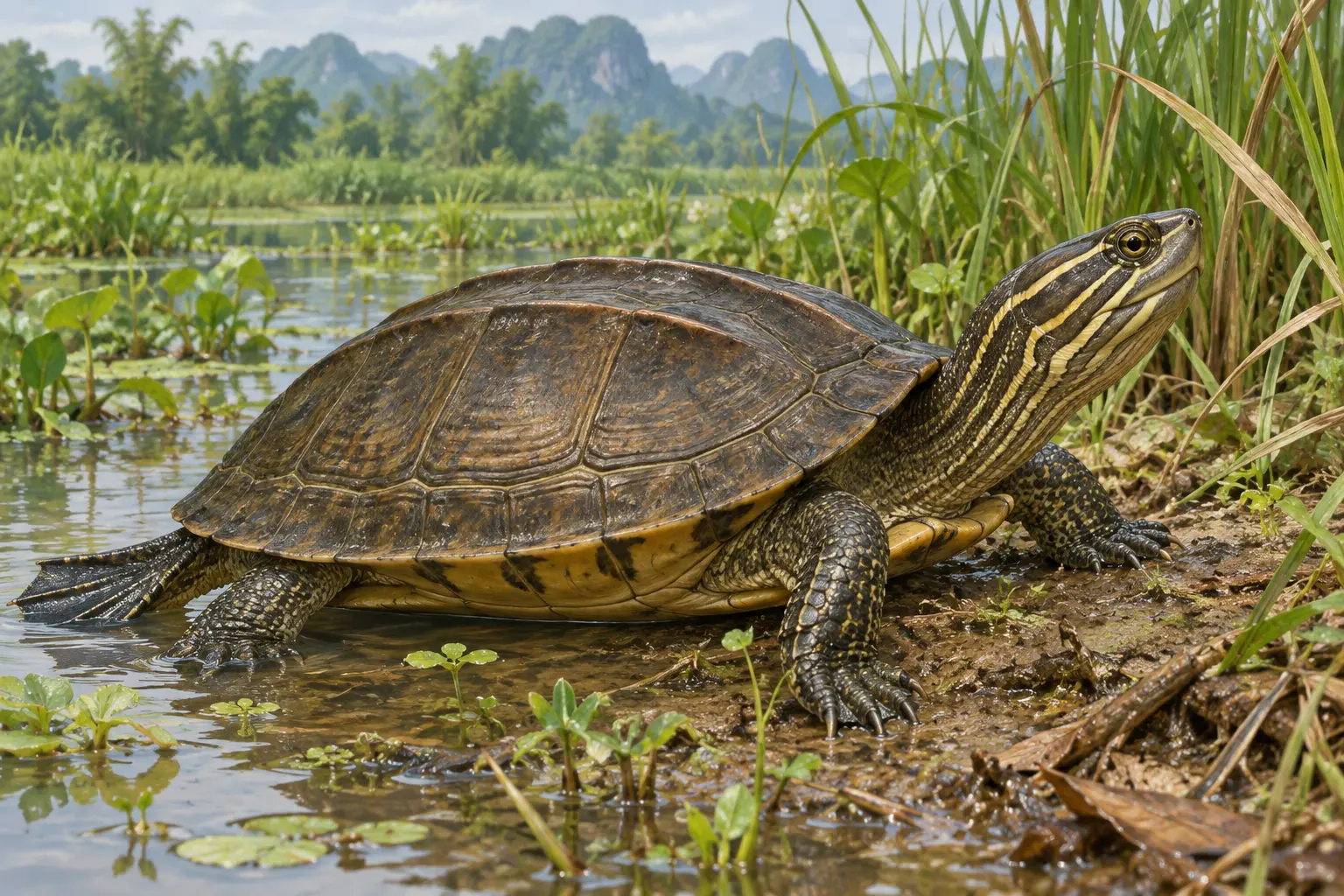
Vietnamese pond turtle
Mauremys annamensisA freshwater turtle endemic to central Vietnam, with a dark brown shell and several yellow stripes along each side of the head. Long feared lost from the wild, it is now the focus of eDNA surveys that can search for traces without publicising sensitive locations. [1,2]
Open full profile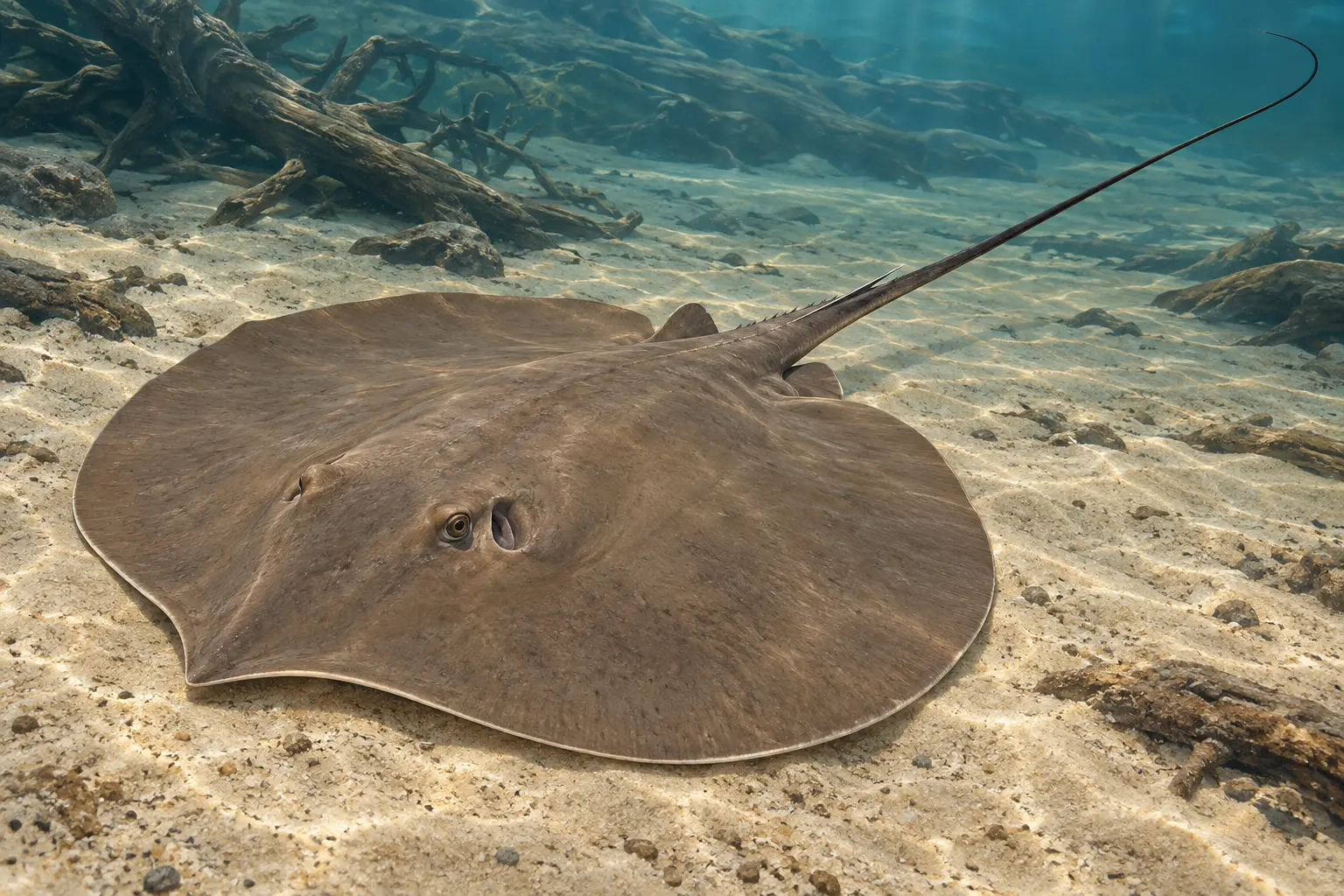
Giant freshwater whipray
Urogymnus polylepisOne of the world's largest freshwater fishes, with a broad disc, pointed snout and extremely long whip-like tail. It lives on the bottom of major Southeast Asian rivers and estuaries, but a complex taxonomic history means old range records require name verification. [1–3]
Open full profile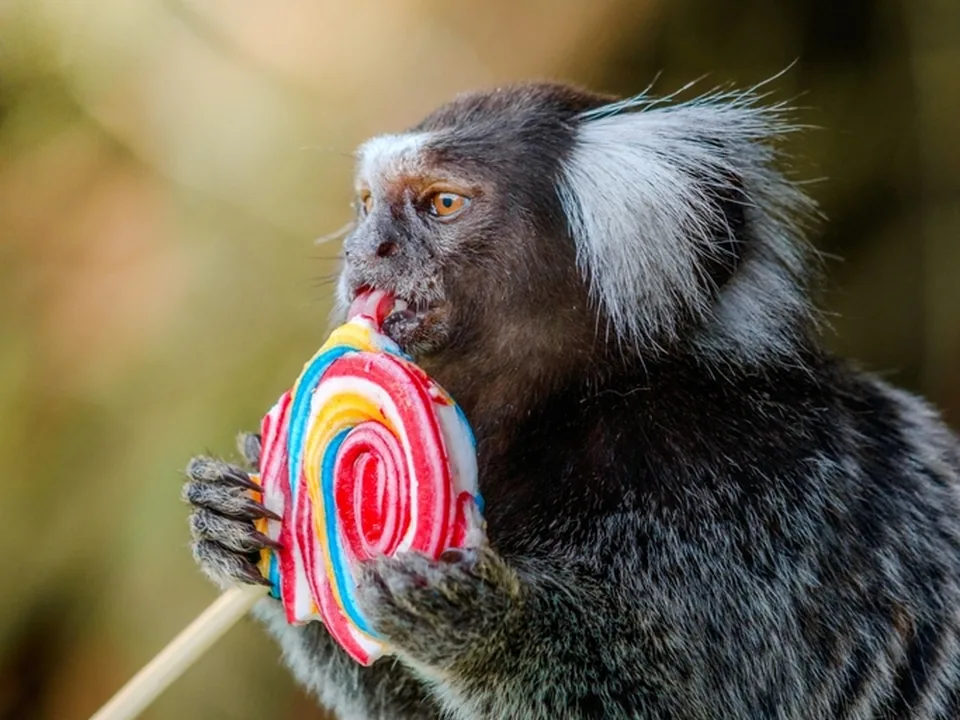
Common marmoset
Callithrix jacchusA small Brazilian primate recognised by white ear tufts, a ringed tail and bark-gouging for plant exudates. The unusually heavy burden of twins is offset by cooperative infant care across the group. [1,2]
Open full profile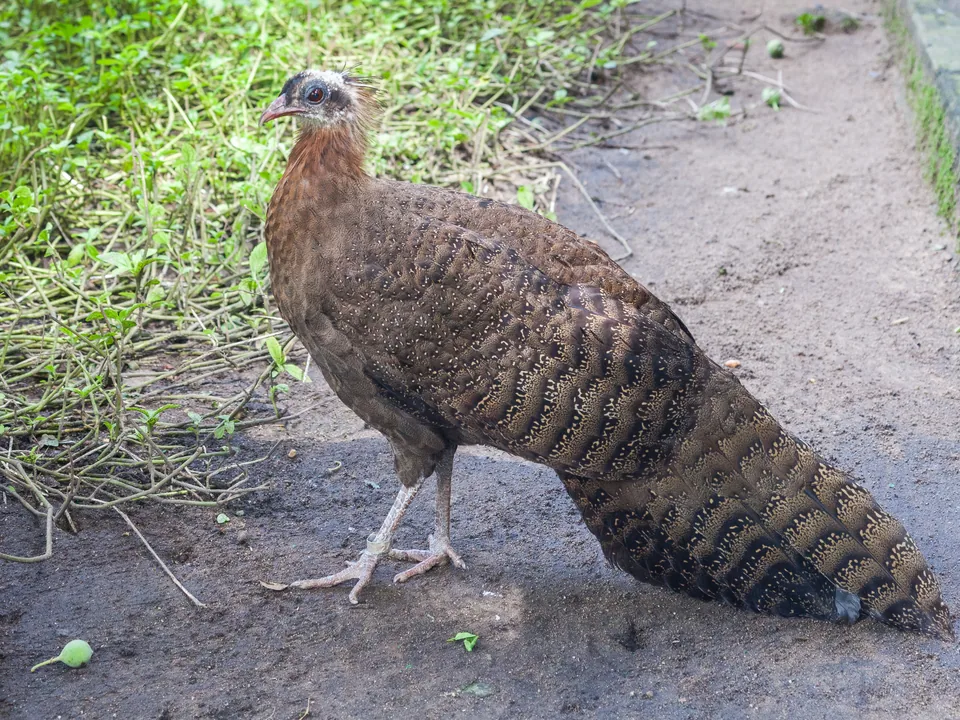
Vietnamese crested argus
Rheinardia ocellataA closed-forest bird of the Annamite range, marked by a double crest, ocellated brown plumage and exceptionally elongated central tail feathers in males. It is extremely elusive and heavily pressured by wire snaring and forest degradation. [1,2]
Open full profile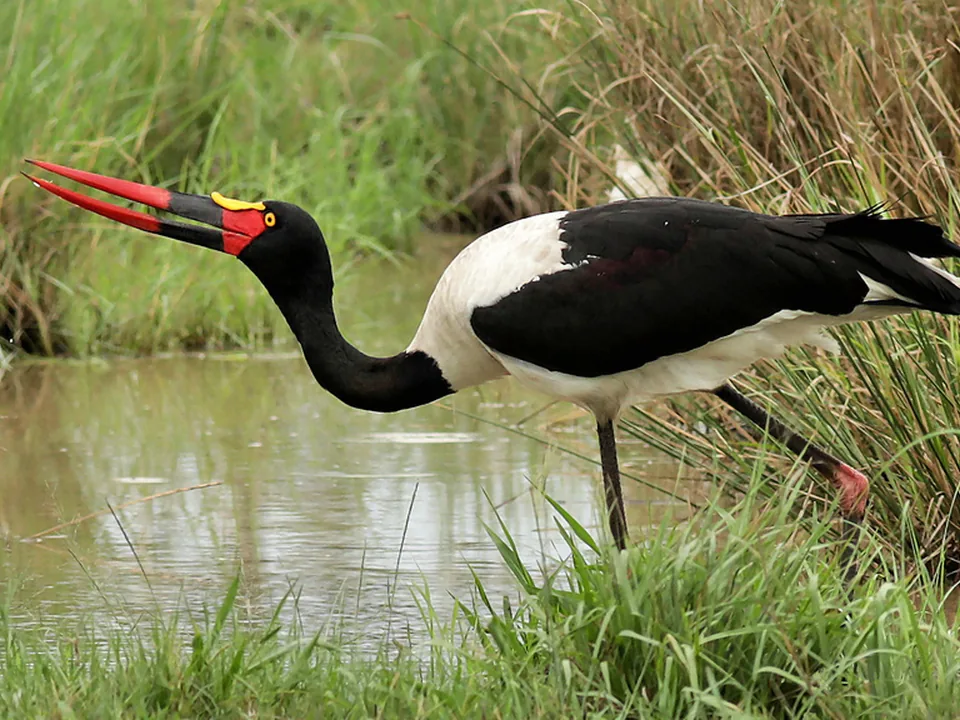
Saddle-billed stork
Ephippiorhynchus senegalensisOne of the tallest storks, inhabiting wetlands across sub-Saharan Africa. A red-and-black bill with a yellow saddle, extremely long legs and sex-specific iris colours allow recognition even at a distance. [1,2]
Open full profile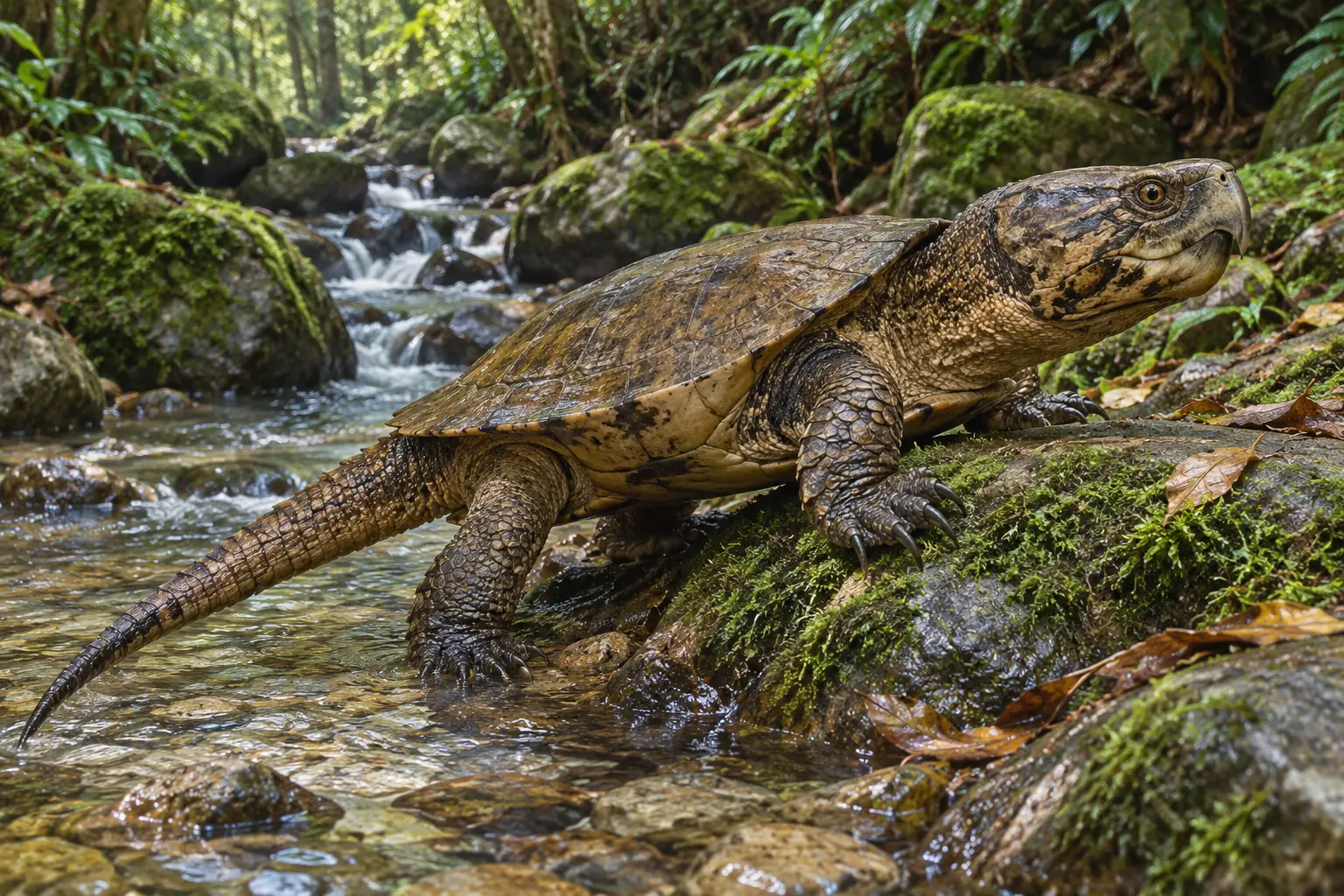
Big-headed turtle
Platysternon megacephalumA mountain-stream turtle with a head too large to retract, powerful hooked jaws, a flattened shell and an exceptionally long tail. It climbs rocks well but is not a distance swimmer; collection for food and pets has depleted many populations. [1–3]
Open full profile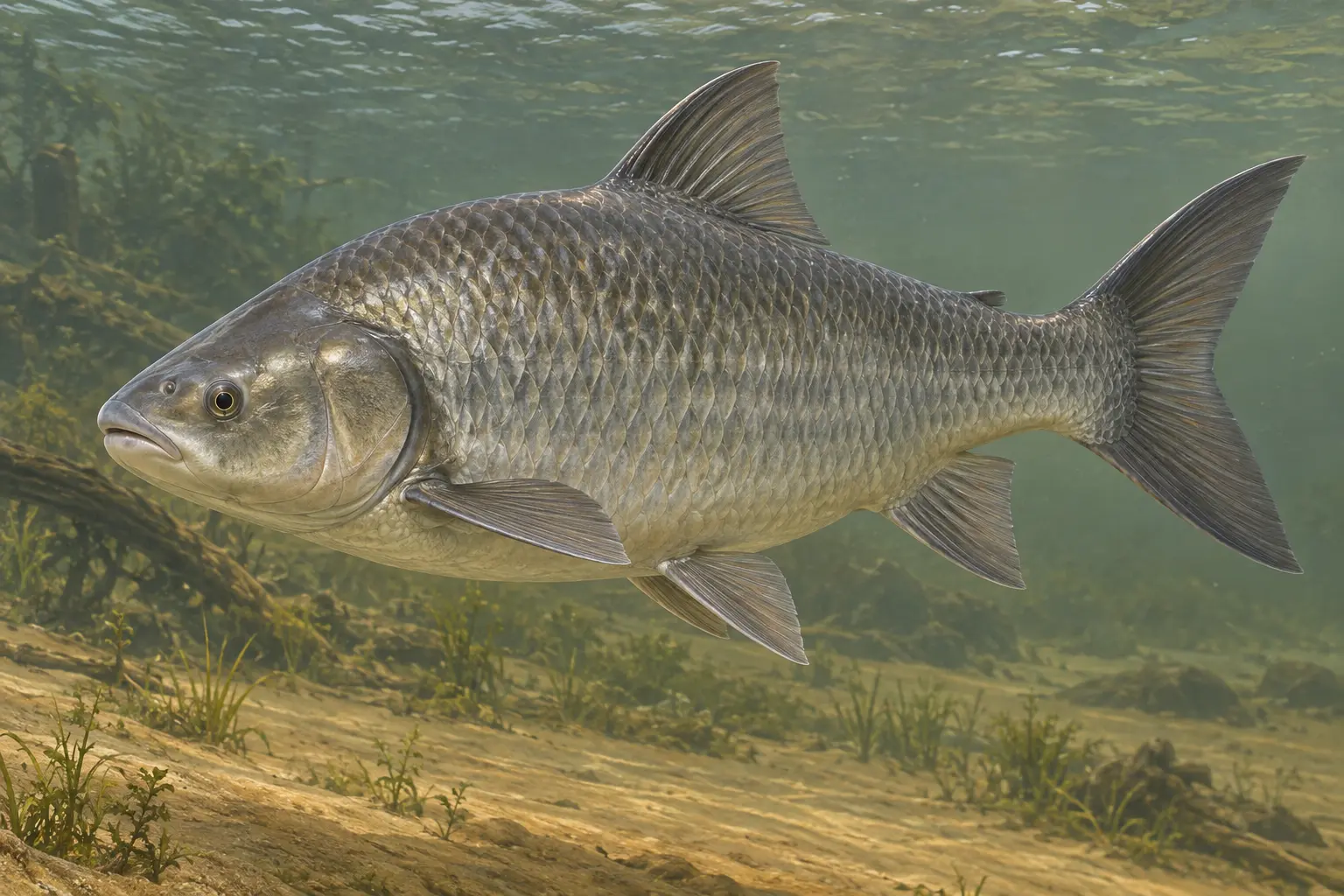
Giant barb
Catlocarpio siamensisOne of the world's largest freshwater carps, native to the Mekong, Chao Phraya and Mae Klong basins. Adults use large rivers and deep pools while juveniles use floodplains and smaller channels; severe decline reflects lost connectivity across whole basins. [1]
Open full profile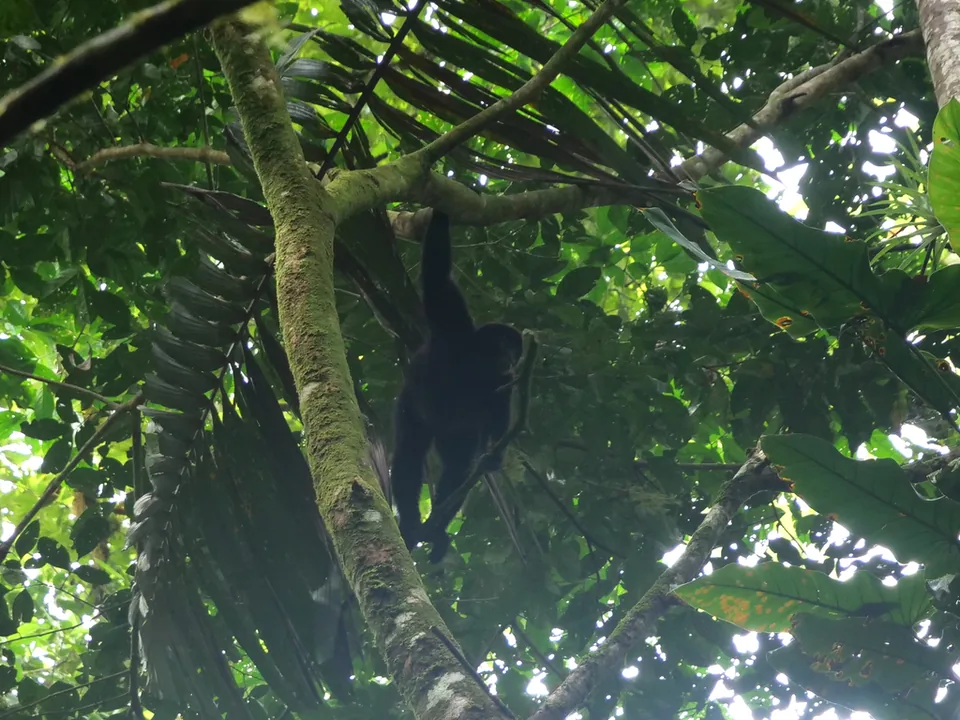
Brown-headed spider monkey
Ateles fuscicepsA canopy primate with exceptionally long limbs and a powerful prehensile tail functioning like a fifth limb. It lives in a flexible fission–fusion society, depends on continuous forest and is an important seed disperser. [1,2]
Open full profile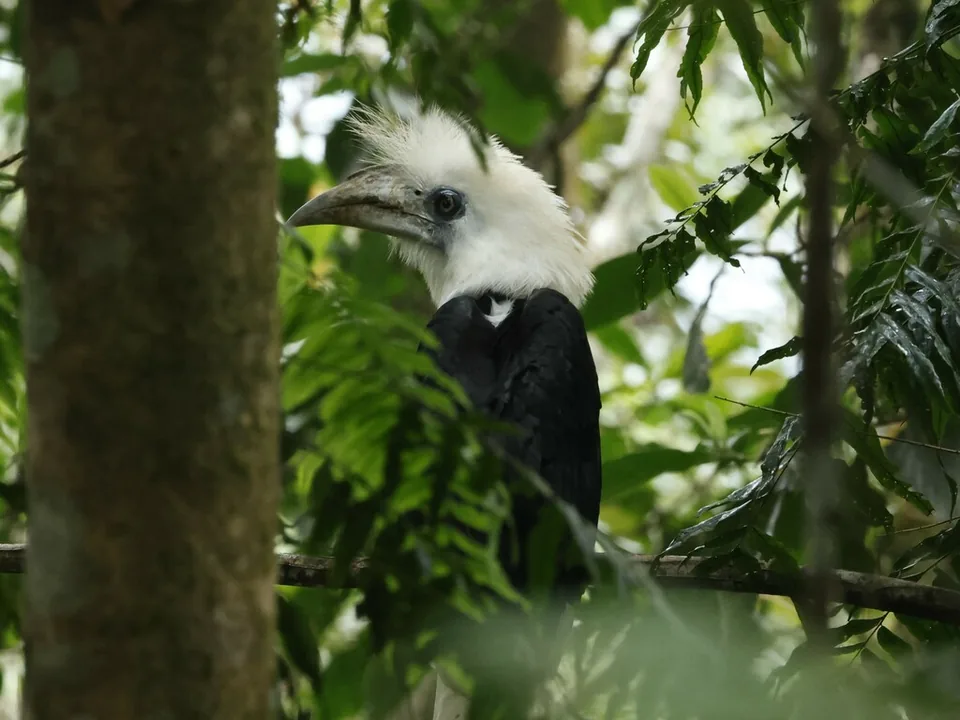
White-crowned hornbill
Berenicornis comatusA South-East Asian rainforest hornbill with a shaggy white crest, long tail and a more animal-rich diet than many other hornbills. Dependence on old forest and large tree cavities makes it highly sensitive to logging. [1–3]
Open full profile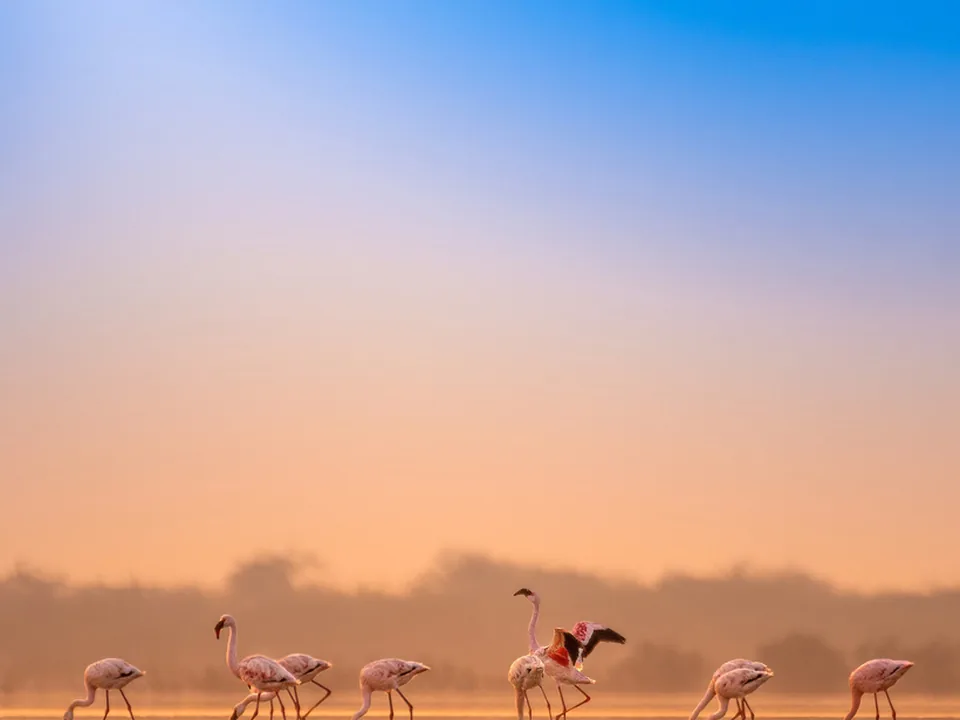
Lesser flamingo
Phoeniconaias minorThe smallest flamingo, specialised for filtering cyanobacteria and microalgae from alkaline and saline lakes. Spectacular mass flocks depend on the hydrology and water quality of a small number of wetlands. [1–3]
Open full profile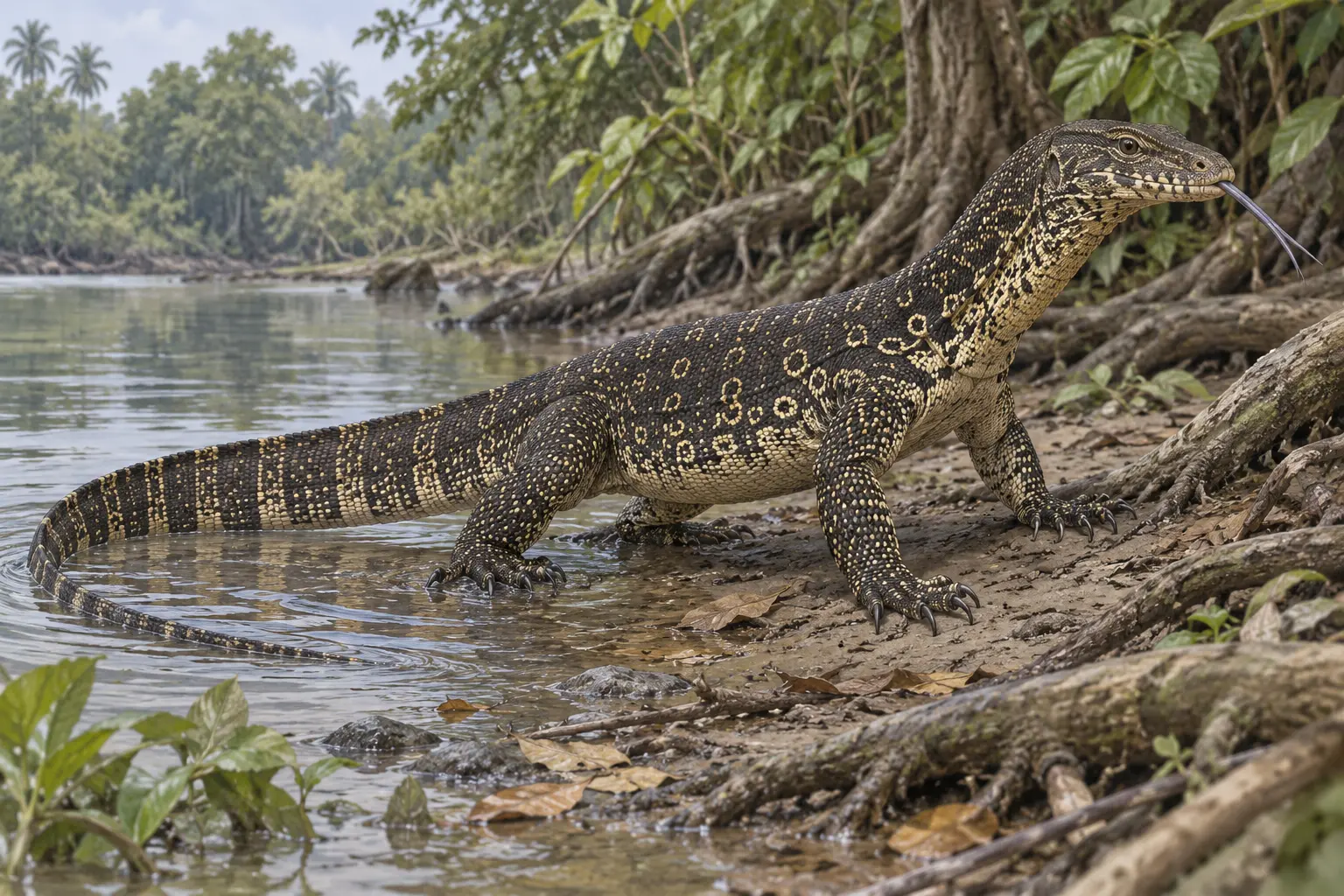
Asian water monitor
Varanus salvatorOne of Asia's largest lizards, closely associated with rivers, swamps, mangroves and other waterside ecosystems. It is an adaptable predator–scavenger, powerful swimmer and widely distributed across South and South-East Asia. [1–3]
Open full profile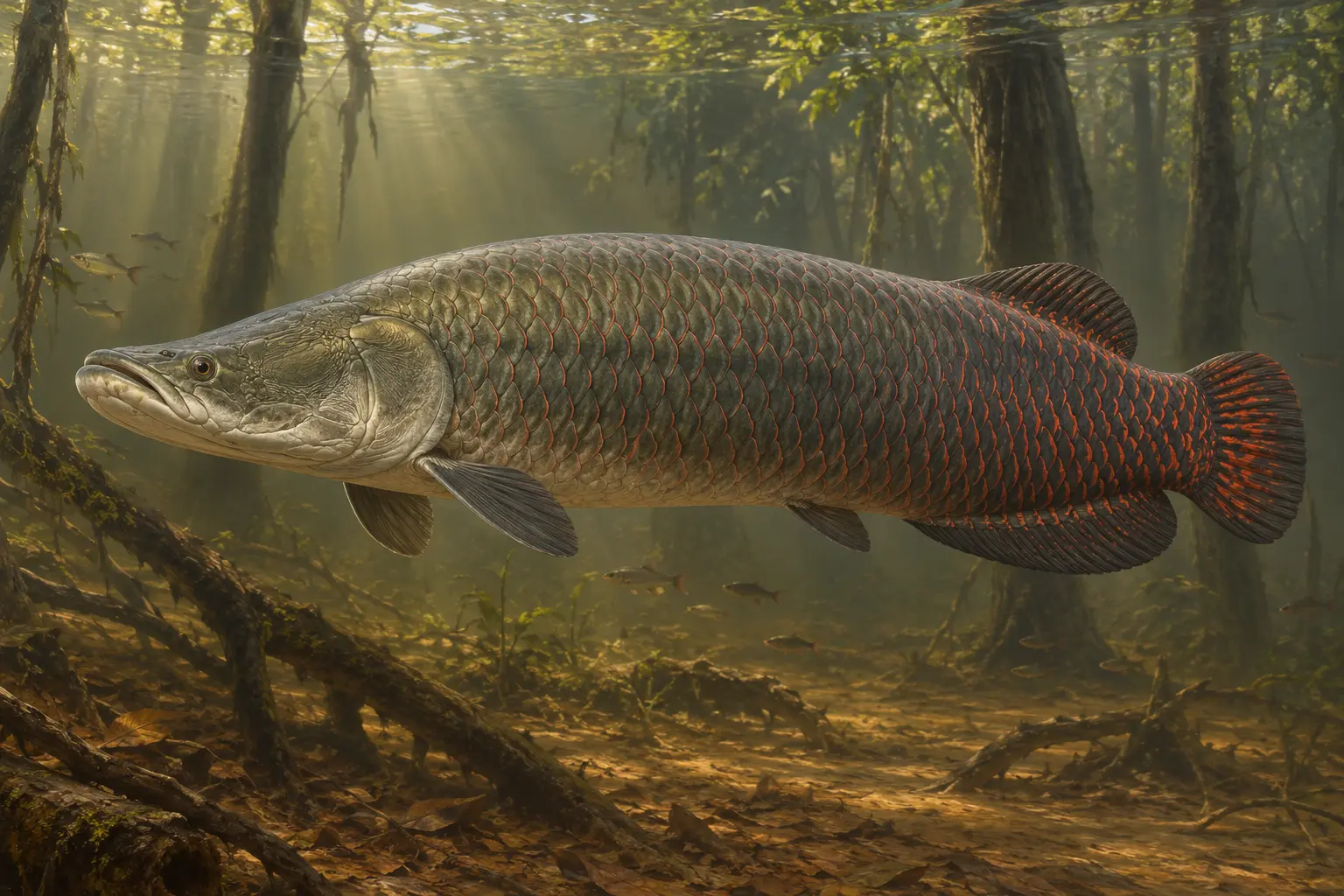
Arapaima
Arapaima gigasA giant freshwater fish of the Amazon–Essequibo region that must surface to breathe air with a modified swim bladder. Great size, flood-season reproduction and harvest value mean populations require locality-based management. [1–4]
Open full profile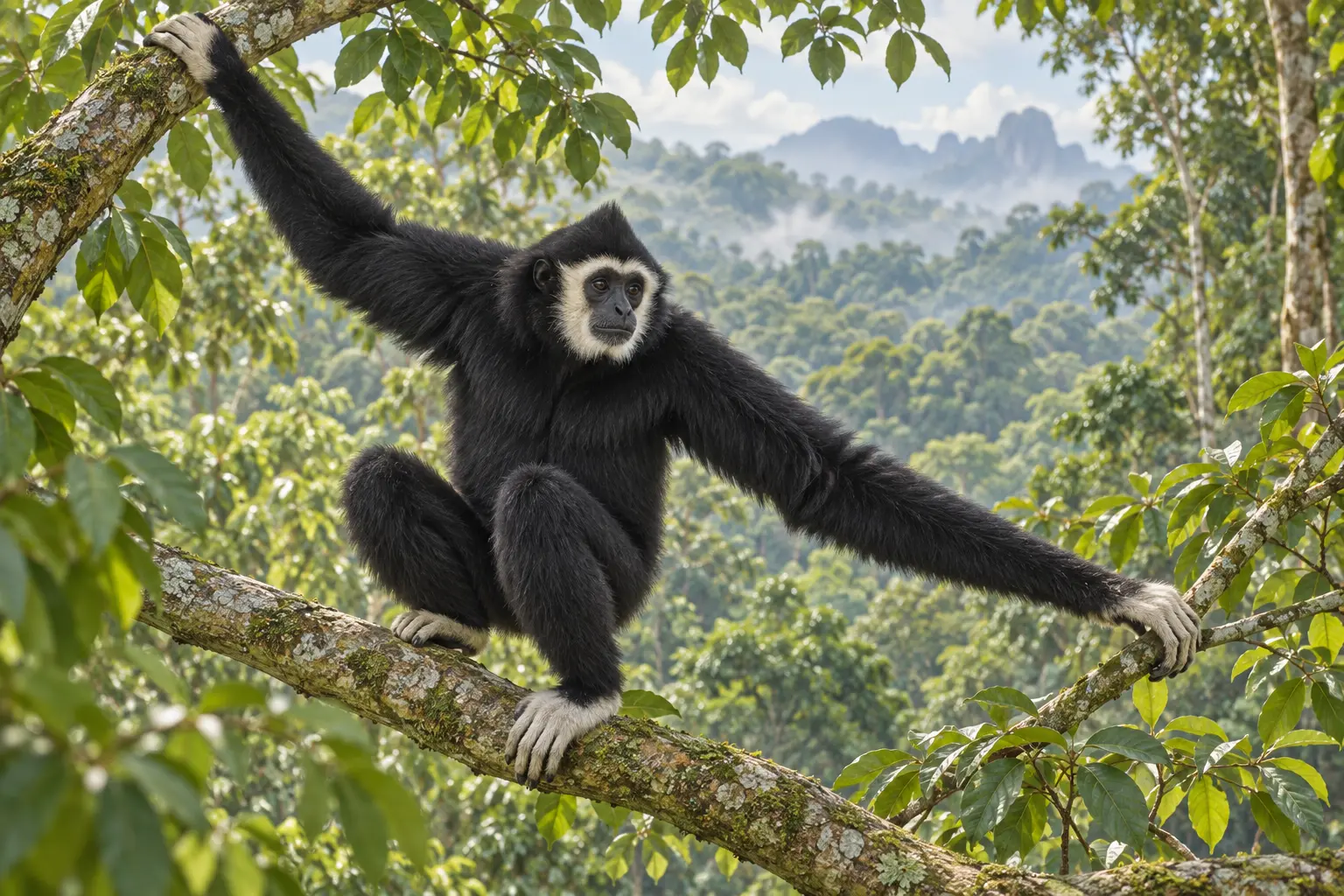
Pileated gibbon
Hylobates pileatusA tailless small ape of mainland South-East Asia, notable for strong sex differences in coat colour and territorial duet songs. Its survival depends directly on continuous forest canopy. [1–3]
Open full profile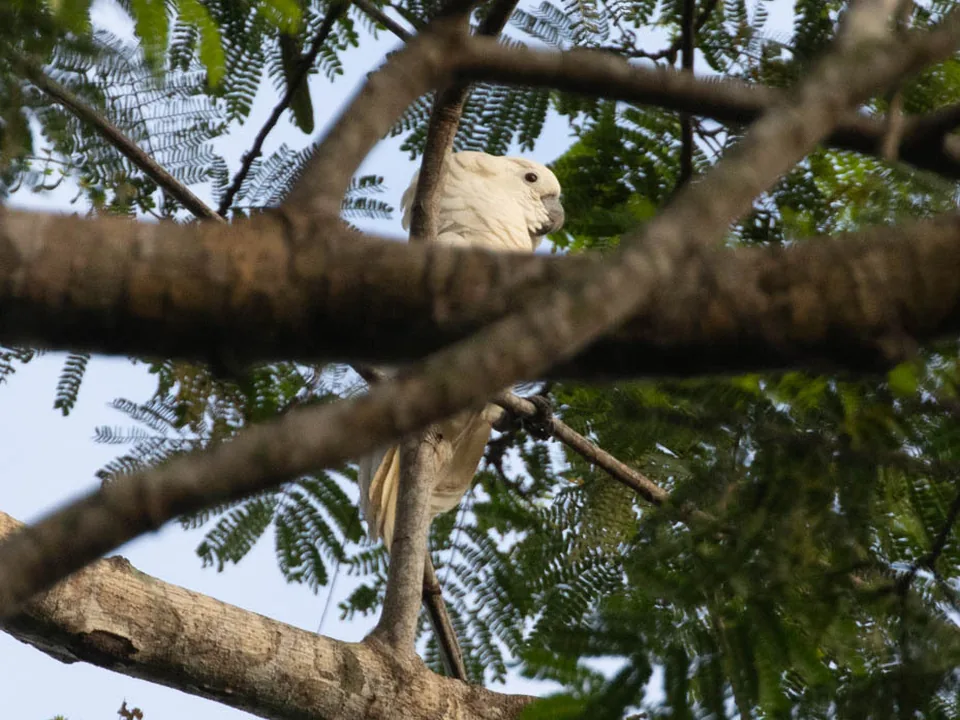
White cockatoo
Cacatua albaA large cockatoo endemic to Indonesia's northern Maluku islands, with a broad white umbrella-like crest. Curiosity and complex social life create high welfare needs, while wild populations face trapping and forest loss. [1–4]
Open full profile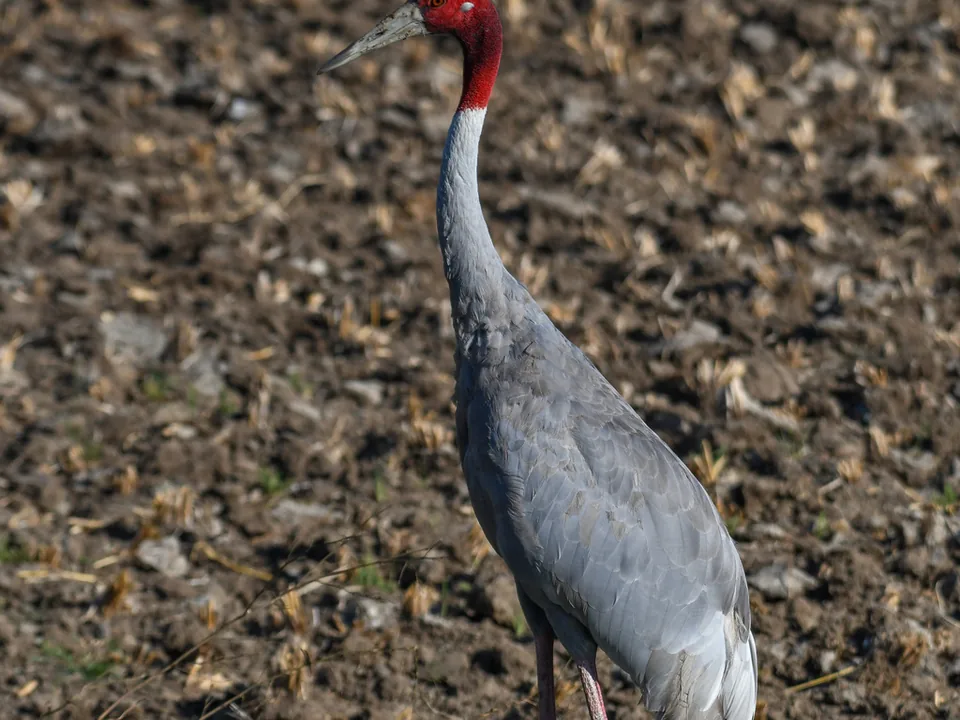
Sarus crane
Antigone antigoneThe world's tallest flying bird, with a grey body and conspicuous red skin on the head and upper neck. The eastern subspecies persists in Cambodia, Laos and Viet Nam and is closely tied to Mekong-basin wetlands. [1–3]
Open full profile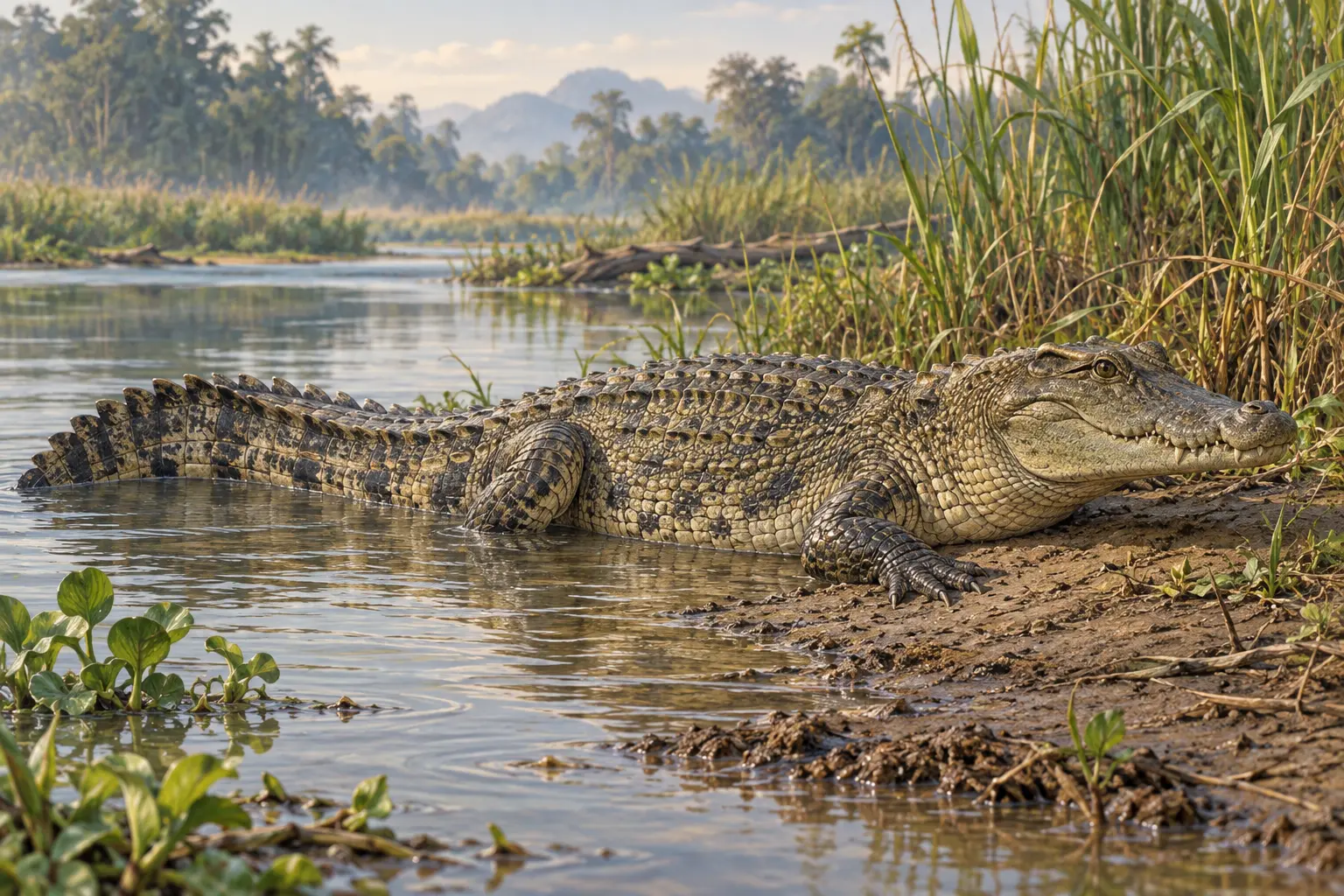
Siamese crocodile
Crocodylus siamensisA medium-sized freshwater crocodile of South-East Asia that was once widespread but now survives in small, fragmented wild populations. Conservation requires both wetland protection and genetic integrity of release stock. [1–4]
Open full profile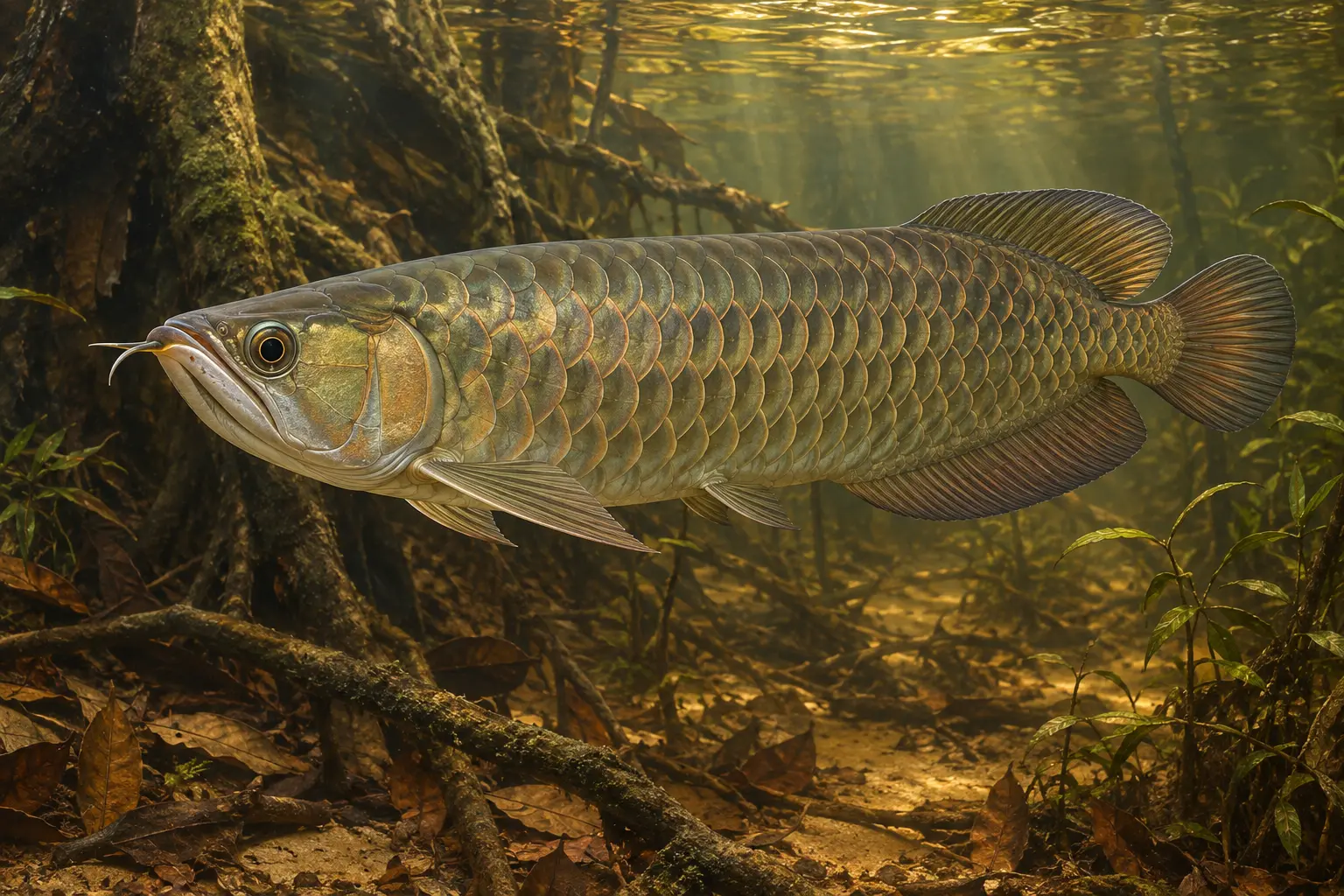
Asian arowana
Scleropages formosusA surface-oriented predator of South-East Asian rivers and swamp forest, with an elongate body, large scales, upturned mouth and two lower-jaw barbels. High trade value makes provenance and legal identity as important as biology. [1–4]
Open full profile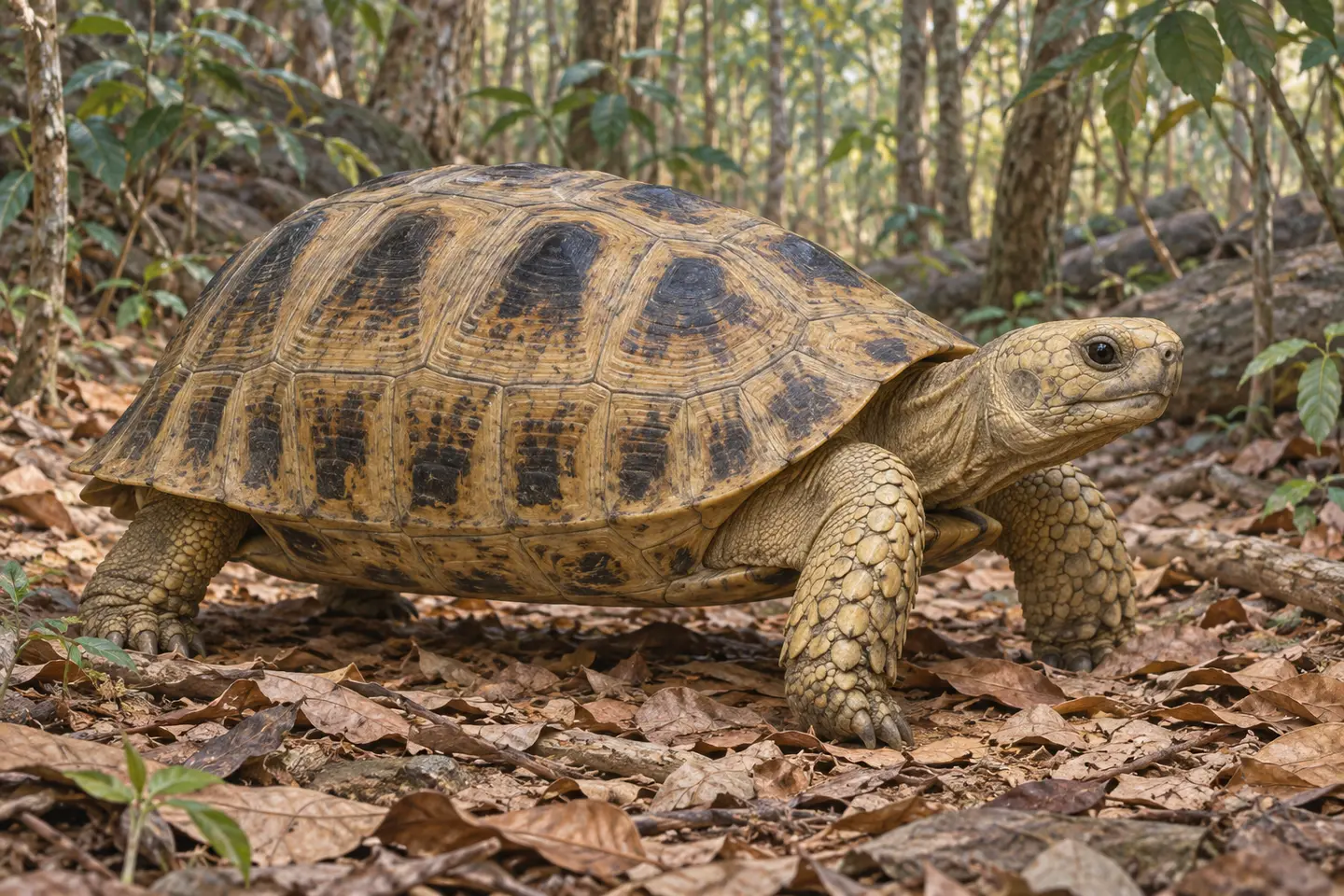
Elongated tortoise
Indotestudo elongataA medium-sized South and Southeast Asian tortoise with an elongated yellow-brown shell, dark scute blotches and an often yellowish head. It is now CR after prolonged exploitation and habitat loss. [1–4]
Open full profile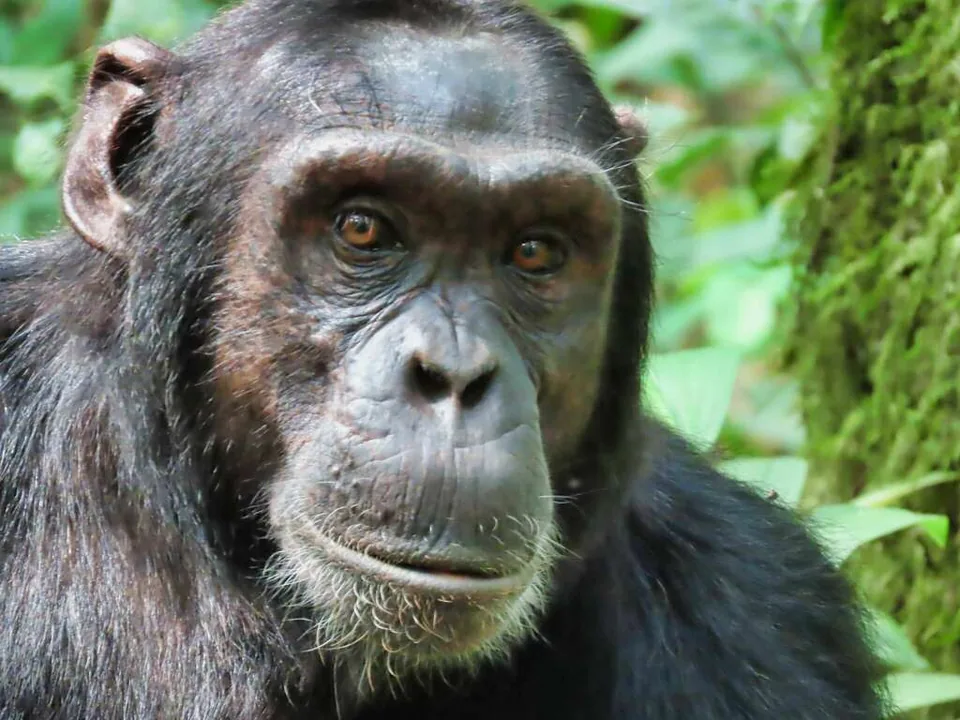
Chimpanzee
Pan troglodytesAn African great ape living in flexible fission–fusion societies, renowned for tool cultures, social learning and complex community relationships. High cognition entails exceptionally demanding welfare and biosecurity requirements. [1–3]
Open full profile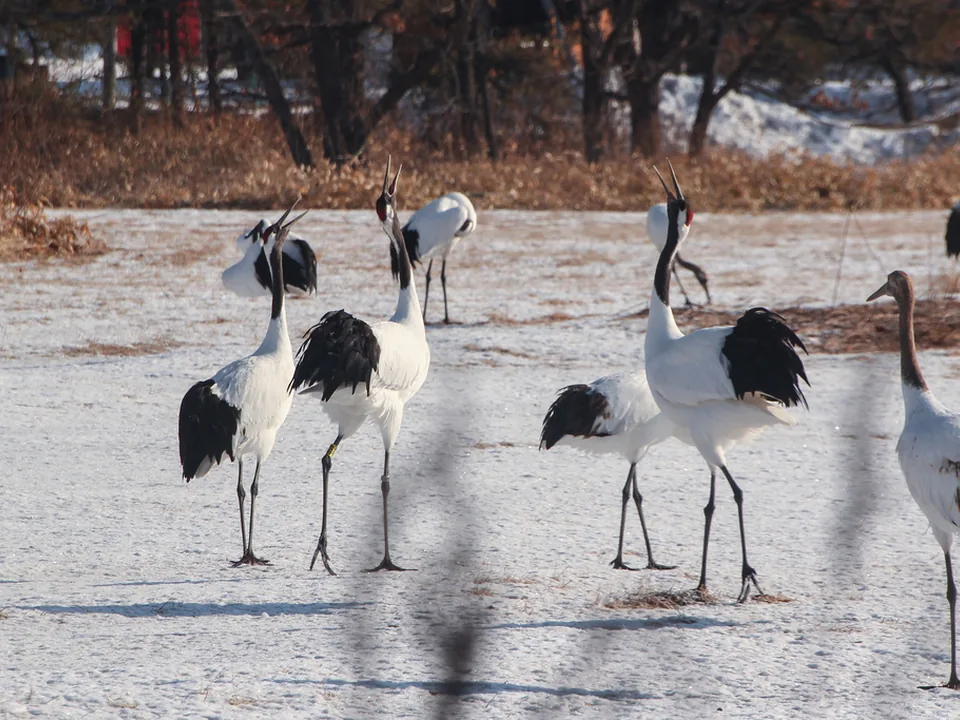
Red-crowned crane
Grus japonensisOne of the world's largest cranes, with a white body, black neck and secondaries, and exposed red crown skin. The species depends strongly on north-east Asian wetlands. [1–3]
Open full profile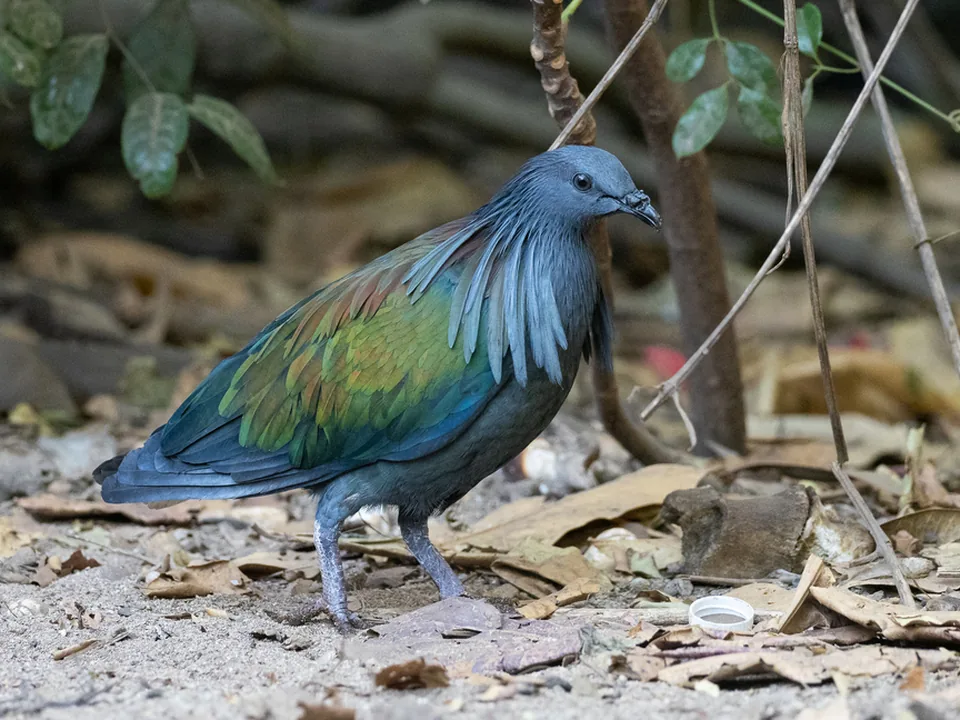
Nicobar pigeon
Caloenas nicobaricaA large, mainly terrestrial island pigeon with long neck hackles, metallic green-blue-bronze plumage, red legs and a white tail. It moves among forested islands to feed and nest. [1–3]
Open full profile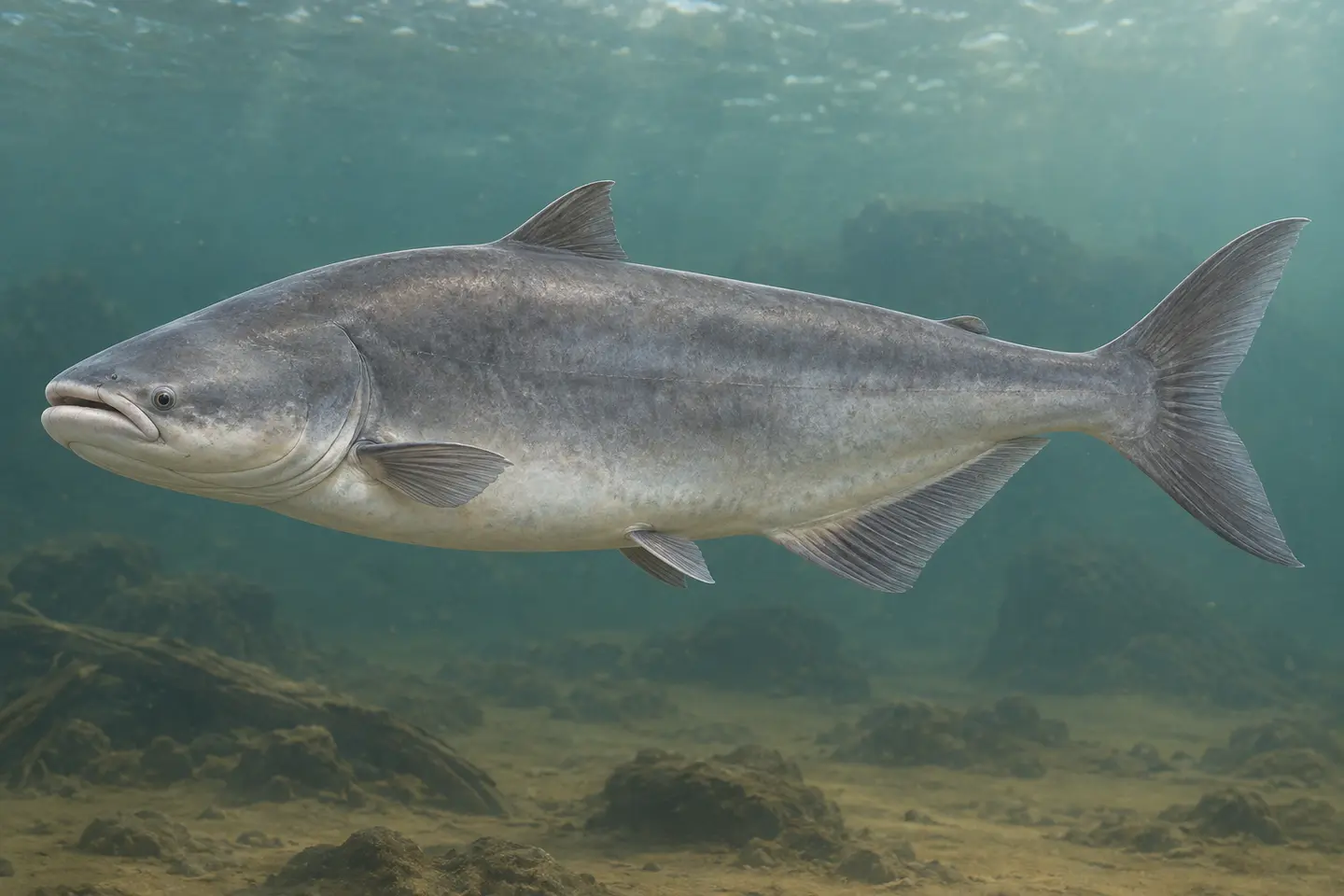
Mekong giant catfish
Pangasianodon gigasA giant catfish endemic to the Mekong Basin, reaching about 3 m and ranking among the largest freshwater fishes. Adults almost lose their barbels and teeth, unlike the familiar image of a predatory catfish. [1–4]
Open full profile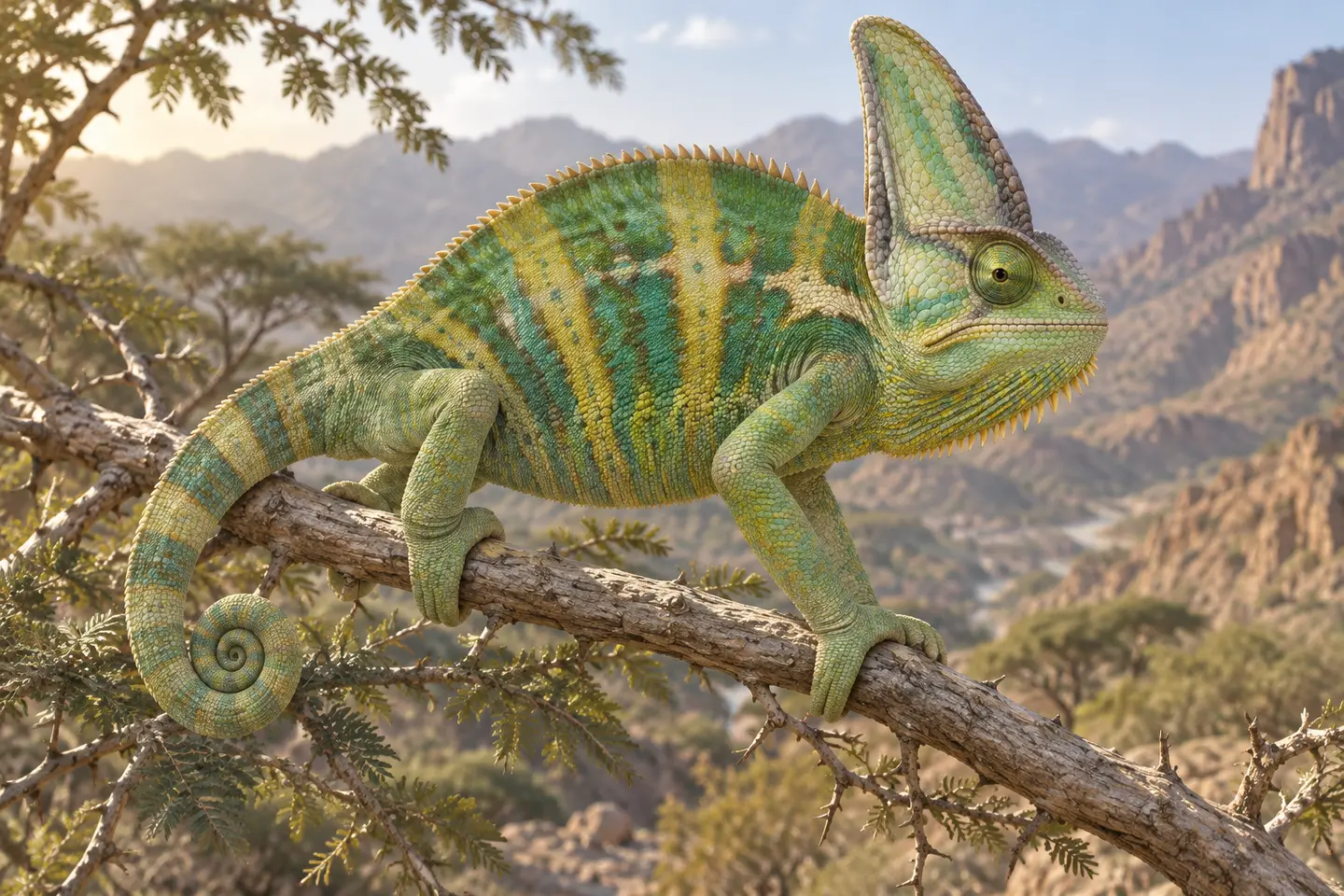
Veiled chameleon
Chamaeleo calyptratusAn arboreal chameleon native to Yemen and south-western Saudi Arabia, recognised by its high casque, branch-gripping feet and colour shifts linked to physiological and social state. [1–3]
Open full profile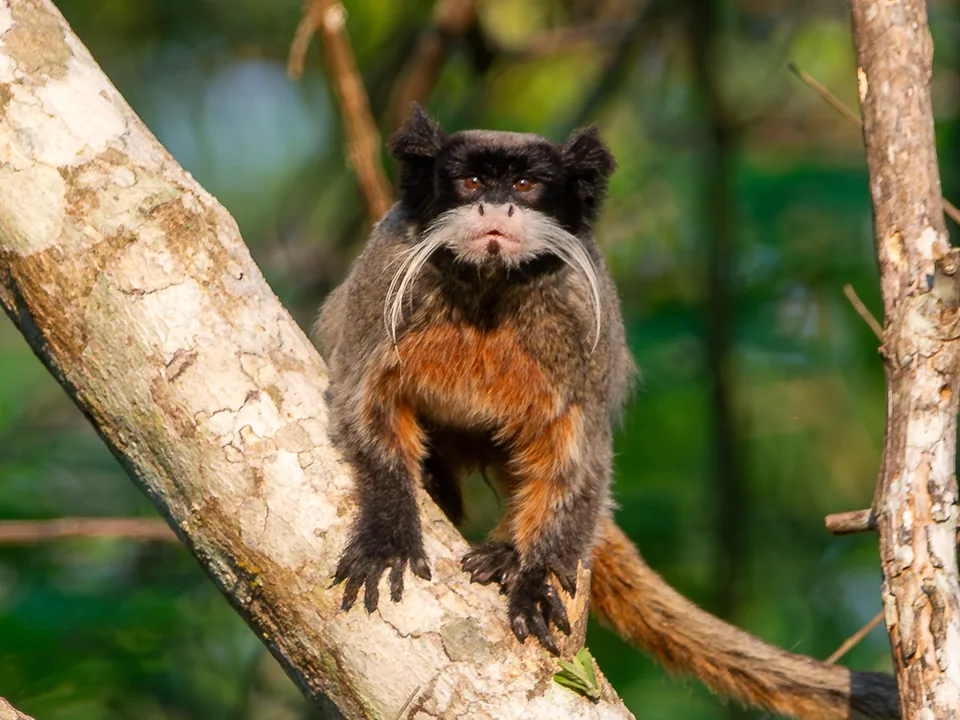
Emperor tamarin
Saguinus imperatorA small south-western Amazon primate distinguished by an exceptionally long white moustache and cooperative infant care in which males and other group members carry young. [1,2]
Open full profile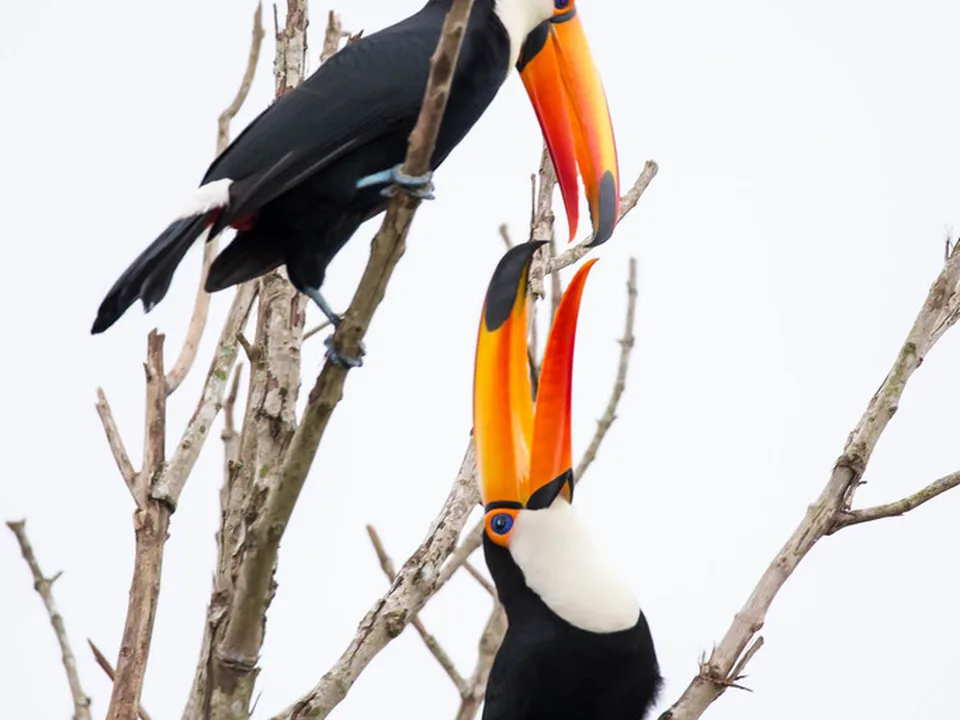
Toco toucan
Ramphastos tocoThe largest toucan, inhabiting open habitats and forest edges in South America, recognised by an enormous orange bill with a black tip. The bill handles food and participates in heat exchange. [1–3]
Open full profile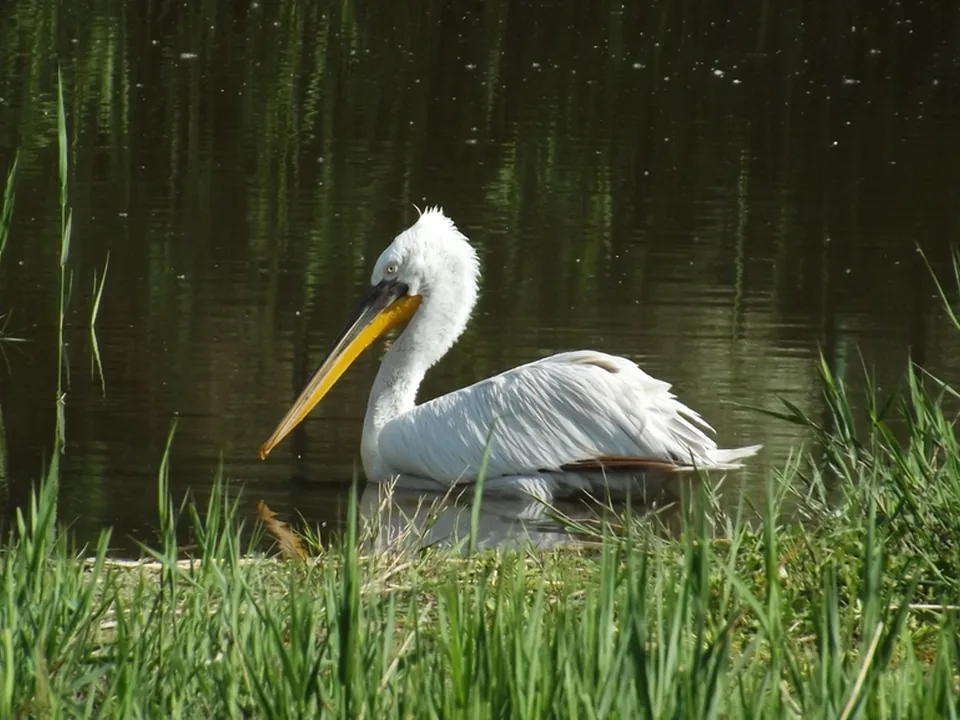
Dalmatian pelican
Pelecanus crispusOne of the world's largest flying birds, breeding in wetlands from south-eastern Europe to Central Asia. It is characterised by silvery-white plumage, a curly nape and a large throat pouch. [1,2]
Open full profile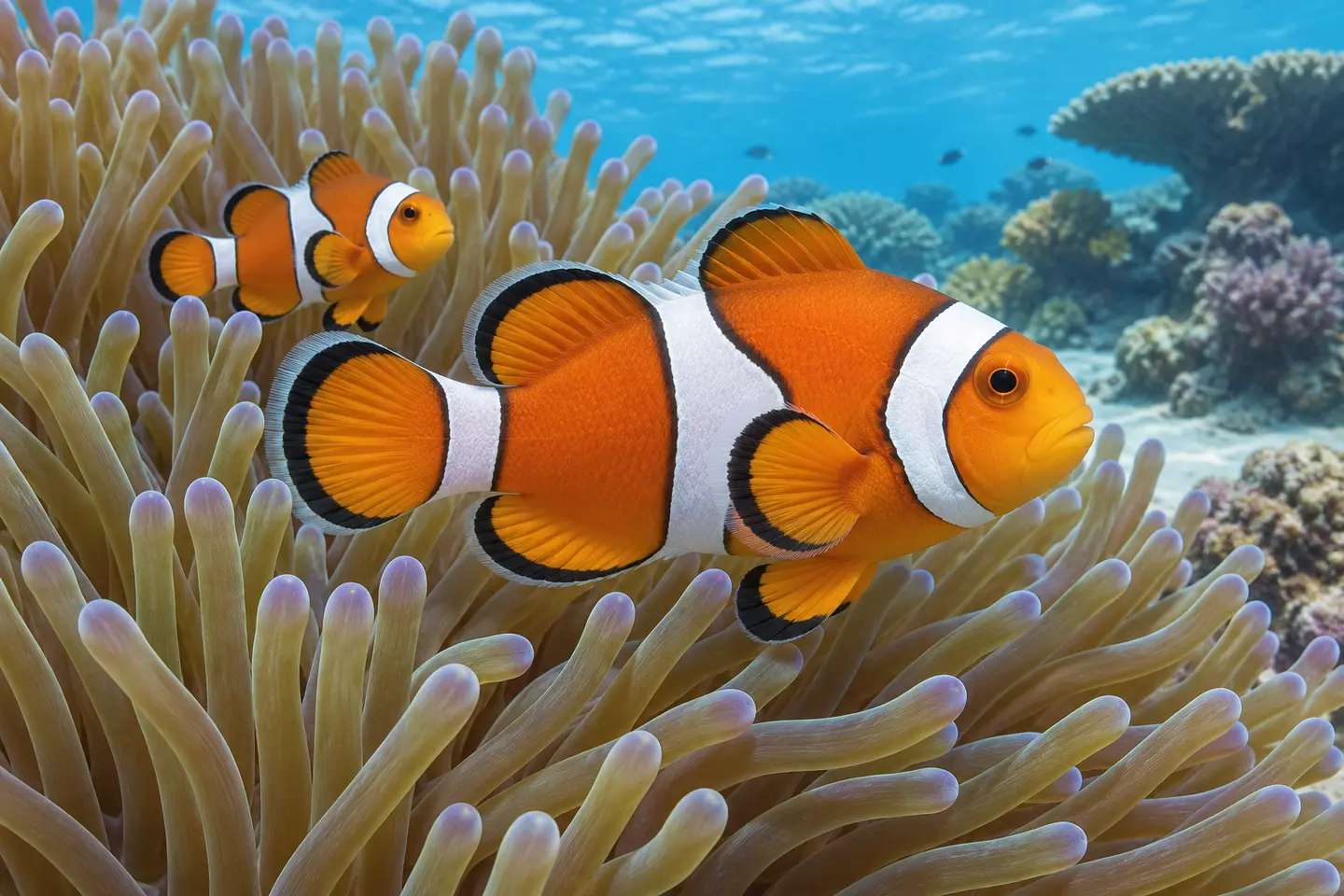
Ocellaris clownfish
Amphiprion ocellarisA small Indo-West Pacific clownfish with three white bars and an obligate association with selected host anemones. Social rank governs sex and reproduction within the group. [1–3]
Open full profile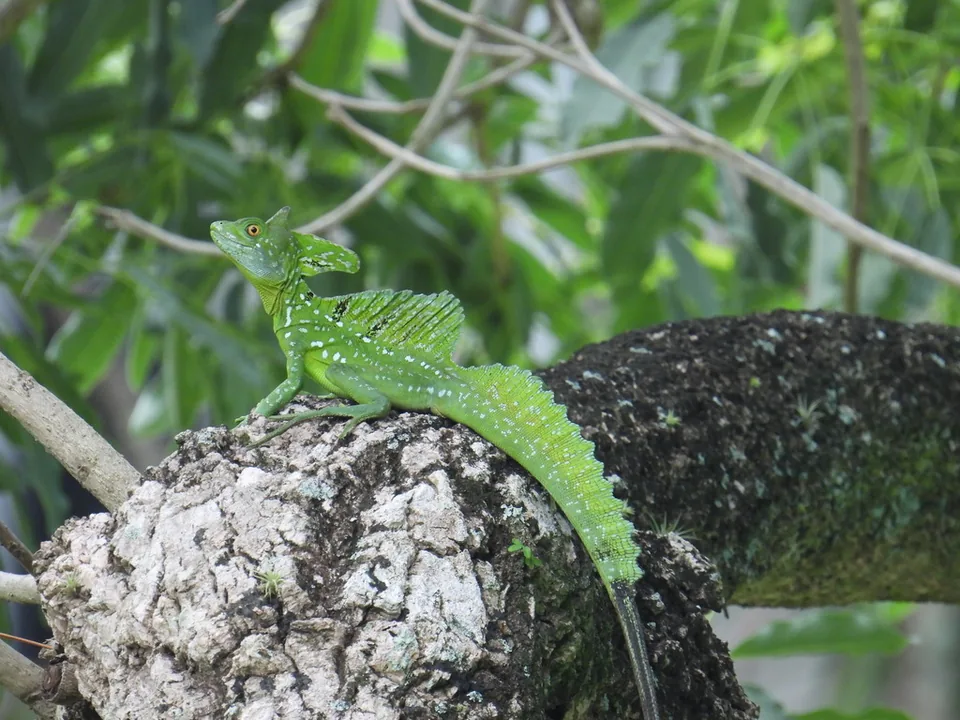
Green crested basilisk
Basiliscus plumifronsA semi-arboreal, semi-aquatic Central American rainforest lizard, notable for bright green colour, tall crests and short sprints across water. [1,2]
Open full profile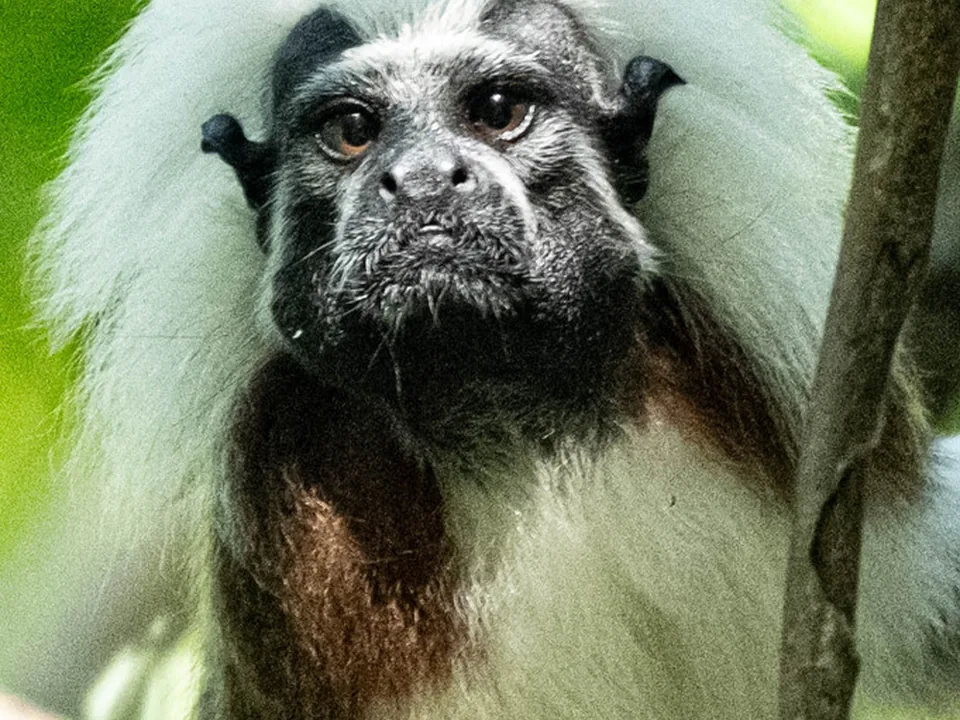
Cotton-top tamarin
Saguinus oedipusA small primate endemic to north-western Colombia, recognised by its long white crest and cooperative social life in the forest canopy. [1,2]
Open full profile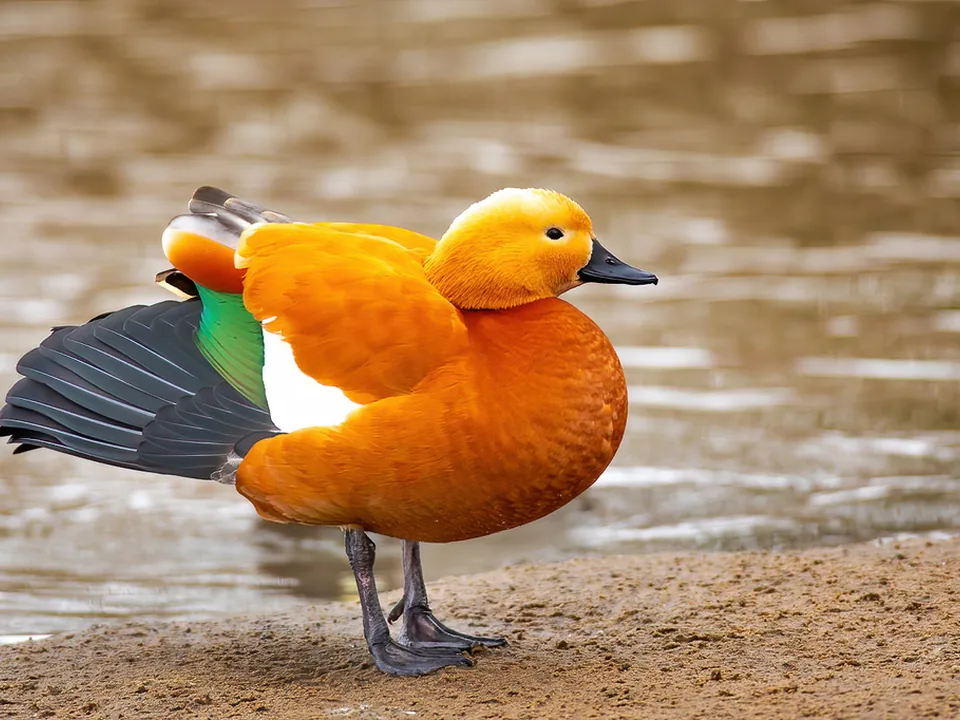
Ruddy shelduck
Tadorna ferrugineaA russet-orange waterfowl ranging from south-eastern Europe and North Africa through Central to East Asia, often forming durable pairs and nesting in cavities. [1,2]
Open full profile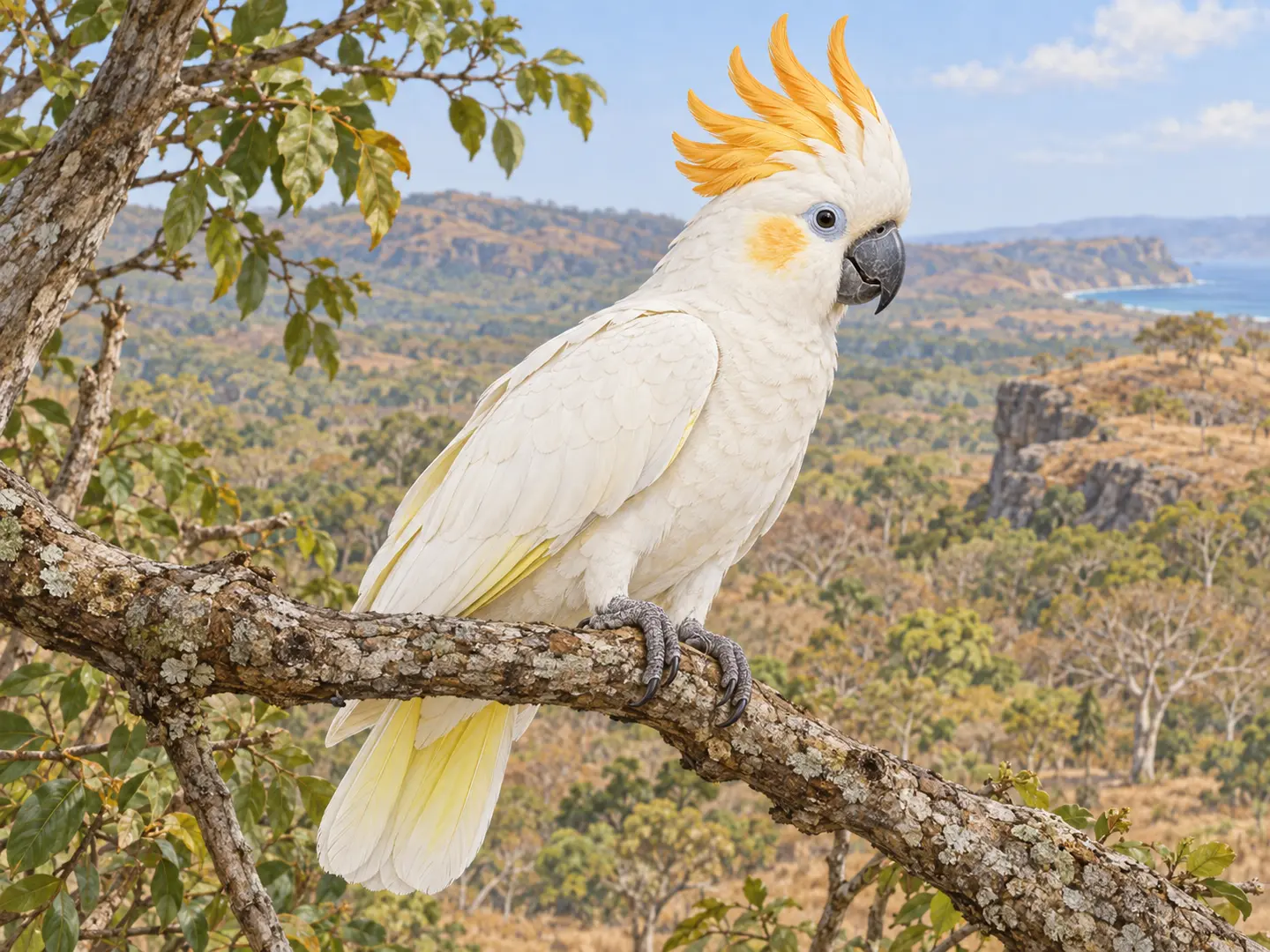
Citron-crested cockatoo
Cacatua sulphurea citrinocristataA white cockatoo endemic to Sumba, recognised by its citron-orange crest and orange-yellow cheek patch; two taxonomic treatments remain in common use. [1,2]
Open full profile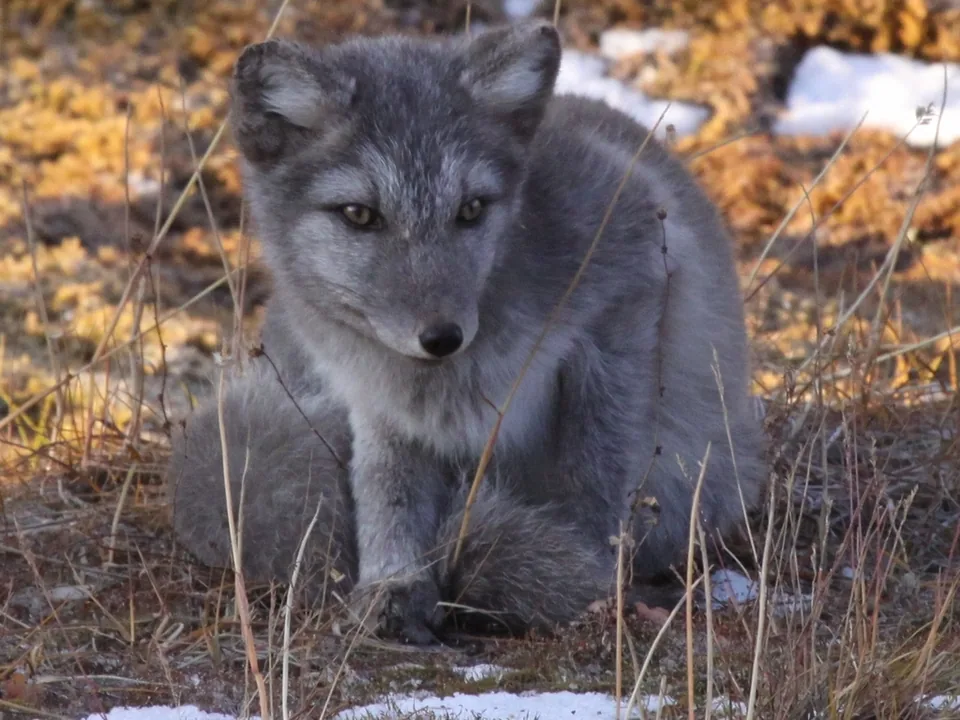
Arctic fox
Vulpes lagopusA small circumpolar fox with dense seasonal fur, furred feet and changing coat colour adapted to cold tundra. [1,2]
Open full profile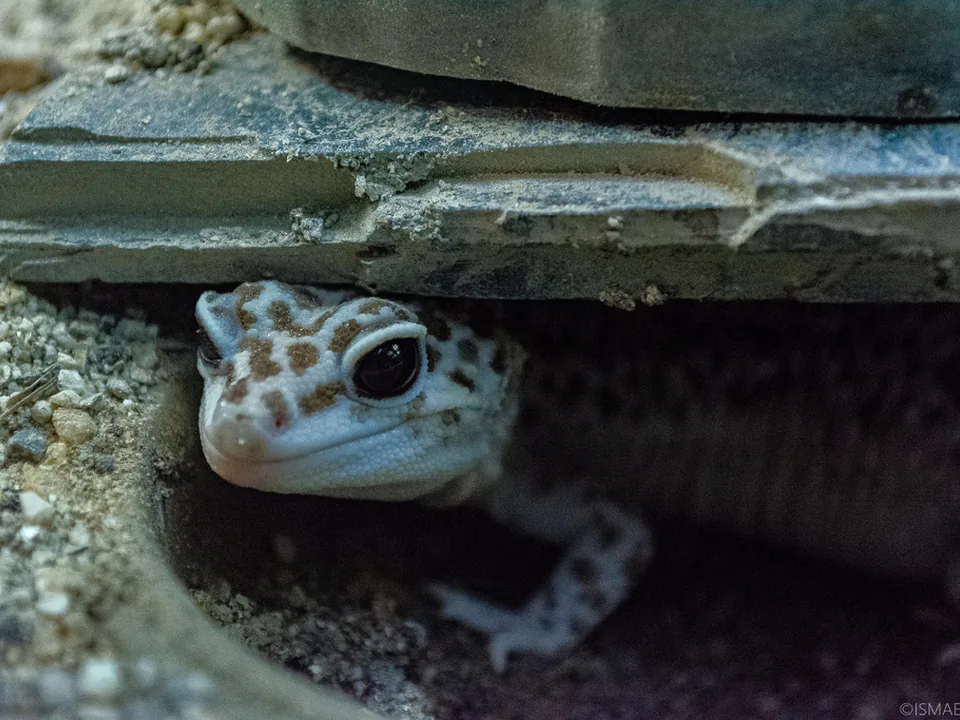
Common leopard gecko
Eublepharis maculariusA ground-dwelling gecko of dry South-Central Asia, distinguished by movable eyelids and an energy-storing tail. [1,2]
Open full profile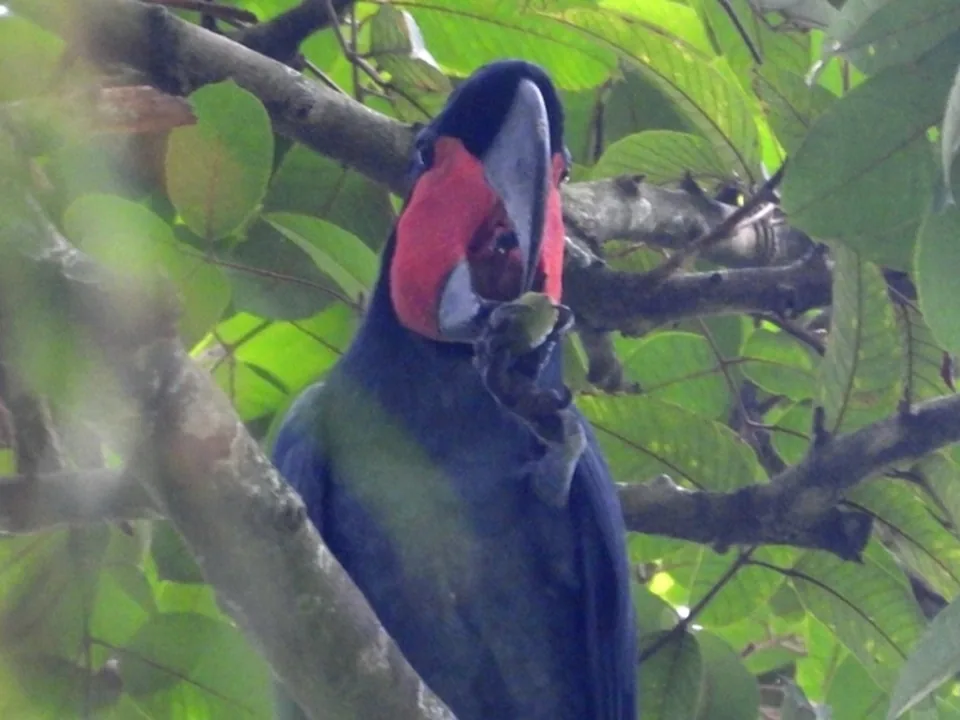
Palm cockatoo
Probosciger aterrimusA large black cockatoo of New Guinea and northern Australia, known for its massive bill, red cheek patch and tool-assisted drumming. [1,2]
Open full profile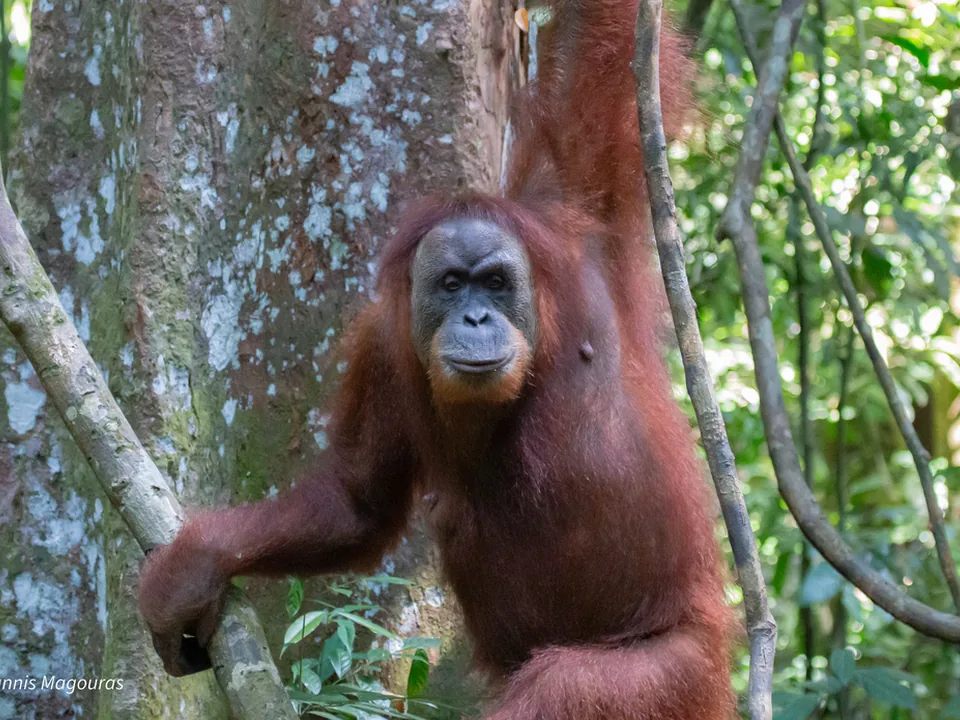
Sumatran orangutan
Pongo abeliiA great ape endemic to northern Sumatra, primarily arboreal and exceptionally slow to reproduce. [1,2,3]
Open full profile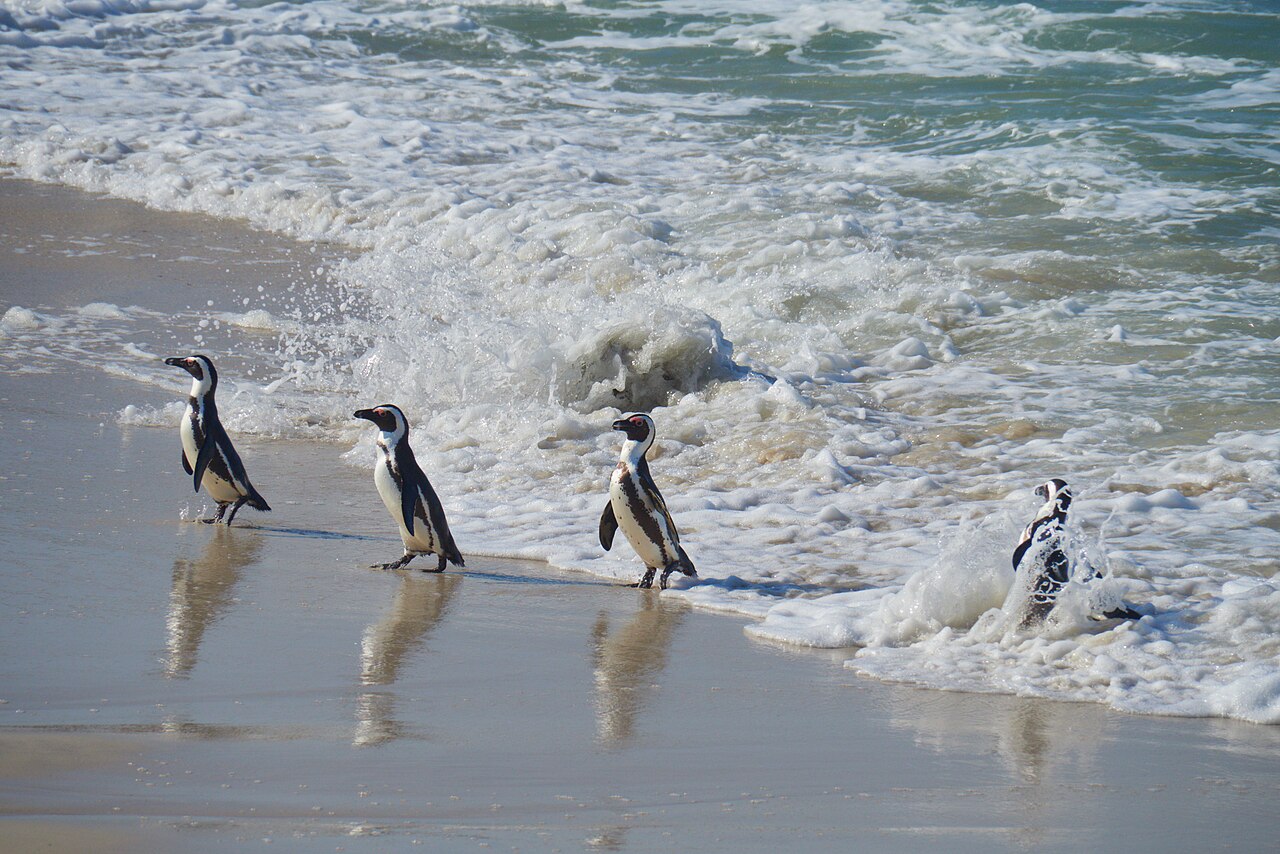
African penguin
Spheniscus demersusA penguin endemic to southern African coasts, identified by a black chest band, individually distinctive belly spots and pink skin above the eyes. [1,2]
Open full profile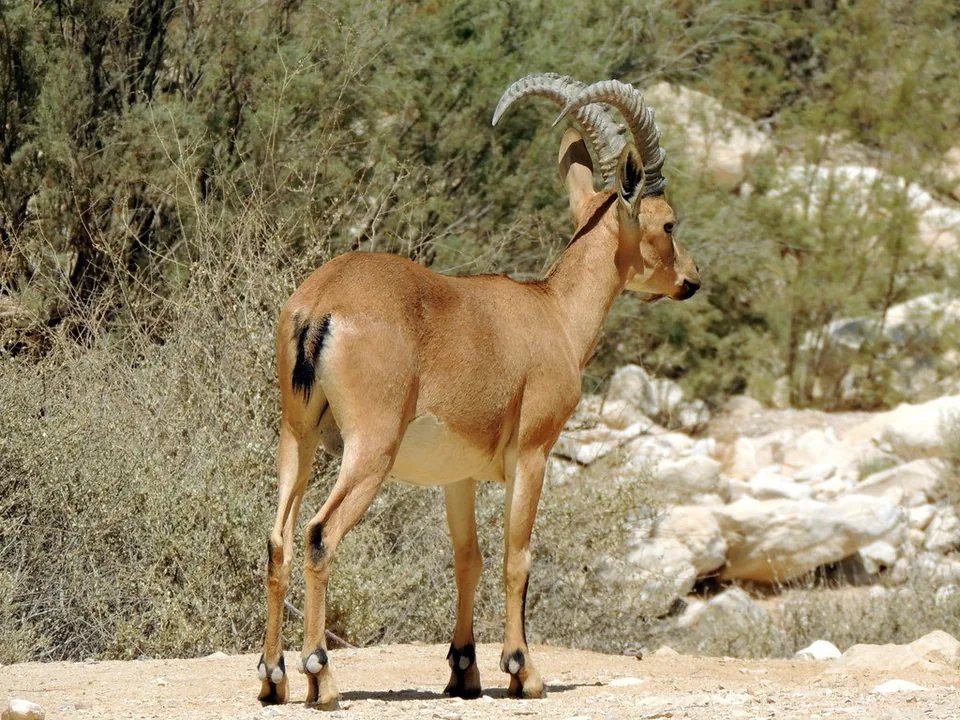
Nubian ibex
Capra nubianaA wild goat adapted to arid rocky mountains of north-eastern Africa and the Arabian Peninsula, with sweeping horns and exceptional cliff mobility. [1,2]
Open full profile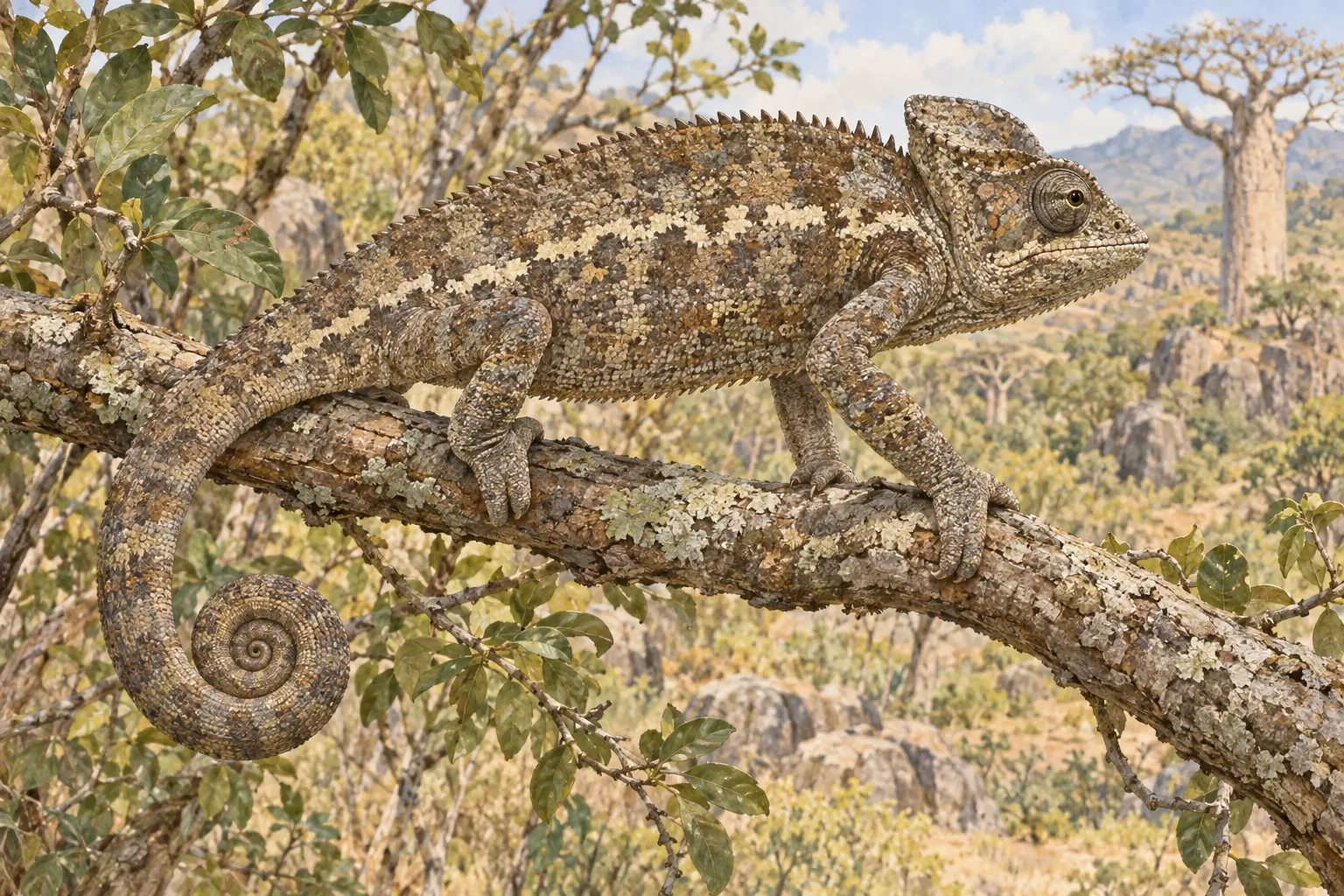
Oustalet’s chameleon
Furcifer oustaletiA large Malagasy chameleon with a gripping tail and branch-clasping feet. [1,2]
Open full profile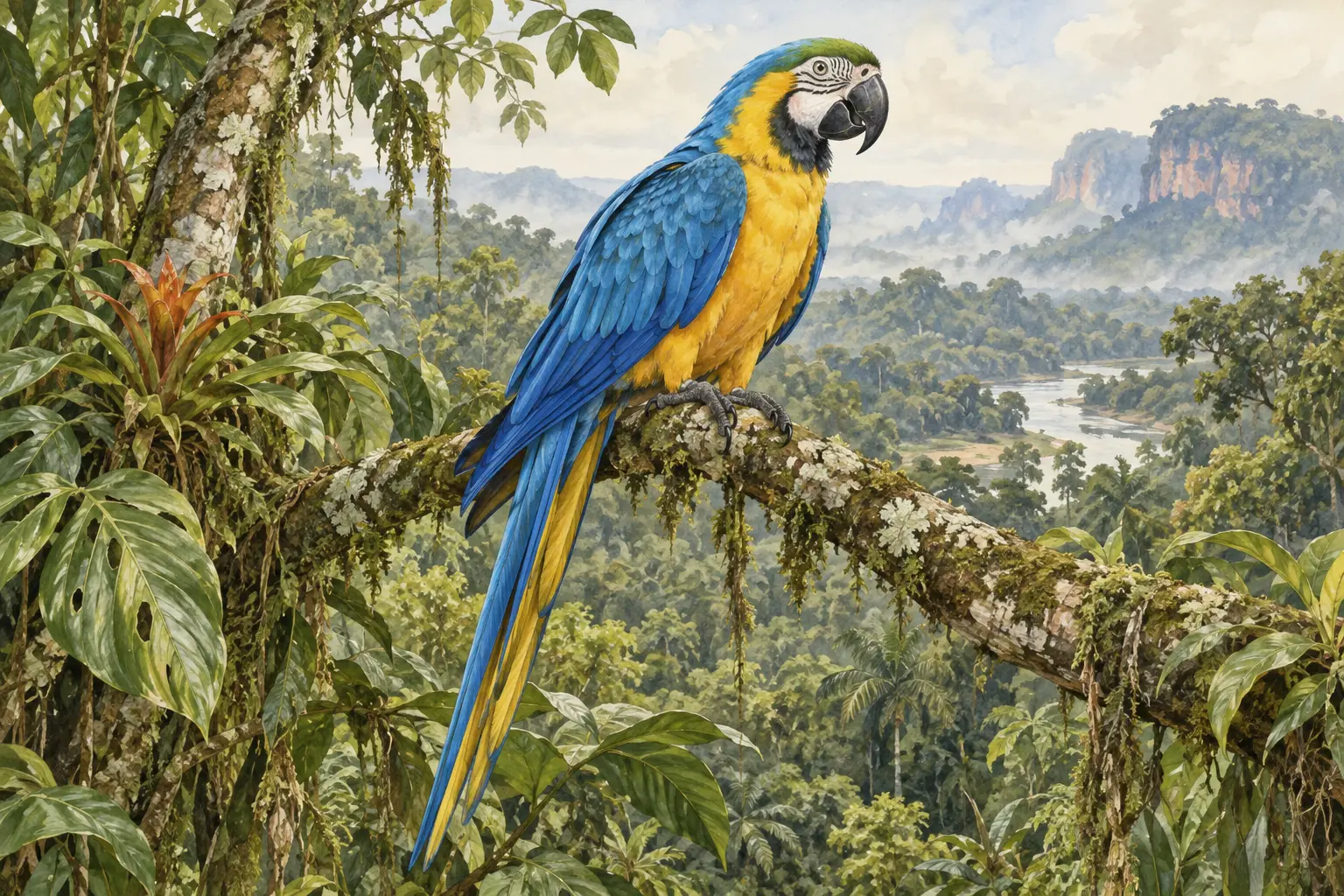
Blue-and-yellow macaw
Ara araraunaA large South American parrot with blue upperparts and a yellow breast. [1]
Open full profileBongo
Tragelaphus eurycerusAn African forest antelope with russet fur, white stripes and horns in both sexes. [1]
Open full profile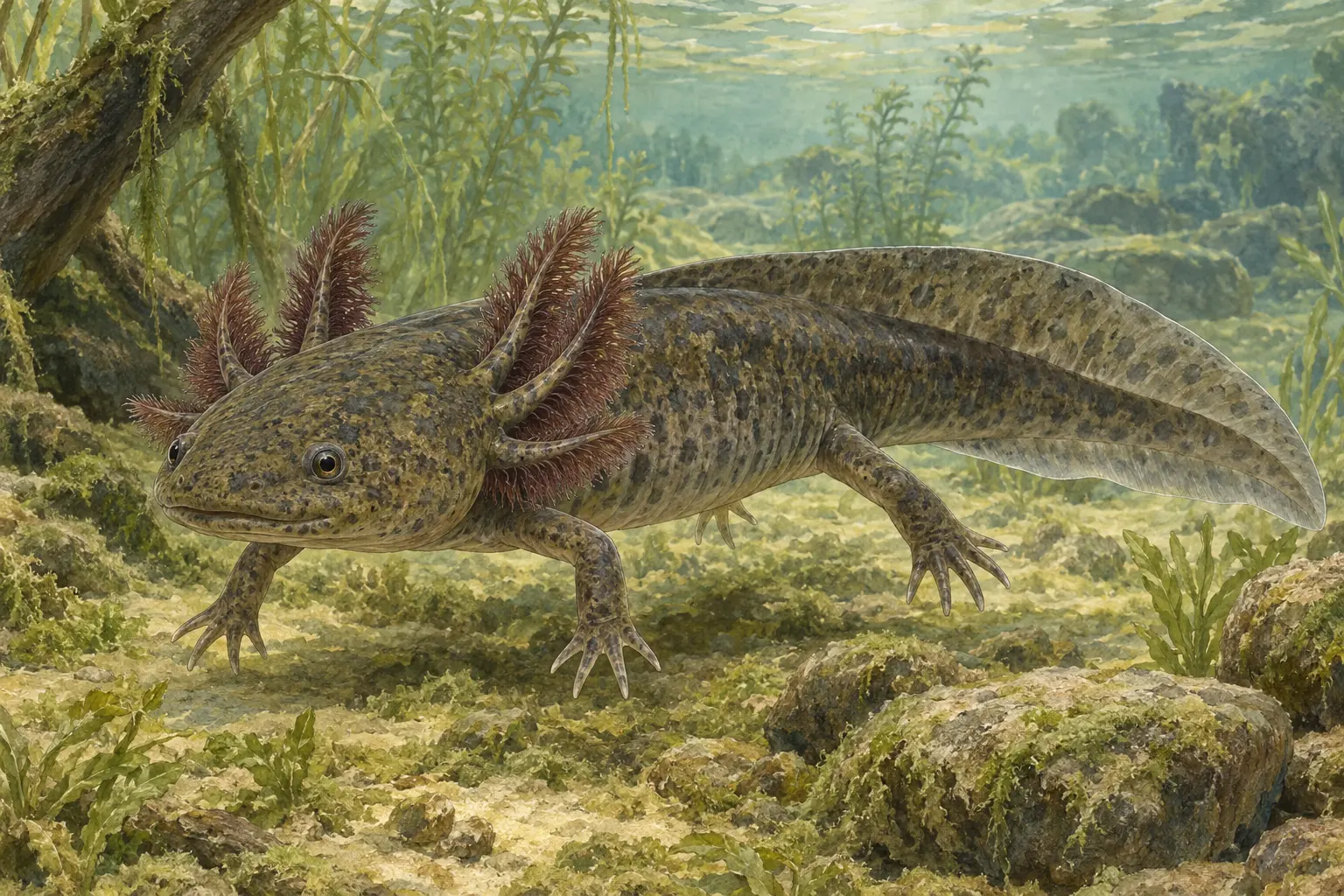
Axolotl
Ambystoma mexicanumA Mexican salamander retaining larval features after reaching sexual maturity. [2]
Open full profile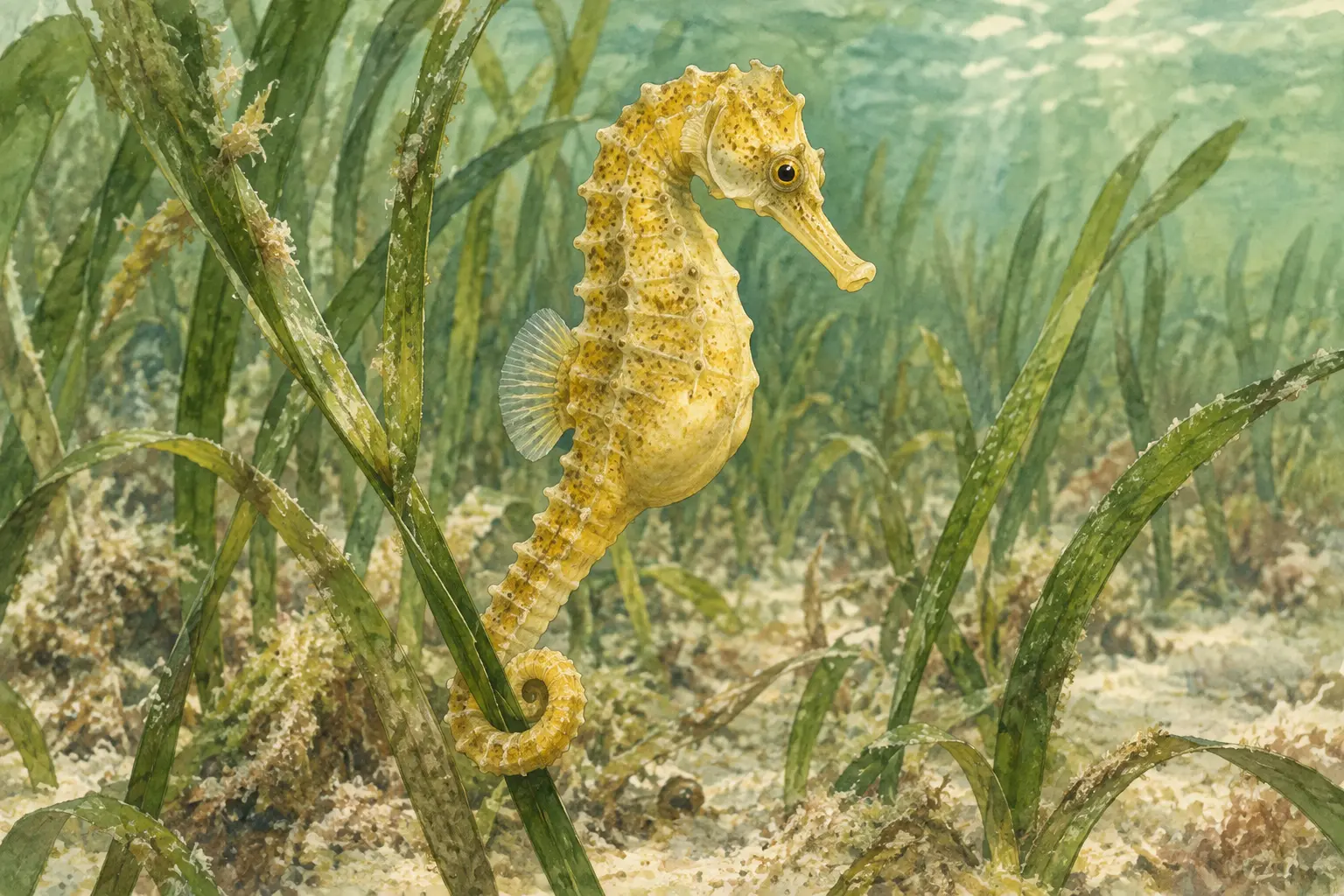
Spotted seahorse
Hippocampus kudaAn Indo-Pacific seahorse whose males carry eggs in a brood pouch. [2]
Open full profile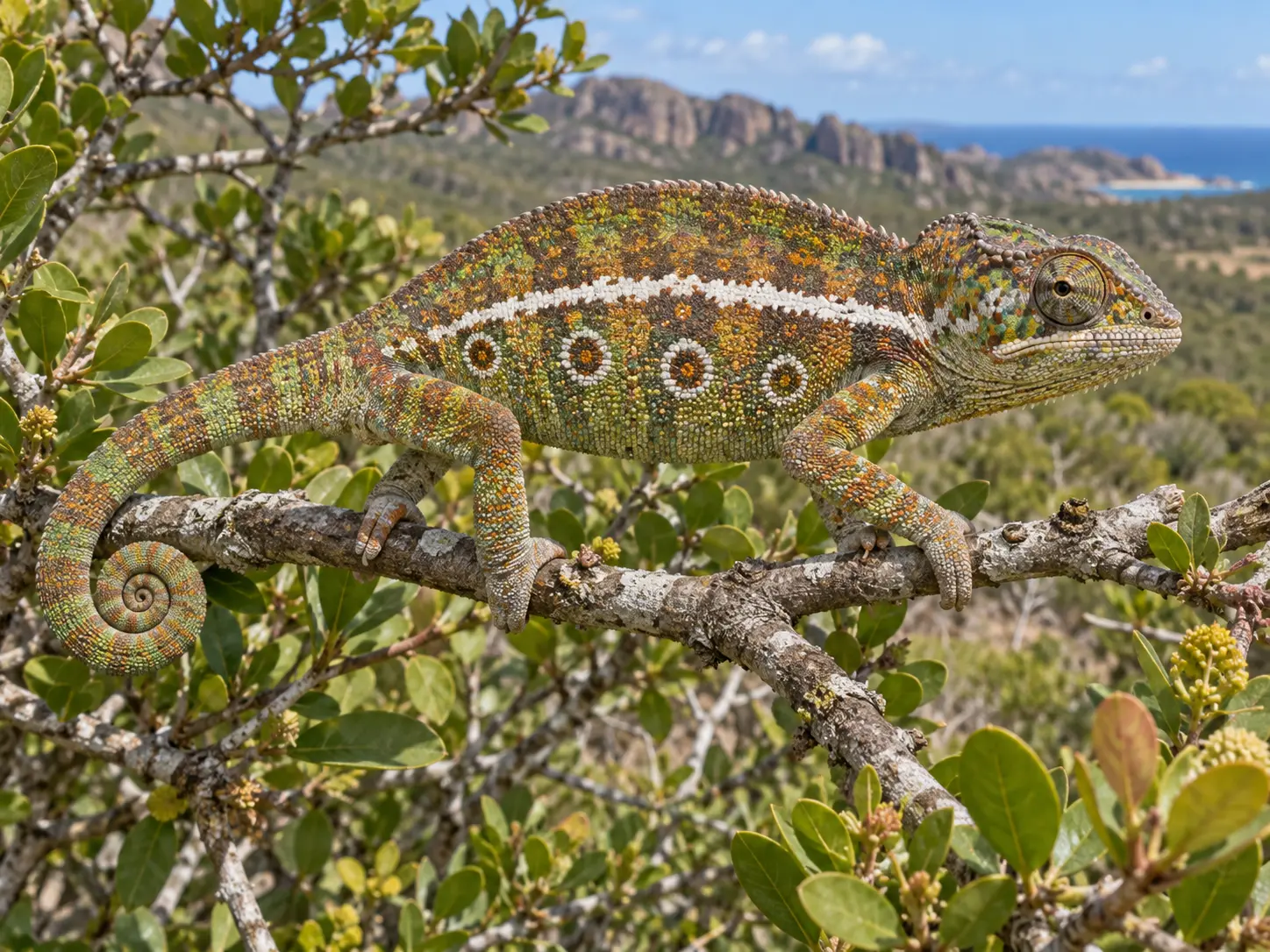
Carpet chameleon
Furcifer lateralisA small-to-medium chameleon endemic to Madagascar, named for tapestry-like patterning; females are often especially vivid and show strong reproductive colour changes.
Open full profile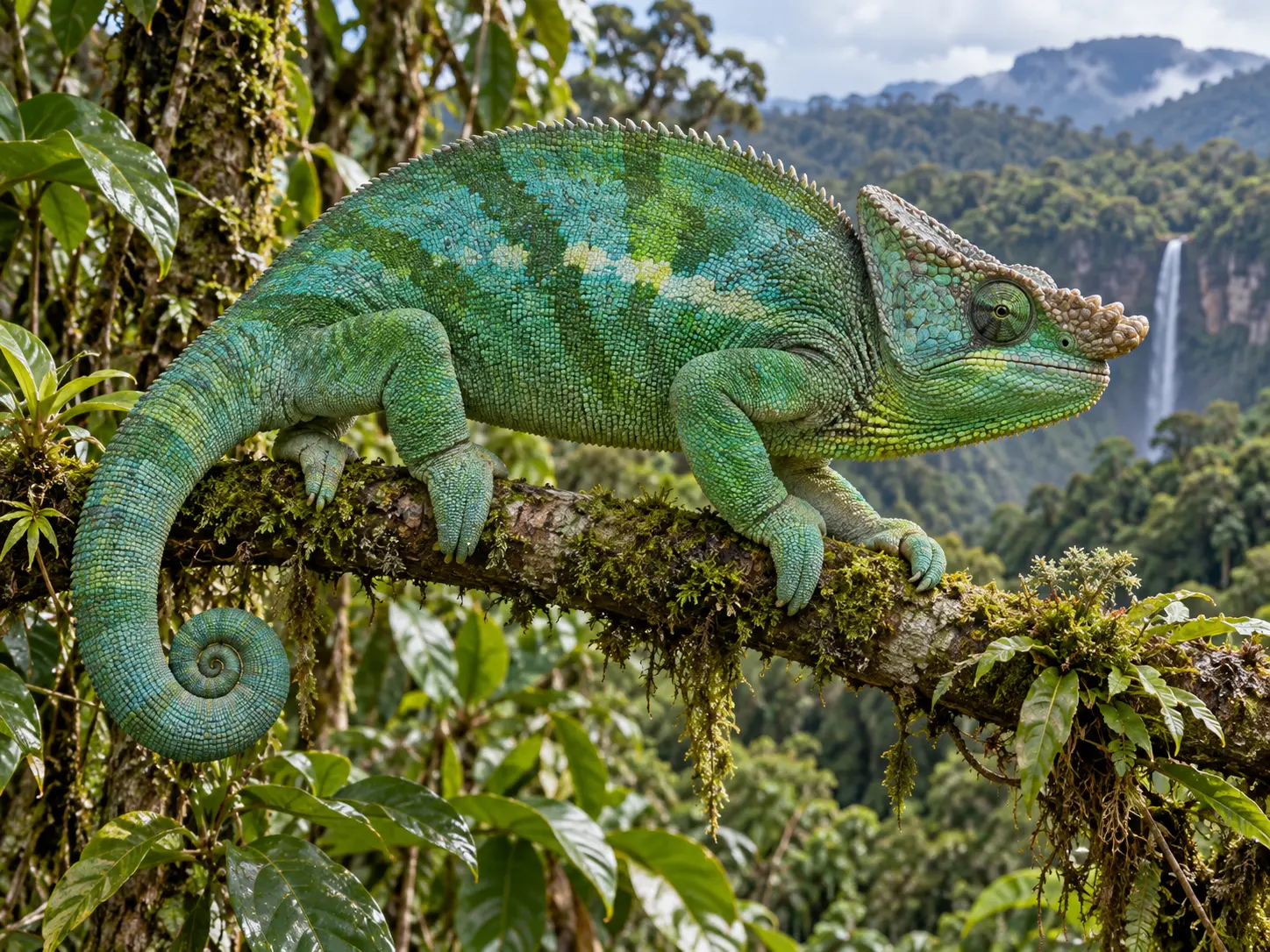
Parson's chameleon
Calumma parsoniiOne of the world's largest chameleons, endemic to humid eastern Madagascar forests and markedly slower-lived than many smaller chameleon species.
Open full profile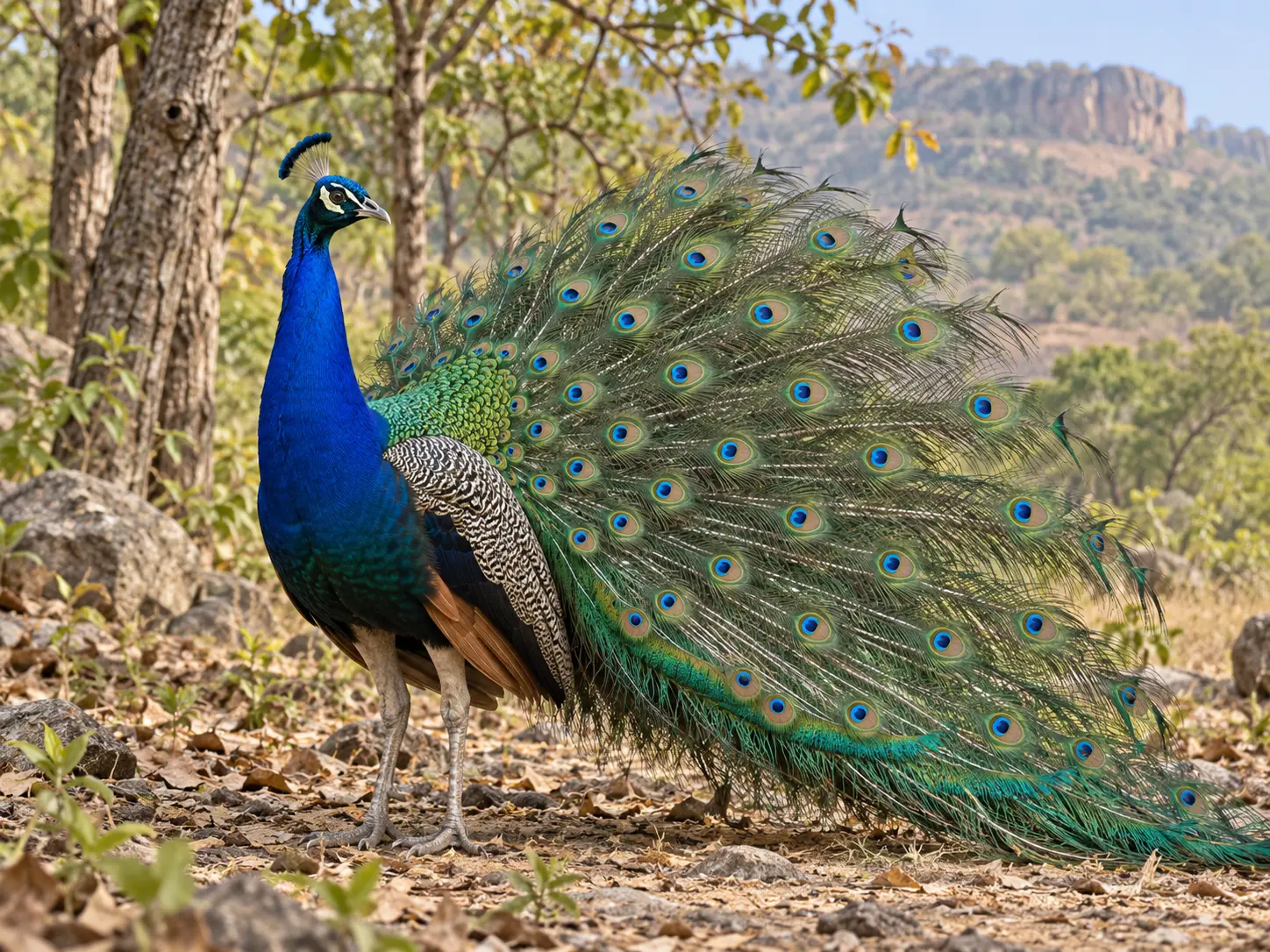
Indian peafowl
Pavo cristatusA peafowl native to the Indian subcontinent; males have an iridescent blue neck and elongated upper-tail coverts forming an eye-spotted train.
Open full profile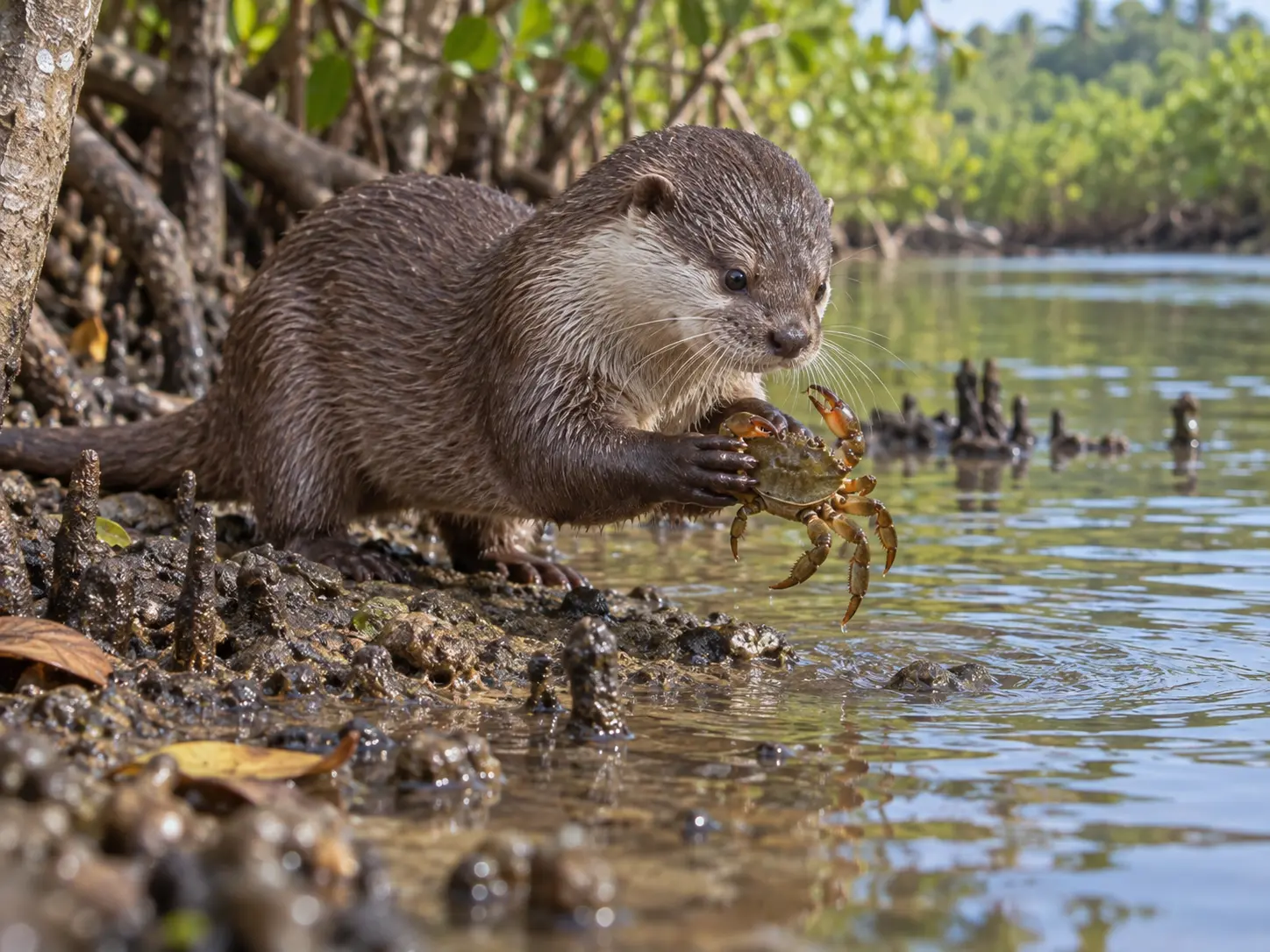
Asian small-clawed otter
Aonyx cinereusThe world's smallest otter, distinguished by dexterous digits, reduced webbing and very short claws—adaptations for finding crabs, molluscs and benthic prey.
Open full profile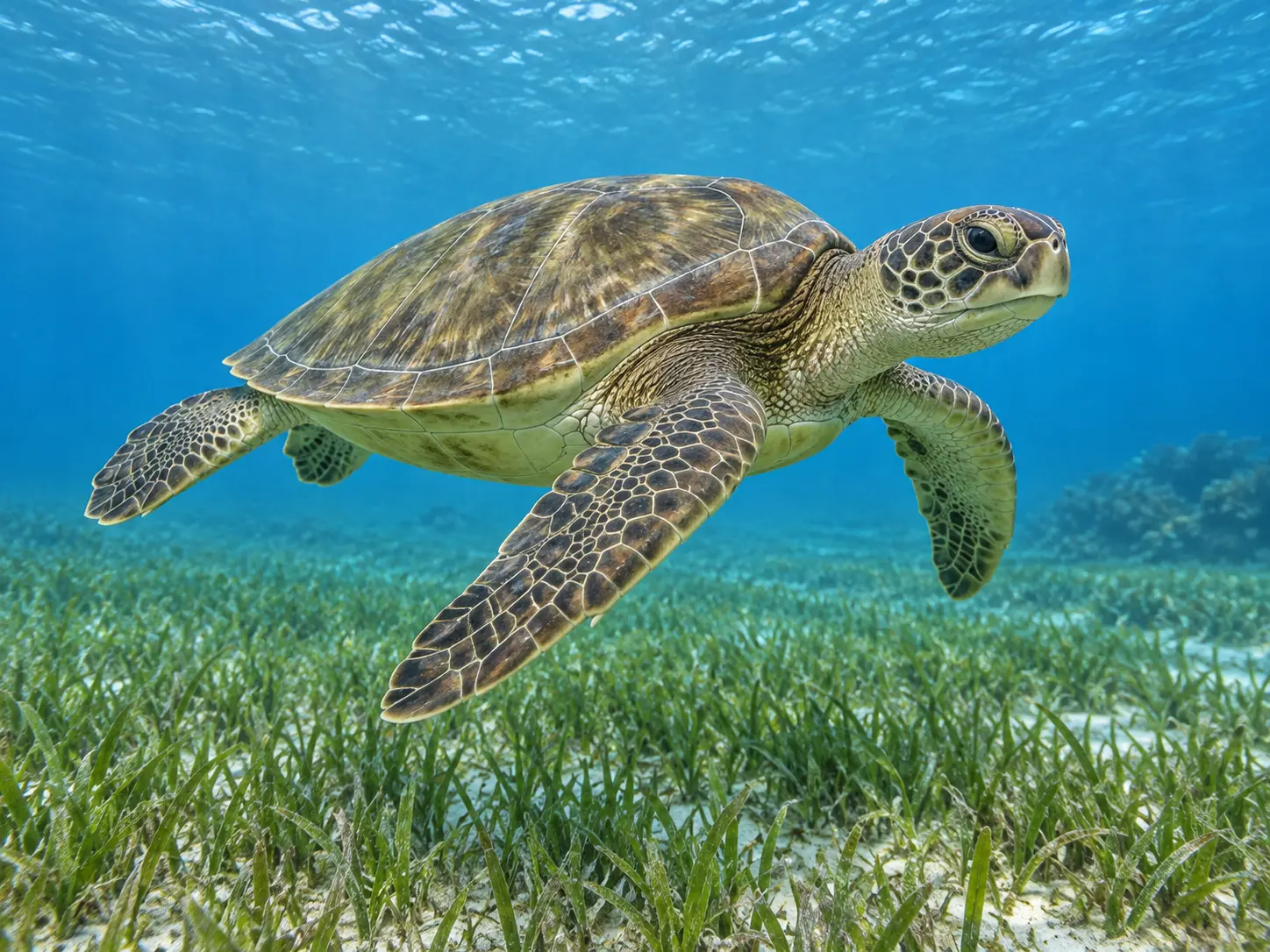
Green sea turtle
Chelonia mydasA large sea turtle distributed across tropical and subtropical oceans; adults feed mainly on seagrass and algae, helping maintain coastal ecosystems.
Open full profile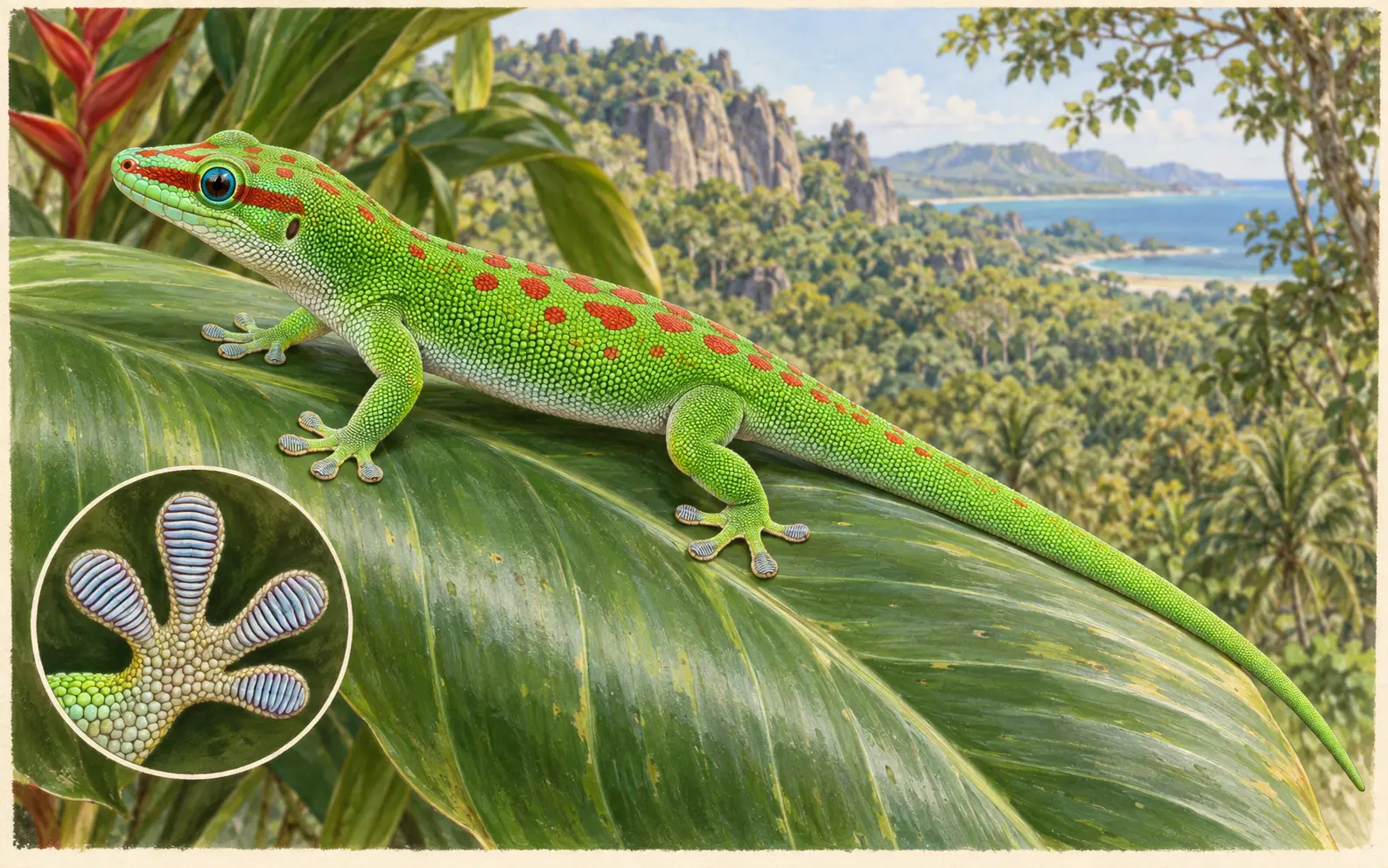
Madagascar giant day gecko
Phelsuma grandisA large, diurnal, arboreal gecko from northern Madagascar. Bright green colour, a red facial stripe and adhesive toe pads make it distinctive.
Open full profile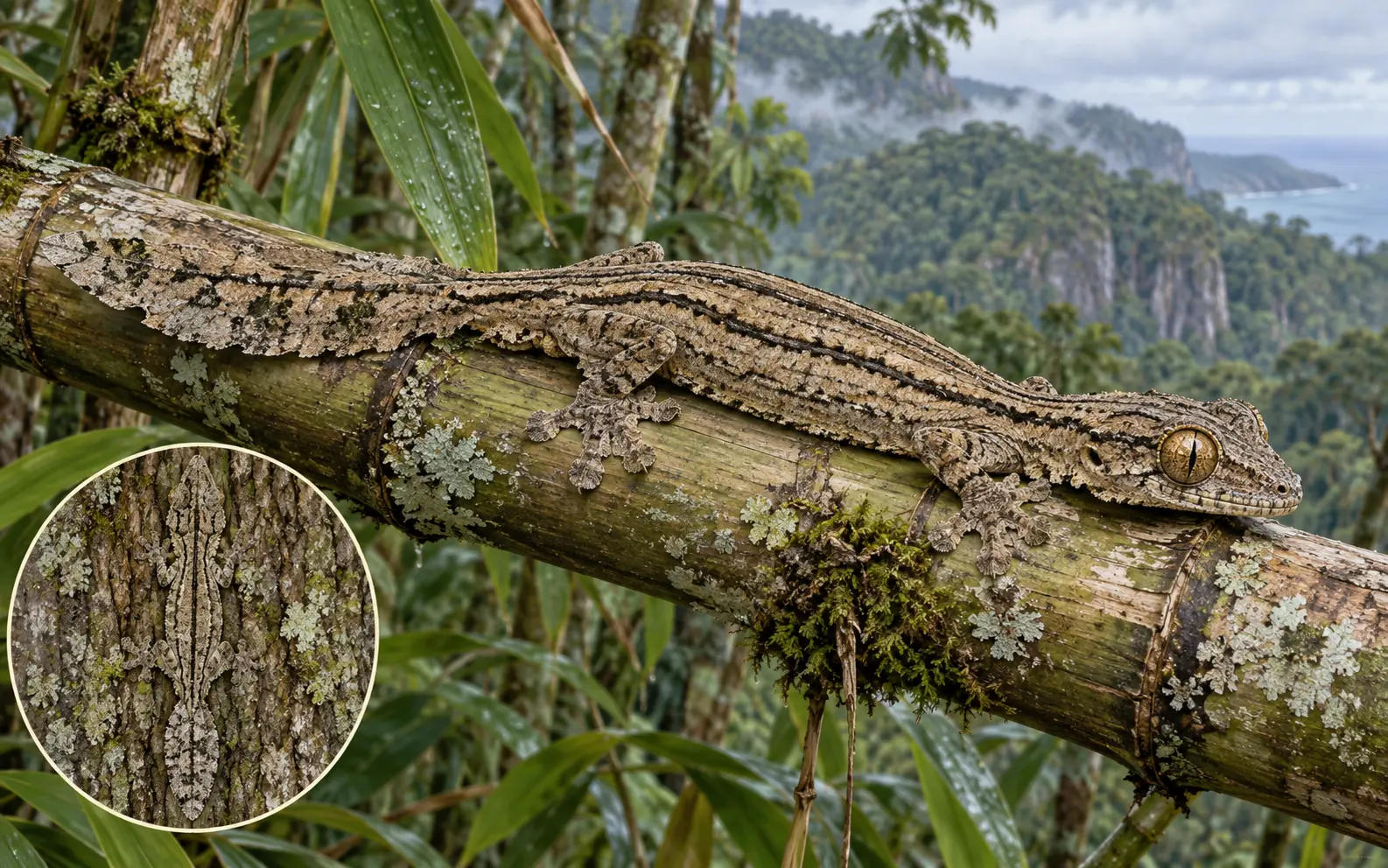
Lined leaf-tailed gecko
Uroplatus lineatusA gecko endemic to eastern Madagascar rainforests, with an elongated body and longitudinal lines that merge visually with bamboo, branches and leaf sheaths.
Open full profile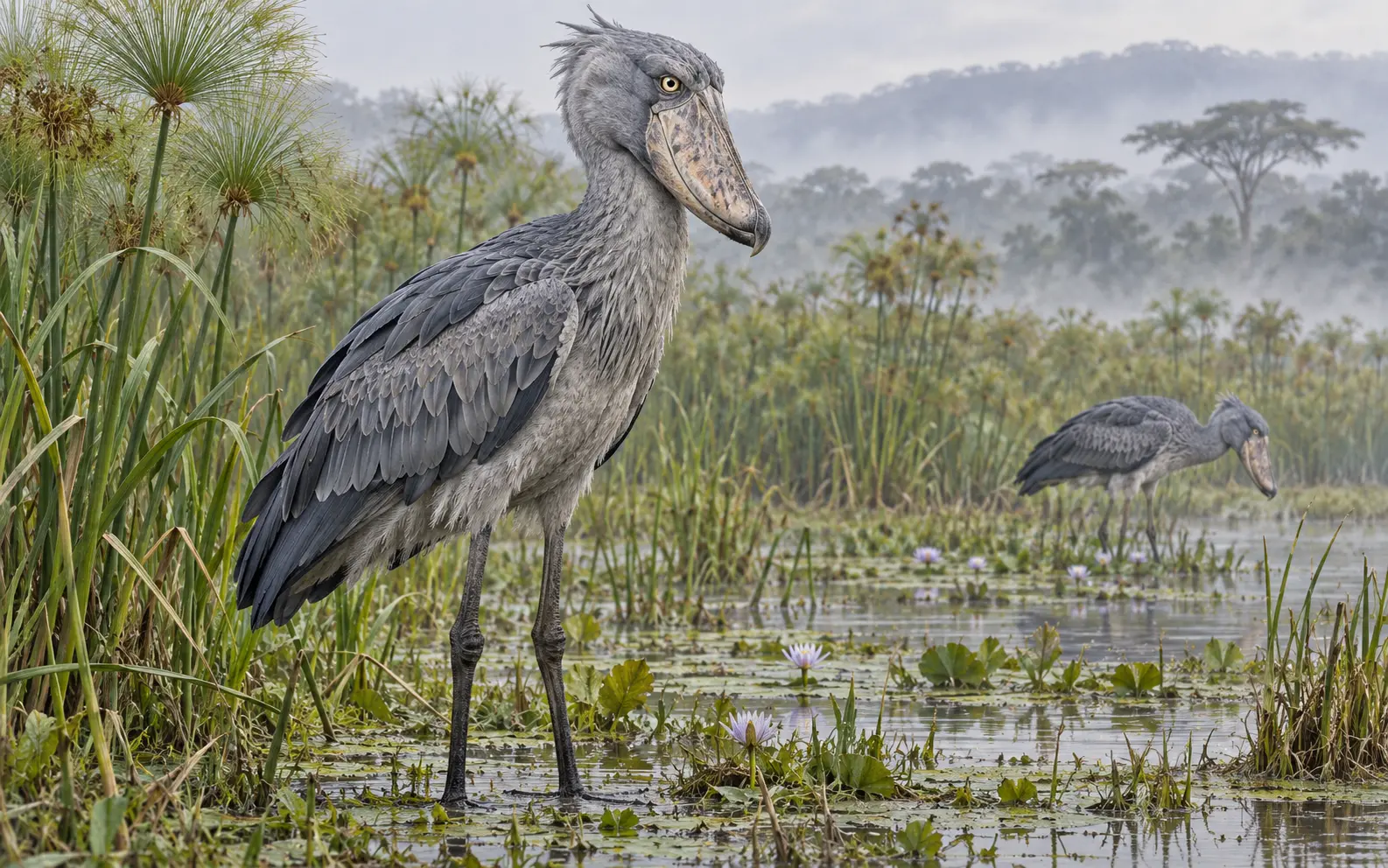
Shoebill
Balaeniceps rexA large waterbird of tropical East-Central African swamps. Its deep, shoe-like bill is a fish-catching tool suited to low-oxygen wetlands.
Open full profile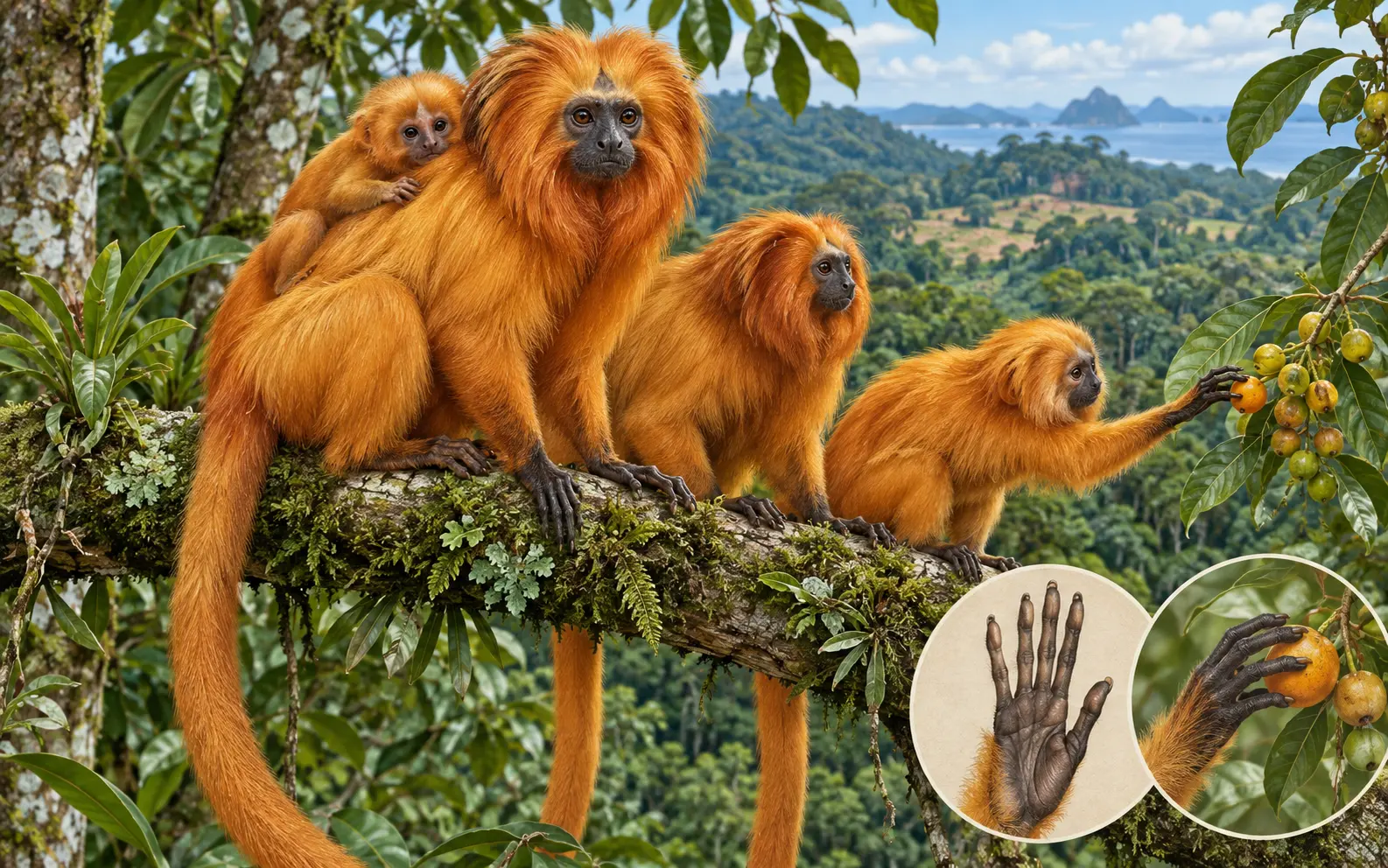
Golden lion tamarin
Leontopithecus rosaliaA small primate endemic to Atlantic Forest in Rio de Janeiro State, Brazil. Golden-orange fur and a face-framing mane make it a conservation icon.
Open full profile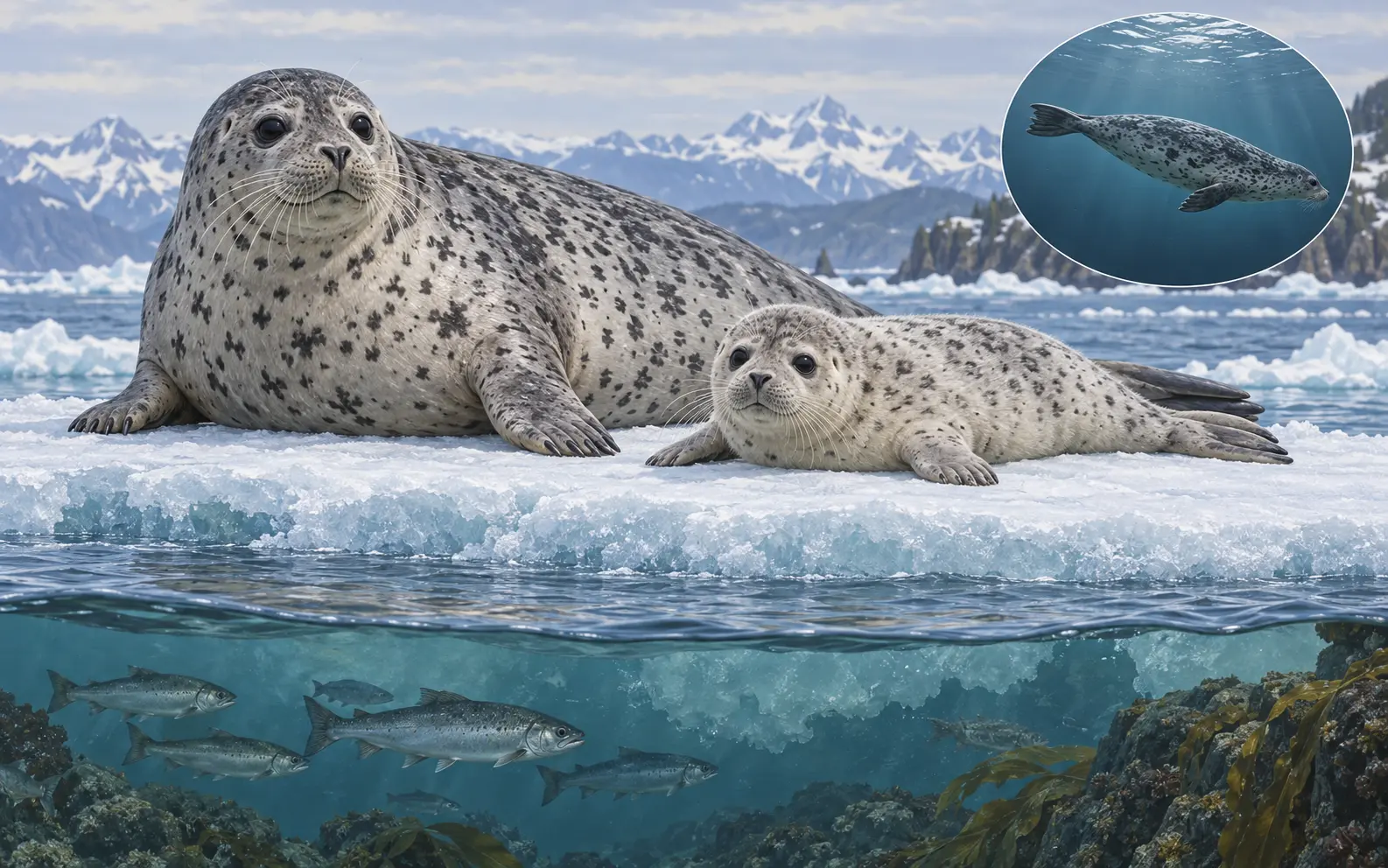
Spotted seal
Phoca larghaA true seal widely distributed across North Pacific continental shelves, relying on seasonal sea ice for pupping, resting and moulting.
Open full profile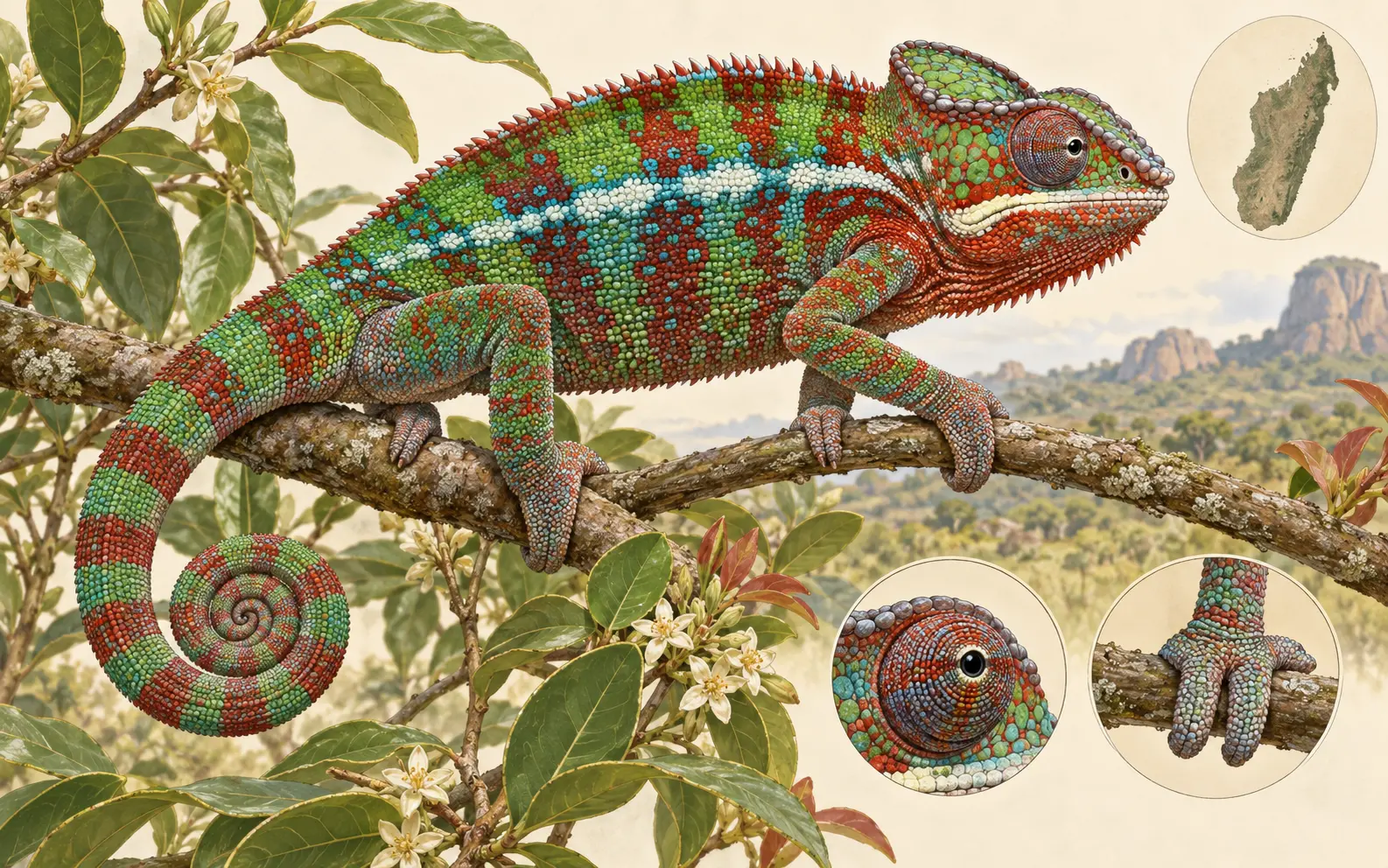
Panther chameleon
Furcifer pardalisA diurnal chameleon endemic to Madagascar, notable for strong geographic colour variation. Colour is biological signalling—not merely camouflage.
Open full profile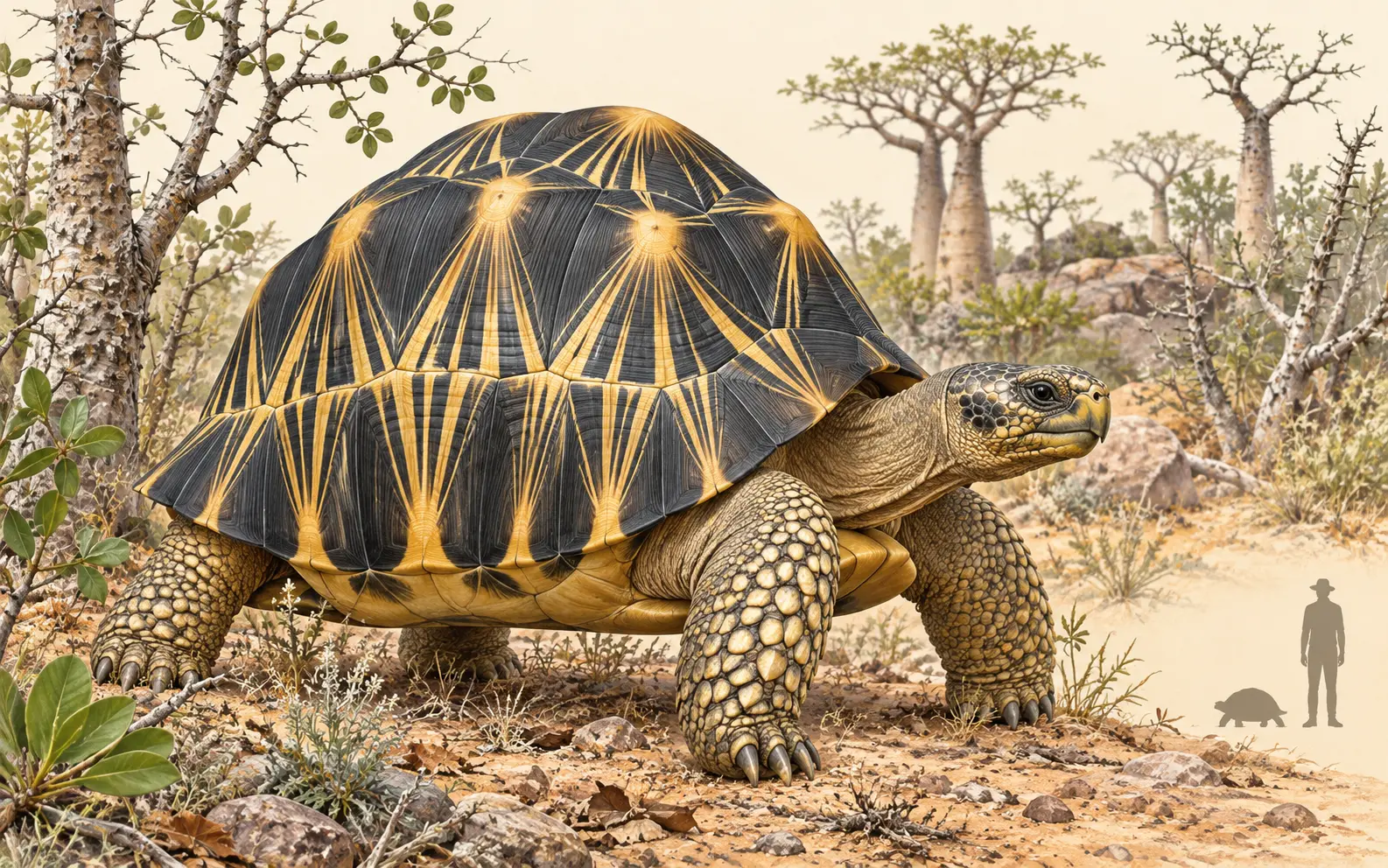
Radiated tortoise
Astrochelys radiataA southern Madagascar endemic with a high-domed shell marked by yellow rays from each scute. It is among the tortoises most severely threatened by collection and habitat loss.
Open full profile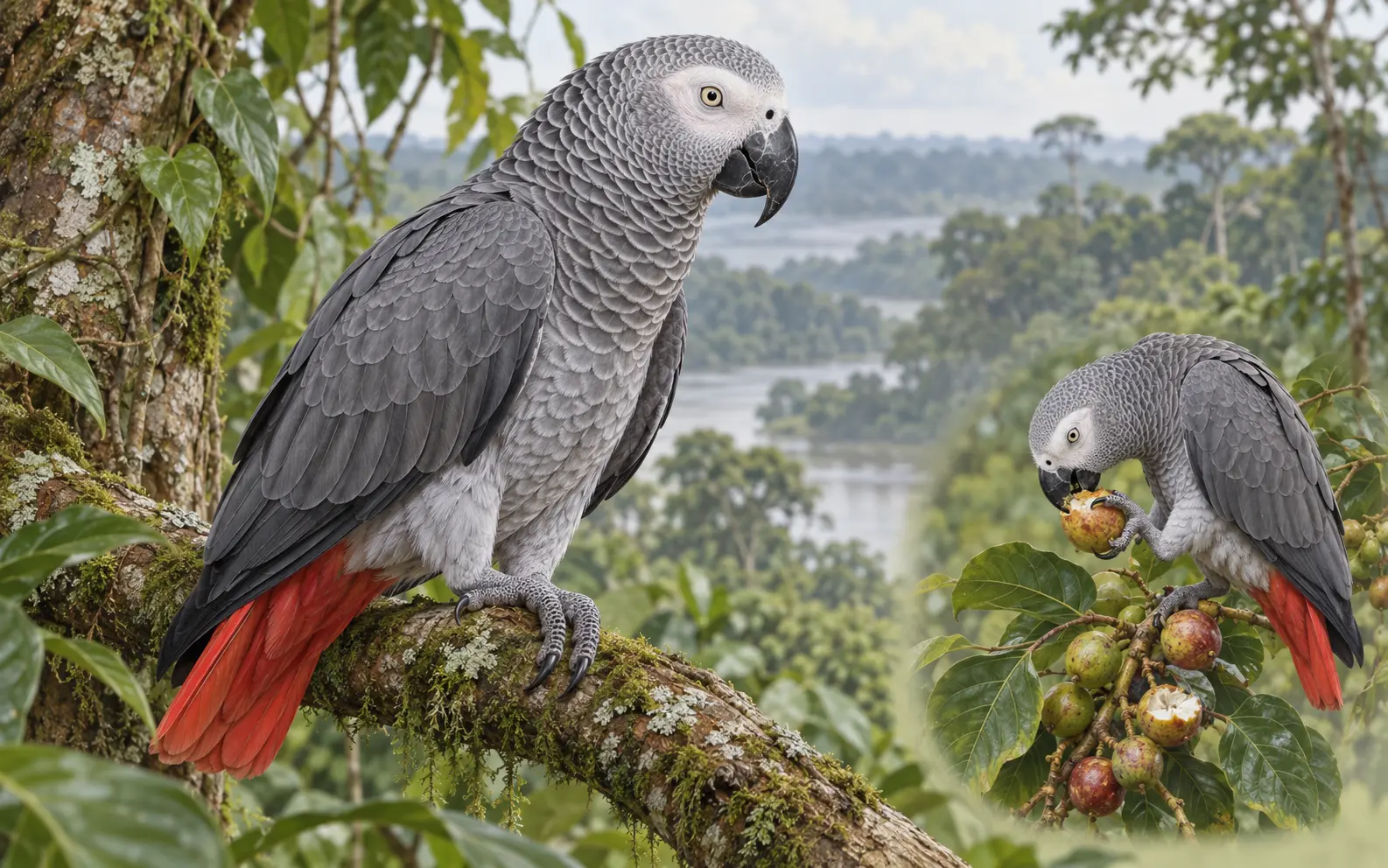
Grey parrot
Psittacus erithacusA West and Central African forest parrot recognised by grey plumage, a black bill and red tail. Exceptional vocal learning does not reduce its very high social, cognitive and welfare needs.
Open full profile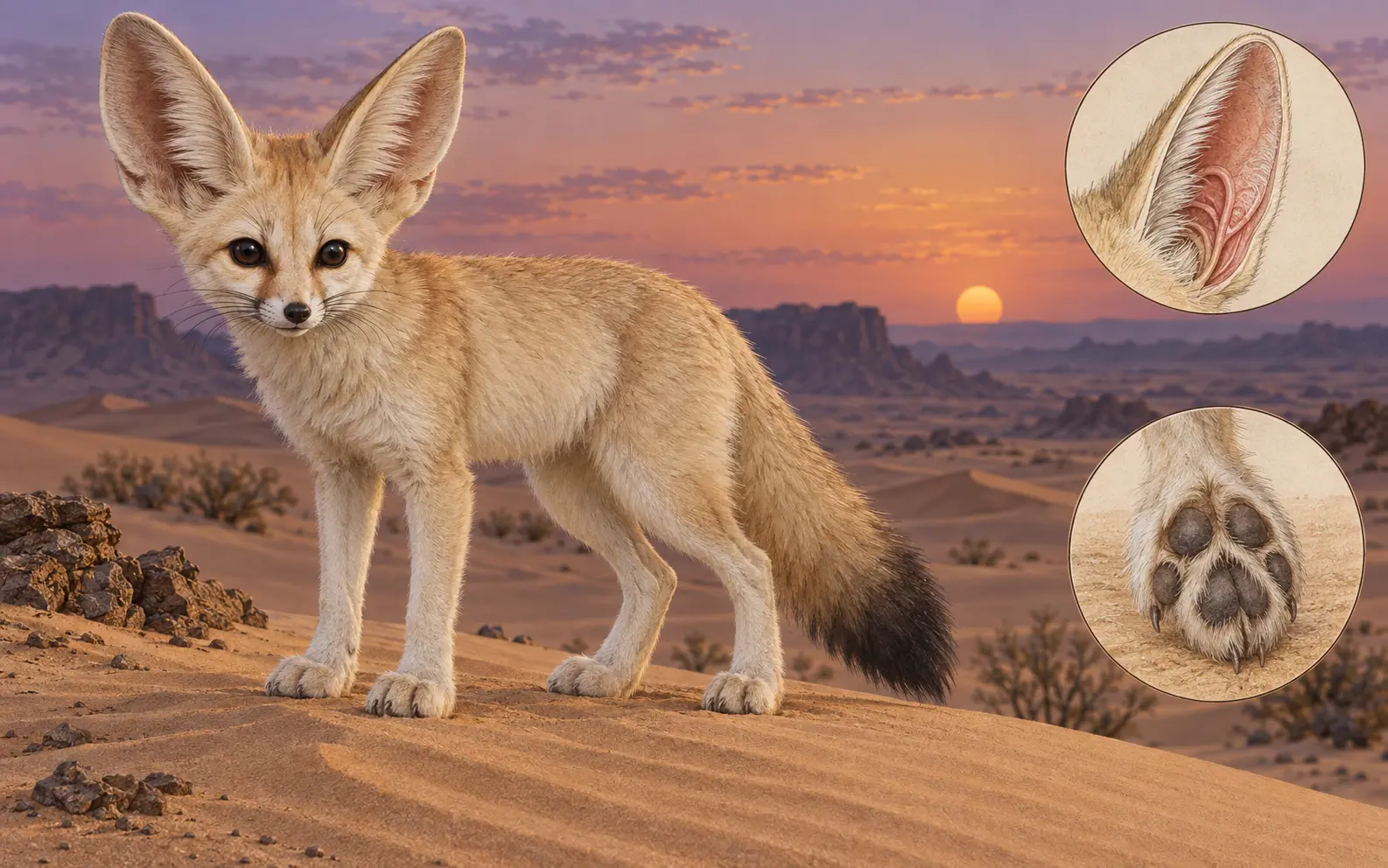
Fennec fox
Vulpes zerdaThe smallest canid, adapted to North African deserts through very large ears, pale fur, burrowing and nocturnal activity.
Open full profile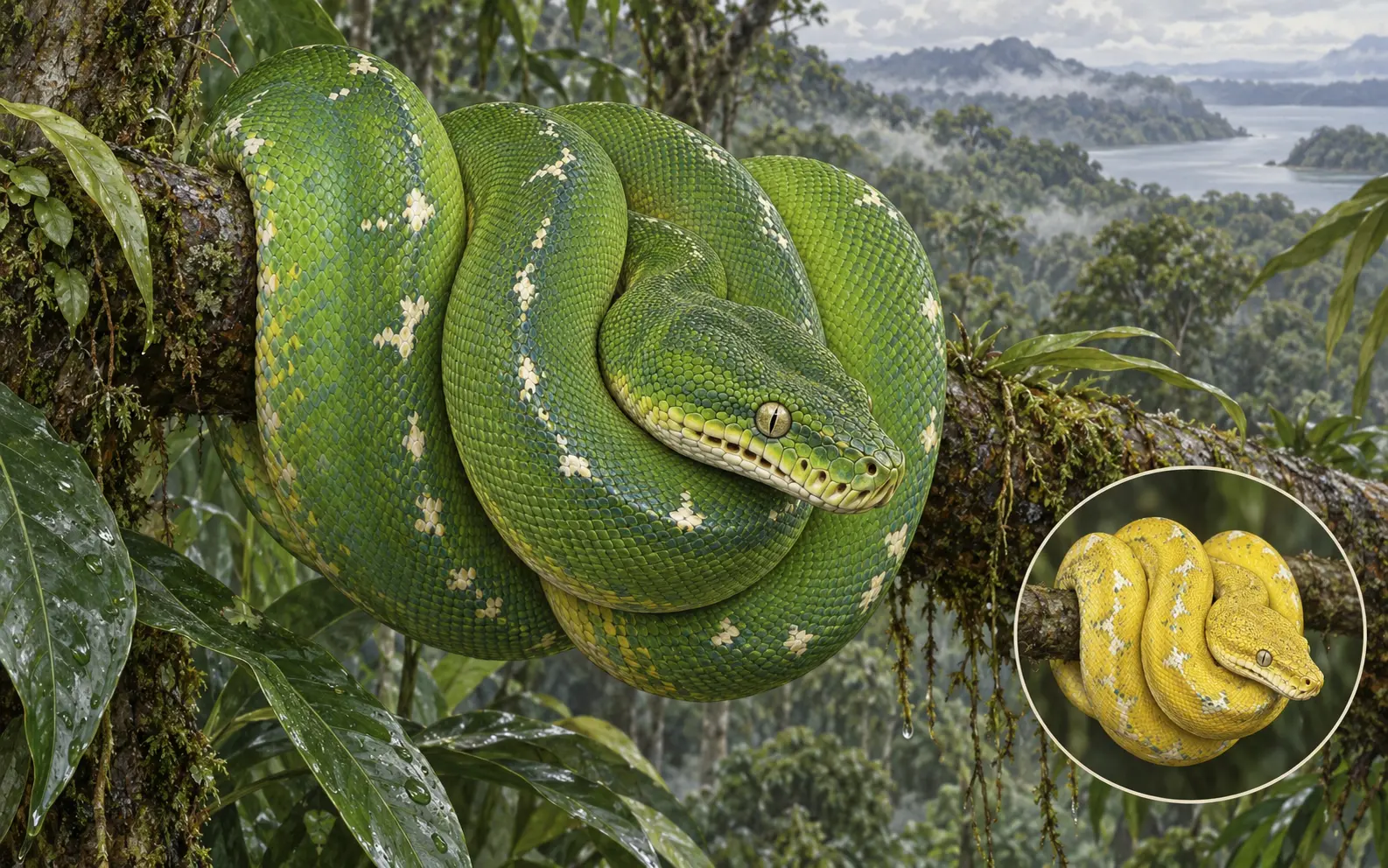
Green tree python
Morelia viridisAn arboreal python from New Guinea and far northern Australia, famous for its branch-coiling posture and ontogenetic shift from yellow or red juveniles to green in many adults.
Open full profileVisual learning library
See more. Understand more.
Explore anatomy, behaviour and habitats through illustrated learning plates. Read the editorial notes before using information shown in a poster.
Images supplied by DinoJura; original creator marks retained. These visual references are not validated care protocols, conservation certifications or animals offered for sale.
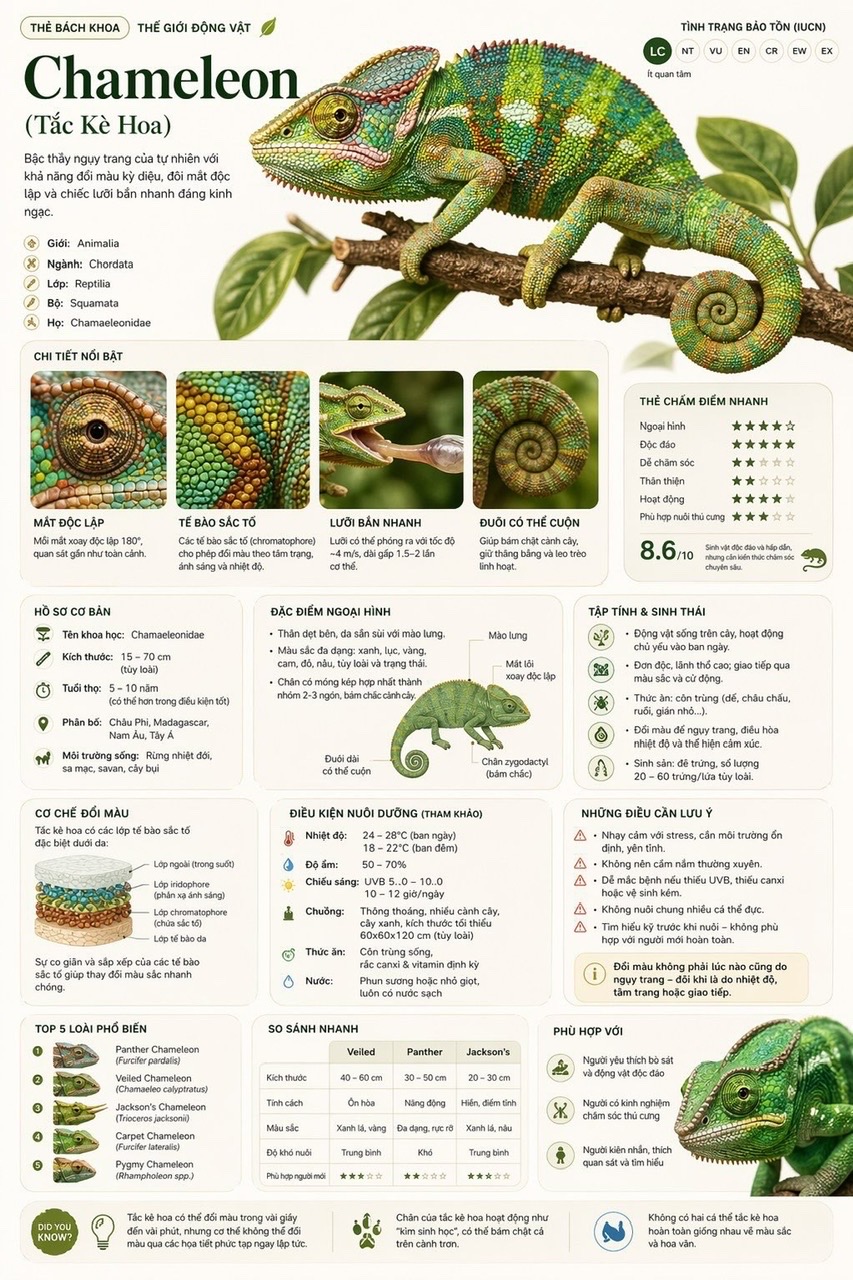
Chameleons · Beyond camouflage
Chamaeleonidae is a family, not a species. Neither LC status nor one set of husbandry parameters applies to the whole family. In Panther chameleons, colour change also involves nanocrystals in reflective skin cells.
View full image ↗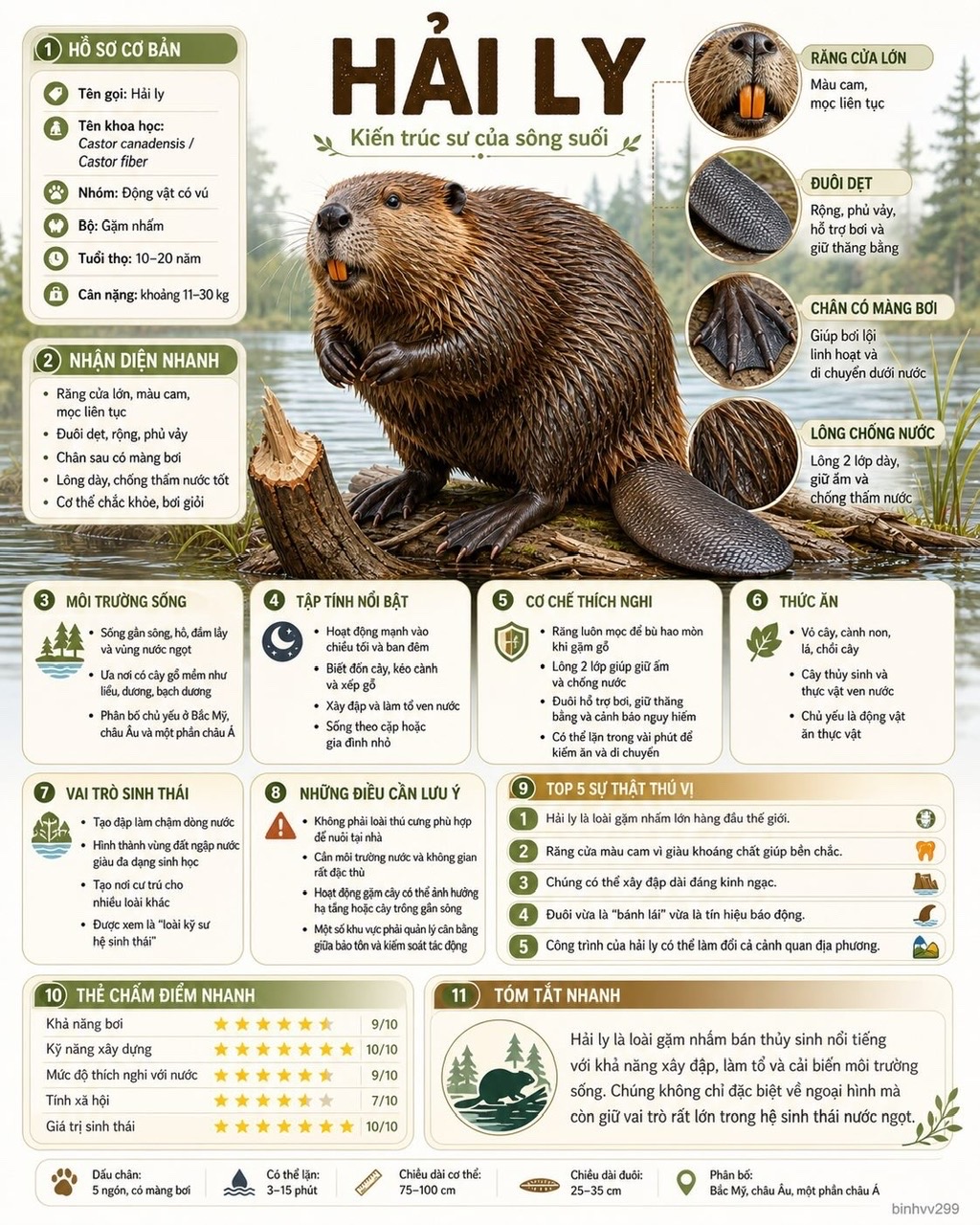
Beavers · Ecosystem engineers
Distinguish the North American beaver (Castor canadensis) from the Eurasian beaver (Castor fiber). Star ratings in the supplied poster are illustrative, not scientific assessment scores.
View full image ↗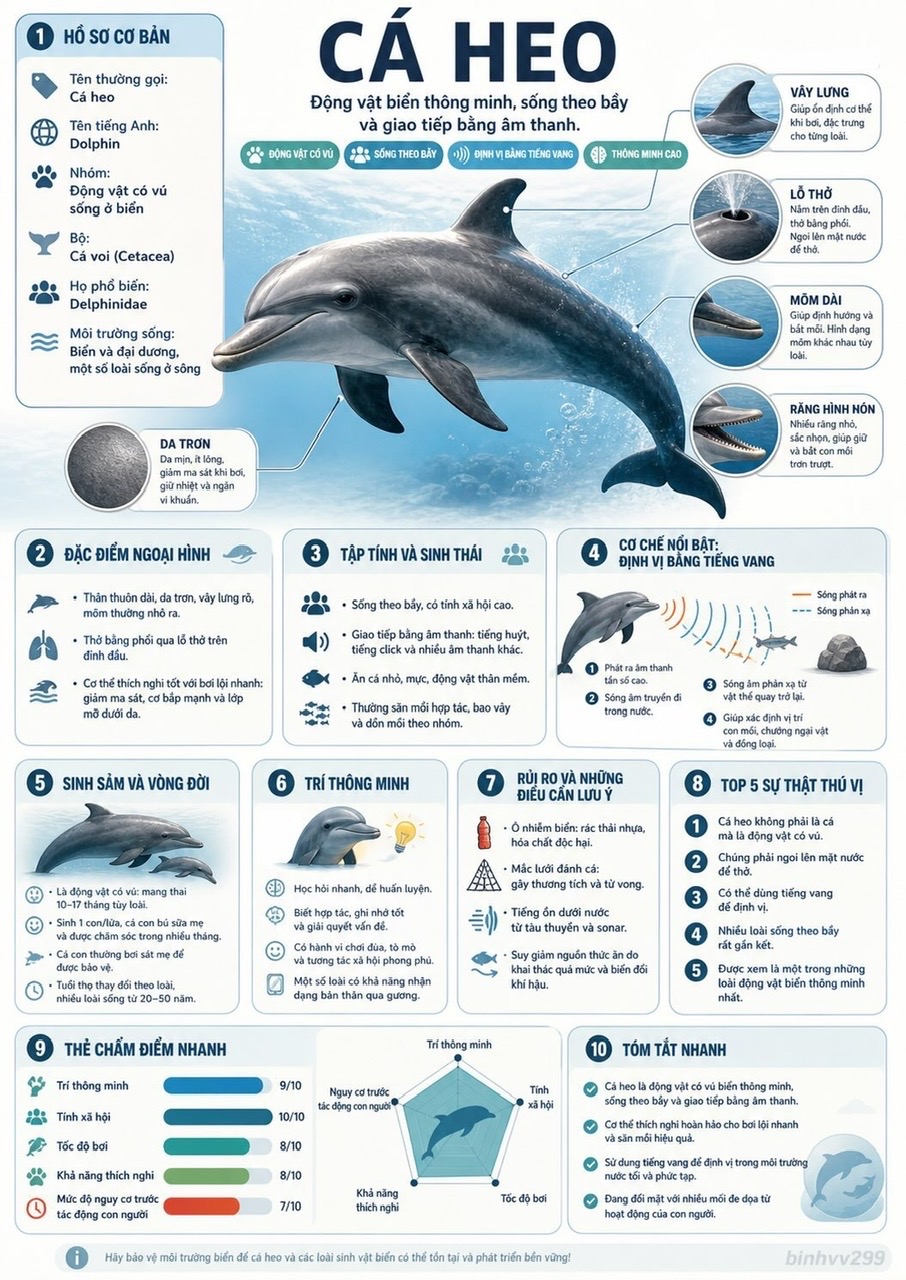
Dolphins · Sound underwater
Dolphins are mammals, not fish. Lifespan, gestation and anatomy must be interpreted at species level; the poster’s scoring chart is not a standardized measure.
View full image ↗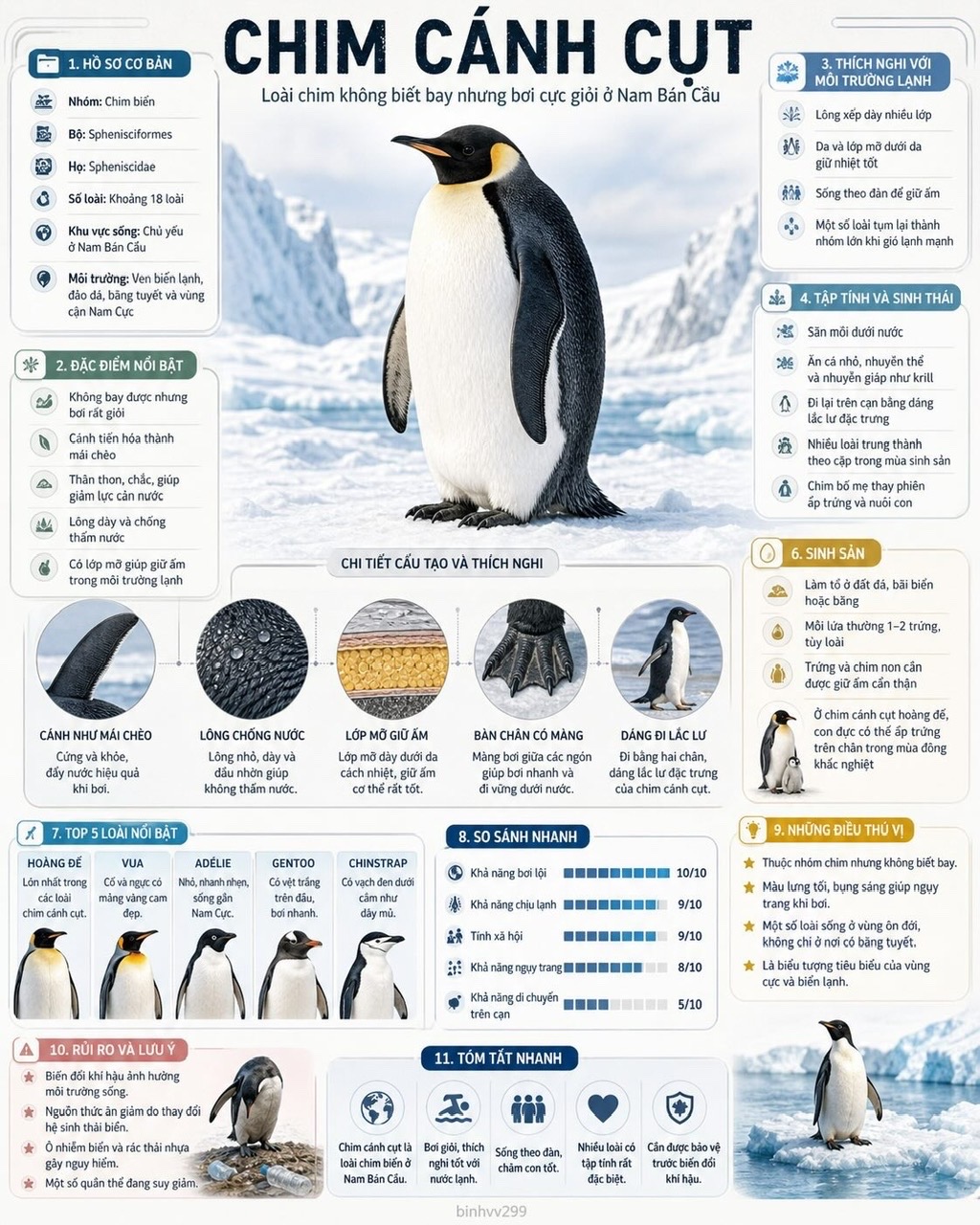
Penguins · Adapted to swim
Not all penguins inhabit ice and snow. The cold setting illustrated here should not be used to infer temperature requirements for every species. Ratings are illustrative.
View full image ↗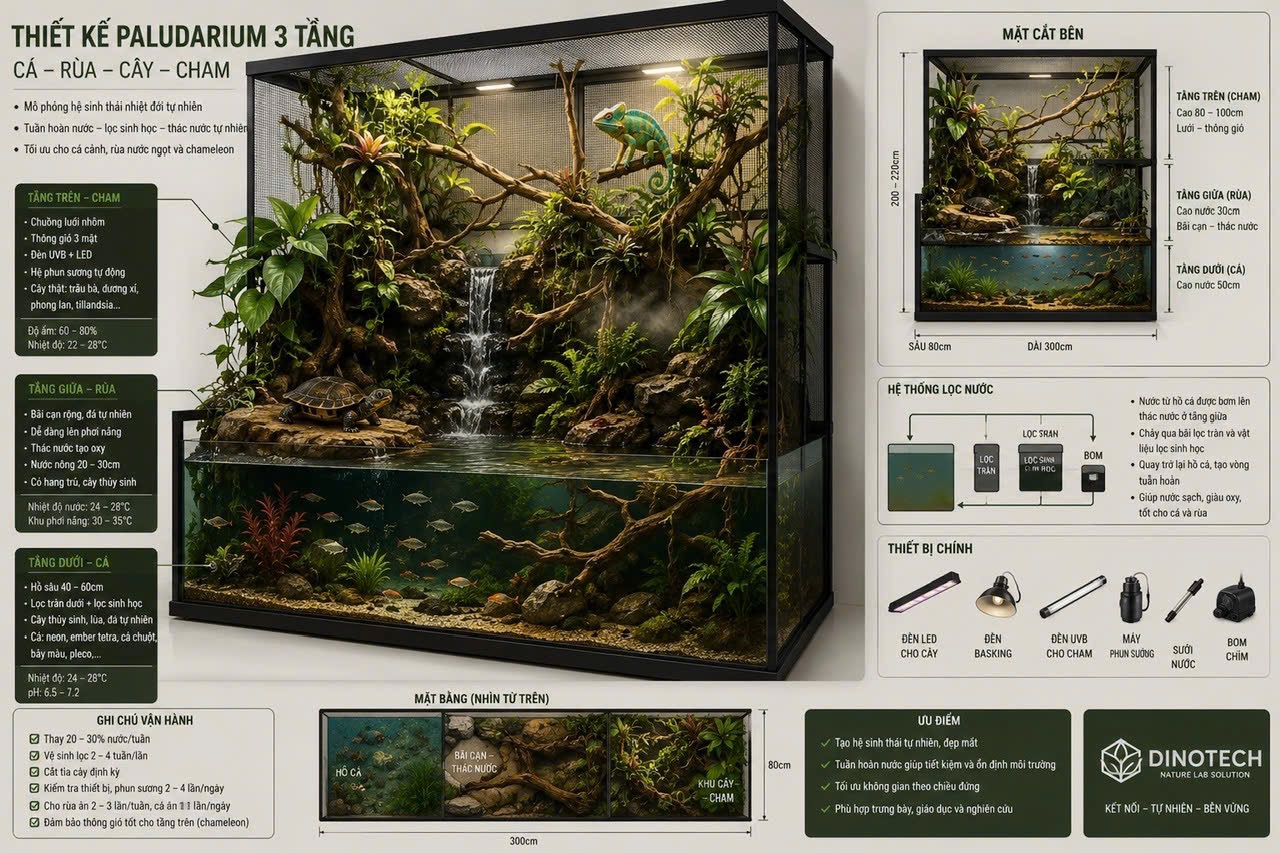
Paludarium · A three-level design concept
A design concept, not a validated construction or husbandry specification. This image alone is not a recommendation to co-house fish, turtles and chameleons. Species compatibility, safe separation, water systems, structural loads and electrical safety require assessment; pictured specifications are unverified.
View full image ↗Further reading on Panther chameleon colour change: Teyssier et al. · Nature Communications (2015)
Publication standard
Only sourced, dated records are published.
Each profile identifies the exact species, links its references, records the review date and states the limits of IUCN/CITES verification. Unsourced general drafts have been removed from the public library.
View verified monitoring notes